
Art of the World: Critical Tendencies 98, an ambitious international event organized by the French magazine Beaux Arts, under the sponsorship of the French Association of Artistic Action (AFAA) of the Ministry of External Affairs, was inaugurated in the Passage de Retz in Paris. The event, in which 24 other art publications from around the world were involved at the curatorial level, was intended to offer a panorama based on the editorial experience of the publications in their respective geographical areas, illustrating the various trends in contemporary art. Subtle and essential differences revealing an infinity of different worlds —at the personal, cultural, and geographical levels— were reflected in this interesting curatorial experiment.
Certain places of origin perhaps determine certain uses and languages in the artistic process. However, what was interesting, as the young Belgian curator Bárbara Vanderlinen pointed out (Manifesto 2, European Art Biennial, Luxembourg, June 1998), is the fact that there is no globalization of tendencies. Many works are similar in terms of their contemporaneity, but what is important is the tiny difference that distinguishes each of these creations. In more general terms, frontiers are disappearing and media are being merged. Contemporary art is becoming based on new modern values, such as instantaneity, recycling, glamour, speed, and technology.
The German magazine Neue Bildende Kunst responded in a critical and skeptical way to the convocation, declaring that the Beaux Arts initiative was a “commercial ploy." Neue Bildende Kunst published a special issue and mounted an exhibition over whose content they would have no control or influence. The objective was to counter this trend with their own concept, by presenting within the exhibition an artist (Adib Fricke) whose work deals with the frontiers of language, its media visualization, and its commercial implications. It was in 1995 that Fricke established The Word Company with the idea of working on “units made up of different words." Only by buying the works can the owner give his own meaning to the words making them up, for ‘In the final analysis, the objective of the magazines is also to sell.”
Two groups of photographic works in the Parkett exhibition represented what is known as the new Swiss Airbag Generation: Stefan Altenburger on the one hand, and Teresa Hubbard and Alexander Birchler on the other, proposed scenes taken from decontextualized points of view.
From the United Kingdom, Art Monthly invited three curators (Michael Archer, David Barret, and Iwona Blazwick) to present one artist each (Juan Cruz, Mike Kay, and Tomoko Takahashi). The three works were all installations based on furniture, evoking a certain kind of history (the theater) in the case of Juan Cruz, the cold and anonymous dysfunctionality of office furniture (Mike Kay), and composition based on waste materials (Takahashi), Taide (Finland) reflected the short history of "contemporary" art in a country which, economically dependent on the State, has decided to pursue the construction of national identity. Thus the two works on the show revealed an element of tradition in a decisive attempt to “internationalize” their language, an aspect which was also evident in the exhibition on the art of the Nordic countries titled Visions from the North, which the Museum of Modern Art of Paris also organized at the same time. A large photographic installation by Pekka Turunen documented the life of the inhabitants of a Finnish town, while Pasi Karjula presented elongated wooden pieces sculpted with an ax and knife.
The Czech Republic proposed an interesting panorama in which a recent period of postmodern skepticism in art coincided with the radical change in political regime, resulting in specific results such as the application of publicity and multimedia procedures, including hitherto inaccessible spheres of new technologies, new materials and new media (video, laser, the Internet, electronics, computerization). The two artists represented in the show, proposed by Atelier, Verónika Bromová and Federico Díaz, reflected this new sense of experimentation by the incorporation, in the light sculpture of the former and the minimalist picture of the latter, both movement and sound and images involving the senses and unusual sensations.
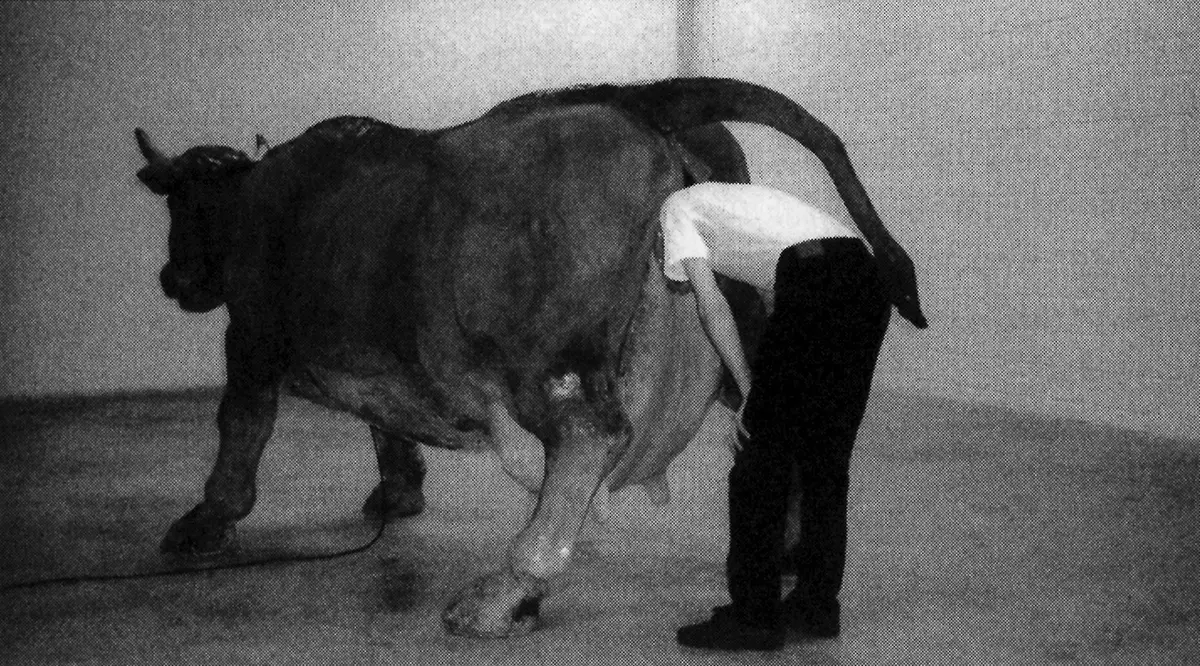
Russia, represented by the magazine Kommercant Daily, is at present a hostile and derogatory environment for its artists who, after an abrupt international commercial boom during the final years of perestroika in the 1980s, no longer find any possible sources of support in the country. This explains the sense of violence in their work. Oleg Kulik, a performance artist, presented Red Cow in the show, an enormous animal sculpture into whose anal orifice the spectator had to peer to see the video inside. The same artist recently interpreted the role of a wild dog at the Interpol exhibition in Stockholm, where various members of the public, including the organizer of the event, suffered vicious bites from the artist in a canine trance.
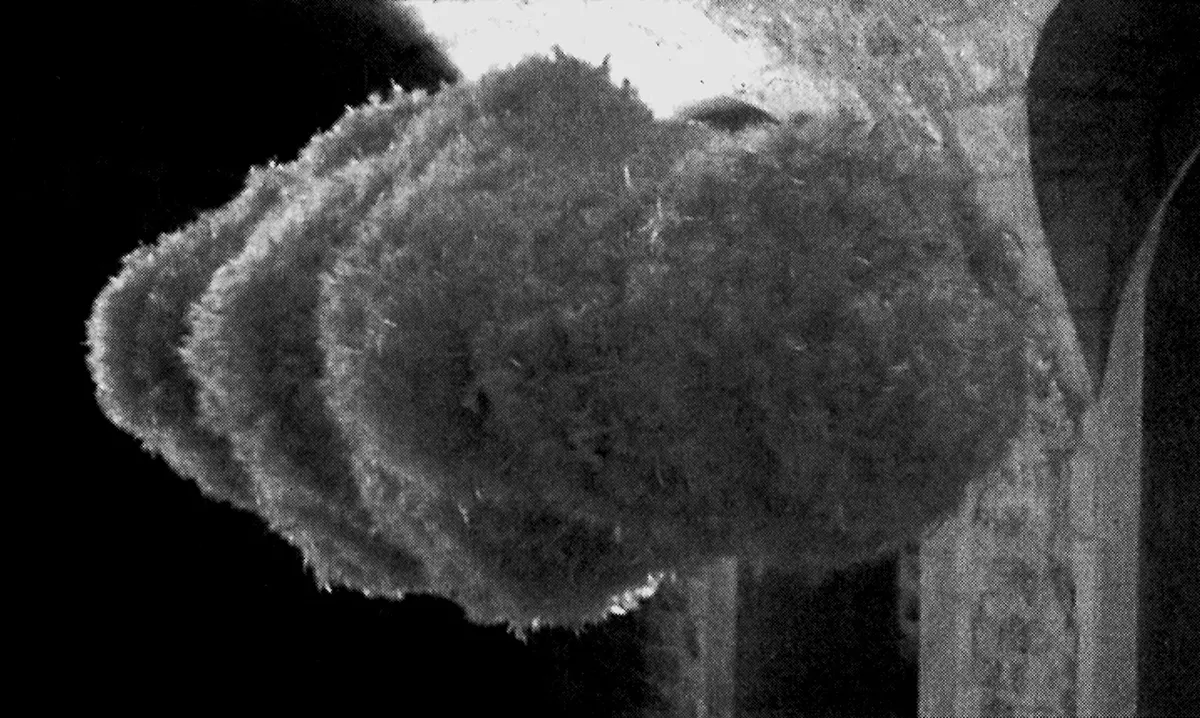
The new expressions of contemporary art arrived late in Turkey, and their emergence has been largely due to the five editions to date of the Istanbul Biennial, as well as other group events. The themes adopted by the country’s young artists are usually determined by the hegemonic nature of its culture, the problems of identity and war, mainly the war in Bosnia, in works that “float between hope and despair." In this exhibition (Milliyet Sanat Magazine), Canan Senol reconstructed with pins a dismembered image of the Mona Lisa, while Serkan Ozkaya proposed a serial sculpture of a woman repeatedly captured in little glass boxes.
From Israel, the magazine Studio presented the work of two women, Signalit Landau, and Tamar Getter. Farouk Hosny and Nazil Madkour, were the Egyptian artists selected by the journal Al-Ahram Hebdo. Zhang Xiaogang, Emily Yang Shih-chih, and Victor Lai, Chinese artists presented by Asian Art News, showed work within the more conventional pictorial tradition. Also within the more “traditional” parameters, or at least reflect a stronger sense of national identity, there was the selection from black Africa (Pume, Ennri Kums, and Abdoulaye Konate) proposed by Revue Noire.
On the other hand, the “Atlantic” area (the Caribbean and the Canaries) is the result of the countless movements, exchanges, and fusions produced by trade, slavery, tourism, and the colonial economies, making it a region of hybridization, cross-breeding, syncretism, and transcultural, a mixture of exoticism, religiosity, and contemporaneity-all of which are reflected in the work of its artists (represented by Moises Finale (Cuba) and Mario Benjamin (Haiti).
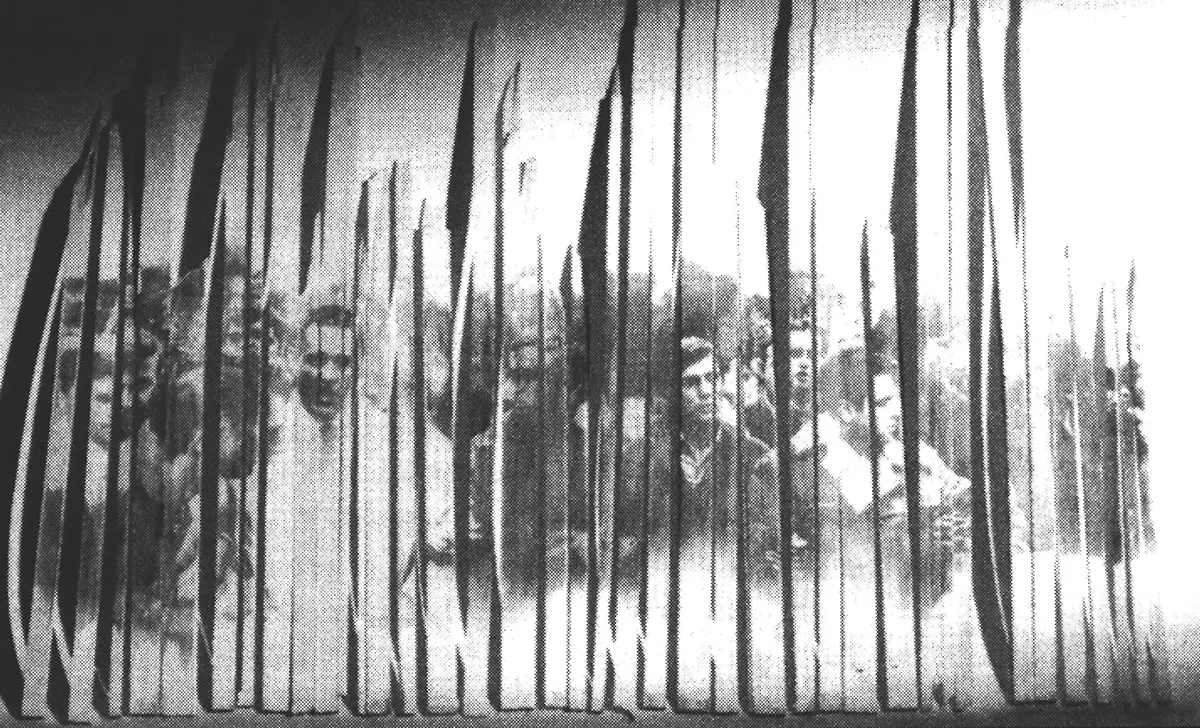
South America, selected by ArtNexus, was represented by six national projects: an installation by Graciela Sacco (Argentina), a work by Ernesto Neto (Brazil), a pictorial installation by Arturo Duclos (Chile), a sculpture by Nadín Ospina (Colombia), a work by Jorge Francisco Soto (Uruguay), and from Venezuela an installation by Milton Becerra and a photograph by Alexander Apóstol.
Glen Seator, Fabian Cereijido, and Matthew Ritchie were the three New York artists selected by Flash Art, artists for whom, according to the curator of the selection, Owen Drolet, “creation is a story or a game, with their work being an invitation to play.” Like, a publication from Australia, based its selection on what has been called a “new existentialism”, with work by artists examining the experience of being at the end of the nineteenth century (Lyndal Walker, Ricky Swallow).
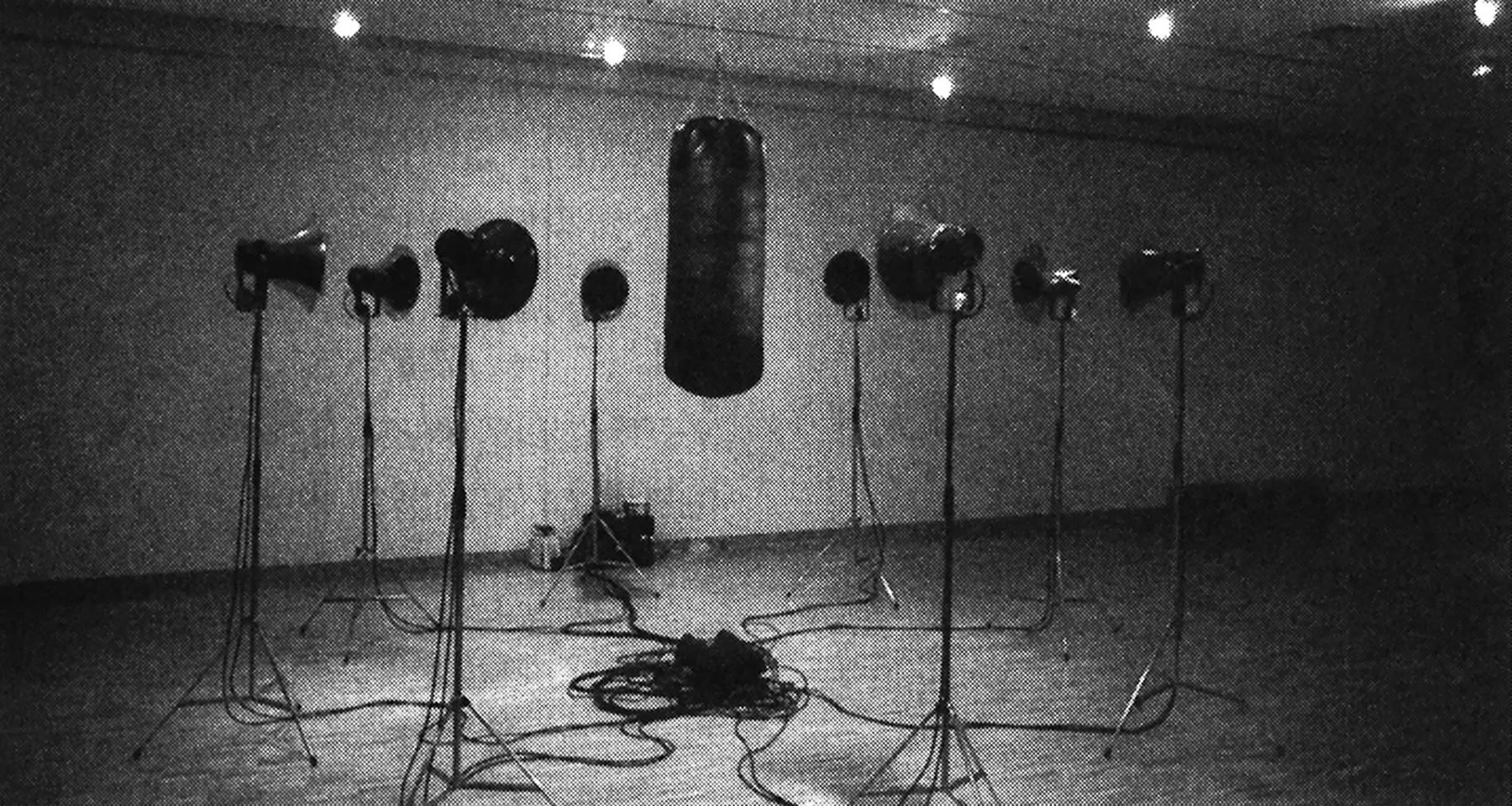
The Art News Magazine of India selected a highly symbolic work by Jitish Kallat to represent the new generation of artists whose freedom transcends the “colonialist traumas” of earlier generations. Atelier International (Japan) presented large almost monochrome canvases by Gaku Kató incorporating the artist's carefully orchestrated personal poetics. From Korea, there were two interesting works chosen by Gana Art Magazine. Zong-Dé An uses a variety of materials, in this case, silk papers, to reflect the passing of time and resulting degradation, while Joong-Jae Rieh’s installation, with its marked political content, proposed a circle of loudspeakers beating out the sound of a patriotic song. Finally, there were two works of note in the French selection. Serge Comte constructed on the wall a collage based on little adhesive leaves which explored the theme of the economy of resources currently characterizing art in France, and Marie-Ange Guilleminot installed in the Museum a typical second-hand bookseller's stand, of the kind commonly found along the banks of the Seine, but which offered books and catalogs of other artists of her generation.