
Mona Hatoum, a Palestinian artist born in Lebanon and educated in London, is in her own career an example of the bricolage present in her visual art. Hatoum exemplifies the new nomadic artist who constructs her individuality by appropriating elements from the various cultures through which she passes and by investing an enormous amount of energy in unifying dissimilar elements in order to identify herself in her own eyes and in those of the rest of the world.
Hatoum's show, currently at the New Museum of New York,1 does not have a uniform level of quality but it does contain powerful treasures. Even when there frequently appear vague and not so vague echoes of artists who preceded her historically, her own work leaves an emotional mark on the spectator that is difficult to erase. That is precisely what she sets out to do and one of the curatorial texts on the wall quotes her on this point: "I have always made my work for a Western public. But although I use a Western language, I definitely feel that my experience of growing up in the Middle East has shaped my work. This is probably the reason why my work disturbs people. I think it is easy to experience a sensation of fright and fear but I hope that the opposite reaction is also possible: a sensation of poetry and of beauty. I want to push the public in different directions and expose the contradictions that always form a part of life."
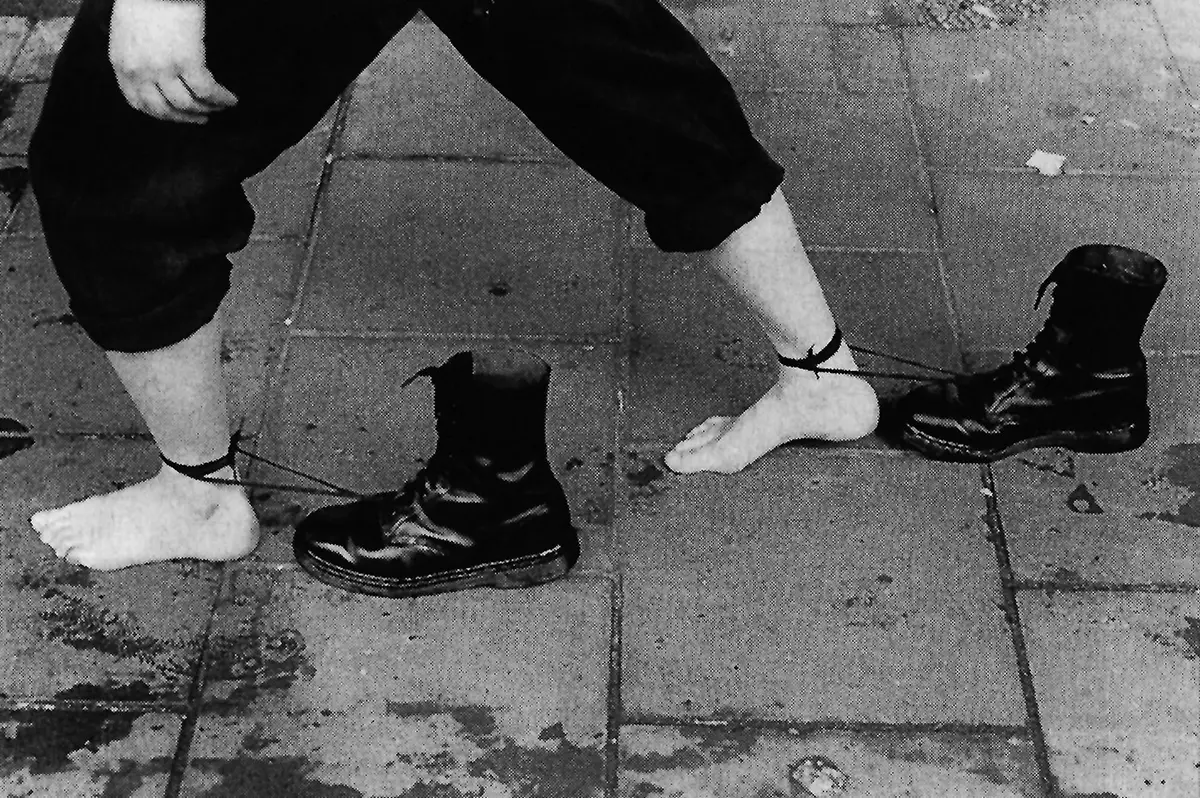
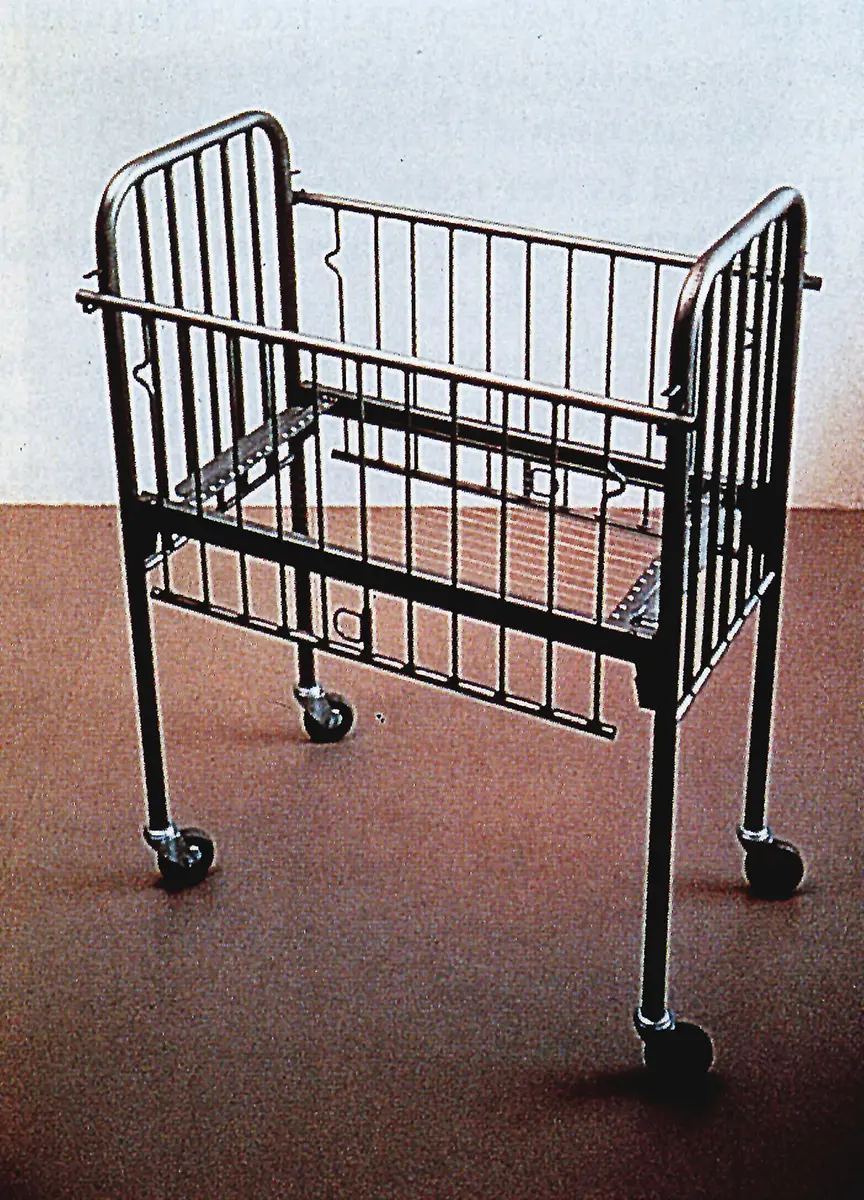
First Step (1966) is an empty crib with stroller wheels. Empty and without a mattress, Hatoum sprinkled sugar through the safety grating as if it were a stencil, leaving the design on the floor. The out-of-phase bed suggests a child's first step blanketed in terror and absent of any sweetness. Roadworks (1985) is a photograph (the document of performance) of bare feet walking arduously and dragging their respective boots (or the boots of a hypothetical soldier) tied to the ankles, indicating eternal and implacable persecution.
Hatoum's show does not place importance on the artistic quality of the work as a collector would see it. Her most significant revelation lies in managing to precisely locate hybridization. It is generic hybridization: the no longer merely technical mixture of culture and evocations. She represents the hybrid. Nevertheless, while she seems to give body to the broadened category, Hatoum never abandons art. Hers have manipulated works that have no need of museum references in order to get recognition and cannot be confused with frivolous, everyday objects.
Hatoum's work is profoundly political. To achieve its effectiveness, she utilizes a methodology that doesn't respect technical limits and signals interdisciplinary ambitions. But simultaneously and almost as a contradiction, the category of "art" remains ever present. Throughout all her works, Hatoum maintains her fidelity to the artistic tradition; there is an absence of defiance of that tradition. It is undeniable that the definition of the Western artistic tradition has changed violently in the last fifty years.
The work of Hatoum shows no attempt whatsoever to continue that process of rupture; it limits itself to using the teachings offered by the ruptures of others. It is a posture that to some extent is conservative but which exempts her from the need to experiment and allows her to focus on the synthesis of the many variables she handles. This strategy is useful for Hatoum wants to say many things, often to denounce things. Her pieces are understood or leave the impression of being understood without obliging the spectator to puzzle out innovations and extreme linguistic ruptures. Hatoum illustrates the artist who, outside her country, finds herself facing a myriad of perceptual and cultural attacks, as well as political indignations and contradictory decisions of conscience. Bombarded by all this, she must find an artistic language that not only expresses this complex salad but also that allows her to understand her own identity and guarantees her a state of mental health seriously at risk in the face of reality.
Until only a few decades ago, this type of artist was relatively scarce. She was associated with the brain drain from the periphery toward the centers —the symptom of grants or of the well-to-do emigrant. Today, the artist who is a product of migration has become a sign of globalization. Massive migrations transfer brains before they are revealed and create even more difficult conditions in which they might rebel. Hatoum's biography —born in 1952 and sent into de facto exile— is an intermediate case: middle-class Palestinian, educated in private and/or prestigious schools and living in London since 1975. She still belongs to a generation that assumes exile as their identity more than emigration. It is the same journey but with distinct psychology. It is no coincidence that one of her favorite texts should be one by Edward Said, "The achievements of exile are permanently undermined by the loss of something abandoned forever... for exile, different from nationalism, is fundamentally a discontinuous state of being."2
The way in which Hatoum faces cultural chaos not only serves her but clearly prefigures a solution for artists of the Diaspora who share and have shared her problems of adaptation. Many years ago, concerned with the theme of the emigrant artist, I wrote an essay about "Spanglish" art. Taking Ana Mendieta as an artistic example, I tried to compare the idiomatic mixture of Spanglish with the cultural hybridization in which both cultures end up incomplete. To these semi-systems which, together, attempt to form a whole, the presence of two audiences —also incomplete— were added: the audience of origin, distorted by memory, and the adoptive one, incompletely assimilated. A third, the more real audience is also added, made up of those who experience the same conditions as the artists, generally with the nostalgia that is an integral part of exile. Strictly speaking, Hatoum would fit in this category. To describe one piece (Under Siege, 1982,) Hatoum comments, "As someone from the Third World living in the West, existing on the margins of European society and alienated from my own...this action represents an act of separation...leaving the acquired frame of reference and entering a space that acts as a point of reconnection and reconciliation with my own past and the bloody history of my people."3
The piece consists of a performance in which Hatoum tries to stand up within a glass prism with wet clay covering the floor. She is constantly slipping and falling, leaving clay marks on the walls in ways that call to memory the work of Mendieta's Body Tracks, of the same year. But even while there are certain similarities both artists use their bodies as a kind of geography— the differences are as large as the distance there can be between an anthropological autobiography (Mendieta) and a symbolized politics (Hatoum). Hatoum's audience is much broader than her community in Diaspora, is truly the audience of a fragmented Third World. Although informed by her roots, the artist doesn't seek to shape an identifying culture based on a limited ethnicity.
Particularly in her more recent works, Hatoum inserts herself in surrealist conceptualism whose origins can be found in the work of Meret Oppenheim. Furthermore, Oppenheim and Hatoum are both clearly conscious of being female and both hold a feminist position. Therein lies an obvious link but a facile and superficial one as well. There is a stronger communion in their methodology, in the combination of unrelated images that, once joined, become indivisible —they support one another mutually as a whole in which the parts lose their original sense. The first origin lies, of course, in the defunctionalizing of the object as proposed by Duchamp in the bicycle wheel installed on top of a stool in 1913. The second, more direct origin, is Cadeau, the iron to which Man Ray added nails in 1921. What for Duchamp was pure defunctionalization —a fundamentally artistic versus non-artistic speculation— in Man Ray became a combination with literary evocations as well: the iron not only no longer irons, it tears. When the connections are made by Magritte a few years later, they are examples of nomenclature. Words or objects name other objects and pull them out of the realm of the real to extend the evocative realm of the parts. A door to a mystery is opened in which the spectator has to find her own means to get around. In the case of Oppenheim, a decade later, as is the case of her cup covered with fur (Le Déjeuner en fourrure, 1936,) the connection has a different character. The hybrid of the combination acquires an advertising-like quality: there is a new product that is becoming a part of our reality. She doesn't abandon us in order to create an alternative world. It isn't that she lacks evocations but that these are ramifications of everyday reality. This stay in the real world is a political necessity, is imposed by the will to politicize the work, and is also a form of maintaining that politicization without necessarily turning it into explicit content. In the case of the more successful works of Oppenheim, her need to express her independence as a female individual is always apparent. In the case of Hatoum, her early works contain a more obvious political narrative although they never fall into pamphleteering. In her more recent works, she uses politics almost like a perfume —an aroma that enriches the image but doesn't determine it. At times, in fact, it reclaims the image. And Hatoum's feminism isn't the orthodox Western kind: "l find her commitment to feminism to have been like a springboard toward an inquiry into the structures of power in a broader fashion, as in the relation between the Third World and the West and the topic of race. And, of course, I quickly realized that the discussions within Western feminism are not necessarily important for women in less privileged parts of the world."4
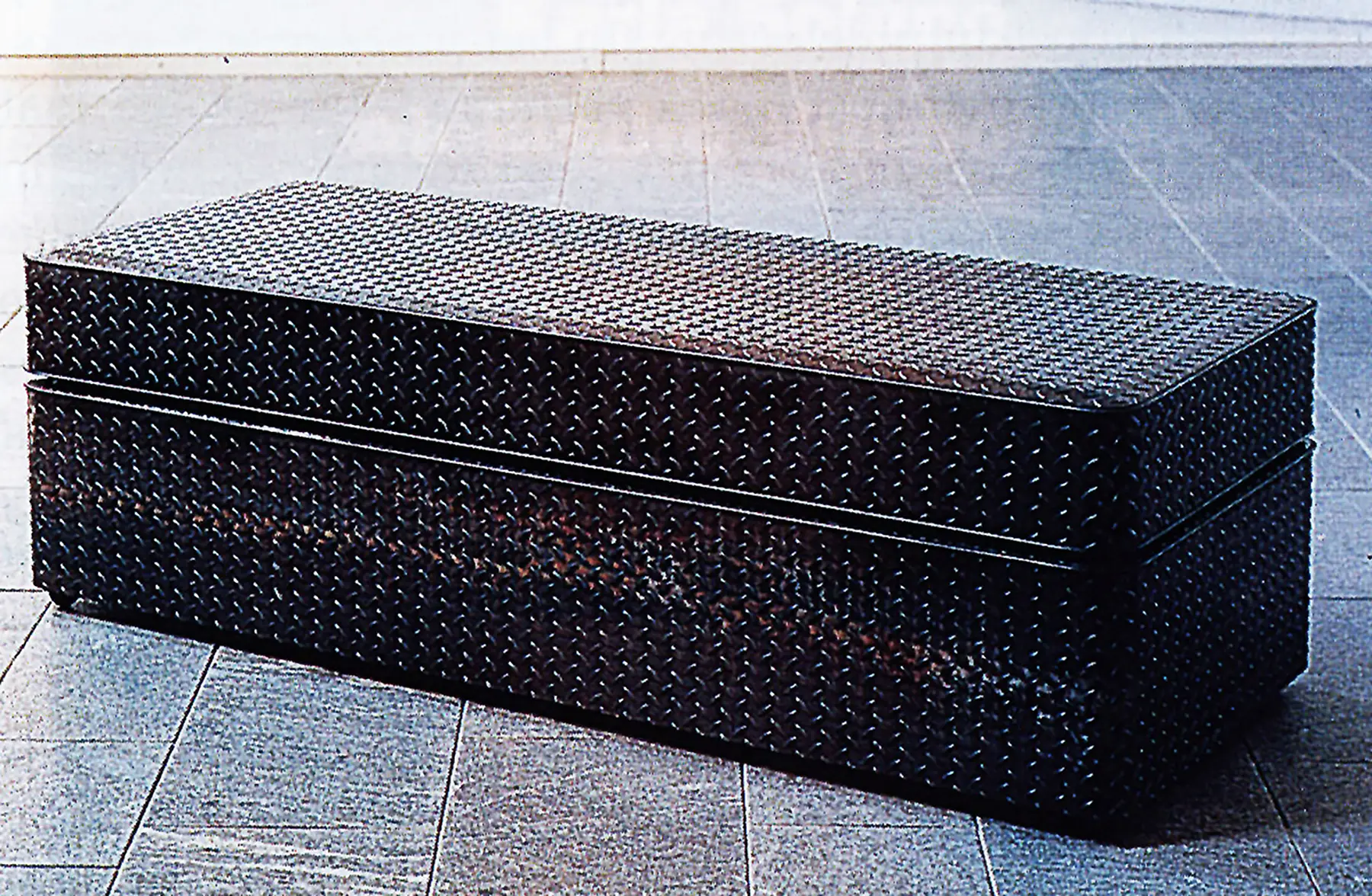
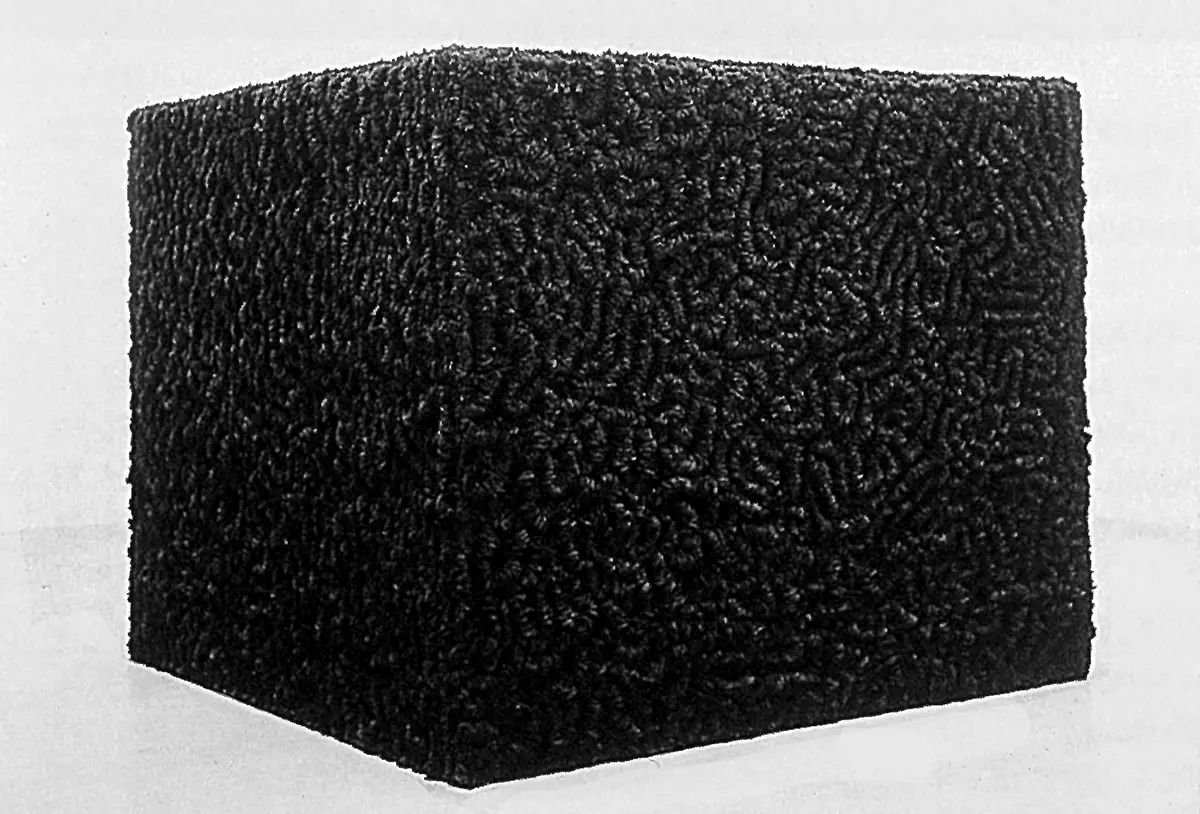
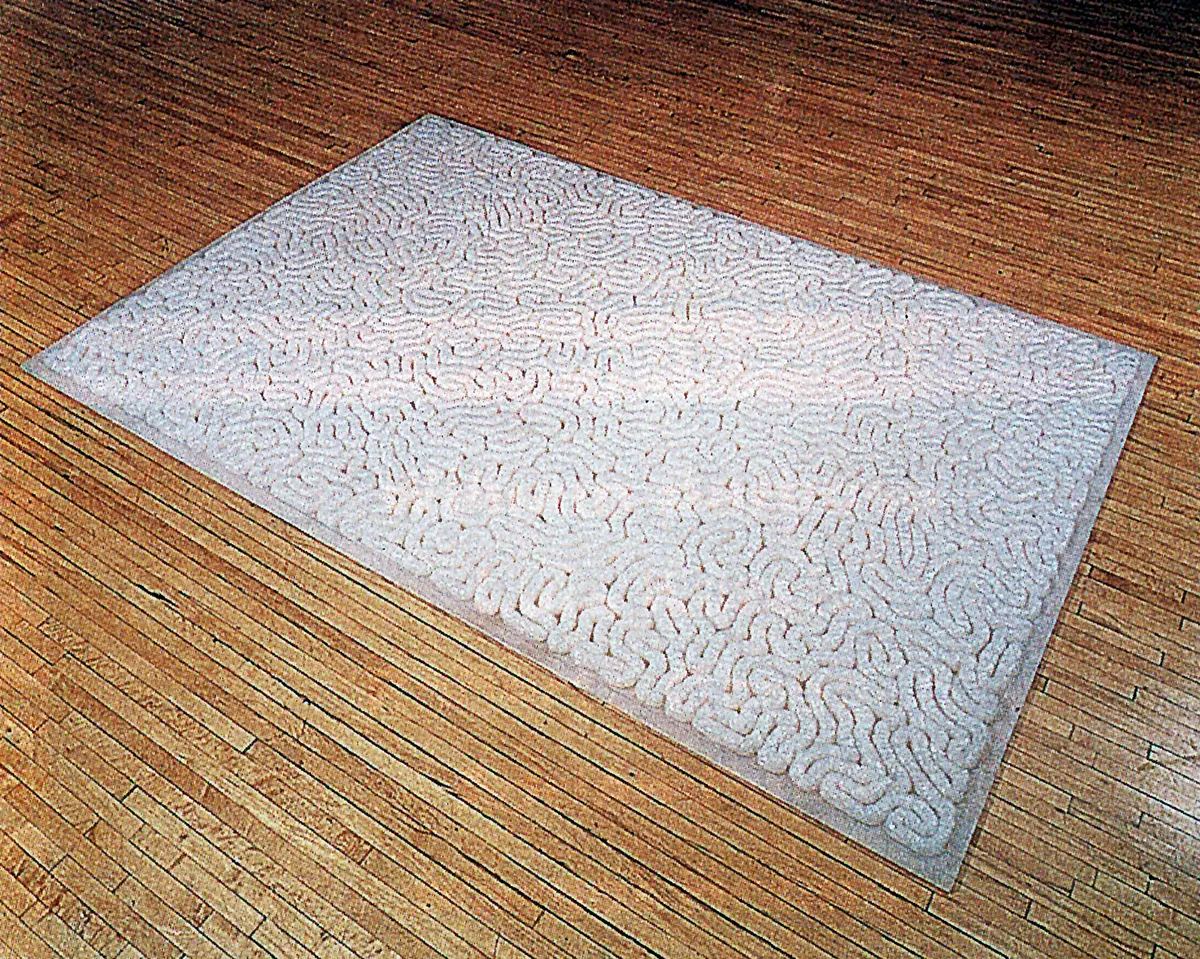
In No Way III (1996), the allusion to Man Ray's iron is direct —a skimming spoon with holes plugged by aggressive screws. The object, however, is also a form of a strike against domestic subservience. One could say that Hatoum's evocative system, spatially speaking, has a short range. She uses metaphoric mechanisms that, instead of trying to organize the universe in metaphysical form, limit themselves to ordering immediate reality. It is on this reduced scale that a poetic of very personal politics is developed. It is also a reductive scale, not always altogether successful. In Socle du Monde (Pedestal of the World, 1992-1993), Hatoum takes up the classical work of Piero Manzoni from 1961 (a prism 1 m. x 1 m. x 0.80 m., standing in a field with the title hung upside down.) She duplicates the size of the piece, fills it with magnets and covers it with iron filings that organize themselves in intestinal rhythms that appear to form a skin. The cosmic and ironic dimension in Manzoni's piece, which had thus appropriated the entire globe, is reduced to an enormous, immediate object. The morbidly decorated surface ends up just ridiculing Manzoni (whom Hatoum admires) without going beyond or enriching the original. But the experience generated another piece more typical of the artist. Entrails Carpet (1995), a whitish mass, four square meters large, in which the contradiction of the industrial rubber finish and the ornamental aspect and evidence of organic refuse, added to the implicit invitation to step on the household object and the real negation of artistic fetishism (and the museum guard), all irritate and destabilize the observer. Hatoum's effectiveness increases with the economy of her media: a necklace of beads made with human hair, a piece of soap pierced by needles, and an impression of a colander on a piece of wax paper are all objects that are at once light and dramatic. They allude to the fragility and the danger of the immediate surroundings.
It is in Hatoum's seemingly more modest works that Oppenheim's spirit reappears. In her frustratingly irregular career, Oppenheim, despite having reached the age of 72, did not manage to completely define her path. Perhaps unwittingly, Hatoum continues and broadens the path sketched out by her predecessor. Even more importantly, she also helps us to define our own.
NOTES
LUIS CAMNITZER
Uruguayan Artist. Professor at the Visual Arts Department in the New York State University College at Old Westbury.