
Mario Abreu was born in 1917 in Turmero, a town in the state of Aragua, to a family of humble origins. At the beginning of the forties, they moved to Caracas and the young Abreu took night courses at the School for Fine and Applied Arts. His first noteworthy pieces are dated 1942. Among his fellow students were Soto, Alejandro Otero, Pascual Navarro, Regulo Perez, and Carlos Gonzalez Bogen—all significant presences in the fine arts in Venezuela. In 1944, he participated in the student section of the Official Salon held at the Museum of Fine Arts. In 1947, he finished his studies and by the following year was an active member of the Free Art Workshop. From that point on he worked as a painter, and in 1952 traveled to Paris where he remained until 1962.
Mario Abreu would go on to become a full-time painter, drawer, and sculptor. In 1976, he received the National Fine Arts Prize. He exhibited often, in and outside of Venezuela. The critics Roberto Guevara and Francisco D'Antonio are scholars of his work as is, in the younger generation, Katherine Chacon. The poet Juan Liscano and the painter Manuel Quintana Castillo have also written about the artist. Abreu died in Caracas in 1993 and shortly afterward the government decided to honor him by naming the Museum of Contemporary Art of Maracay in the capital of the state of Aragua after him.
A museum that is growing and expanding
Even though the Museum of Contemporary Art Mario Abreu of Maracay (the Museum of Maracay) has existed for thirty years, its process of renovation dates from the nineties and is associated with the directorship of Idelisa Rincon. The Museum of Maracay is actually one of the first institutions of its kind established outside Caracas. Maracay is the capital of the state of Aragua and is located a little more than an hour by highway from the nation's seat. And it is located in the middle of two cultural poles, Caracas and the Athenaeum of Valencia. Nevertheless, “the point had to be made.” Like any institution that has reached thirty, the Museum of Maracay has a history. Its first appearance in national life occurred when its promoters took the initiative of creating a Salon in 1963. This took place on an irregular basis, according to the availability of space; the Museum proper did not emerge until 1967. Its ability to attract artists was modest and even when a great artist won its first prize (like Alirio Palacios, who received this honor in 1967), it did not become a noteworthy event in the fine arts in Venezuela. So when the Salon ceased to be held, few people noticed the doors had been closed.
In the decades that followed, those in charge of the Museum of Maracay attempted to organize regular activities, give continuity to the Aragua Salon, and produce publications (albeit only small catalogs). The pieces that entered the Museum collection originated, above all, from the initial nucleus of 1967, provided by the Minister of Culture. These were followed by a few donations and the acquisition prizes offered by the Salon. At that time the museum was provincial; it showed student work and received few visitors. But in that period, there began to appear signs of changes in the concept of the museum. It is worth remembering the steps taken by the directors, Edgar Guinand, sculptor and professor, and Aquiles Ortiz, a journalist. Under their leadership the museum acquired a regular presence in the press, the Salon occurred regularly, and the collection underwent a notable expansion. In 1990, Idelisa Rincon, former Director of the Municipal Gallery of Maracay, was named director of the museum.
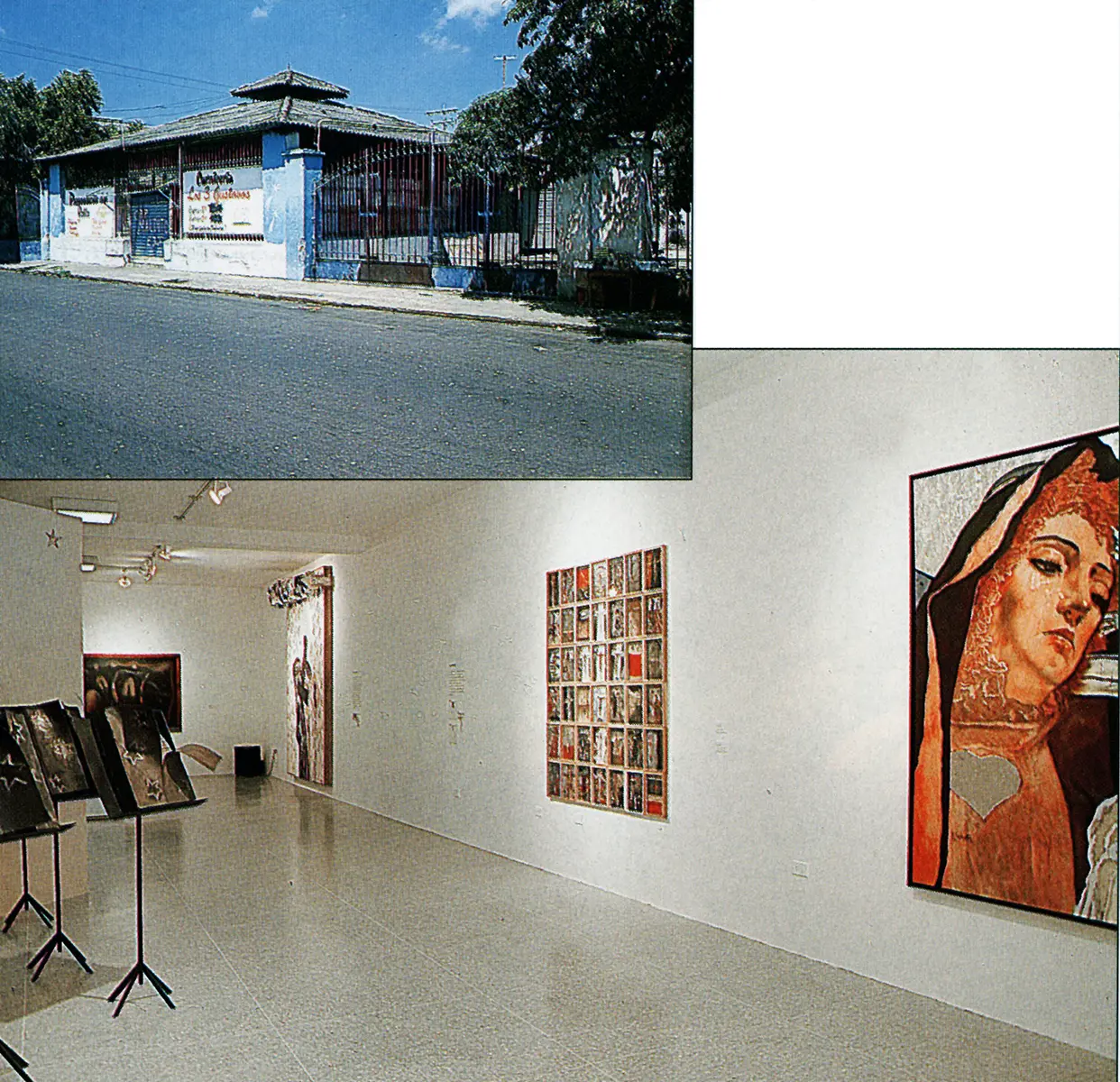
In the nineties, the activities of the museum attained professional status. The personnel is now specialized or, at least, university-trained. Every exhibit, now occurring regularly throughout the year, has its own catalog, poster, and even a T-shirt to publicize it. In recent years, Maracay has offered original and high-quality programming compared with any other Caracas museum. One of its programs consists in highlighting outstanding figures of the region, and in this vein, great exhibitions were presented by Ángel Vivas Arias, a conceptual artist, Jorge Chacón, an exceptional landscape painter, and the master Mario Abreu. As a corollary to all of the above, the master Gerd Leufert was asked to design the museum’s logo.
The quality and frequency of the catalogs published by the Mario Abreu Museum of Maracay are noteworthy. They are professional catalogs on par with any other serious institution, with texts written specifically for the occasion, at times by Federica Palomero and Katherine Chacon, among others, when not authored by the museum's own researchers. Further, the museum has garnered fame for its installations, its museographic solutions, its agreements with the local schools to encourage young people to visit the museum, its lecture series, exchanges with other cultural institutions in the country, and the beginning of a specialized library. All of this is today that to date, the Museum of Maracay has established itself as an important reference point for Venezuelan fine arts.
In the nineties, the public administration of Venezuela went through a process of decentralization and reaffirmation of regional values. When it came to the election of political leaders, the nominal elections for governors took place (they used to be named personally by the president). The new state leaders voted to fund a strengthening of the Museum.
With regards to the collection, before 1990 there existed several works of interest in a collection in disorder—for example, paintings by Mary Brandt, Manuel Quintana Castillo, and Alirio Rodríguez (all from 1966), Jacobo Borges (from the sixties), Manuel Espinoza (1969), Alirio Palacios (1964, 1966, and 1967) and two pieces by Mario Abreu, sculptures by Narváez (1966, stone), Harry Abend (1965, bronze), and Víctor Valera (1962, iron) —a conscientious growth in the collection has occurred in recent times. This is not only due to the Salon, which has achieved greater quality in yielding better results but also to the museum’s improved standards for accepting donations and choosing acquisitions.
In the eighties, the enlargement of the collection led to the depletion of Museum spaces in its headquarters located next to the House of Culture, the Public Library, and the School of Music. At this point, Rincon proposed to search for an appropriate building or piece of land on which to expand. Thus a location in ruins was found: the old Industrial Slaughterhouse of Maracay, built-in 1928 when General Gómez lived in this city. La Ganadera (The Cattle Hold), as it was also known, was the work of the French engineer André Potel. It was a model commercial establishment in Venezuela in which meat consumed in the country was butchered and stored—800 heads of cattle and 400 hogs. It was a bolted metal structure containing a complete refrigeration system, a creamery hall, laboratories, containers, storage, and links to the Great Railway, among other features.
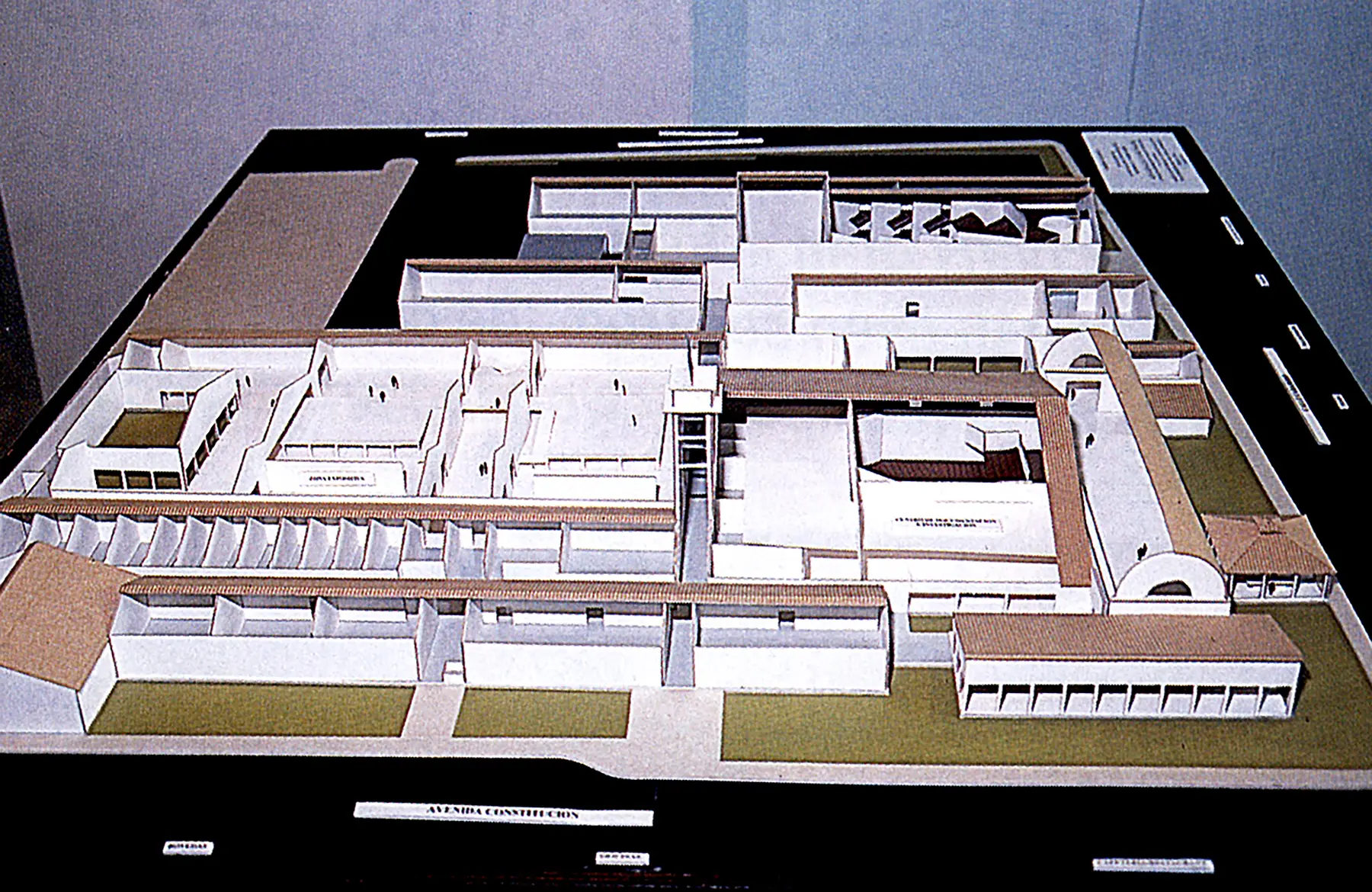
In the Museum’s proposed project, the bulk of the metal assembly still standing will be recycled. The Museum design is by the architect Nicolás Sidorkos who has extensive experience in this area as he designed the Museum of Contemporary Art of Caracas and directed the renovation of the colonial house out of which the Coro Museum now operates. The new Museum of Maracay will have an exhibition space of 5,450 square meters “distributed among 14 rooms of differing caliber, size, and height,” according to Sidorkos. In addition, the museum will have at its disposal a vault depository (the museum’s collection is currently stored outside the institution in a rented house), workshops, multiuse halls, and others for receiving works destined for the Aragua Salon (this is currently done in spaces at the Music School), a library, a store, a cafeteria, a bookstore, a children's workshop, a parking lot for 250 vehicles, and a 1,500-seat theater.
The Museum will also have green space in which a sculpture garden is planned. Altogether, the area of the Museum of Maracay will surpass four thousand square meters, which will make it the largest museum in Venezuela. “The total reclamation of the spaces of La Ganadera,” states Idelisa Rincon, “earmarked for cultural use belongs to a class of initiatives rooted in our desire to preserve the memory for future generations.”
JUAN CARLOS PALENZUELA
Historian, art critic, and collaborator to ArtNexus.