
The past Biennial of Lima brought to Peru the first opportunity in a long time for us to meet once again the rest of Ibero-American art. The experience was positive given that ours is an environment of superbly skilled painters, outstanding sculptors, and noteworthy photographers. Nevertheless, the majority is still reluctant to accept installations, videos, interventions, and multimedia as art. Another sector, certainly in the minority, considers the less orthodox experiences to have been mild, that young people above all must be willing to take greater risks.
The Biennial received a million visitors, well exceeding the expectations of its organizers. Skeptical spectators had the same smile on their lips as, for example, the sophisticated Germans enjoying the experiences of the recent edition of the Documenta. However, the goal of this first Biennial was not to ensure the acceptance of languages hitherto not widely known, but simply to show the public that many paths are now open to men and women to express their reality and that these paths are not necessarily limited to a tradition which is increasingly become an anchor around our necks.
The split between audience and critics became evident when many of the foreign intellectuals who visited us thought that the selection of the participants had been made through the commercial galleries. They were wrong. While these galleries did represent 20% of the votes, they did not substantially determine the selection of those represented. What happens is that the galleries handle 90% of the artistic movement in the country due to the absence of a museum of contemporary art and the lack of cultural centers that might be capable of sustaining one.
On the other hand, it was symptomatic that competitions located here would be aimed exclusively at supporting painting—a discipline that enjoys wide acceptance in the local market. The circle is made complete when one learns that the majority of the grants given by private institutions are directed toward more traditional artistic activities. Again, painting is uniquely privileged. It is unusual for a business in Peru to sponsor, for example, an artistic intervention, either due to its ephemeral character or because of the controversy that might arise from an uninitiated public. This situation has meant that until now there were few artists who could venture to make inquiries that diverged from the predominant concerns given that the resources an installation requires are beyond most people's grasp.
So among us, painting remains the preferred medium. That is why one of the most fruitful polemics in the Biennial turned around the question of installations and their fashionable reputation internationally. What is certain is that the rejection came from members of an older generation that criticized the seeming lack of standards established by an installation. This form wasn't accepted even though it was just one option within a broad vocabulary available for expressing ourselves through art.
Nevertheless, as has always happened, young people have taken on the job of abolishing prejudices and simply opting for the language that best suits them, leaving aside that old question which, for the whole century, the most conservative sectors asked of the unknown. This is art? Thus, acting freely, each of them has in their own manner come up with a solution to the disagreements.
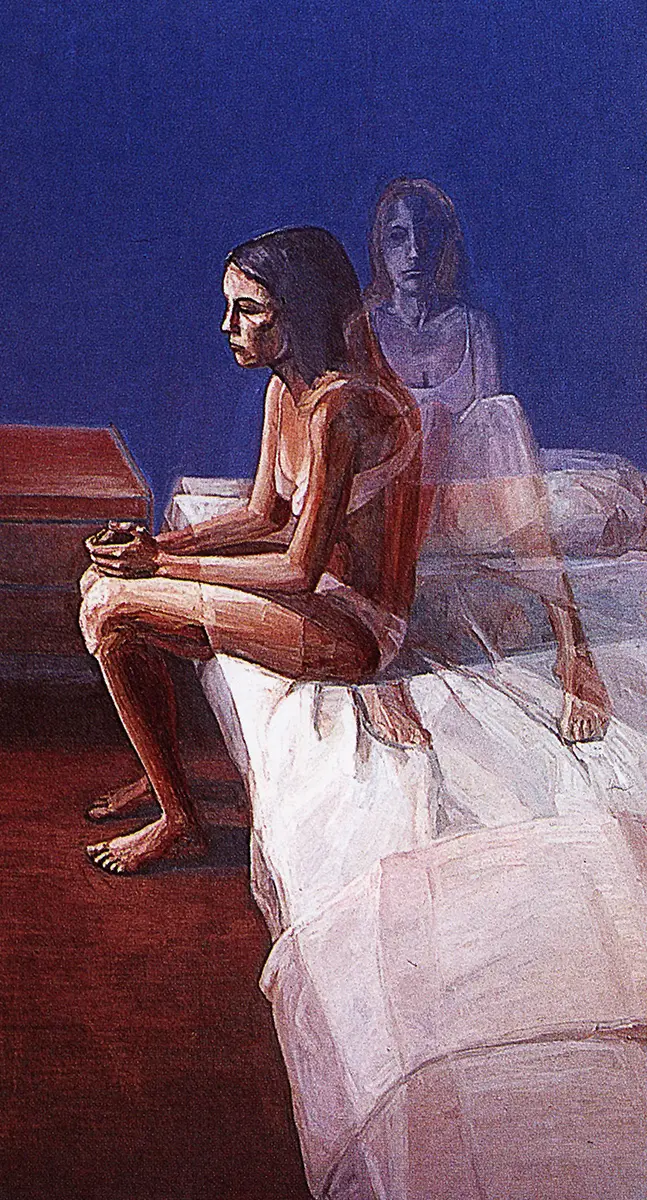
Let us look at some of them: Natalia Iguiñiz (1973) is very young but is an outstanding painter, above all of the wrenching self-portraits in which she is able to transform her everyday life vis-a-vis nervous fields of color and brushstrokes with which she creates a world of tortuous suggestion. But she is no stranger to installations. In fact, she was the one who created the most successful intervention in the Openings Section at the last Biennial.
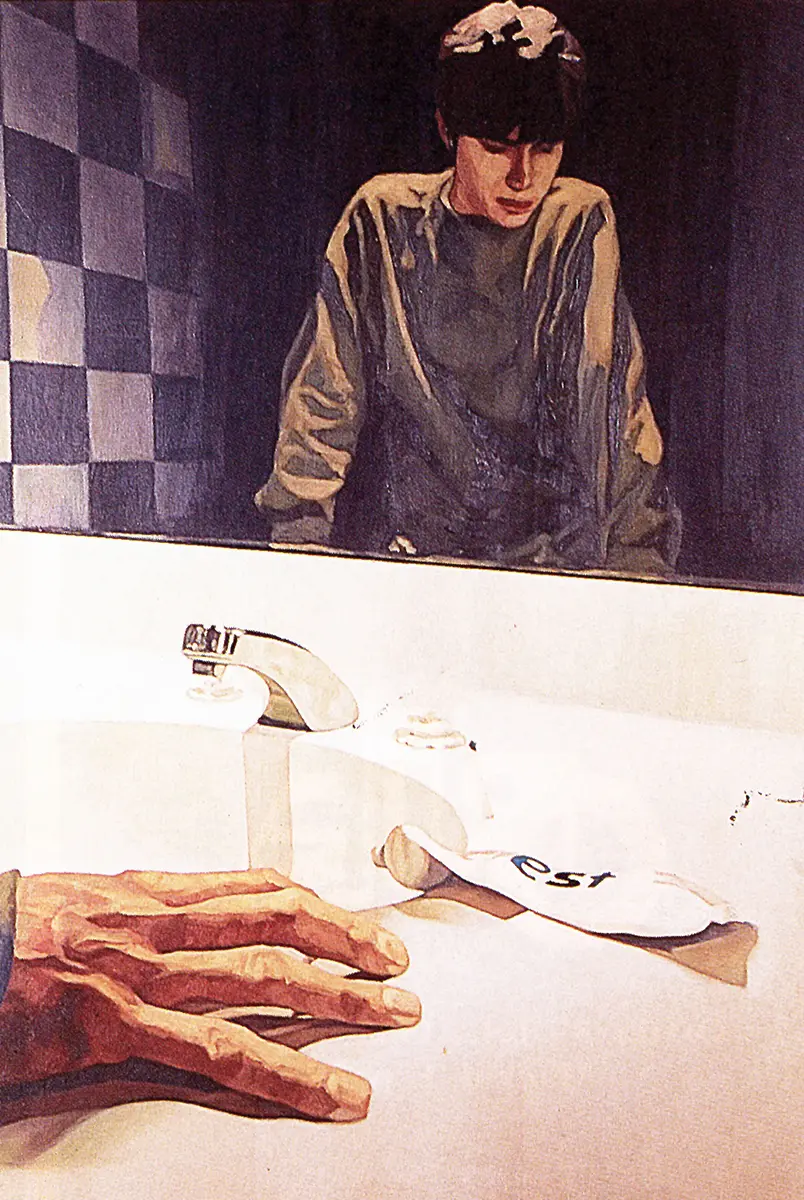
From the same generation, Miguel Aguirre (1979) works alternatively in a type of painting in which we can partly detect some of the power of Hockney's first phase, in paintings that in the day-to-day world might become banal. Nevertheless, he escapes this reality by looking to magazines, painting himself with Kate Moss, or painting, based on pornographic cutouts, and expressions of women at the moment of orgasm. His installations have a more playful character, at times naive, at times ironic. His humor might be often confused with a deliberately "light" position, taking on an ambiguity that ends up strengthening the irony of his project.
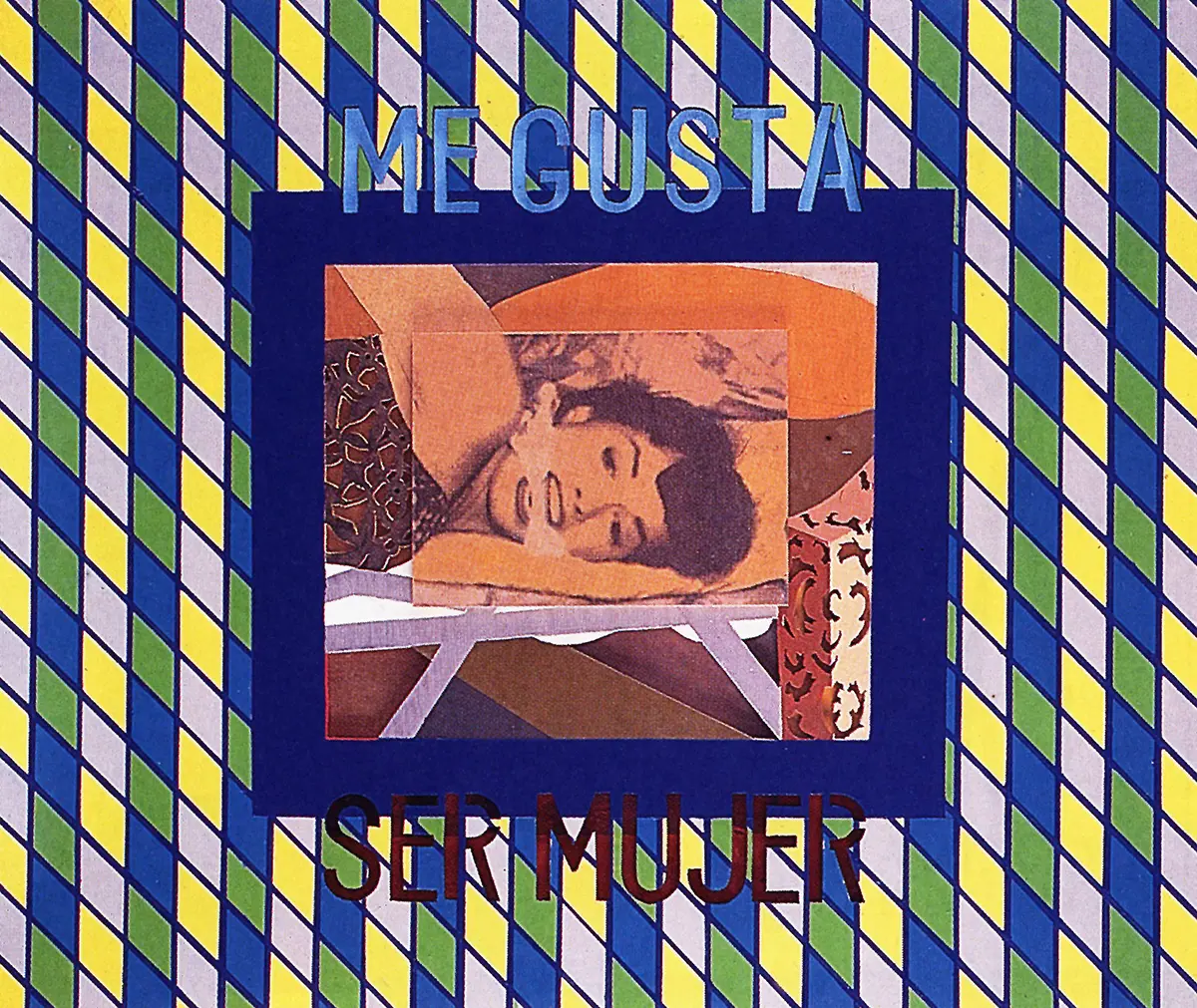
Max Hernandez (1969) is another outstanding young artist. He does a re-reading of pop art, working with flat fields and strident colors on which he applies reproductions on fabric with images taken from publicity to make reference to sexual identity. Of the three artists mentioned, he has most successfully entered the "mainstream" of Lima with the greatest corrosive charge. He has yet to be embraced by our collectors but that is the cost one of our young artists with the most visual intelligence has to pay.
In previous decades, when the problem of gender was dealt with, artists often were unable to avoid dogmatism and a pedantic tone. Perhaps, for this reason, the protest has gradually been diluted. Nevertheless, two outstanding women artists now focus their work on inquiries into their situation in our society.
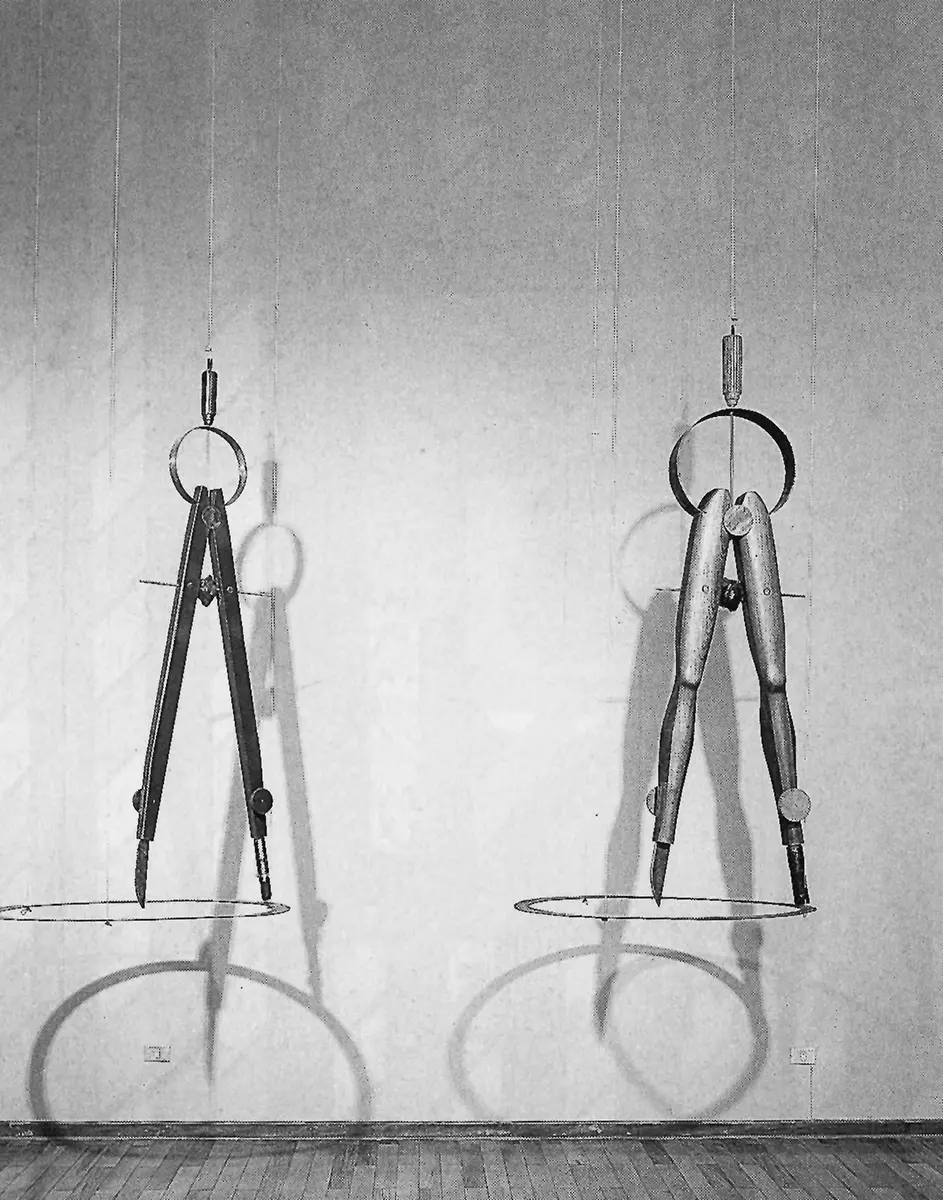
In Patricia Llosa's first exhibition, she dealt with the relationship between men and women in Freudian terms. Working with painting, sculpture, and assemblage, she produced an installation in which she speaks of childhood and menstruation, of the oppression of time and of penetration. In her work, shoes—which could be fetishistic objects as well as instruments of torture— are elements of a complex project that leads the spectator to confront what could be, for the artist, identity. We can locate the guideline for this in the heart that replaces the genitals on each sculptural body, while the legs end in gigantic knives and in enormous tubes of lipstick that trace circles around themselves.
In our circles, Llosa's (1955) proposal is a radical one, not only because of what she is saying but above all because of the way in which she says it and the materials she uses. Until now everything in her work has been unheard of in Peru's fine arts: clocks, surgical tubing, ironing boards, felt, tape recordings of her voice, and x- rays. She combines painting with wood, plastic, and fabric to create a world so outside any precedent among ourselves that it is possible to glimpse the time that will have to pass before she might gain acceptance in this environment.
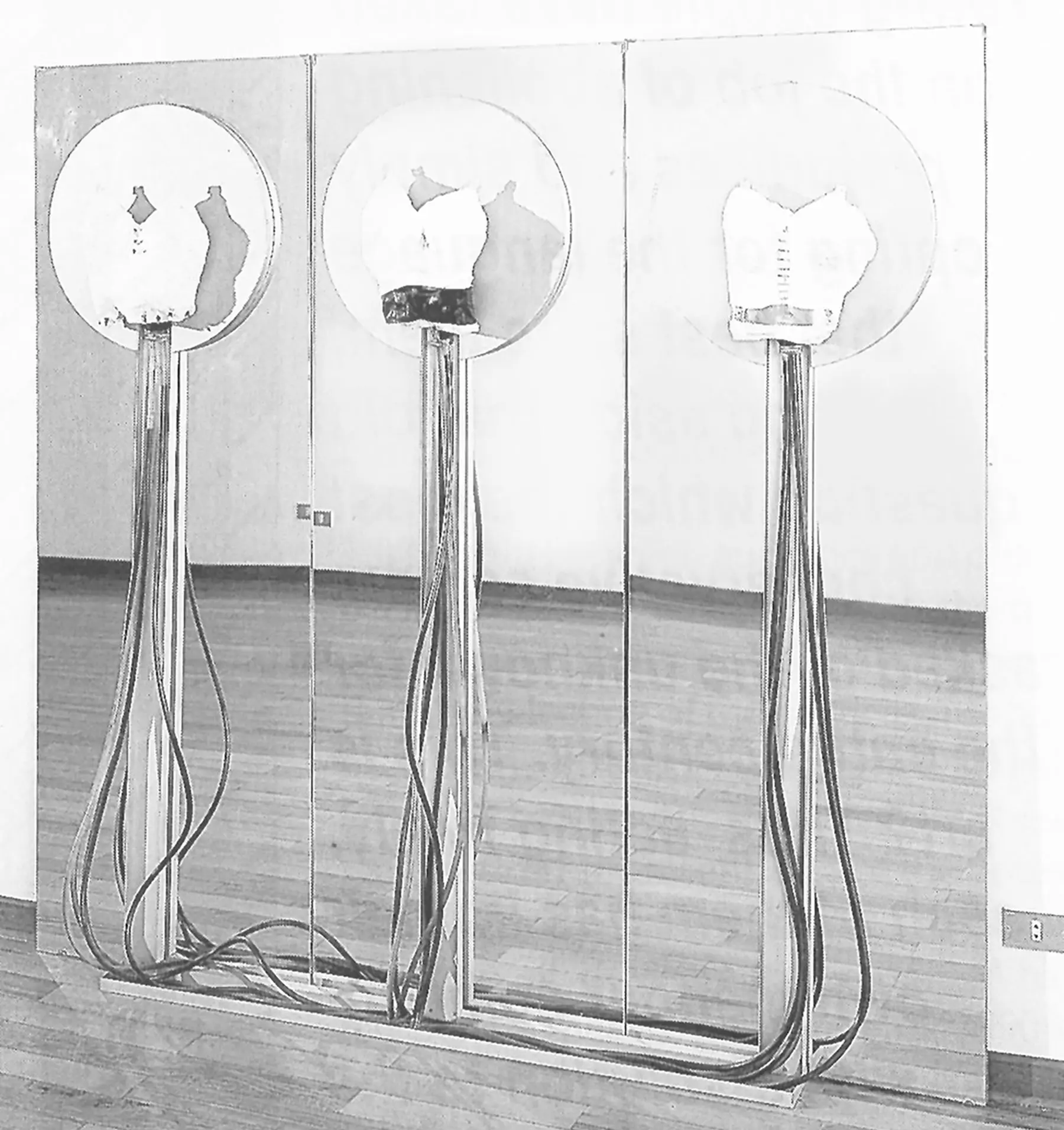
In contrast to Llosa, Rosario Wenzel distances herself from the binary system of gender to concentrate on the female world. Herworkhasa remote parallel in the essential spirit of Judy Chicago except that we are in Lima where our modesty declares that vaginas not be represented. Instead, corsets function as a symbol of oppression and liberation. Wenzel lays the female undergarment on top of nails and hardened mattresses with which she forms her series of beds. In the extreme case, we can find a bandaged life jacket used as a female sexual symbol placed over images of dead birds. "Bird" is a Peruvian colloquialism for the male organ. In this fashion, Wenzel transforms the bed into a battlefield in which there are no survivors.
But it is perhaps in two other works in which she accentuates the irony and turns the spectator into a peeping Tom. The first of these are seven padded boxes lined with purple velvet, interconnected by thick electrical cables that produce the interior light that allows the spectators to see the contents of their interior. The person who peeks through the orifices will see painted photographic transparencies of various areas of the artist's body, accentuating even further the erotic implication produced by the act of looking.
Wenzel's proposal is radicalized in her final work, that of a pedestal that reaches eye-level and whose top is covered in black leather. As we walk around the piece we can look inside it through four lenses to scrutinize the female body. When we look up we find ourselves facing a curved mirror, just like the ones we see in supermarkets used to detect theft. Suddenly we feel guilty for having been caught in the act of peeping.
Passionate and intelligent, Llosa and Wenzel are two women who bring to their work the fact of living and making art in this country. The five artists we have discussed allow us to anticipate the changes that unavoidably await the fine arts in Peru.
LUIS LAMA
Art critic, Director of the Corriente Alterna School, and President tor the Iberoamerican Biennial in Lima.