
“Sculpture is a metaphorical projection of the presence of the body in a foreign material; a kind of fantasy introspection of what is clearly human in what appears inhuman. This substitution of the material makes sculpture the representation of the inner image of the body, thus capturing the most primitive kind of experience."
Perla Krauze (Mexico City, 1953) recently presented an exhibition titled Natures, of 15 sculptures and installations the external appearance of which —though decidedly sensual— is a little less important than the sense emerging from the works. I am referring specifically to the sense of corporeality that the artist transmits by combining materials of different kinds within a space which harmonizes with the works.
Perla Krauze's sculptures do not depict the physical appearance of the body, but the materials and forms created to reflect the most intimate conception of the body. The artist gives form to his sculptures through a process in which the material —whether organic or industrial— becomes the metaphoric emblem of emotion. As Donald Kuspit has said: "Metaphor is the vehicle of subjectivity; to see the matter in a non-metaphorical way would destroy the profound subjectivity of sculpture."
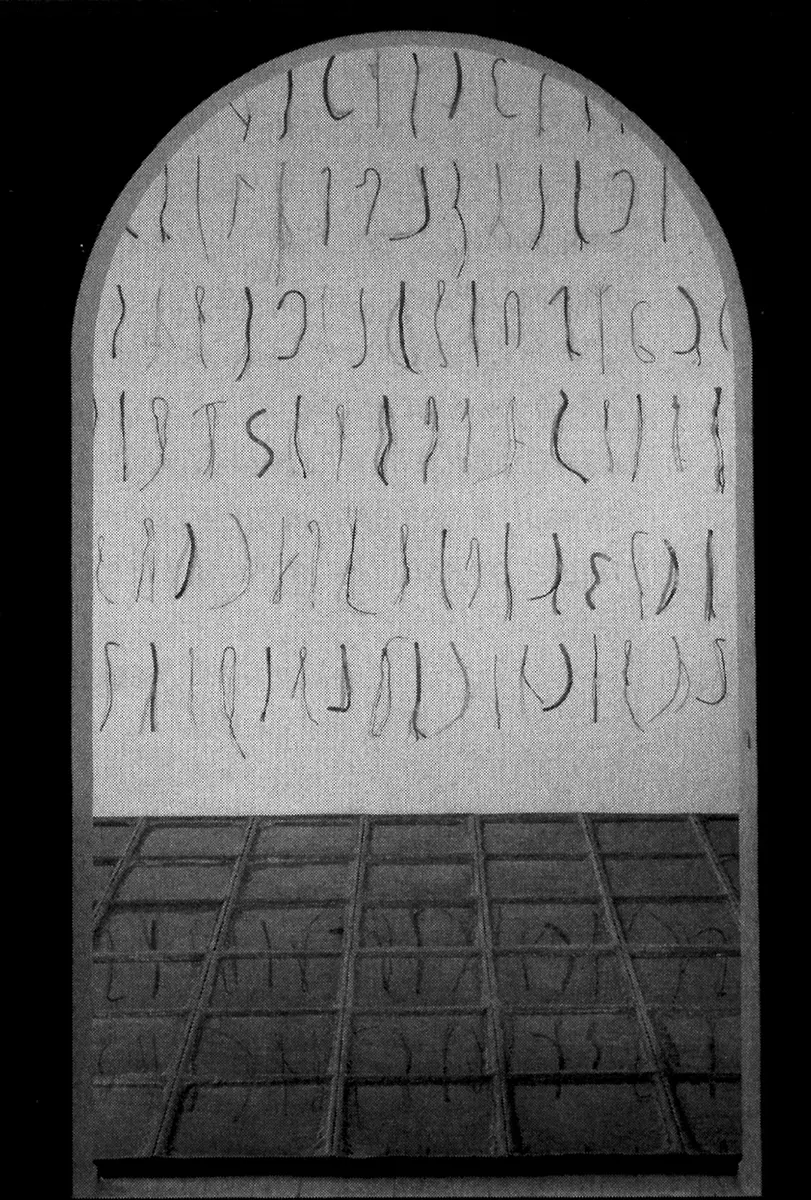
Although it is not clear at first sight, Krauze’s works depend on an unconscious relationship with the body, which is not his fundamental theme but is the implicit model for conceiving the space in which the sculptures are set. The question of the intervention of space, along with the transformed, constructed, molded, or simply arranged materials, results in an aesthetic integration that springs from the artist's concern to fuse pieces of a formal, almost minimalist kind with “raw" material (beeswax, tree branches, clay or plaster).
The water containers in the space were made of wood and covered with lead sheets, painted in a uniform color and with the apparent intention of reducing forms. This simultaneously maximized the effect of heterogeneity by reflecting in the water/mirror evocative drawings of the pieces done with branches, lead wire, and aluminum, and placed on the wall adjacent to the container. The effect produced by the peaceful fusion of the various materials used was that of a healthy empathy between nature and abstraction.
It was a union between fragility (everything recalling the mortality of the human being) and what was rational and straight, structured and ordered. Krauze’s sculptures oscillate peacefully between the process of creation and the construction of forms, between the artisanal technique of molding and the execution of heavy forms in lead, between undulating and rigid elements, the ephemeral and the eternally durable.
Whether in the case of the tangled forms (nests, seeds, matrices?) in bronze, aluminum, and beeswax (Germinal), the branches with aluminum (Natures No. 7), the horizon in bronze, or the pieces in black clay, stone, and wire, all of Krauze's work gives the impression that the material has a spontaneous metaphorical effect resulting from the mere fact of being formed. Each material has a demiurgical potential, which must be stimulated and articulated through artistic language in order to strengthen the creative capacities of both the creator and the receptor.
"Art —as the theorist Jean Fisher has said— in its real presence, must communicate something about the experience of our existence and relationships, enabling us to transform our perceptions and understanding of one another and of our realities. For art to be something, it must be seen as a practice that is both aesthetic and ethical, a way of making and remaking reality by both the artist and the spectator."
LUZ MARÍA SEPÚLVEDA