
The Argentinean presence in Paris has been significant throughout the century. The creation of the kinetic movement in Paris at the beginning of the 1960s, in which Argentinean artists played a significant role, marked a fundamental stage in the change in the European image of Latin American art and in that of Latinos vis-á-vis a Eurocentric posture. Today, despite the somewhat unfavorable situation of the Latin American art market, young Argentinean artists continue to flock to the French capital.
In 1998 the Argentina Foundation in Paris will celebrate its sixtieth anniversary and its new director, Diana Saiegh, has set herself to the task of restoring the cultural life of the place by promoting the plastic arts and the cinema. Since last year a series of exhibitions have been organized, with invitations being extended to young artists resident in Paris and Europe. The most recent of these exhibitions, titled Cachamai, included work by Miguel Almirón and Carla Cavallini (Paris), Cristina Ghetti (Blois, France), Elizabeth Aro (Madrid), and Juan Paparella (Brussels). To gather together artists with different sensibilities without adopting any specific criteria, merely on the basis of the value of their work is likely to result in imbalances and differences which prove counter-productive. However, with the exception of the work of Carla Cavallini (whose presence I found anachronistic in this show, and about whom I will therefore not speak in this review), the show did achieve a sense of coherence and harmony despite the difficulty of modulating the exhibition space, which was of the art nouveau kind, with pillars, a fireplace, a mirror and pieces of furniture.
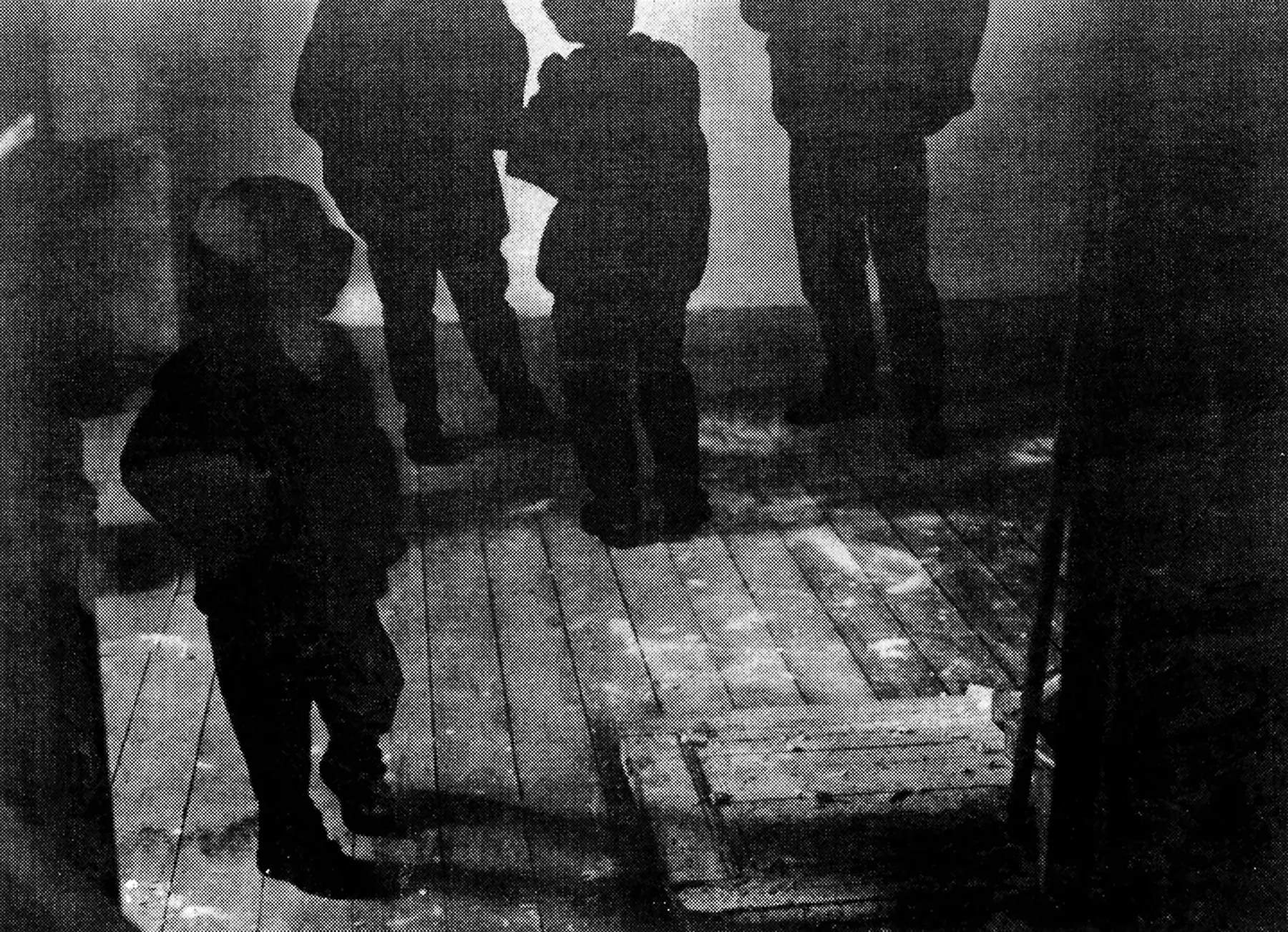
The four proposals were linked by their common relationship with formal and conceptual aspects, with each artist reflecting on the dialogue between sense and means. This was an interesting feature worthy of comment, despite the modesty of the space and the reduced size of the exhibition. Juan Paparella (1965) presented, for the first time in France, six small and medium-format photographs. Above all, this work of pictorial intervention, pigments on photography, rendered a dramatic homage to silence, giving an affective density to emptiness and transforming grief into a synonym for absence. The work of this artist is concerned with obsession, and this permanence of memory (of not forgetting) which is questioned over time allows him to structure a palpable sense of reflection, materialize doubt, to tackle the challenge of form, within what I would call the “aesthetics of disappearance." For a number of years, these same concerns have led other artists, such as Alexis Leyva (Kcho) in Cuba and Eugenio Dittborn in Chile, towards different metaphorical registers of denunciation. Paparella’s intention is to construct a climate, setting his silhouettes like phantasmagorical shadows fixed within an empty, desolate space. They are anonymous appearances/disappearances, without ceasing to be loved. This interrogation which gives existence to the dialectical relationship between reality and fiction, bordering on the absurd, is not only an aesthetic and social concern but an essential and vital ingredient for Paparella and his art.
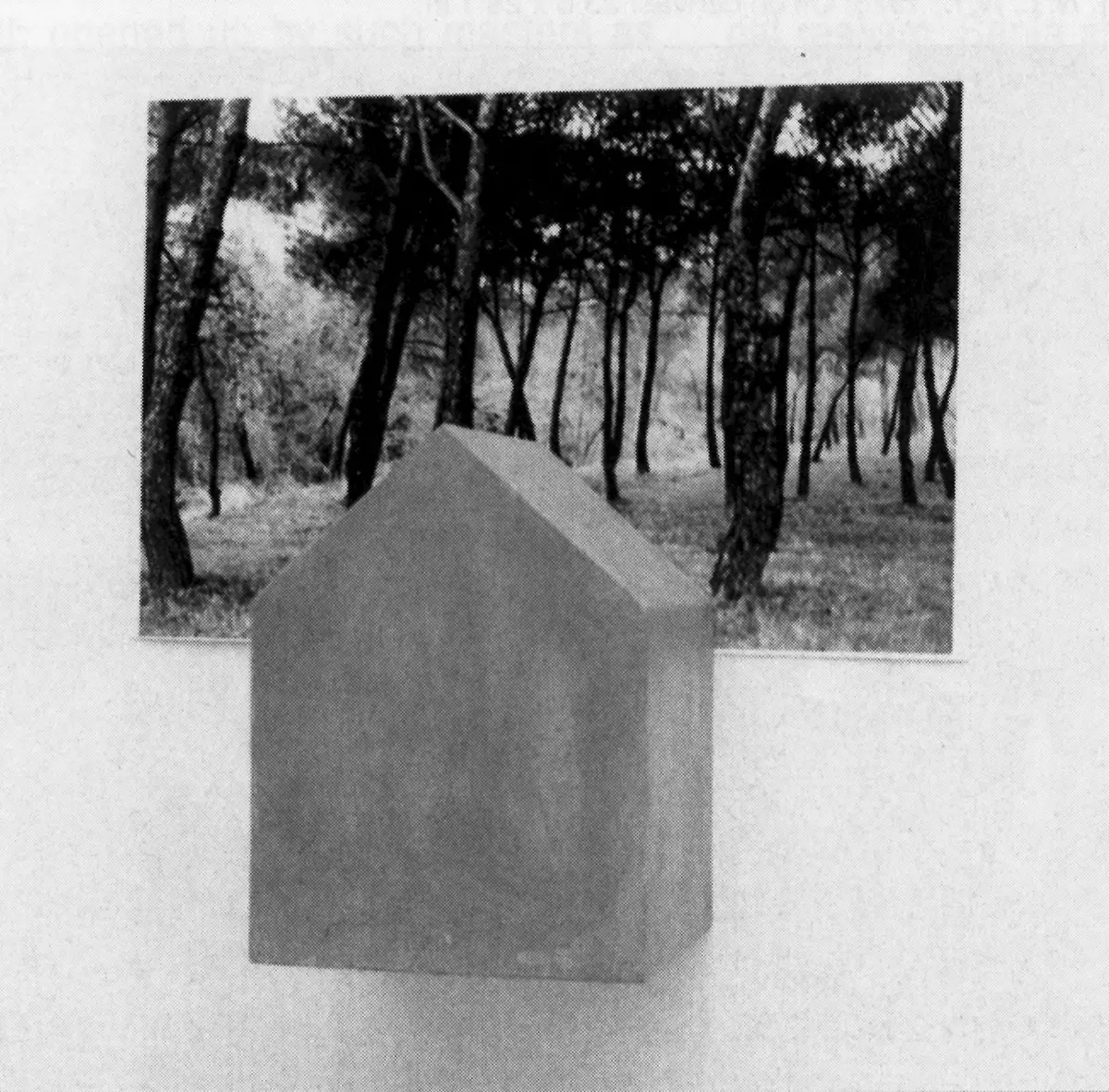
Elizabeth Aro (1961) was also showing her work for the first time in Paris. A sculptor who may be described as a minimalist landscape artist, with interior and sensitive interests, she presented three works, juxtaposing a black and white photograph of a forest with a geometrical volume (in the form of a house) installed on the photograph. Aro herself has said, Home as a sign of transcendence is the symbol of what we are, the values of protection and resistance are transposed into human values and landscape offers us the mystery of an infinitely prolonged space which can show us the way to an intimate profundity.” Here too, at another level of reflection, memory, and sentiment, there is the experience of an anonymous territory, a field of mediation that results from the confrontation between house and landscape. To change countries, to be far away, and to reflect on this emigration, is to question the identity of one's essential being. For the artist, the disparity between two spaces constitutes a territory to be explored, a virtual, symbolic, and affective dimension to be constructed. Nothing is either near or far, except the existence of the movement of the wandering memory. There is, without doubt, an evocation here in these open incursions into the unknown of the “sensitive geometry” introduced by Joaquín Torres-García.
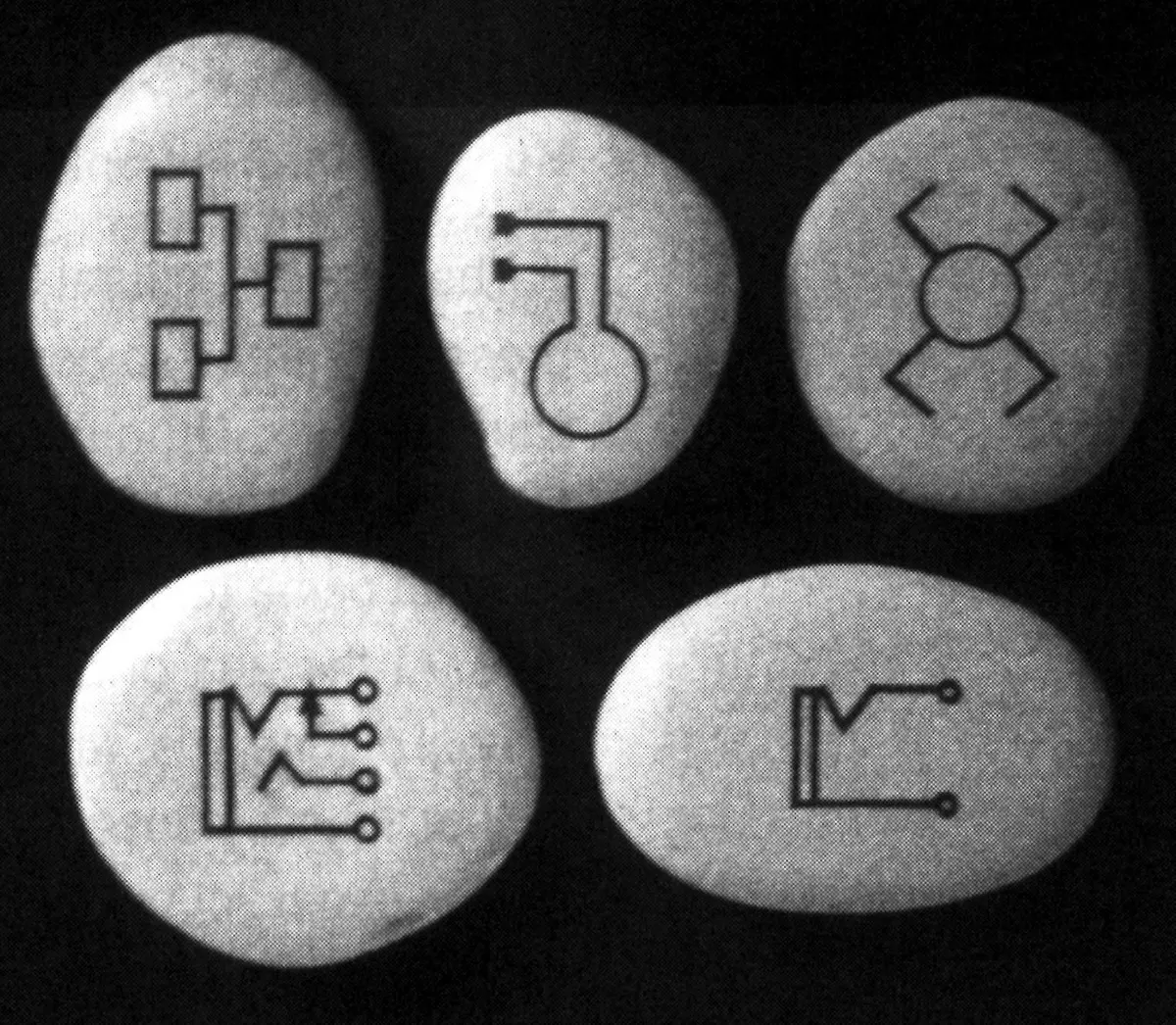
Cristina Ghetti (1959) works with the signs and symbols of modernity, or rather, the world of technology: urban and industrial signs, electrical circuits, an entire generation of familiar or unfamiliar icons and symbols, depicted in black on various surfaces, small same-format canvases, painted with a pink background, or smooth river stones, with variations based on signs relating to speed and air, the recuperation and distortion of meaning, the proposal of new readings, both musical and geometrical. The creation of a new space-time transmutes logic into a mental and formal deconstruction, with the resulting chain of superimposed elements opening up an infinite field of material, mental and aesthetic combinations.
Miguel Almirón (1964) also works with time and memory, focused on his sense of identity, his own image, and the use of dedoublement. Almiron was inspired to use as his support a mirror placed within a niche (an evident phallic form), as a means of engaging a twofold interplay between the false and the real, an astute means of relating aesthetic and conceptual questions on the basis of the initial support. On the mirror, the artist used the printing technique of a black pochoir, reminiscent of old anatomical prints. Drawings and representations (self-portraits), as well as little suspended glass medallions, were distributed over the surface as if the vertebral column of the images was a tree of life. Two small side screens showed continuous images, with his head dedouble and a heart (recalling the work of the New York artist Tony Oursler). This installation was complemented by a video that also questioned identity in the context of sexual identification.