
Carlos Aresti, a Chilean painter who has lived and worked in Paris since the early 1970s, has exhibited little in France. This exhibition, made up of drawings, sketches, and canvases in different formats, presented work done in France over the last ten years by this former member of the now defunct Magia-image group (made up of Latin American artists including Leoncio Villanueva, Mario Murua, Heriberto Cogollo, Saúl Kaminer and Luis Zárate and which was active in Paris during the 1980s). Within his generation—he was born in 1944—Aresti continues to be one of the few pictorial and plastic artists who impose, within a rather unfavorable context, an art that champions the sense of metier, with special emphasis on form and aesthetics. With consistency, rigor, and passion, he has constructed a specific, imaginative, and seductive world of forms that merits our attention.
This review is not an attempt to argue for or against painting. However, Aresti’s work does offer us an example of a genuine “defense and illustration of painting," an attempt to achieve a balance between drawing and form through the exaltation of color. If today's technique and modernity may still go hand in hand and say something about the meaning of a work, Aresti's painting, through its chromatic equilibrium and its sense of the organization of space, seems to corroborate this possibility. The skill with which the painter cuts/disintegrates/reconstructs his forms creates a space whose movement comprises a two-fold element, both plastic and conceptual. Dedoublement, the interplay of surfaces, fractures, and breaks are balanced through recourse to sfumato which softens the surface by creating transparencies. One of the most notable aspects of this search for tactile qualities is the vibration of color achieved through a divisionist kind of work. The space is revisited by a kind of post-cubism that combines various echoes of the past, such as those of Pettorruti or Linder, as well as the labyrinth of an Escher transformed into a strident colorist.
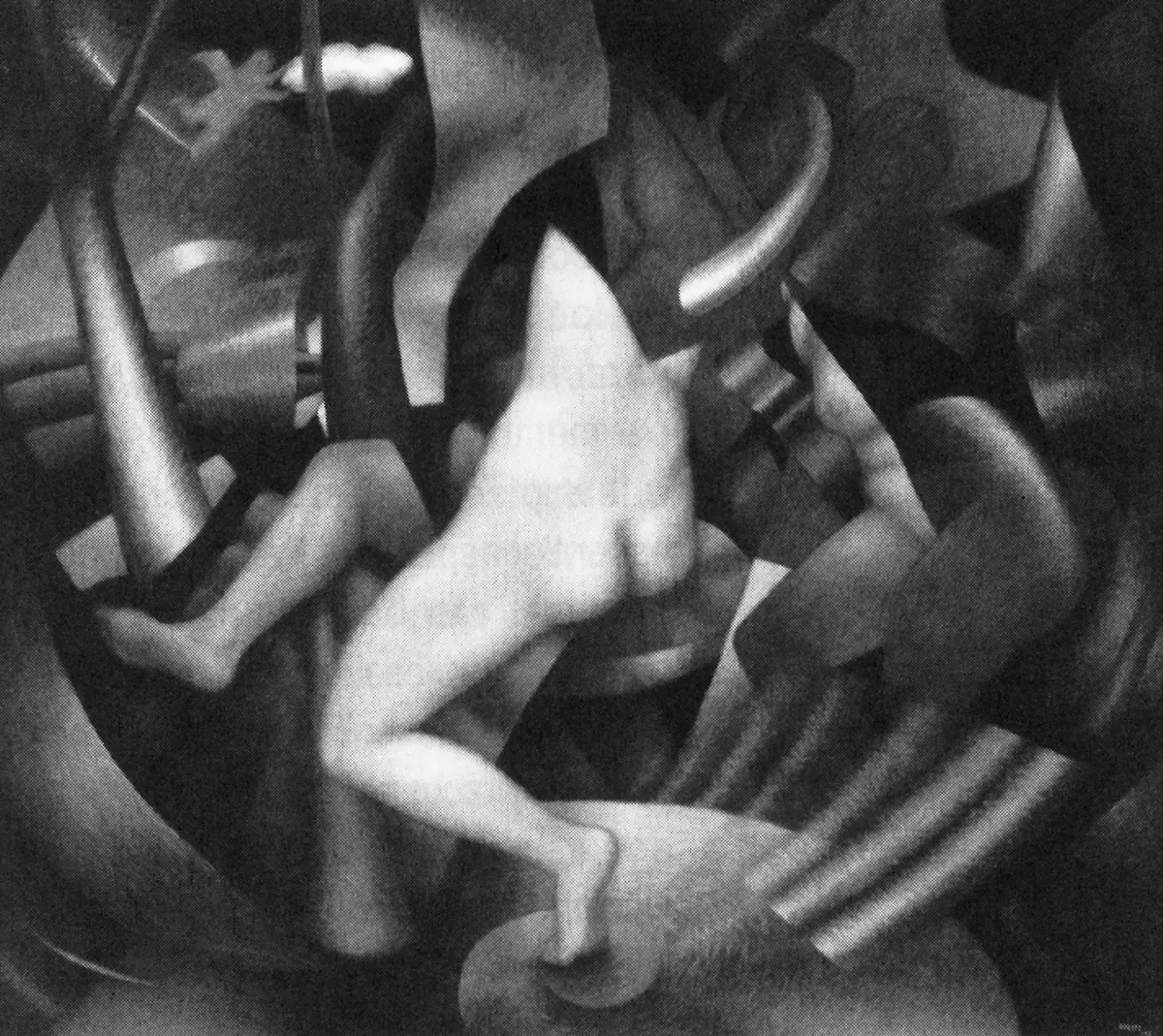
It is a work that seeks to establish the limits of painting through the crushing of color—acid greens, Mexican pinks, and turquoise blues—and domesticated, majestic form, creating a sense of fullness. The presentation for the first time of a series of colored drawings, ink works, and preparatory sketches never exhibited by the artist before enriched the show by allowing the visitor to understand the necessary processes and corrections involved in the structuring of the large format canvases. The graphic elements also confirmed the agility and gestural freedom with which the artist lets flow the deepest and most spontaneous expressions of his memory.
Aresti proposes an interpretation of his reality or the remnants of his memories of various realities, which include in particular, a real/imaginary vision based on dreams, experiences, and everyday life. The work encompasses a range of subjects including the circus, the city, traveling, and the jungle, all treated in an oneiric and metaphorical manner—and yet is constructed within a reasoned formal framework that leaves little room for chance and hazard. Alongside the liberating automatism of the surrealists, the imagination and unconscious favored by the Chilean artist evoke a kind of narrative and iconographic nomadism combining everyday elements with the dream world. While the narrative figurative artists of the 1980s pursued a post-modern re-writing of their cultural identity, Aresti has taken his distance from them through a carefully constructed personal universe that is clearly indebted to the tradition of "great painting.”
His work reveals, through the free control of visual codes, the infinite complexity of the merging of moments in and out of time.
CHRISTINE FRÉROT