
With the suggestive title of Errors, Omissions, and other absences of prolixity, Luis Felipe Noé inaugurated at the Centro Cultural Borges and the Rubbers Gallery a mega-exhibition gathering together more than sixty works from his oeuvre over the last two years.
The show at the Centro Cultural Borges was made up of around fifty works, of which twenty-five were in small format, the starting point of this new series. There was a similar number of large format pieces, what might be called object paintings in which the canvas acquires volume due to the folds and counter-folds forming a kind of bas-relief. Equally, intense color is integrated into the varied and irregular forms. Although these pieces can be seen as a continuation of Noé’s work from the 1960s, volume now acquires autonomy by dominating the entire canvas and becoming its protagonist.
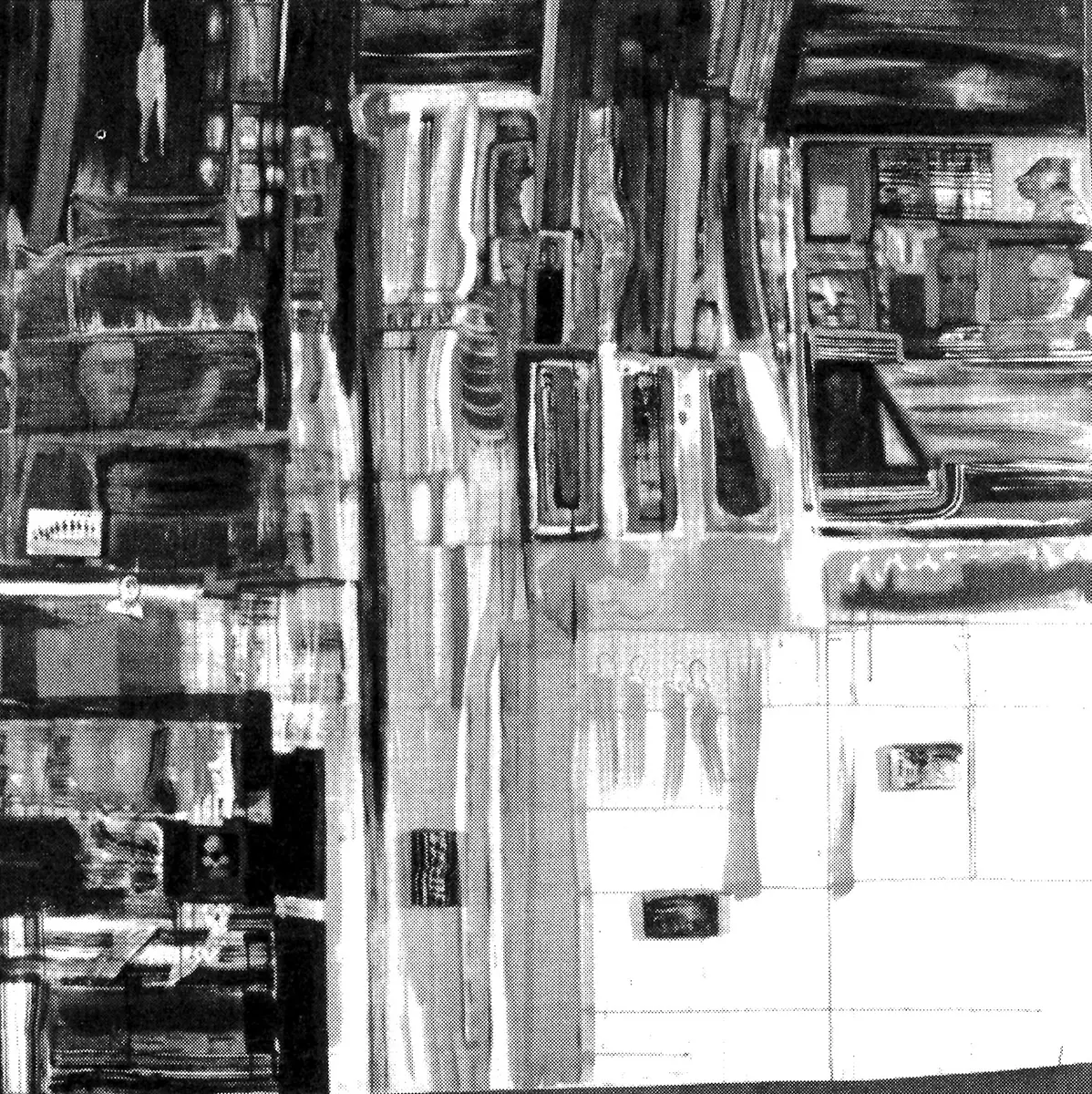
There were also paintings characterized by extensive planes of color in which the linework played a major role. In some cases, the drawing of black lines on a large format white background brought the works, in conceptual terms, close to graphic production.
It was perhaps in this last group, as well as in the small format pieces, that we can find rather different approaches to the handling of chromatic texture and the hierarchy of the extensive planes of color. There is here a certain rational containment of the emotional element.
With these new works, Noé is attempting to highlight and explore events that make up our present and everyday reality. In line with his position in regard to contemporary art, which he believes is once again becoming discursive, Noé thus puts into practice his ideas in this new thematic series. Although this is nothing new in the case of this artist from Buenos Aires—since a review of his work reveals the significance of the title in his pictures—this new series does mark an advance in the depth of his obsessions. There is, however, some distancing that serves to temper the expressionism of this artist who has always made use of vigorous brush strokes and contrasting colors.
In the final analysis, the works reveal a tight synthesis between form and content. Good examples include Urban Deconstruction and Diario. Of the works in the Rubbers Gallery, special mention should be made of Navigating towards the Third Millenium and Between the Sky and the Earth.
ALBERTO COLLAZO