
The plastic and conceptual language of Nadia Benatar (b. 1949) has always expressed itself on the edges of memory. Memory based on humility, the instruments of the craft of drawing, a feminine condition in art, and a kind of contemporary archaeology of existence has left their imprint on her work —work without stridency and with a memorable sense of artistic formulation.
We remember her drawings with urban motifs and her canvases in which she evoked what is expelled by the sea onto the shoreline, transforming it into poetic, existential metaphors.
Just over ten years ago, Roberto Guevara, in presenting one of Benatar's exhibitions, said that her inventive capacity was “accompanied by an emphatically austere spirit." This remark, though made in May 1987, continues to apply to the work of the artist.
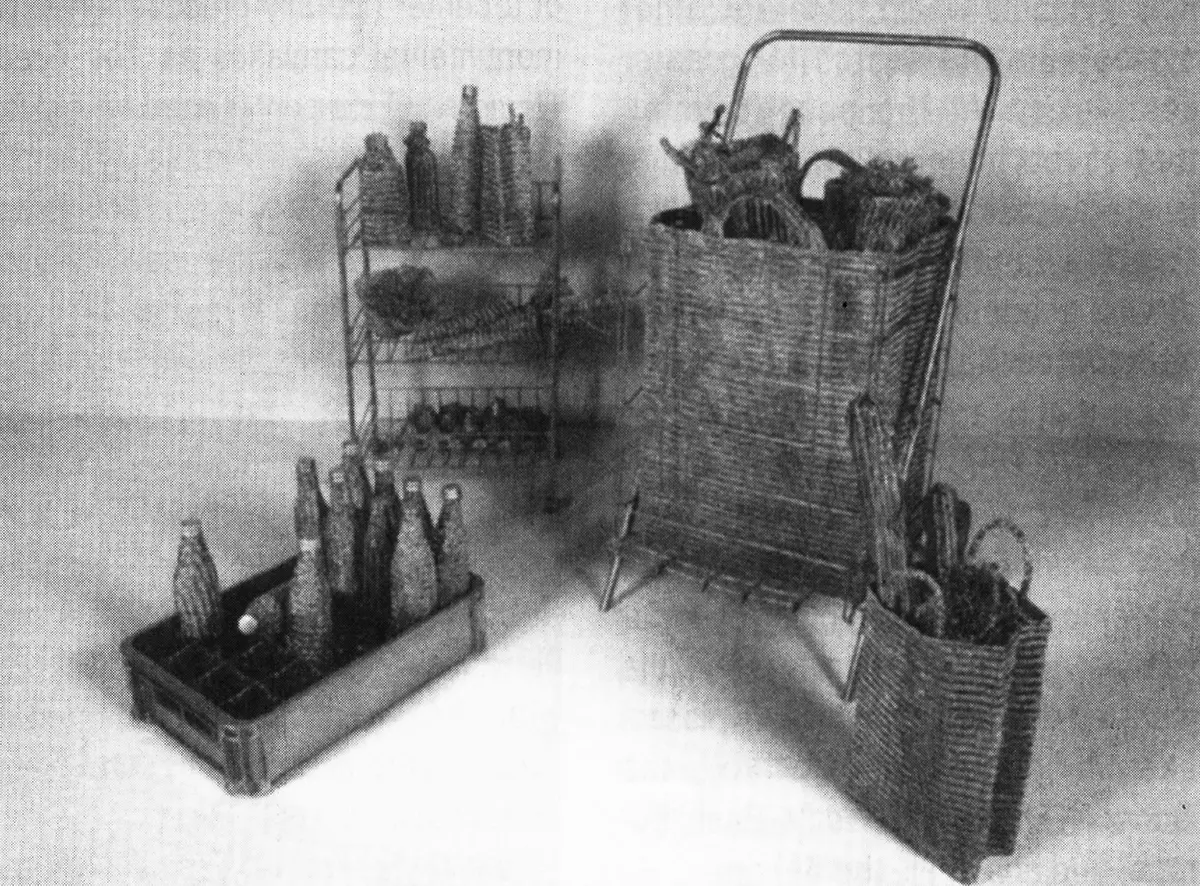
Now, after a long absence from the exhibition rooms, Nadia Benatar has just presented an installation that is one of the landmarks in contemporary art in Venezuela. Domesticada is a full-scale construction of an apartment with furniture and equipment, clothes, food, and decorations. The human figure is absent, but there is an enormous sense of experience in the work, a feeling of crushing routine, regimentation, an environment, and emotions in the process of deterioration.
Benatar has always been interested in landscape and its degradation. Her work continues to explore this theme but with different goals. She now focuses on the interior environment, the intimacy of the home, and the person, where human life has suffered decay, becoming pessimistic and grey. Here the word “grey" is not only a metaphor but the dominant color of the installation, the color of all the spaces, objects, and pieces of furniture in this apartment/sculpture/environment. The grey tones bring time to a stop and focus our attention on the ruins of everyday life.
The artist used air-conditioning filters as the material for her work, wrapping, re-inventing, all the objects which make up a home, creating a mesh that gives both things and feelings a kind of timeless skin. It is a landscape of close quarters, from which, in anguish, the artist tries to project a utopia.
The place, which does not exist, is possible in Benatar's project. Her grey is not the grey of ashes or chaos or decadence but rather has a sustained luminosity suggestive of a kind of hope. Hence the feasibility of utopia, or at least, a kind of redemption through art.
JUAN CARLOS PALENZUELA