
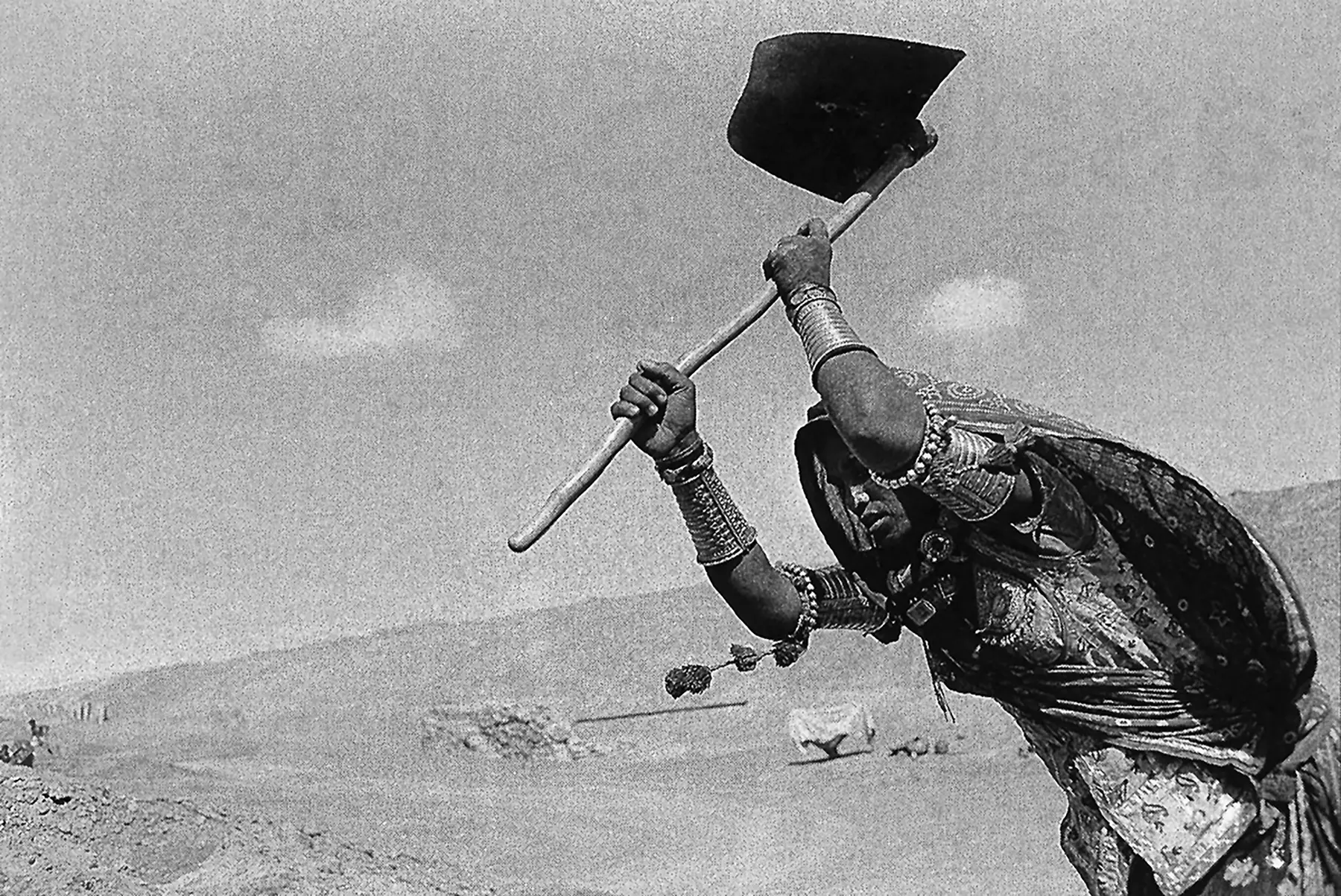
Sebastião Salgado has spent more than 25 years documenting the lives of the dispossessed in Latin America, Africa, and India. People who in fact make up the immense majority of mankind and who are still invisible to the minorities who have monopolized modernity. But Salgado believes that a process of "fabulous modernization" is underway in the so-called Third World, from which it will no longer be possible to exclude those who have been forgotten by history, and whose forced displacements have not managed to destroy their intrinsic dignity. Salgado's photographs, with their light, shot through with the Baroque drama of the Spanish masters, their hallucinating sense of reality, and the penetrating and direct gaze of their figures have been praised and reproduced throughout the world. They have also been sometimes strongly criticized for their alleged manipulation of poverty and wretchedness in the search for an unworldly kind of beauty. For Salgado, however, "beauty" and "wretchedness" are relative concepts that are too obvious to reflect the essence of his work, which is focused on something much more important: the search for and expression of human dignity, which Salgado believes is synonymous with the history of man and his life on earth. A dignity that can only exist when it is shared, in a spirit of communion between the figure in the photograph, the photographer, and the spectator.
In association with Christian Aid, Sebastião Salgado recently inaugurated in London an exhibition of his photographs to mark the fifty years of independence of India, while Terra, a show of 250 photographs documenting human displacements, is being presented simultaneously in various countries throughout the world. Brian J. Mallet spoke with the photographer in Paris about his work, his critics, and his conception of art.
Brian J. Mallet: It has been said that the great enemy of your work is its own beauty, which seems to conjure away the wretchedness that serves as its point of departure ...
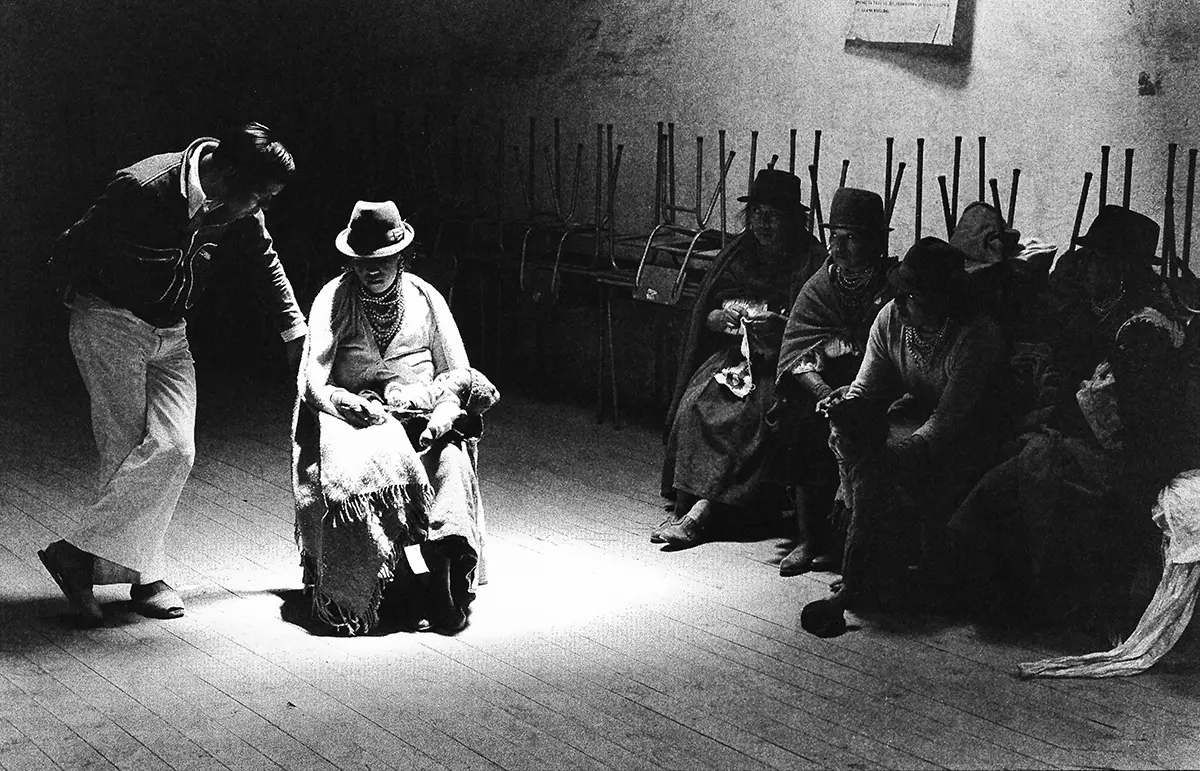
Sebastião Salgado: Beauty is not my adversary, but rather my friend. 1 was not born in Europe or the United States, where people are obsessed with the ghost of guilt of the Christian philosophy, where things have to be good or bad, black or white. It is virtually impossible for people in Europe to admit that beauty exists in places whose inhabitants are poor in material terms. But those inhabitants, in Africa, Asia, or Latin America, have a richness of spirit which it is often difficult to find in many places of the First World. Here in Paris, for example, there is an enormous amount of spiritual poverty, which you can see on the faces of people who have lost the sense of community, of their group and family. Beauty, like civilization, is a combination of many different things, and it exists everywhere in the world. It does not belong to just one group, or to the so-called "rich" cultures. In Europe, there are many people who believe —let us say, for documentary purposes– that it is important to highlight the ugly side of poverty. For me, there is no such side. Light exists in every latitude, along with the environment and human dignity.
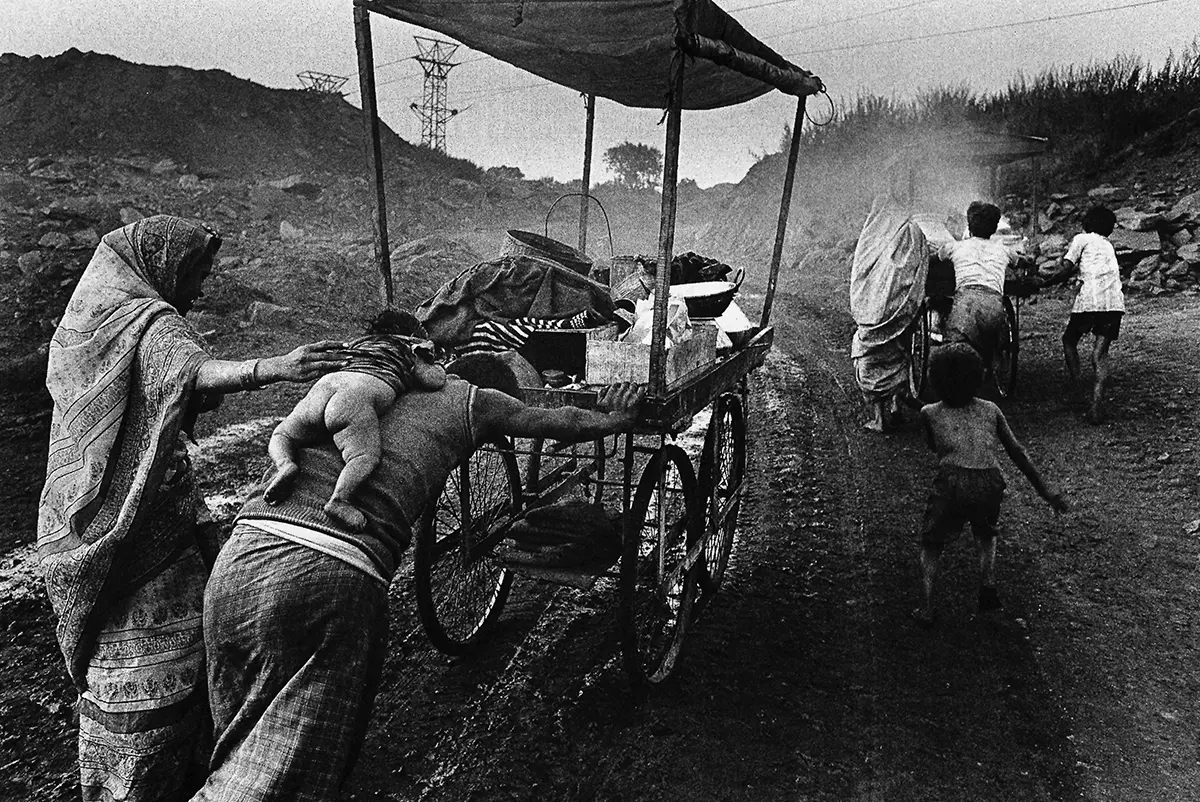
So for me, there is no dichotomy between beauty and poverty. I am now working on a series of photographs about displaced populations, people traveling from countries that are poor in material terms to the rich north, looking for work. They come with their courage and their dignity, crossing deserts, mountains, and seas, in different places throughout the world. There is a beauty in these people, a beauty which I have learned to love as a friend.
B.J.M.: In such a context there would seem to be little room for art criticism ...
S.S: Art or photography critics often create controversies that they use for their own purposes and self-promotion. In my case, those who criticize my work have never gone where I have been, they have never seen what I have seen with my own eyes. Such critics see only the so-called aesthetic side of things, and with a pretentiousness bordering on vulgarity, claim that "this" is an art and that "that" is not. I do not believe that what 1 do in my photography can be called art. Art exists, of course, but it is not the artist who makes it. For me, the artist does not exist. What makes something into art is history and it becomes art only with the seal of history, as a consequence of history. You can create an object, but for that object to become art, it must become part of mankind's heritage. Art is what remains from history, man's mark here on earth. In this sense, I do not make art. I am a journalist. The first support of all my photographs is without exception the press. Of course, the photographs are also shown in museums and galleries, but first and foremost, they appear in the press. For example, my photographs of the movement of landless peasants in Brazil were published in the form of high-quality posters, which were shown in 3,500 simultaneous exhibitions that collected funds subsequently used to build a school for the peasants. Unfortunately, some people today want to hijack the world's museums for their own ends.
B.J.M: You came to photography at a relatively late age in 1973, without any professional training. Yet the density of your photographs, and their emotional resonance, are instantly recognizable...
S.S: Like any photographer, I have my own aesthetics, my own way of penetrating reality. This "take," which is mine alone, is also the result of what I am, of what I owe to my father, my mother, the town in Minas Gerais where I was born, with its dramatic light and harsh sun. It is a "take" that reflects my place in my social group and my family, my political beliefs, and my ideology. Many of my photographs are taken against the light, just as in my childhood memories, my parents always seem to appear with their back to the light. And so on the one hand there is a density of experience, but on the other, there is the fraction of a second in which you press the button on the camera, a magical instant in which everything has to come together. A short time ago, I presented my Terra exhibition in the Palais of Tokyo in Paris, with 250 photographs each of which was taken at an average speed of 1/250 second. In other words, there were 250 photographs which together made up the duration of a second. This is the marvelous thing about photography, which at the moment of its making is already a final product. You can't change it or alter it afterward, except for minor modifications in contrast that in the end do not really affect its essence. Or at least so it was until recently. Now, we might well be, entering the twilight of photography as we have known it for the last 150 years, with the development of new computerized techniques and the arrival of digital photography.
B.J.M: Your vision, your "take" on reality, is as you say exclusively your own, but the technique is something that can be learned.
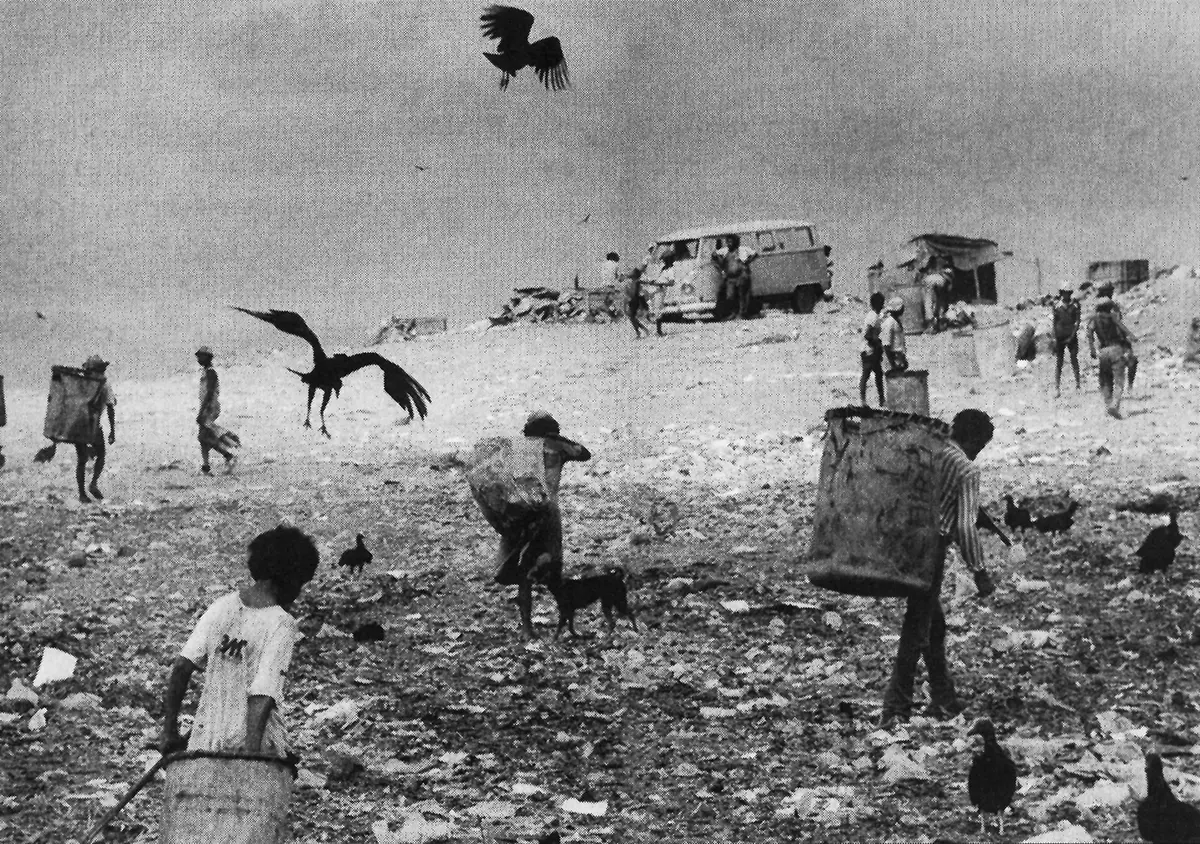
S.S: Every photographer has their own aesthetics, and for this reason, you cannot, for example, say that Latin American photography is a "copy" of what the Europeans have done. For a Latin American photographer, Latin reality continues to be an inevitable point of departure and reference that necessarily will appear in his work. The technique is something different. Photography was partially discovered almost simultaneously in various countries, in England, France, Brazil... I like to see it as a kind of robot, which replaces the hand, with the help of chemistry and physics. But a robot is or should be, in the service of man, of all men, a symbol of a moment of fruition within a multi-faceted and ongoing historical process. Like the robot, photography should belong to everyone. In this sense, photography has a great advantage, in that the true original is the negative, which can be reproduced without any loss in the quality of the product. When we published the book on Terra in April, we presented 125 simultaneous exhibitions in Brazil —in universities, churches, and other places. Only photography offers such a luxury. But it is a luxury that is closely related to the new realities of the world. At the beginning of the century, for example, Europeans made up 18 percent of the world's population. Nowadays, the figure is just over 4 percent, and Europeans no longer have the right to think in terms of frontiers. Indeed, frontiers of all kinds are now being dismantled ... both for material goods as well as in the communications field. At the same time, there are millions of people on the move throughout the world, in a process of historical upheaval which is changing the face of the earth.
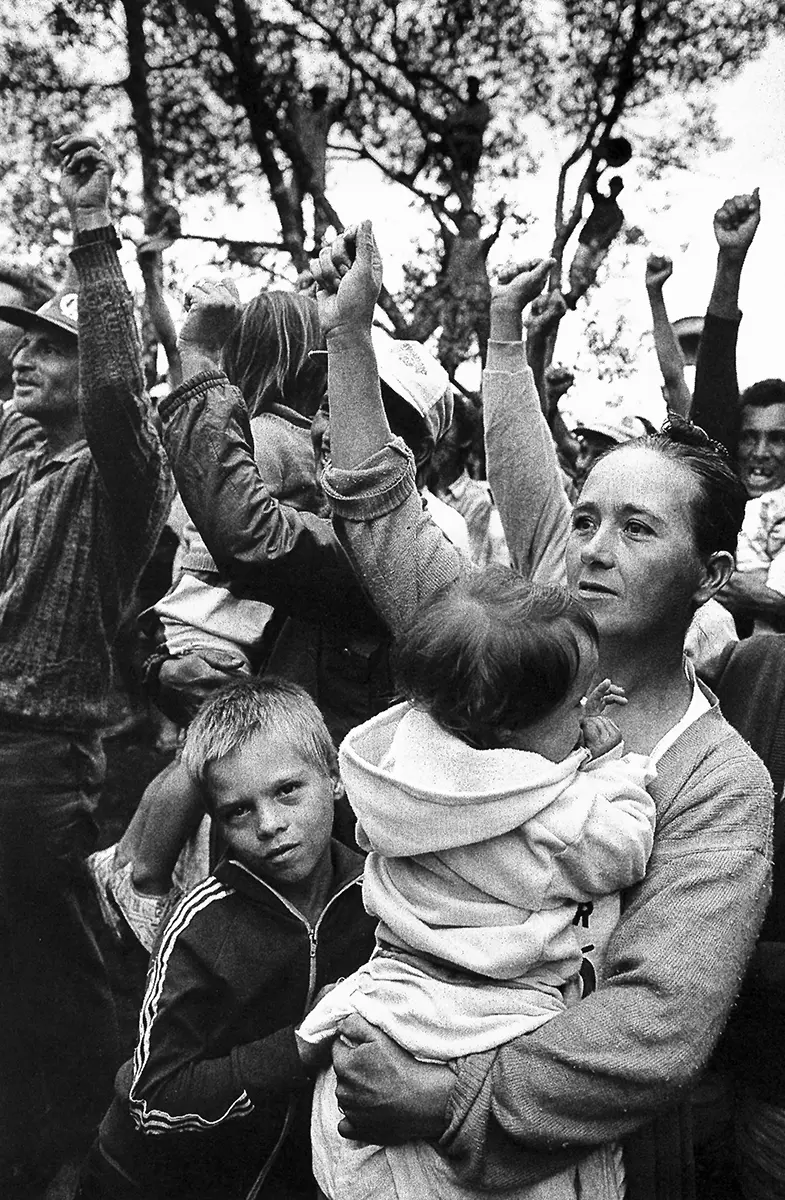
B.J.M: Looking at your pictures, 1 always think about the moment just before and just after the click of the lens. Something was happening just before, and something else will happen afterward. Your figures almost always look directly at the viewer. Can we speak of a mise en scène here?
S.S: I don't think so. At least, not in the sense in which it can be applied to painting, where the artist might use sketches or even photographs to compose his work, or film, where for reasons of logistics and costs, everything has to be literally a mise en scène. What photojournalism requires is something different, a density of experience which comes from the photographer's integration into the context of what he is documenting. I never "steal" photographs, and I believe that such pictures lack power and argument. All the figures in my photographs know, in the full sense of the work, what I am doing and participate of their own free will. But this requires time and effort. Many of these people live in communities, which means that I have to explain in detail to many different people what I want to do, because there is a true sense of democracy in many of these cultures, and everyone has the right to express their opinion. Once, during the preparation of my book Other Americas, I had a long conversation with some members of an indigenous group along the frontier with Ecuador. We spoke about their tiny river, which they called "the snake." To help them understand where I came from, I explained that this small river was going to flow into a bigger river, which would then join another river until it reached the Amazon, before disappearing into the Atlantic. For Brazilians, the Atlantic is a friendly ocean, unlike the Pacific, which for us has a bad reputation associated with storms and shipwrecks. But for this indigenous group, it was the opposite, and they really became sad when they learned that their little river was destined for such a fate. Such passionate conversations are always part of my photographs, just like the periods during which I live with the communities, which may last a month or more. In comparison with these enriching conversations and experiences, I sometimes think that my photographs fall short of the mark. And so, to return to your question, I do not think that there is a mise en scène in my photographs. But I am convinced that their content is firmly rooted in experience on both sides, theirs and mine and that such experience is essential to any real image.
NOTE FROM THE EDITOR
Spain awarded Sebastião Salgado the Prince of Asturias Art Prize, in 1998. He was chosen among 53 other candidacies from 22 countries. The jury's act consigned that he had been awarded for “portraying the human condition and evidencing inequity in today's world, as well as for his personal, profound, poetic and high formal quality plastic language.
BRIAN J. MALLET
Correspondent for ArtNexus in Switzerland, Brian J. Mallet writes for a number of publications in Europe and Latin America.