The exhibition “Torres-García” toured in 1991 at the Museo Nacional Centro de Arte Sofia, in Madrid; and the IVAM Center Julio González in Valencia. The exhibition “The School of the South: The Torres García Workshop and its Legacy” began its roaming in the Reina Sofía. It was then exhibited at the Archer M. Huntington Art Gallery, Austin, Texas. It is currently exhibited at the Museo de Monterrey, México. Then he will be at the Art Museum of the Americas, Washington, The Bronx Museum of the Arts, New York and at the Rufino Tamayo Museum in Mexico.
Editor's Note.
ALVARO MEDINA
Joaquín Torres-García is a paradox: he is one of the Latin American painters who spent the most time in Europe and the only one who seriously proposed “to forget about Europe.” But he was never a partisan of nationalist art and never practiced such art. Unlike the Mexican muralists, who in a sense were his contemporaries, the Uruguayan painter was the champion of universalism a outrance and relentlessly criticized nativism. He criticized it and at the same time theorized and practiced in his own manner, and imposed among his disciples in his own studio, an art based on the geometric principles of architecture, sculpture, painting, ceramics, goldwork, and the textiles of the aboriginal peoples of America. For Torres-García, geometry had to dominate both art and life. With such an idea in mind, he wrote in 1936: “in this continent of ours, there emerged, many centuries ago, a perfect and astonishing culture, based on such principles.” This fact, in his view, was a good reason for not “looking further afield for what we possess here at hand”(l).
The years have passed and shown that Torres-García was right, the only master of masters to have emerged from Latin America. He was proved right, not only in the terms of theory but in those of having generated a noteworthy and long artistic legacy. Thanks to his teaching, sculptors and painters of the first order received training and guidance in the Torres-García Workshop - figures such as Gonzalo Fonseca, Julio Alpuy, Jose Gurvich, Francisco Matto, Manuel Pailos, Horacio Torres and Augusto Torres. If this list might appear extensive, it should be remembered that his influence was not limited to just the members of his studio. To have known Torres-García and his work allowed Carmelo Arden Quin and Tomas Maldonado to take up positions which subsequently led to the creation in Buenos Aires of the Modi and Arte Concreto Invent ion groups. To all this - which is a lot - we must add his theoretical writings which he collected in fifteen or so books, a total of more than two thousand pages. Thpy have been used with profit by such different artists as Paternosto, Eduardo Ramirez Villamizar and Marcelo Bonevardi.
If all this is something which we already know in a general way, the same cannot be said for the mulititude of details which were revealed by the two exhibitions which opened at the Queen Sofia Art Center in Madrid at the end of June. I am referring to the retrospective show which was accompanied by a collective exhibition entitled The Southern School. The latter confirmed that the legacy of the master of masters continues to live and that it is itself being continued, more than four decades after his death in Montevideo, by young artists who in some cases are under the age of thirty. They continue his tradition without copying it, since there is no Torres-García “manner” but only his “teaching.” To understand it, I should like first to analyze what was made clear by the retrospective itself; I shall then examine some of the work of his disciples, both direct descendants and “adoptive” sons.
Torres Garda before Constructivism
Torres-García is one of the best studied Latin American painters at the moment. In comparison, the texts written on Tamayo appear a disappointing collection of generalities and commonplaces, with one or two exceptions. Even so, the best interpreters of the Uruguayan artist sometimes seem to be confused by his irregular trajectory, which in graphic terms could be compared to a spiral, creating not a curve but a capricious and coherent zigzag line, rotating around a central point but becoming more distant from it with each turn.
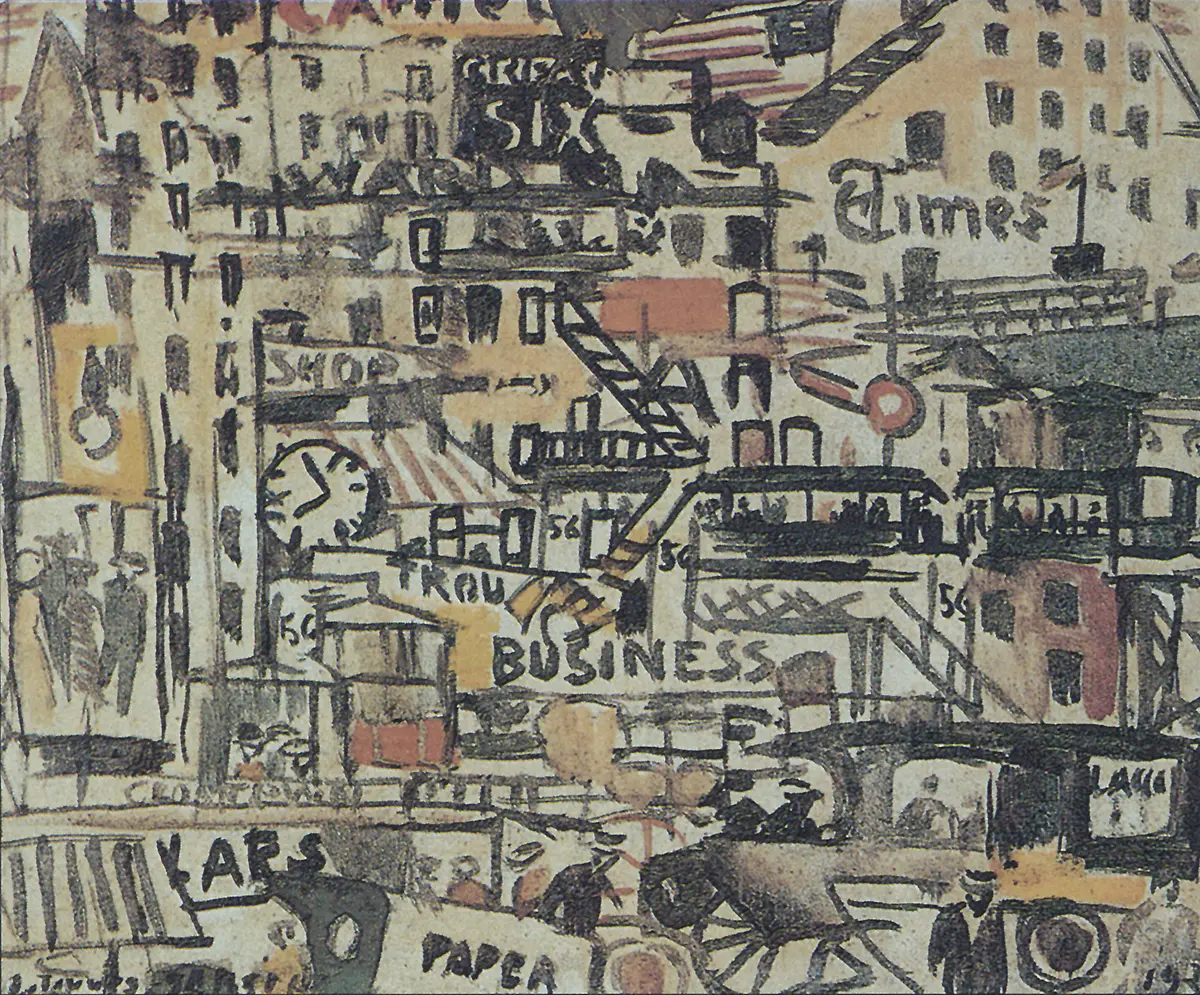
Before embarking for the first time on the basic principles of his language, something which did not occur until 1928, when he was 54 years old, the painter experimented with various tendencies. I shall examine only two: the neo-classical, which developed under the influence of Puvis de Chavannes, and the vibrationist, of a decidedly modem air. The first began in 1904, and reached its point of culmination with the five murals now destroyed which he painted for the San Jorge Hall of the Diputacion in Barcelona, on which he worked from 1913 to 1917. The second began with the drawings of street scenes which he published in 1917, in the Catalan review Un Enemic del Poble.
Torres-García believed that “art should be from a land and an epoch”(2). In Barcelona, “since I was in a land with a well defined tradition, all I had to do was to go towards it,” he wrote in his Historia de mi vida(3). He went towards this tradition, it should be noted, with a neo-classical sensitivity. Was he mistaken? Not at all. Torrres Garcia identified with the Mediterranean tradition which gave birth to Greece, prolonged Rome, suffocated Christianiy and led to the Italian Renaissance. In the process he studied Pierre Puvis de Chavannes in the Paris Pantheon and assimilated the principles of his art. Of course, he did not see an over-sweet and complacent French painter, since his archaic images illustrated with undeniable rigor a lofty tradition. That was enough. An idealist like Torres-García could do the same, except that he was not able to devote himself entirely to something in which Puvis de Chavannes only scratched the surface.
The basis was Picasso, thus proving that the proposal was both valid and topical. This happened many years later, with the Indian ink drawings inspired by Greek pottery. By suppressing color, Picasso avoided facile decorative effects, proceeding like the Greek Eufronius in capturing the essential: the hedonism of a culture which the Spanish painter resolved to exalt with a classical and not neo-classical approach. Picasso thus became part of a centuries-old tradition, using a language which was also centuries-old and becoming a link in a chain which will be continued in the futureby other artists of genius. He became a major link, it must be said, without ever ceasing for one moment to be an artist of his time.
The recognition of Picasso’s success helps us to understand the failure of Torres-García. Both understood the modernity in the way it which it must be understood, i.e. a vital and continuous renovation of the legacy which each generation receives from those who in the past were modem. In March of 1917, Torres-García published an article in which he emphasized the need which artists had to be of the present and to remain always up to date if they were to avoid routine (4). As was to be expected, the theoretical proposal helped shape the thematic and plastic conception of the San Jorge Hall. In the first murals, the painter depicted Gaeco-Roman antiquity. In the last work, he presented an allegory of contemporary life. A sketch of this mural has been preserved. It shows an airplane with canvas wings, a cargo train, factories and various motor vehicles, but above all there is an order which, without being constructivist, has something to do with that of the painter going out to the street and capturing the rhythm of modem urban life.
Under the influence of Puvis de Chavannes, Torres-García set himself the task of reinterpreting the culture of mediterranean Europe. In 1917, in adesire “to renovate himself completely ”(5), his concept of “epoch” moved from a scale of millenia to one of seconds and that of “land” ceased to be a matter of vast expanse to become reduced to a small street scene. Torres-García drew what “seemed to be interesting to him: the fragment of an
object, a patch of land and a sky, the angle of a door, the front of a house (...) all within a great modem dynamism”(6). This fragmentation was given a name in September 1917, when he met Rafael Barradas, a compatriot of his. Barradas had been in Italy and had devised the vibrationist variant of futurism. Nothing was more appropriate to vibrationism than the street scenes which were interesting Torres-García, bustling scenes full of the frenzy of commerce in the great citz, not the Sunday afternoon calm and gallant atmosphere which Renoir captured in his pictures of Parisian boulevards.
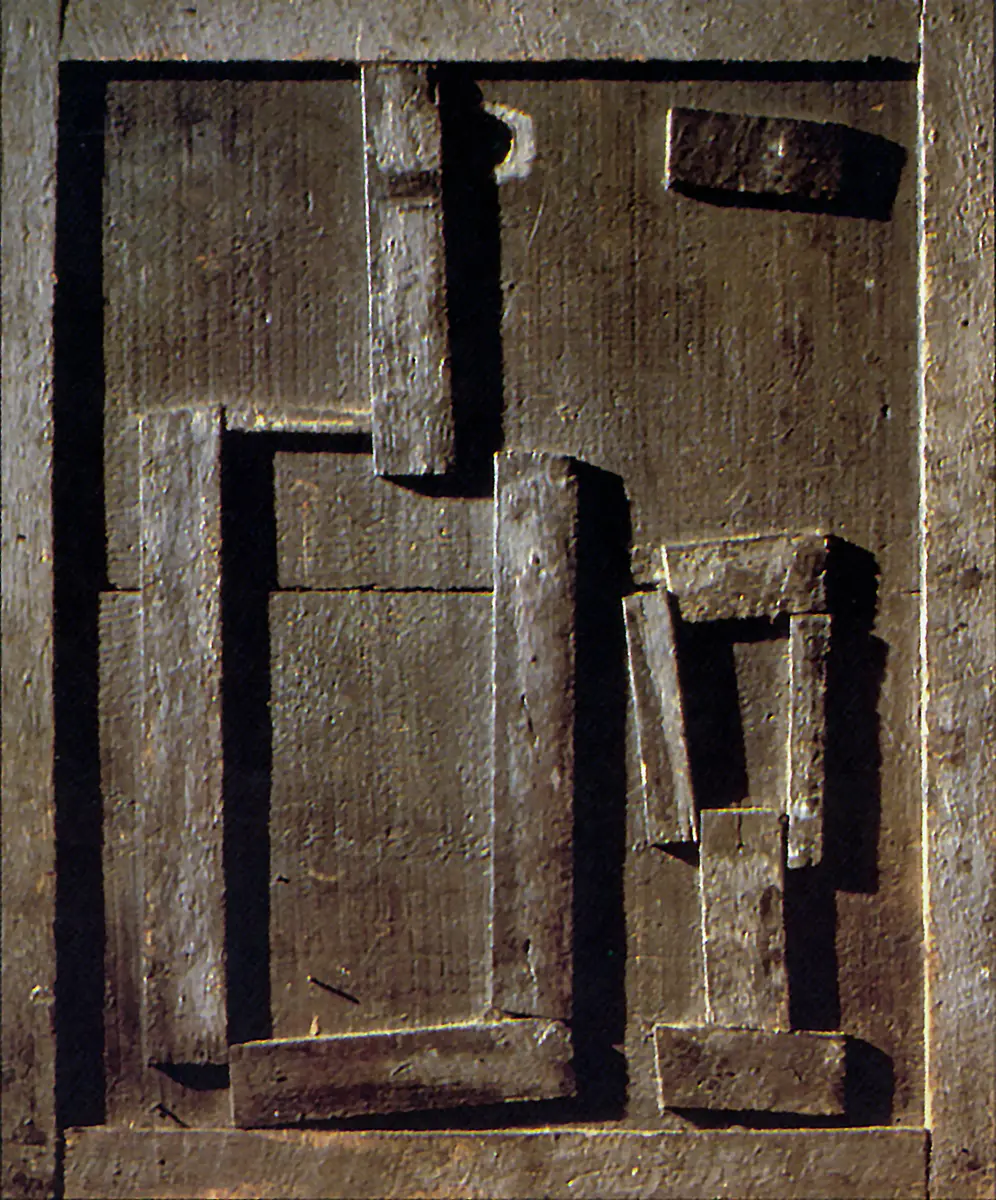
The change in the scale of space and time produced its best fruits in New York between 1920 and 1922. Torres-García did some good painting at that time and gave proof of his creative genius. This was the most revealing aspect of the show at Madrid, and which was not really reflected in the catalogue. The show presented dozens and dozens of notes from the New York Album, in Indian ink and water-colors. Although these notes were done on the small format pages of a notebook, they are major works in which the artist tried, as he himself said, to capture a “vision which was both expressionist and geometrical at the same time,” giving a “real impression” which reflects a “true synthesism”(7). His eye turned to anything that was design, architecture, graphic or decoration expression. He was especially attracted to signs, whether illuminated or not.
It must be said that Torres-García did these drawings in the busy streets of Manhattan and in 29th Street, where he lived for some time. Later, when he moved to a quieter area, he stopped painting because what he saw seemed trite to him(8). He was so right - in both his art and his themes - that his New York drawings already heralded the work of Stuart Davis and certain features of Pop art. Others give a foretaste, in terms of rhythm, of what Mondrian painted in his Broadway Boogie Woogie. In the way in which they abstract and structure the image, others make us think of certain periods in the work of Jasper Johns. In the way in which he fragments a detail, then magnifies it and places it in the foreground, Torres-García is a forerunner of hyperrealism with its fragmentation and superimpostion of images in an interplay of translucent surfaces.
It has been said that the work of Marcel Duchamp contains the seeds of many later movements and trends. Without any exaggeration it can be said that this is also true of Torres-García. Only the fate of the one and the other has been different. As Llorens has said, Torres-García “arrived too soon in New York and too late in Paris”(9). He lived two years in Manhattan, after which, without knowing that he was the supreme father of the iconography of the modem city, he went to Europe and to the neo- classicism of Puvis de Chavannes.
The non-European traditions
Until his death in 1949, Torres-García was an artist who never stopped experimenting and investigating. Every three or four years, his art ran the risks of presenting something new, usually successfully, sometimes less so. The 1926 reaction is the most opaque moment in his career filled with surprises. If that career was almost always a zig-zag one, on not rare occasions he hesitated and the displacement resulted in a pendulum movement. That of 1926, for example, was a return to neo-classicism which in the end proved to be of no use. That of 1928, on the other hand, reconciled him with the concept of the avant-garde. In that year he painted Dockland District, and his work acquired its own accent. The composition, governed by geometry, suggested the grid which was finally to characterize his paintings.
The first works in which Torres-García consciously used the grid to separate and enhance each motif date from 1917. They show street scenes in Barcelona, divided into rectangles, squares and trapezia. The image contained in each segment may be represented from afar or be a detail seen up close, at times almost abstract and othertimes clearly figurative. That dated 6th August 1917 is one in which the grid is determined only by horizontal and vertical lines(lO). Looking at the drawing, one could say that everything is there, that the painter has achieved his goal. However, between the hesitant constructivism of 1917 and the mature work of the 1930s, there are differences, the main one being the fact that the painter no longer structured his plastic- thematic motifs in the same way. In 1917 he proceeded like a realist and in 1930 like a creator of signs. From the point of view of the general composition, vibrationism had distracted him from his purpose. On the other hand, it taught him to be synthetic as regards the use of detail. But synthesism alone did not satisfy the ideals of his sensibility which looked at artistic creation in terms of tradition.
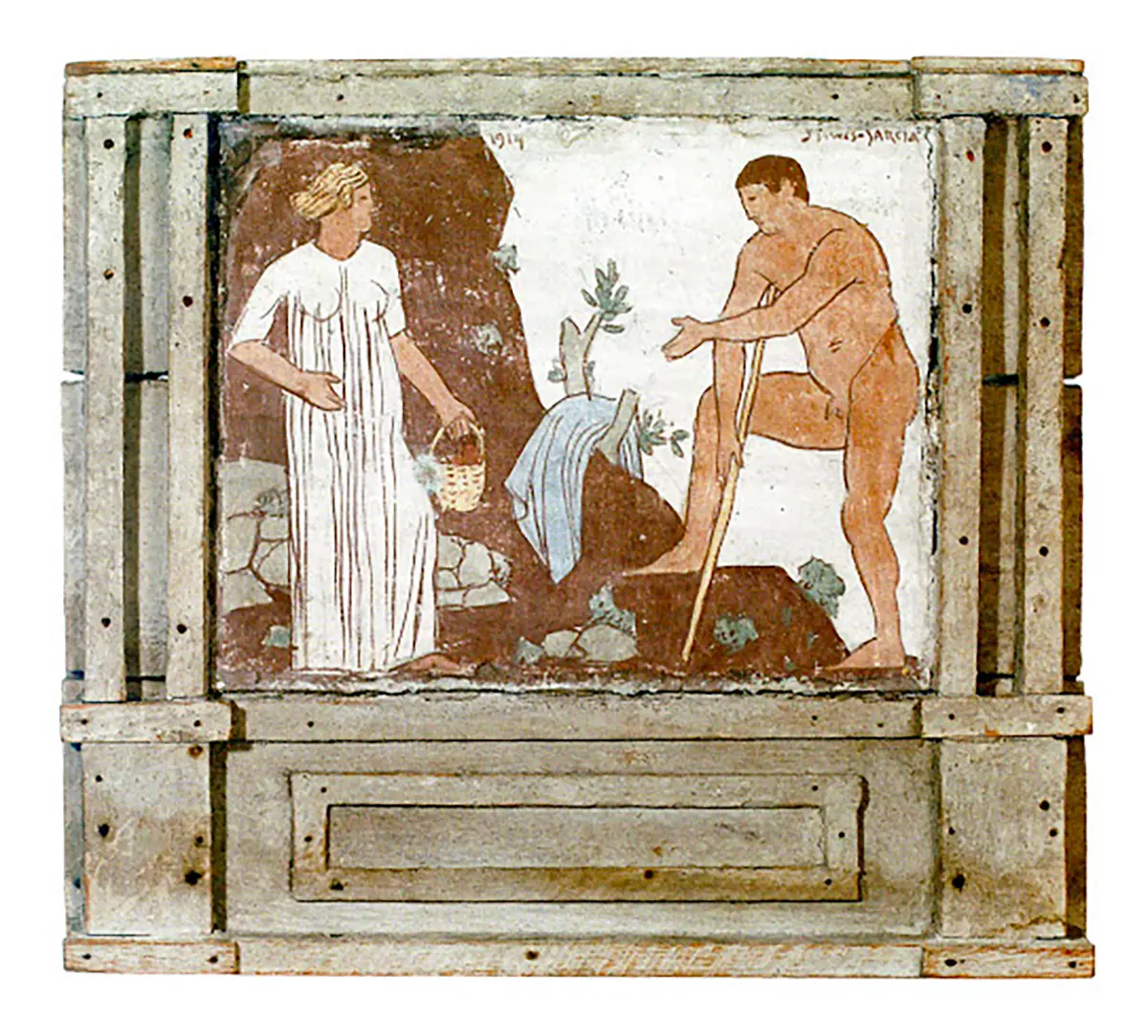
In the search for identity, Torres-García became interested in the art of primitive peoples. This is made clear in many of his works, both abstract and figurative. A good many are small constructions in wood, the product of his experience with toys made of moving elements which could be dismantled which he tried to mass produce in the United States, masterpieces of Torres-García constructivism. In Bouteille et Verve (1927), five rough laths of wood form the bottle and five others the glass. The real subject is not the motif but its structure, the structure which for many years had been endeavouring to emerge as decisive in the configuration of language. Look at Architecture with classic forms, from 1914. It is a piece of cardboard painted with a Mediterranean scene typical of the period in question, which the artist placed on a wooden support which heralds the architectural wall. In an assemblage like this, prepared to determine the scale for a mural study, what is noteworthy is the fact that the whole is endowed with its own life. It is, therefore, something more than a maquette for the visualization of a project. It is an object which combines planes, materials, tonalities and textures to express itself both structurally and plastically.
Of those of his generation, Torres-García was perhaps the last to show interest for the arts of Oceania and Black Africa. Although coming late, this interest facilitated the transition towards Indo-American primitivism which he was able to appreciate and study between May and June 1928, not in 1927, as the catalogue states, on the occasion of the exhibition entitled Les arts anciens de I’Amerique. Favorably impressed, the Uruguayan master thus tried something different. In 1934, in his Historia de mi vida, he explained what happened in the third person: “Already by the middle of 1928 something else was beginning. It concerned the architectural, constructive sense of his painting. A disassociation occurred between drawing and color, which became like two separate things”(ll). This is, in my view, a more important event than the fact that he made the acquaintance, at the end of the same year, of Theo van Doesburg.
However, the Americanist lesson was not assimilated at once. Torres-García was an ecclectic until 1932. In Abstract Boat (1928) and Mask with Pipe (1922), there is an obvious African influence.
In Port gris au bateau rose (1928) and Street Scene (1930) we have Torres-García "tout court". In Construction avec triangle (1929) and Composition (1932) he is a good neo-plasticist. In Negresse et elephant (1928) and The Spanish Woman of the same year he is expressionist; in the first case on the basis of the African tradition, in the second, the Iberic tradition of Velasquez. Finally, there is Objet plastique (1931) and Structure with Assembled Forms (1933), with the deliberate objective of being Indo-American. But it is not the latter proposal, which was expressed in such an obvious manner, what really interested him. Torres-García experimented in various directions in search of something very profound, something which in the end he was to achieve in a very simple manner. In 1942 he explained: “The geometric principle had made its appearance and this was already a reintegration of arcaic culture”(12).
It must be pointed out that Torres-García was referring to a geometric principle that was not that of van Doesburg, Vanton- gerloo and Mondrian. Although the Uruguayan exhibited with the neoplasticists and established the Cercle et Carre journal with Michel Seuphor, in the end he moved away from all of them. He did not feel attracted by the pure abstraction which his colleagues proposed, far as it was from the archaic language which interested him, but he shared the geometrical principles which served as its basis and justification. Torres-García wanted something else: to recuperate the sense of the work of art with a view to making it univeral and cosmic. He did not tire of telling his disciples in Montevideo that Indo-American art was cosmic and that it also encompassed a rich and admirable tradition. A different tradition. His and theirs. Determined to use his talent to help re-establish the continuity of this tradition, which was brutally interrupted by the invaders on horseback in the sixteenth century, in 1934 he set out for Uruguay, which he had left in 1891 at the age of 17. Torres-García knew that one of the most important contributions of the culture of his time lay in the real possibility of being able to choose between the traditions of the various cultural areas of the world. When the European artists who travelled to the Americas in the eighteenth and nineteenth centuries, at best they understood Ibero-American culture, although they could not integrate it into their own. Paul Gauguin went to Tahiti and not only understood but accepted a way of looking at things which was different from his own, and which brought a breath of fresh air into French painting.
The incorporation of other cultures is an intellectual option which requires a high degree of empathy, and empathy means the capacity to penetrate fully into what the other feels and thinks, something from a different tradition. You do not need to be black to develop a language similar to the carvings to be found in Togo and Cote d’Ivoire; you do not need to be a priest to capture in art the disquieting magic of a voodoo ceremony, and you do not necessarily have to be a Catholic to sculpt or paint a magnificent Christ. If you are able to leap over the barriers which separate men from one another, the adventures of the imagination are always possible. This is demonstrated in the most radical manner by Vlaminck, Derain and Picasso when they turned their eyes to the art of primitive peoples.
Thus once he gave himself with fervor to the “recuperation of the pre-Colombian context,” Torres-García did not commit the act of ‘ ‘regression’ ’ of which Mari Carmen Ramirez accused him in an otherwise well documented and intelligent study(13). It was not an act of regression, just as that of Henry Moore in seeking inspiration in the Chacmool of the Toltecs was not an act of regression. We must not forget that the Italian Renaissance was also a return to the past. The Renaissance painter, sculptor and architect did not repeat what had already been achieved by the Greeks and Romans. However, they re-established with new techniques and new forms of language a tradtion which had been interrupted. The modernity of the twentieth century, at least in the way in which it has been expressed in the visual arts, has been in its turn an expression of rejection of the Renaissance and a reconciliation with the pre-Renaissance view. In each case a tradition had been interrupted and an old tradition re-appeared in a rejuvenated form. Looked at in terms of centuries, rather than years, this is the natural process of all great cultures.
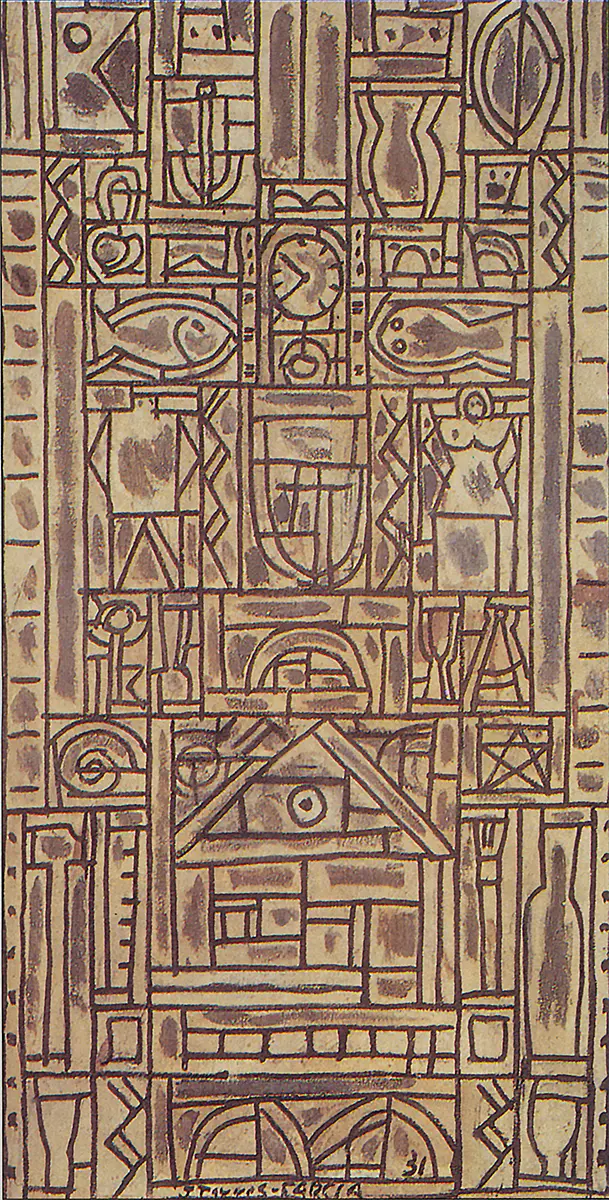
When he arrived in Montevideo, Torres-García continued, but was not “influenced” by Indo-American art. His knowledge of the art of primitive peoples had enabled him to progress from the landscape of Dockland District, mentioned above, to the picto- graphic solution contained set forth in Constructive with with superimposed rods (1930), a pictography which presented expressionist features in Port gris au bateau rose, also mentioned above, and the cubist characteristics of Rue de I’epicerie (1929). Torres-García could have developed within any of these tendencies. This was not the case, however. Finally, he took the principles of the ideogram and used them to synthesize motifs which he multiplied and displayed like the anonymous artist who sculpted the reliefs of the Sun Gate in Tiahuanaco. The reliefs of the Sun Gate show a central figure (Viracocha) and two groups of serial elements inscribed in forty eight squares, twenty four on each side. If we change the predominantly horizontal arrangement of the reliefs and place them vertically around Viracocha, there emerges a stela very similar to the Horizontal Symmetrical Composition in Black and White (1931). Except that Torres-García inserted his signs in rectangles of vary varied proportions and only occasionally in the same picture painted the two same signs.
In the paintings of these years, the symmetry is limited to the grid traced by the “abrupt and audacious hand” of the painter, to quote Llorens(14). A symmetry of structure, not of signs, because man had to be balanced by woman, the compass by the key, the shell by the star, etc. The relative interest which Torres-García had in surrealism enabled him to associate motifs freely; but respecting the semantic rules which he defined. Although the form of a glass could suggest the silhouette of a bell, it is clear that they have nothing in common and so they do not balance one another. The glass, according to Torres-García, would be balanced by a bottle. Since he believed only in constructive art, it is logical that the brush (painting) was balanced by the ruler (the measure). And since he aspired to a cosmic order, the shell from the sea balanced with the star in the sky. Although his painting cannot be read, interpreted and transformed into a discourse based on anecdotes, motivations of a personal and affective kind do appear here and there. In a very suggestive essay, Margit Rowell believes that he “wanted to introduce a random element into pychic life which could not be controlled and to transcribe the images of memory”(15). There is a series of works, including the Universal Symmetrical Composition in Black and White, which are like the facade of a church. With the neo-classical pediment which often appears in these works, they make me think of the drawing which Torres-García did of the church at Sarria, a district in Barcelona which
he used to live. The coldness of the method does not neutralize the vibrations of the artist who, in each work, proceeded with the sensibility of a a poet.
From the AAC to the TTG
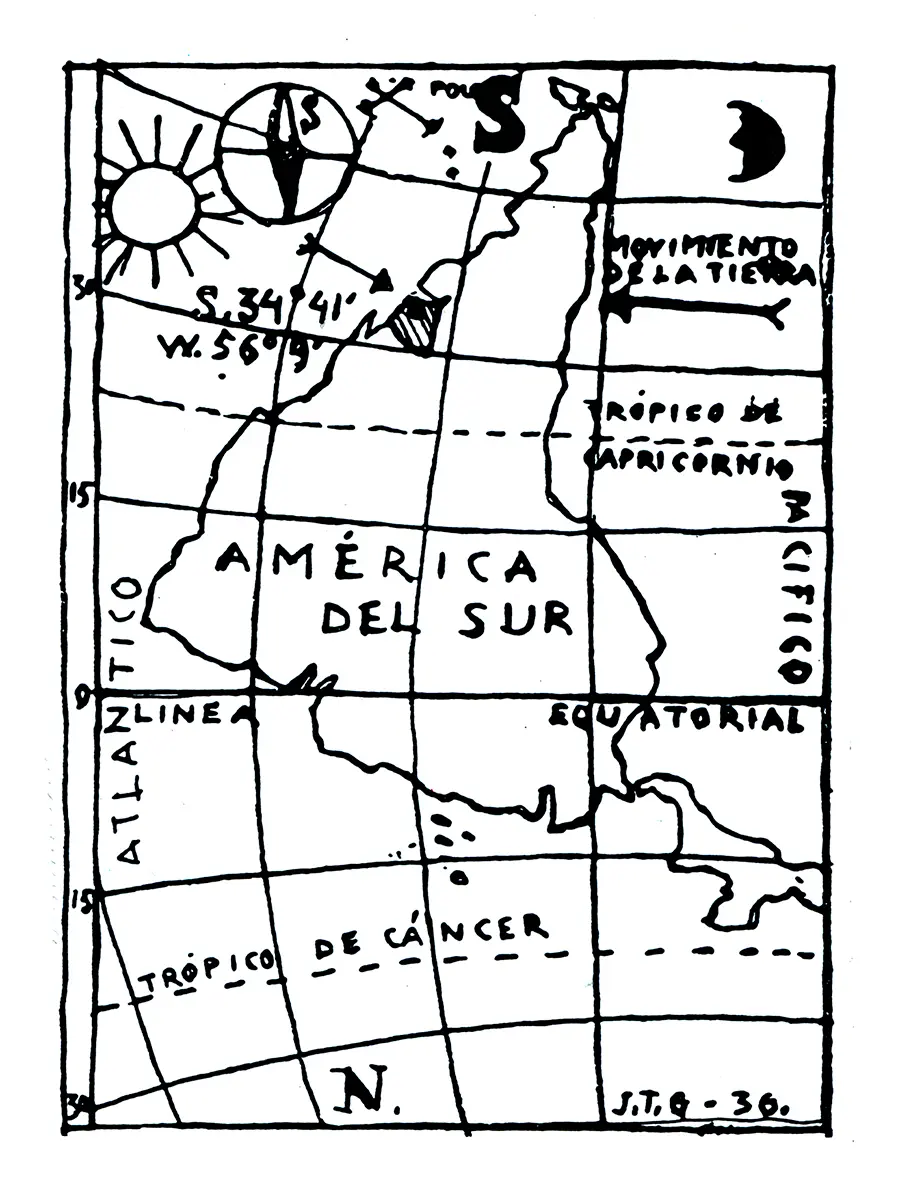
When he arrived in Uruguay, Torres-García was welcomed like a hero. He found a country which was familiar with modem art. Not without causing controversy and dispute, three good painters had preceded him: Figari, Cuneo and Barradas. Torres-García was sixty, although he had the youthful strength of the avant-garde artists. Like them, he tended to be intransigent and spared no efforts to impose his artistic credo. To this end he established the Association of Constructive Art (AAC). According to Cecilia Buzio de Torres, Torres-García organized a retrospective of his work, gave lectures in the history of art, did radio broadcasts, published articles in the press, founded the Circulo y Cuadrado journal, organized collective exhibitions which included works by van Doesburg, Vantongerloo and Julio Gonzalez, proposed that we “forget about Europe” and introduced the revolutionary concept that “our North” should be the South, subsequently expressed in the famous inverted map of South America, in which the S replaced the N of North.
In addition, as Cecilia Buzio de Torres points out, the artist “reflected on prehistoric art, condemned imitative figurative art and described Renaissance painting as decadent’’(17). Logically his theses were not understood by all those interested in the subject and were not always shared by those who did understand them. In practice, those artists who were already trained and had established their own world, such as Cuneo, refused to practice constructivism in their paintings. Torres-García then*wrote his bitter and beautiful book on the nameless city, a book against Montevideo which he saw as hostile to his projects. He then changed his strategy and decided to work with young artists. And so, in 1943, he founded his Torres-García Workshop (TTG).
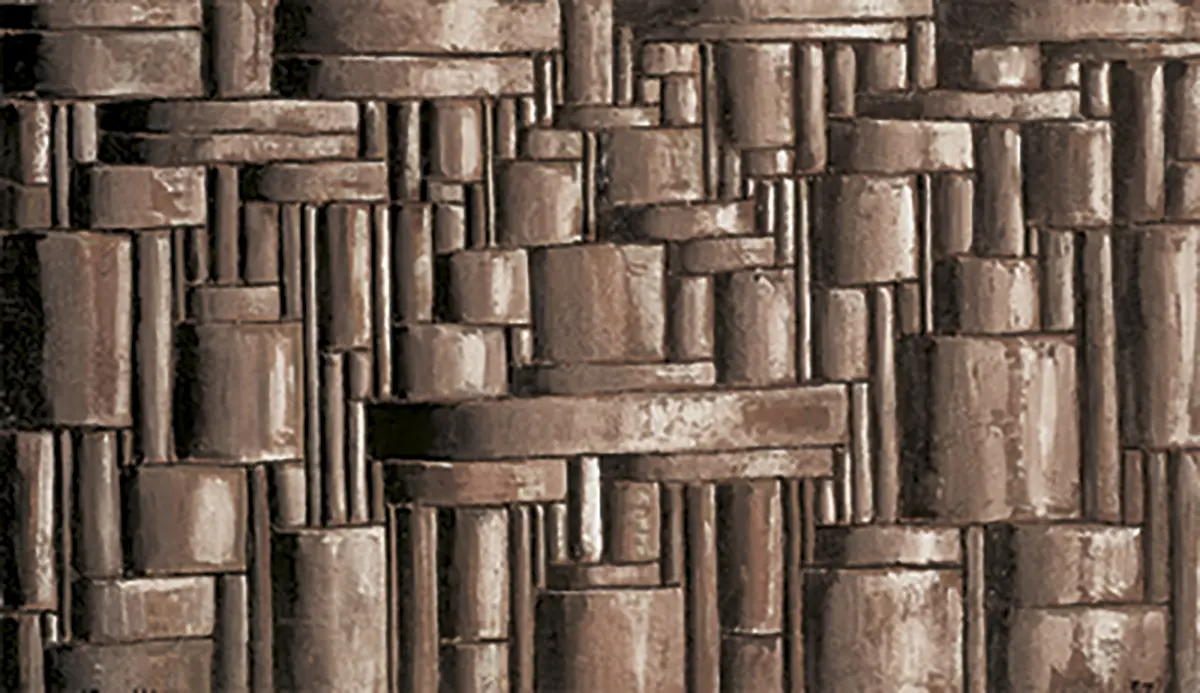
He had already proposed ideas such as the following: “the artist too must take possession of the land. We must therefore be artists of the Americas”(18). To illustrate and prove the vitality of his proposal, which unlike that of the Mexicans did not go in just direction, he arrived at total abstraction in works such as Tubular Structure (1937), inspired in the lithic walls of Inca architecture. As regards his subsequent development, the zig zag movement continued. The Madrid exhibition did not include the series of figures of expressionist finish done between 1939 and 1940. The exclusion was, I believe, correct since it facilitated the transition between the exhibition of the master and that of his followers.
It also helped us to understand why the TTG is an almost mythical institution in the history of Latin American art. By its pedagogical orientation, the TTG was not an academy of arts which sought to teach the techniques of a craft but a center of artistic guidance. What counted were ideas and concepts, not the finish. As was to be expected, these ideas and concepts could be only those of Torres-García. This resulted, even for many years after his death, in a period of mimetism, but a deliberate mimetism which renounced individualistic expression and subjective art. For the members of the Workshop, no other teaching but that of the master was valid. Different and very original things could be said within constructivism, since constructivism was the universal and masterly rule of the great ancient civilizations. Like the Bauhaus school of design, the TTG established principles and required their application. Those who disagreed could simply leave.
I owe this information to Jose Gurvich, whom I met and came to know closely in 1973, one year before his death. No confusion is possible between the mimetism of the followers of Torres-García and the inconscious mimetism of the artist who believes himself to be original when in fact he is following a fashionable trend. The mimetism of the constructivist group in Uruguay was part of a strategy devised to achieve a mission of almost apocalyptic dimension. The results were sometimes brilliant, as in the case of a lost sculpture by Amalia Nieto, from 1936, consisting of a wall of adobe blocks which could be compared with the paintings of Torres Garfa inspired by the Inca walls. Others were less impressive, because they lacked creative imagination and proposed only matters of routine and mannerism.
I said at the beginning that there was a Torres-García lesson, but not a Torres-García manner. I now speak of mannerism. However, in all creative activity which is out of the ordinary, practice is fraught with contradictions. The TTG was not a free school. On the contrary, there was a period when the methods were conventional and sectarian. Even so, it helped to create the conditions to allow Latin American art to present an endogenous continuity. The artistic impulse was not to be given by Europe, but to come from the land itself. Thjis was a legitimate aspiration, although it did not take into account, in its application, the fact that since the Renaissance it has been impossible for an artist to repeat what has been done by others and to present as his own what in fact he has received from the past. In other words, one can start from the point which the previous generation reached, but one cannot take this point of departure as one’s goal. When Jose Gurvich closed the TTG in 1967, the best disciples of the master had already distanced themselves from the rigid but stimulating Torres-García rule and had invented their own languages. They achieved their goal. But, just as the Romance languages preserve the imprint of Latin from which they spring, so too the most outstanding members of the TTG show their common artistic heritage. This gives them a group unity and the status of a movement. What would happen to them today if they abandoned what they had learnt in the TTG and started to introduce into Uruguay action painting, Pop art or arte povera?
The inevitable diaspora of the members of the TTG has enriched the legacy of the master. It has also helped to confirm once again that originality does not come without its price. Once he had returned to his homeland, Torres-García did not enjoy the official favors of the Uruguayan governments. In the national salons the prizes were manipulated, so that finally the members of the TTG had to cease participating in these events. Guido Castillo, a leading art critic, could not continue to publish his articles in Marcha because in a heated debate he had tried to defend Torres-García and attack his oponents in his own name. In 1975, the museum in Montevideo which housed his work was obliged to close its premises in the State building which it was using. A few years ago, in an arrogant and gross manner, a high official of a museum prevented me from making photocopies of some two hundred articles dealing with Torres-García, published in various Uruguayan newspapers and journals in the 1930s and 1940s.
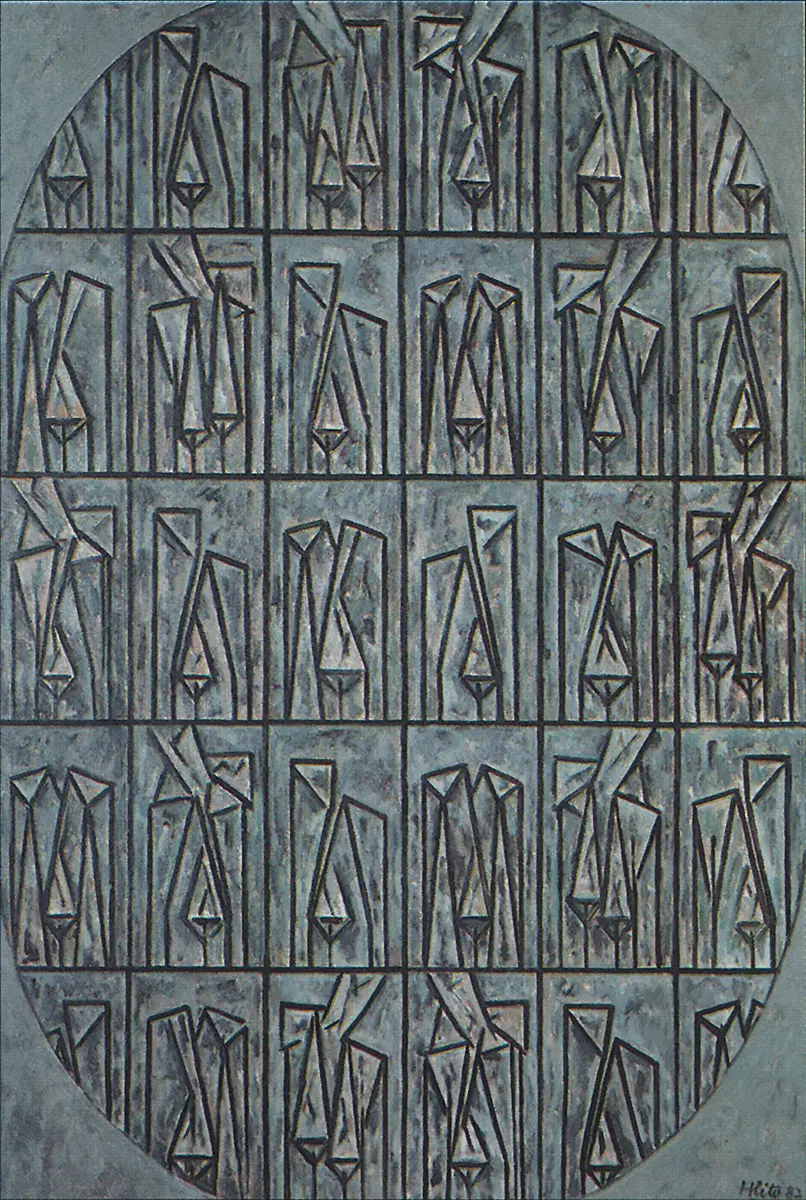
If we now turn to the history of his influence, there is the example of the first issue of the journal Arturo, founded in Buenos Aires in 1943, which had to be printed cladestinely on the presses used by the opponents of the dictator who happened to be in power. Arturo gave rise to the subsequent creation of the Madf and Arte Concreto Invention groups, the first led by Arden Quin and the second by Tomas Maldonado, two of the leading figures of Latin American art. However, of the major international exhibitions devoted to latin American art, only the Ibero-American Art show of 1989-1990, which was seen in London, Stockholm, and Madrid, includede these two movements. Is it not strange that they were never included before? By no means. As is customary in the case of Latin American art, the truly authentic creators are always overlooked in preference to the washed out followers of De Kooning of Rauschenberg, the erstwhile equivalents of the current imitators of Cucchi, Beuys, On Kawara and Polke. The southern School has at last made it clear that to be Indo-American is another way of being international. Bonevardi knew this as soon as he discovered the work of Torres-García and began to work with a different kind of sensibility. Alfredo Hlito entered the Torres-García orbit when he lived in Mexico and became impregnated with pre-Colombian culture. In the case of Pater- nosto, his painting entered a new phase when he visited Cuzco and Machu Picchu, an experience which he has described in a magnificent book entitled Piedra abstracta. (Two Colombian sculptors not included in the show, which was limited to artists from the River Plate, had a similar experience: Eduardo Ramirez Villamizar and Edgar Negret). The case of Alejandro Puente is extremely eloquent. He left his brushes and began to experiment with conceptual art and in 1970 participated in a major collective exhibition entitled Information which was presented by MOMA in New York. This could have been the starting point of his development within conceptualism, when painting was said to be dead, but the following year, he returned to his palette and began to do abstract signs of clearly pre-Colombian inspiration.
The influence of Torres-García has been of one of admirable diversity and plurality. Mari Carmen Ramirez says that his work and theory influenced the North American painters Adolph Gottlieb and Barnet Newman, and especially the sculptor Louise Nevelson (19). These three artists are very different from one another, as are, in the final analysis, Fonseca, Alpuy, Gurvich, Matto, Pailos, and Horacio Torres.
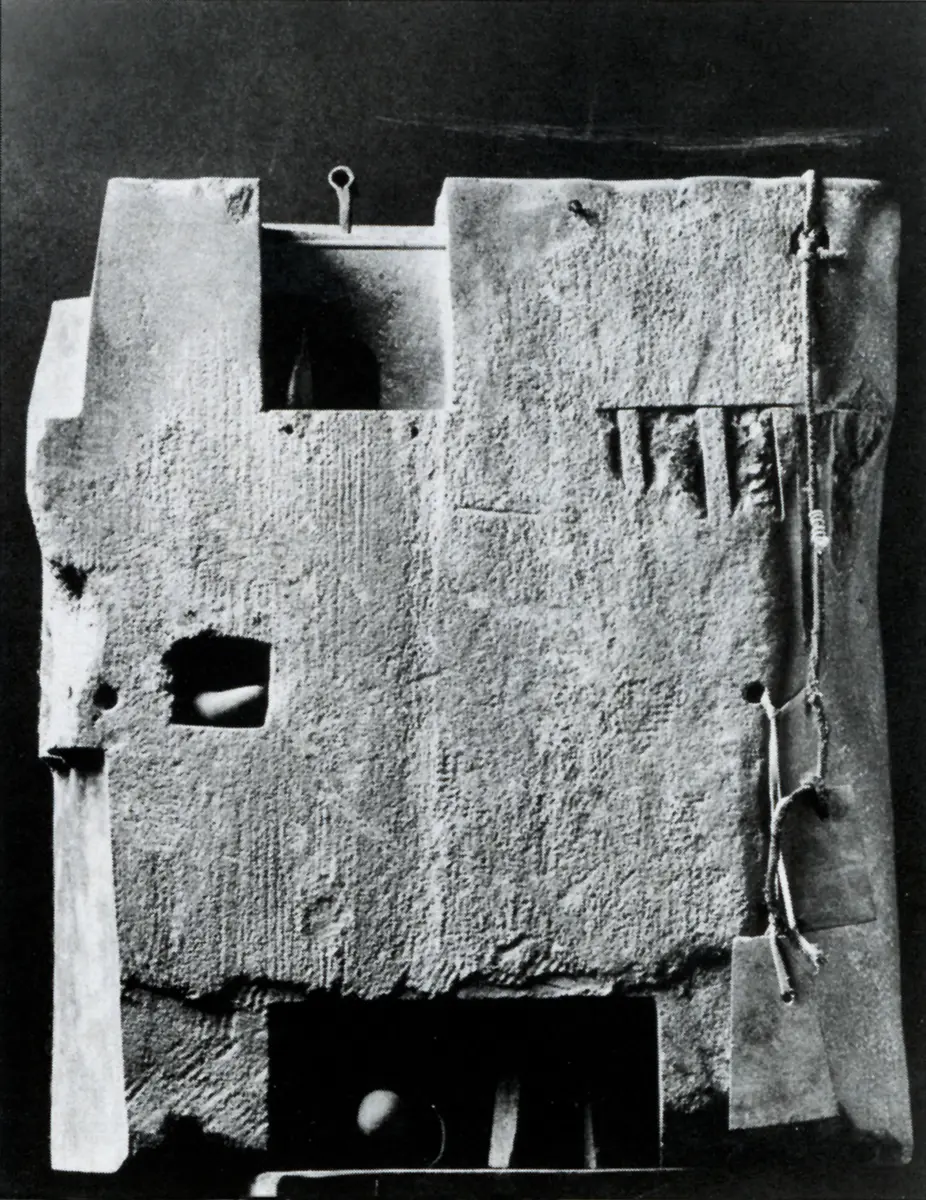
Gonzalo Fonseca is a sculptor well-known for his dense world of imaginary architectures which seem to reach our eyes from the depths of time. The Queen Sofia Center exhibition also showed that he is a great ceramic artist. Disc (1956) is an extraordinary work which rivals in its perfection, symbology and beauty anything produced by the ancient Indo-American ceramic artists.
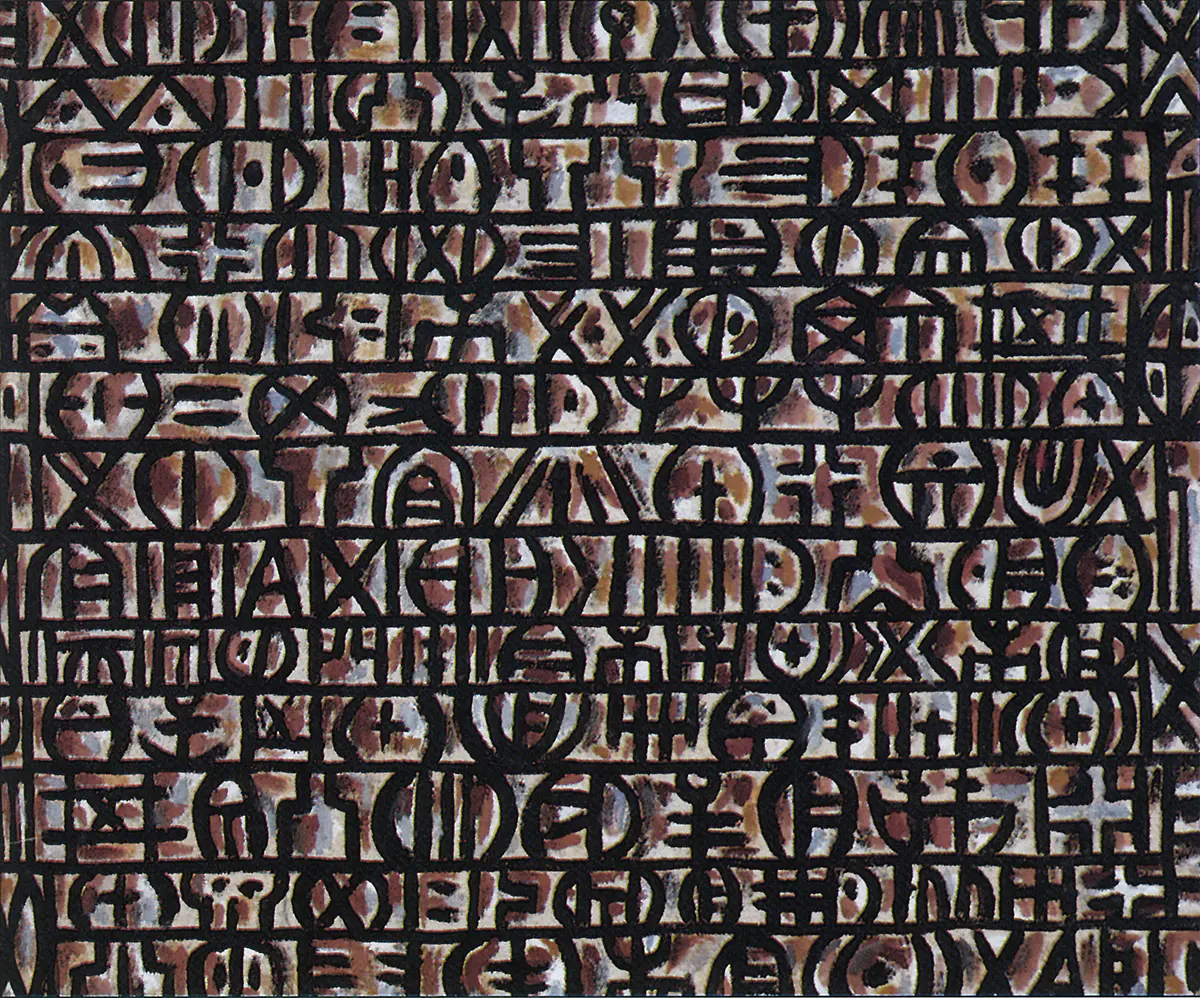
Julio Alpuy works with the subtlety of the silent expressionist that he is. Thus he makes incisions and cuts or make incrustations within a geometrical order which the eye barely sees. Like Gurvich, he is more figurative than abstract. His theme, in works such as Genesis and Eden, both from 1964, takes us back to man at the dawn of civilization. Jose Gurvich followed Chagall’s example and developed with personality, rigor and balance fantasies culled from the Hebraic tradition. His best period was not represented in the show, perhaps because it is that in which he freed himself completely from geometry and explored an imaginary world reminisent of Bosch. However, in his rhythms and obsession with the right tone, Gurvich remained true to his master.
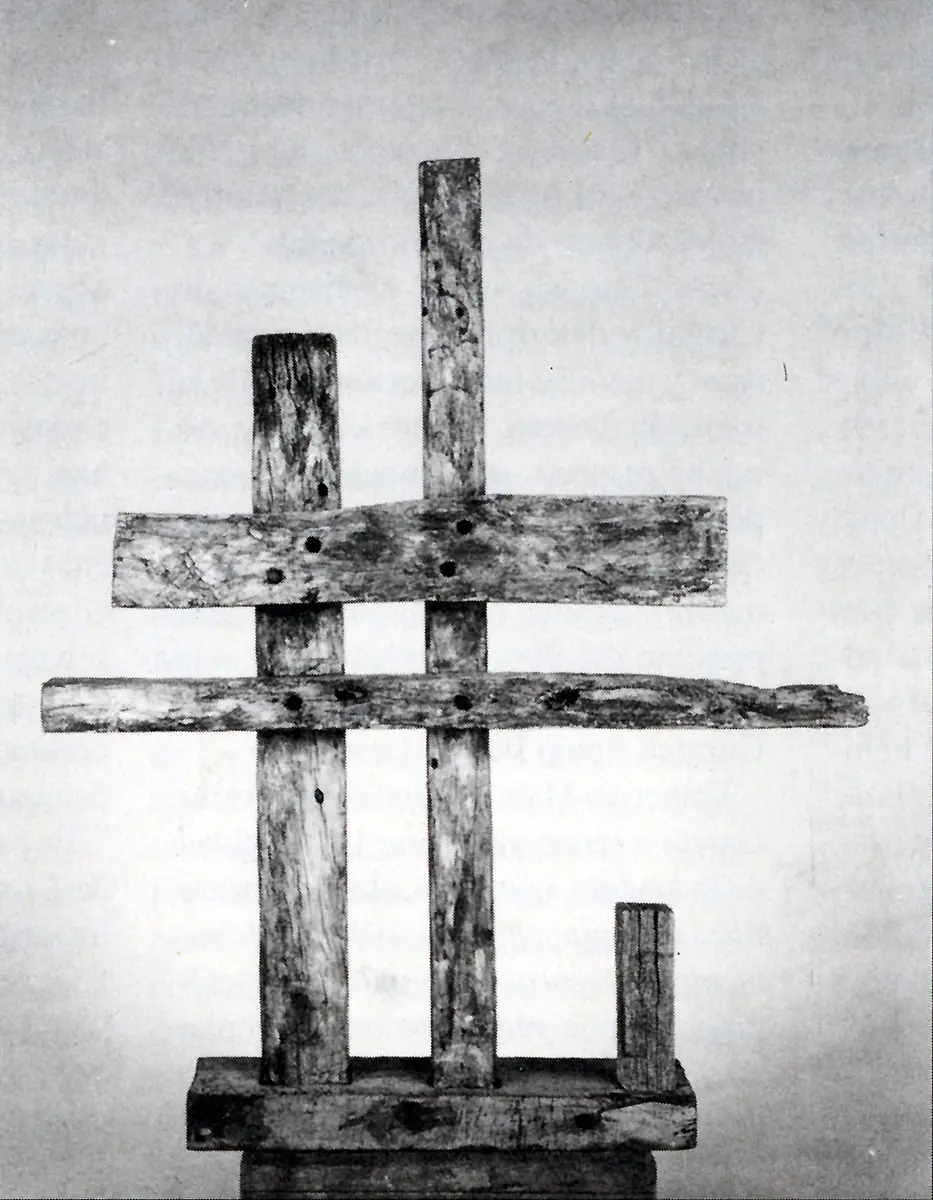
Francisco Matto learned from Torres-García to feel and have respect for the rusticity of wood, which he cuts, nails and barely stains. Construction, from 1948 and Monument in quebracho (a medicinal bark), from 1965, are sculptures of exemplary reduction which, if they had been known when they were first produced, would have had a positive influence on Latin American sculpture.
The career of Manuel Paidos appears to have been the most fluctuating. His Ideogram of 1948 recalls Mark Tobey, not because Paidos took anything from the North American, but because the latter took something from Torres-García, an historical detail which Mari Carmen Ramirez would undoubtedly be able to elucidate. Paidos’s work has been continued, in her own manner, by the young Argentinian painter Elizabeth Aro.
This mutual taking and retaking withou ever lapsing into repetition reached its maximum point of expression when Horacio Torres, at the end of his life, in the 1970s, abandoned abstractionism and turned to hyperrealism. He then painted drapes placed in the foreground, covering almost the entire canvas, and which revealed parts of some naked body. In Horacio Torres, the pictorial texture is rich as in Titian, but the austerity is something which he inherited from this father and master.
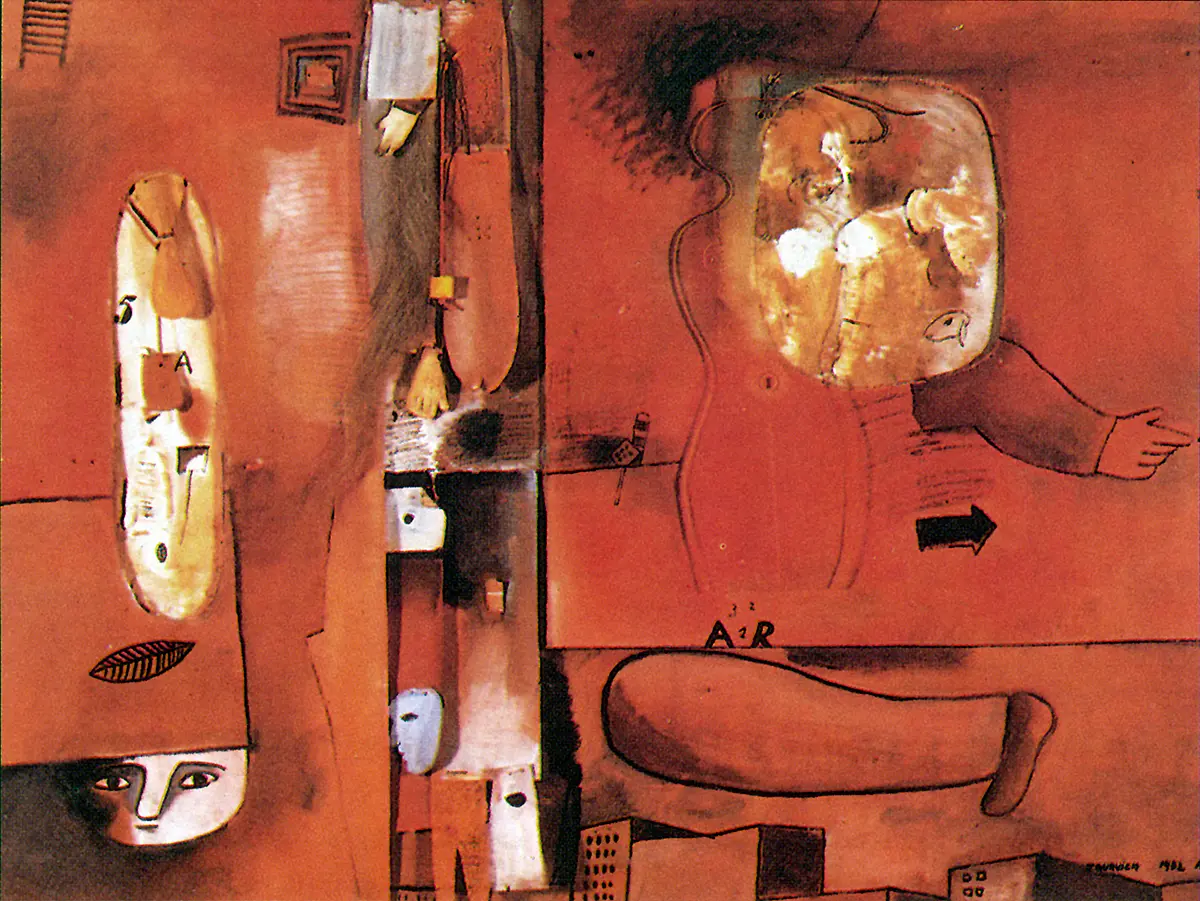
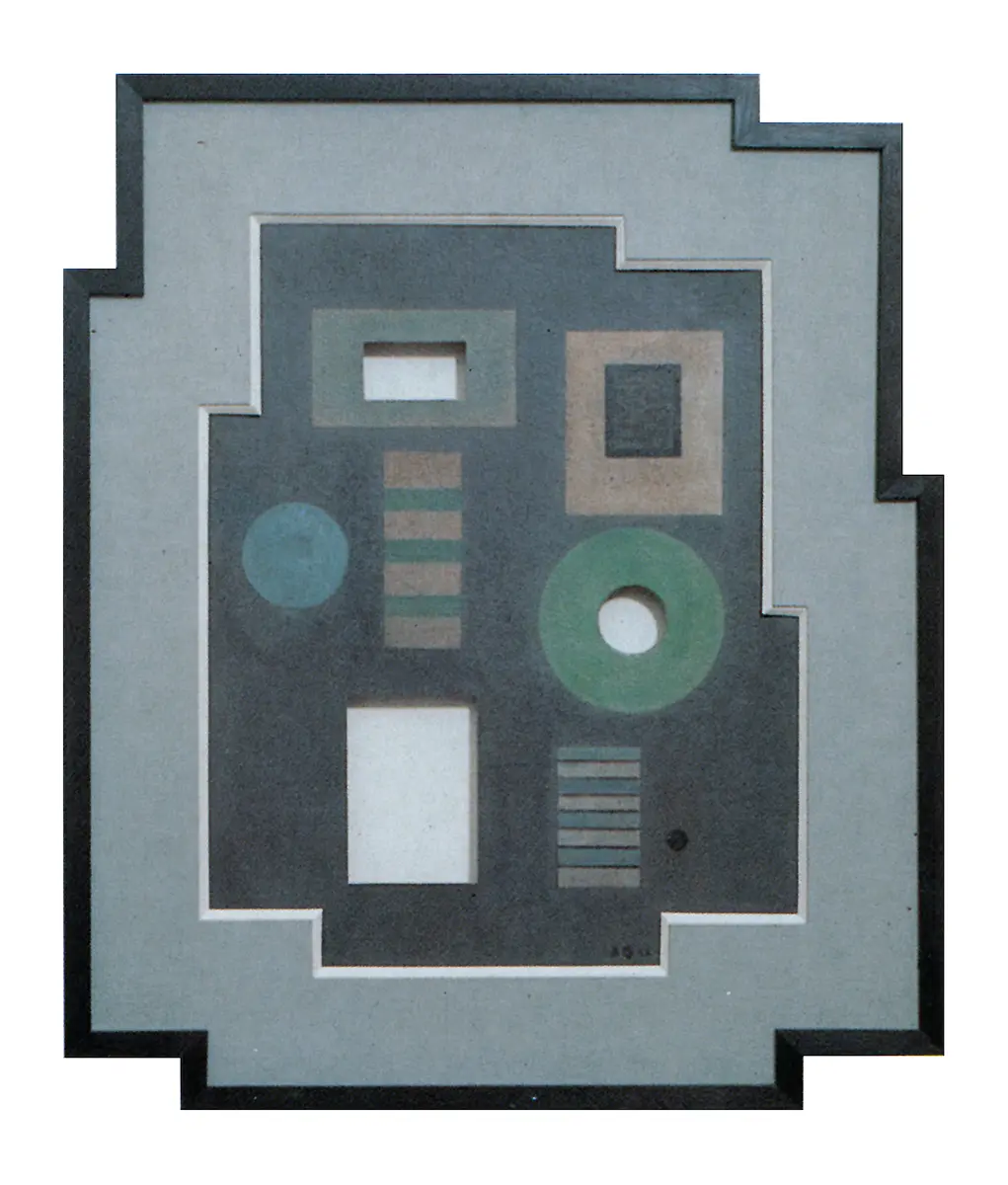
Of those who have applied the teachings of Torres-García without being his disciple, I should like to mention the Uruguayan Carmelo Arden Quin and the Argentinian Miguel Angel Rios. Arden Quin was the most audacious Latin American avant-garde artist of the 1940s. At that time he sistematized the non-rectangular picture, almost two decades before Frank Stella. Almost immediately, seeking inspiration in the toys of Torres-García, he invented a structure of mobile elements which could be hung like a painting and which allowed its components (triangles, squares, circles, etc.) to rotate and be moved manually in a plane parallel to that of the wall. A rigorously geometric and abstract painter, Arden Quin’s boards are characterized by perforations which break the continuity of the surface. As regards Rios, he took Torres-García to his maximum literary expression in phrases which could be read as verse, conceptual proposal or title of the work. For example: I came across my father through space, madly enamoured of the Earth. Between primitive signs, graphisms and blotches, the calligraphic text in large sized letters becomes pictorial. The whole is an accumulation of marks and traces which in some way reminds us of the spirit of Fonseca’s stones and Alpuy’s wood.
To illustrate the extent of Torres-García’s legacy, 1 should like to order by generation the direct or indirect beneficiaries included in The Southern School. These included, of artists bom between 1910 and 1919, Julio Alpuy, Carmelo Arden Quin, Rosa Acle, Francisco Matto, Amalia Nieto, Manuel Pailos, Alceu Ribero, Julian Luis Vicente, and Augusto Torres; between 1920 and 1929, Elsa Andrade, Marcel Bonevardi, Gonzalo Fonseca, Jose Gurvich, Alfredo Hlito, and Horacio Torres; between 1930 and 1939, Alberto Delmonte, Cesar Paternosto, and Alejandro Puente; between 1940 and 1949, Adrian Dorado, Adolfo Nigro, and Miguel Angel Rios; in 1952, Hector Ragni; after 1960, Elizabeth Aro, Cesar Belie, and Alejandro Corujeira.
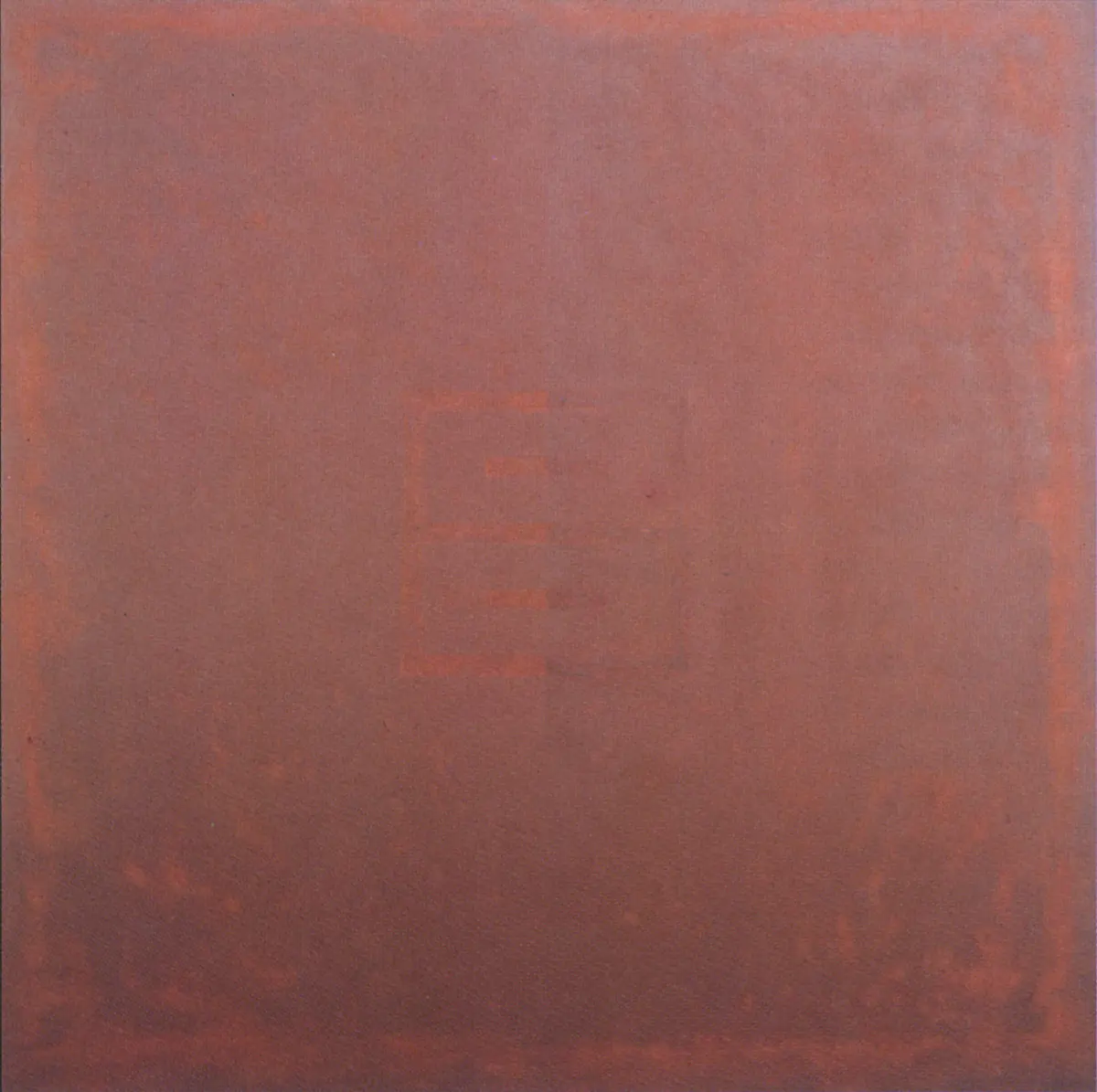
No information is availabel concerning Julian Alvarez Marquez and Jonio Montiel, both of whom were certainly bom after 1910.
The lack of data is the result of a process of underestimation over several decades. But history is remade all the time. The work by Margit Rowell and Tomas Llorens in the Torres-García catalogue, that of Mari Carmen Ramirez, Cecilia Buzo de Torres, Anna Rank, and Florencia Bazziano in the catalogue of The Southern School and that of Juan Flo and Jackeline Barritz in a supplement to the earlier catalogue containing articles not included in the catalogue proper is of high quality in terms of historical research. One may perhaps disagree with certain points, as for example, the insistence of some writers in wanting to show that Torres-García’s Indo-Americanism is irrelevant. In this case there occurs the curious point that the exhibition and the other texts refute this thesis. That being said, it is clear from all the works published that the desire is to be precise and objective. What a difference with the improvisions, superficialities and vacuities contained in Art of the Fantastic or Ibero-American Art.
The Torres-García exhibition is due to be shown at the Julio Gonzalez Center in Valencia, Spain. Joaquin Torres-García and Julio Gonzalez were personal friends and so the event is a symbolic re-encounter between persons who shared the same aesthetic positions. The southern School will then travel, over a period of almost two years, to museums in Austin, Monterrey, Washington, New York, and Mexico City. The English language catalogue of the exhibition is more complete than the Spanish one at the Queen Sofia Center and thus indispensable. The chronology is detailed and very well documented. The graphic part, however, combines in an arbitrary fashion chronological and alphabetical order, so that the reader never knows where to find what he is looking for. It is not surprising that we find ourselves changing many of our attitudes and views, both at the practical and conceptual levels, once we become aware of the importance of this illuminating exhibition.
NOTES
1) Quoted by Tomas Llorens, “Raque de la Atlantida", Joaquin Torres-García, p.57, Queen Sofia Art Center, National Musuem, Madrid, June-August 1991/ IVAM Julio Gonzdlez Center, Valencia, September-November 1991.
2) Ibid., p.26.
3) Ibid., p.27.
4) Jaime Brihuega, Manifestos, proclamas, panfletos y textos doctrinales - Las vanguardias artisticas en Espaiia 1910-1931, Catedra, Madrid, 1979, p.92.
5) Joaquin Torres-García, Historia de mi vida, Paidds, Barcelona, Buenos Aires, Mexico City, 1990, p.133.
6) Ibid.
7) Ibid., p.170.
8J Ibid.
9) Llorens, op.cit., p.207.
10) Joaquin Torres-García, op.cit., p.207.
11) Ibid., p.200
12) J. Torres-García, “El nuevo arte de America”, La Escuela del Sur, Queen Sofia Art Center, National Museum, Madrid, July-August 1991, p.59.
13) Mari Carmen Ramirez, “La Escuela del Sur: el legado del Taller Torres-García en el arte latinoamericano”, La Escuela del Sur, op.cit., p.118.
14) Llorens, op.cit., p.21.
15) Margit Rowell, ‘ ‘Joaquin Torres-García: en busca de una memoria perdida”, Torres-García, op.cit., p.10.
16) See the drawing in Torres-García, Historia de mi vida, op.cit., p.79.
17) Cecilia Buzio de Torres, “La Escuela del Sur: la Association de Arte Constructive, 1934-1942”, La Escuela del Sur, op.cit., p.20.
18) J. Torres-García, “El nuevo arte de America”, op.cit., p.58.
19) Mari Carmen Ramirez, op.cit., p.116.
ALVARO MEDINA