
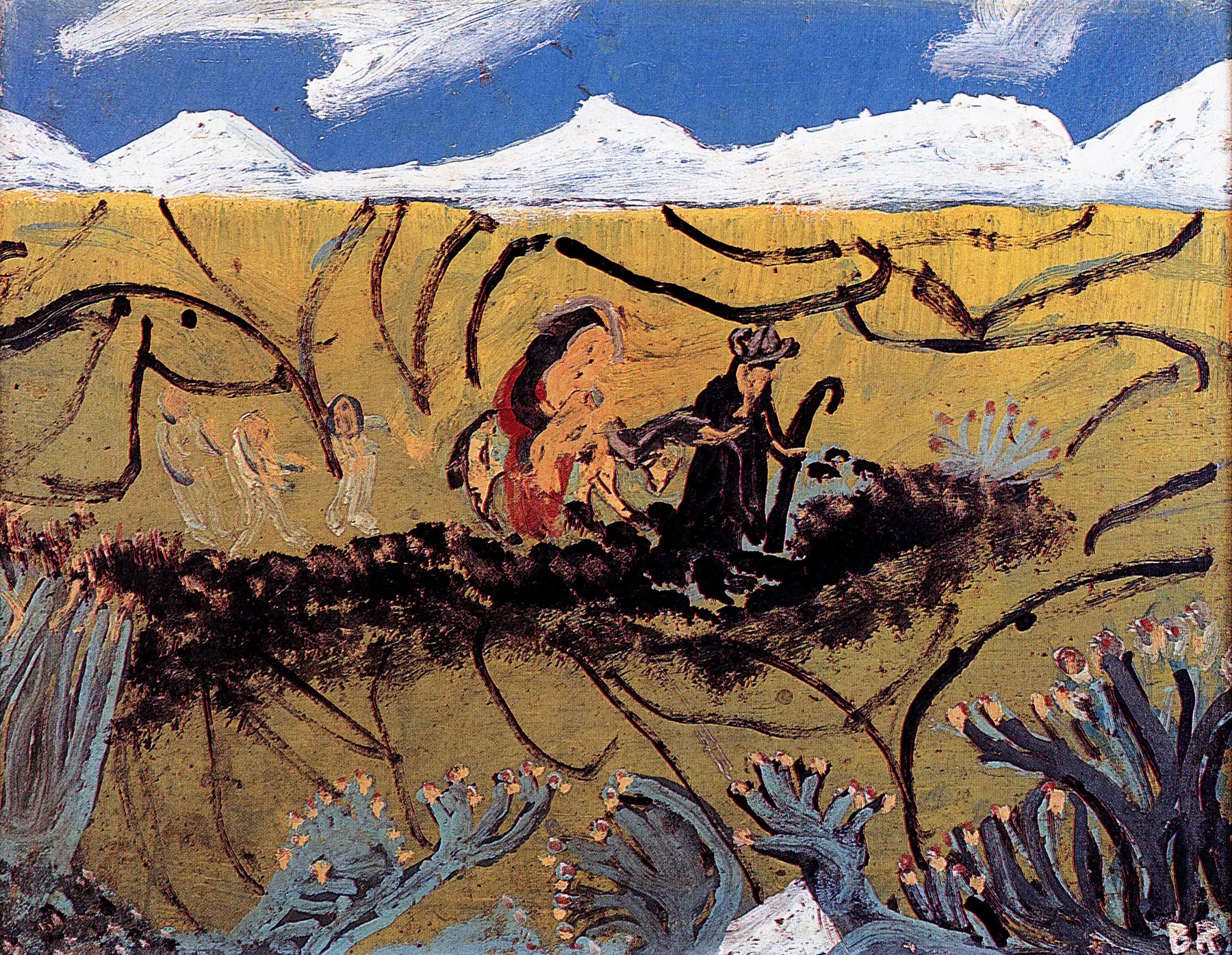
Counter to the opinion that would classify the Venezuelan, Bárbaro Rivas as a naïve artist, we should like to argue or recall the presence of obliterated, unnoticed evidence that lies beneath his themes, his motifs, and his painterly devices that constitute the visible surface of an incomparable pictorial work whose nearest antecedent in the history of Latin American painting would be, in quite a stretch, the Uruguayan, Pedro Figari. That evidence suggests that this absolutely vernacular artist was also a classical artist. In this view, Bárbaro Rivas would be the most classical of all Venezuelan painters of the twentieth century. This causes one also to consider how, in countries that have been submitted to processes of self-denial and self-denigration, in societies that have imposed upon themselves forced, abrupt, negating, eurocentric devices of self-legitimization, the most classical of cultures will often survive, be transformed, and transmit itself in the eloquent and surprising heart of popular culture.
A close look at the painting of Rivas will reveal, in the articulated whole of his paintings, a surprising, perhaps unexpected expression of erudition and intuition bearing the profile of a unique character and thus, the wonder of an unmistakable style. A cultured erudition that, imbued with faith and worship, religiosity and legend, transmits and transforms into explicit content an imagination at once biblical and historical. When this complex and fascinating work is seen as an iconology repertoire, a recurrence of themes and motifs, obsessions and legends, parables and visions will be made manifest that is only comparable from the heights of our gaze, contemporary with that which, during the centuries of a classic age, between 1630 and 1863, nurtured the great rhetorical painting.
Rivas will then become, in our modern century, the most systematic representative of a painting immersed in, saturated with, and rooted in the cultures of the Book and of writing. So, to sift out this aspect of Rivas' painting, one would have to distinguish between two "legendary" configurations that can be glimpsed as the iconology ground of his work: the Bible and historic legends. Few —if any— of our artists have been characterized as Rivas has been by the systematic figuration of biblical, evangelical, and religious scenes. Such scenes, rendered in paint by Rivas in an obsessive repetition of motifs, coincide clearly with the iconology repertoire of classical painting: annunciations, visitations, births, adorations, legends of Herod, the Slaughter of the Innocents, the flight to Egypt, the wedding of Cana, Jesus upon the waters, Passions, crucifixions, resurrections, apocalypses, judgment, Moses, Solomon, the Sermon on the Mount, the plagues, Christ was taken down from the Cross, shepherds, pilgrims, anchorites, and hermits.
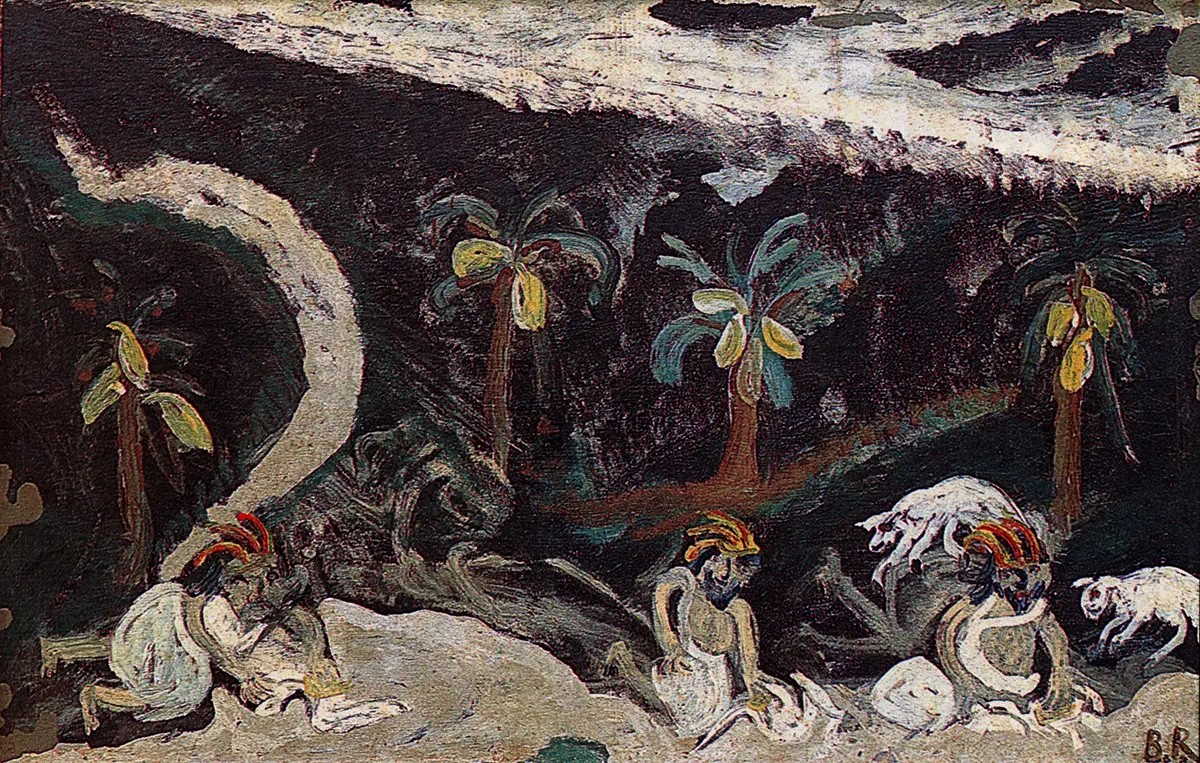
On the other hand, and to a lesser degree, Rivas's painting is nourished by historic legends: the Conquest, Bolivar the Liberator entering Lima, Samán de Güere, the strongmen (Gómez, Castro), the epic of the Andes. These works must be related, in our judgment, with others of a lesser genre—the only ones in our history of art that might be compared to that which in the history of painting in the West is on par with for example Peter Brueghel—in which the daily life of the artist is transformed into legend: the cycle of Escalona, the plague in Petare, the crime of Gadea, the derailment, etc. As if Rivas's painting were precisely the base from which ordinary life is transformed into legend and oral legend—that paradigmatic source for the Book—into the image, into, it is worth saying, iconic paradigm.
The paradox breathes around this "village genius": at once, the greatest of "ingenuous" artists and the most erudite of painters. But the confirmation of that paradox—that is nothing if not obvious—imposes nevertheless a recognition in this artist of absolute indifference to the "bookish" nature of that culture and thus, absolute freedom to make of it his own, fully visual universe. So from there proceeds the intuition in which that erudition, legendary and theological, religious and historical, in no way bookish, embodies itself in unusual forms, unusually modern in the context of Venezuelan painting.
Thus we would be looking upon the specifically distinctive element of Rivas' work: a range of themes whose iconographic repertoire stems from the bookish and erudite painters who embodied the "great classical manner" in the history of Western art—Carracci, Domenichino, Cortono, Bril, Lanfranco, Guercino, Rosa, Poussin, Claude, Stella, Swanevelt, Reni, Gentileschi, etc.—who would become paint in Bárbaro Rivas's work through repetition and in the variations of formal devices and solutions that clearly reveal an intuition freed from "classical" regulations. The problem, a general one with regards to Nature and the unnoticed density of popular culture, stands out as a matter strategically related to painting, to that which is strictly pictorial.
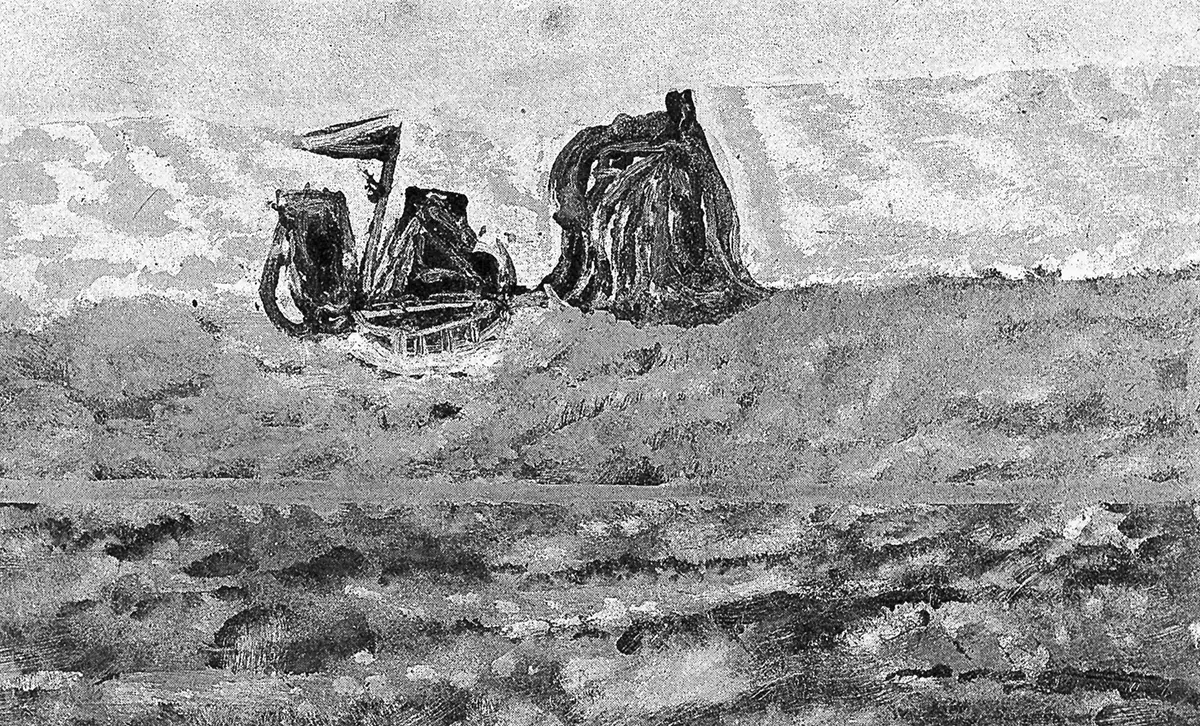
The will to make a narrative painting whose visual effects might be comparable to those of rhetoric eloquence is inseparable from the classical corpus and determines the history of Western painting well into the nineteenth century. In fact, if "classical" painters produced the iconographic repertoire of such legendary and historic themes, once freed from the secular, philosophical reticence that for centuries inhibited imitative practices, they did so by inscribing the art of painting within a large rhetorical framework and taking as their guide, their regulation, and their ambition a bookish culture marked by the paradigm of a narrative, written mode.
"Read," wrote Poussin in a famous letter, "history and painting to know whether each is appropriate to each theme"1, behind this declaration, with a certainty that left little room for error, was the presumption that painting could be read as history. No one denies that this adaptation of the pictorial to the written narrative produced effects in painting that paradoxically are purely visual. And no one denies that these effects, the tense relationship between the visual and the word, which is heightened in that chapter of the history of visual arts, tended to strip painting of all narrative regulation until reaching, those years in the nineteenth century in which Manet finished caressing his Olympia, a pictorial aesthetic marked, in the words of Georges Bataille, by "the decision not to express anything in the painting whose discursive equivalent was possible."2
In truth, one cannot claim that the work of Rivas proceeds from a decision similar to that described by Bataille as the initial gesture of modern painting. But, in light of the visual evidence, everything in Rivas' painting indicates a procedure whose effects turn out to be the equivalents of those in modern painting, freed from written grammatology. When viewing it we stand before a painting fully imbued by its themes, that is classical and even erudite, that is bookish in the Western iconographic repertoire but in the face of which, his painting doesn't ever attempt to detach them from their contents of faith and emotion, turning them into pure, pictorial entelechies. Given their classical nature, the appearance and surface of Rivas' paintings would be considered modern. To say this, although it is paradoxical, does not turn out to be meaningless if, as is known, the basic problem of modernity in painting consists in subordinating all problems to the pictorial surface. Rivas' painting, even when it proceeds to the representation of spatial depths, is always magnificently flat, always brilliantly vertical.
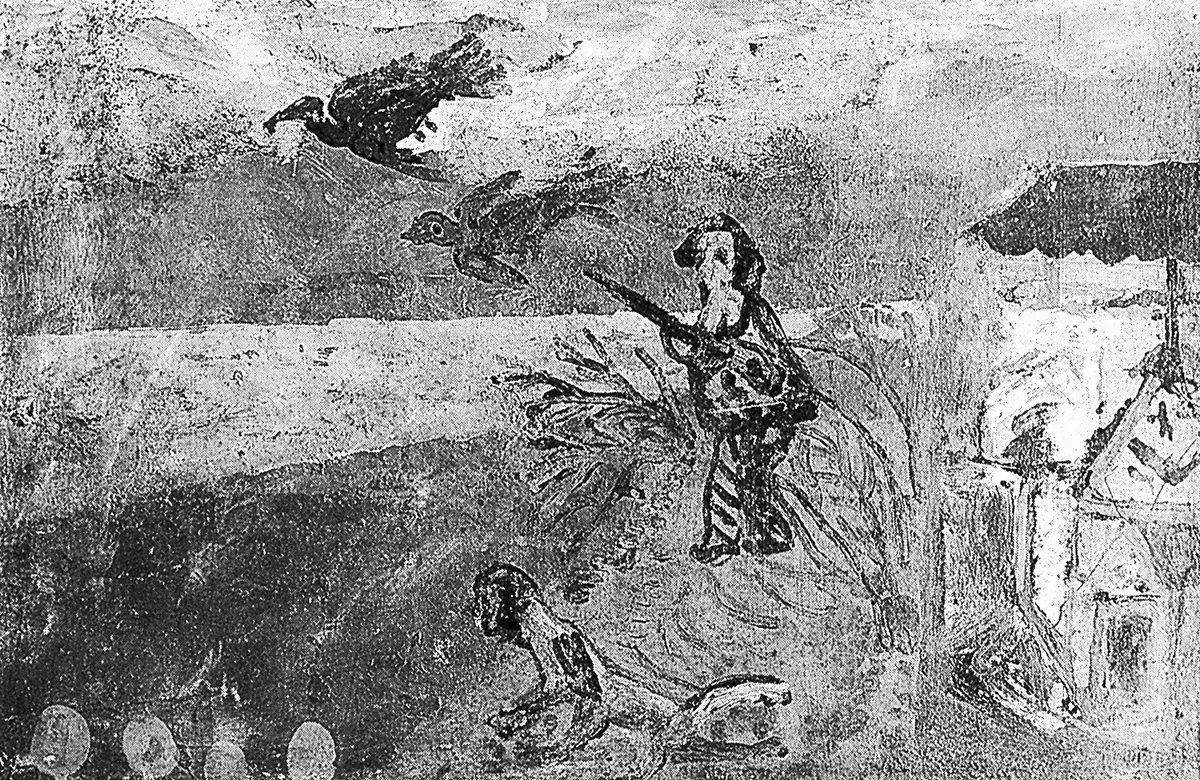
How could an illiterate man produce such a collection of works which are brought together the bookish, biblical, and legendary repertoire of classical painting? How could an "ingenuous" artist—with all the caution demanded in the use of such a term—achieve systematic evidence of modernity in his work? How can one explain both this innate erudition and this explicit intuition?
I would claim that the "erudition" of Rivas the painter is, in its visual nature, purely oral as well. His painting does not proceed from the written word but rather, from the transmitted word, from the secular and collective heritage embodied in (mythic, legendary) voice. Thus, having systematically elaborated the themes of biblical and historical erudition directly from the voices embody it in the oral transmission of culture, without the opaque interference of writing, Rivas' painting has economized an obstacle that marked the figuration of those themes in classical painting, making it labyrinthically more complicated.
"He who writes," —Pascal Quignard has said—, "rids himself of his voice as he who lays waste to meaning and demolishes the eloquence of a world."3 This absence of voice, this aphasia, like an infinite and incurable wound has been and is the great problem, the great limit to all written culture, all writing. With it, classical painting, related to that of Rivas through its themes with the Book, put to a version of the Book as writing and not to that of the Book as voice, at once magnificent and wild, that turns into painting in the work of Rivas, who found the need to replace that absence with his figures and had —such was his great historic destiny—to reinvent a figurative eloquence that would replace the loss of voice in the mute ashes of writing. I would claim, in contrast to this, that the painting of Rivas proceeds directly to the eloquence of the world because it proceeds directly from its legendary voices.
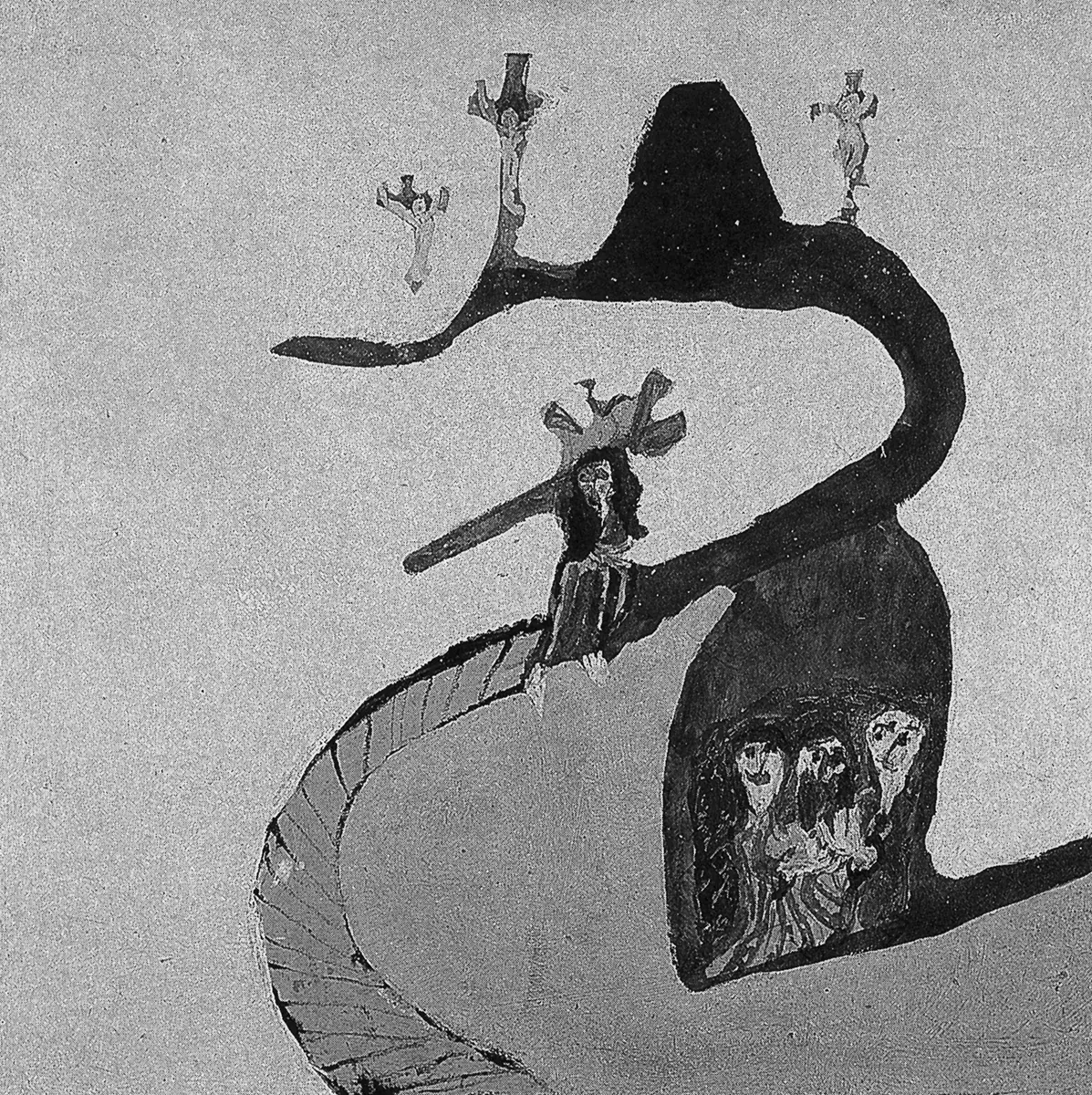
Thus occurs in the works of Bárbaro Rivas, far beyond the many and surprising coincidences of classical themes and motifs within a consistent and intuitive fidelity to the canonical iconography, something analogous to that which Erwin Panofsky describes in his celebrated study of the Renaissance, in which he rightfully considers how a medieval culture, to a large extent oral, dissociated the themes of classical culture, conferring on them a new and hitherto unheard of figuration and, vice-versa, how the iconographic motifs of classical culture were reified as well, supporting new themes and contents, in modern "moralizations" of ancient culture.4
The visible result of this disjunction in the case of Rivas, and for Venezuelan painting through its legacy, is a fully modern work with classical themes. It is not a question of visually maintaining classical motifs—evangelical parabola, country concerts, bacchanalia—freeing them from their literary content. Rather, it is the pre-reflexive figuration of literary and classical content, bestowing upon it an appearance whose only—or best— the analogy would be that of a modern figure. Rivas's painting depends then, with primordial "ingenuity", on the decision to confer a purely visual figuration on a canonical discursive content as if between voice and image there was no mediation whatsoever as if there were no "discourse" regulating the transition from work to figure. What thus emerges is the fruit of unusual freedom. This inherence in the painting of the voices that feed it— and of the voice, that is, of that which neither has nor can have a visual figure—inscribes it on a field of pictorial impossibilities and figurative utopias. Without wanting it, without having proposed it, without seeking it, Bárbaro Rivas elaborates in his painting a form of visual eloquence that suspends, to the bewilderment of the spectator and the marvel of his canvasses, the usual consciousness according to which, between every voice and every image there would always be, meditating and obstructing, a discursive apparatus. The unique element of this painting, in being erudite, lies precisely in that direct eloquence that characterizes it. It consists of being, like painting, the identical—unthinkable—equivalent of an incarnate voice (and not, like all erudite painting, the impotent supplement of its loss in writing). The painting of a voice, the painting of a (visual) thought embodied, fully incorporated into a living organism, the painting of Rivas can only manifest itself in disturbing, disturbingly "modern" configurations in which the "figure" always borders on the "monster" and form always is approaching "formlessness". This intransitive location of the painting, immediate and full, without interference or the mediation of forgetting, in the world (of culture) that nourishes it might be the consequence of a magnificent "ingenuousness". It would be sort of an intelligent painting for it is absolutely and existentially incarnated in the actual "living experience" of its themes and, for that same reason, it would be a purely "ingenuous" painting. But with the provision that one comprehends the notion of "ingenuousness" from a rigorous and nearly metaphysical ontological perspective: like the possible operator of a fundamentally "pre-reflexive" creation. And then everything would occur before our eyes as if the works of Rivas had achieved the marvel of transforming the classical repertoire of erudite and bookish painting into something at once distinct and prior, into a "world lacking any common scale with our thoughts"; as if these works were embodying, before our fascinated, marveling eyes, the pictorial version of that "ingenuous frequenting of the world" that Merleau-Ponty stated was necessary and predated all forms of reflection.5
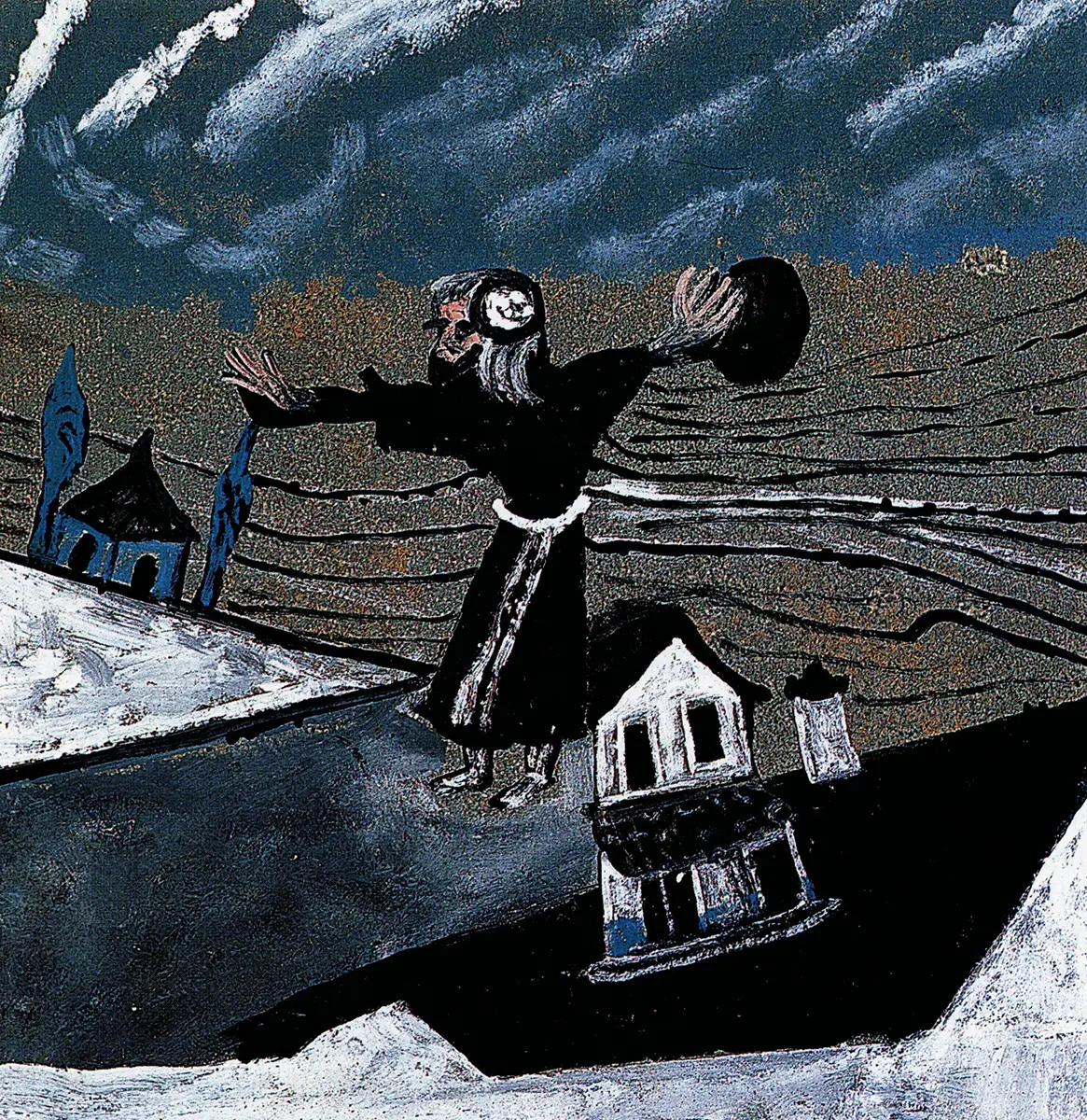
In this way both artists of modern painting in Venezuela, Armando Reverón and Bárbaro Rivas, would be related, incarnating two different ways that intersect in an (unexpected) revelation of what is purely pictorial. The fact that modernity has been an effect and an encounter upon us, and not a project or a search, would be confirmed once again.
Rivas's painting opposed itself, in a paradoxical coincidence of modern effects on the history of Venezuelan art, to the gesture of Reverón, to his decision to simply conform his painting in accordance with the pure density of what is visible, excluding all recourses to legendary or narrative contributions and thereby revealing the crude materiality of the pictorial work. Rivas has done nothing in his laborious career as a painter but to attempt to embody, unwittingly, a legendary, biblical, and historic content in the coordinate planes of a painting that has forgotten its intrinsic difference in relation to those discourses and those voices. It is as if, between his painting and the legends that figure in them there were no need for "narrative conformity" as if there were no interference whatsoever between the artificial linearity of narration and the powerful presence of the pictorial plane. And from that magnificent "certainty"—altogether utopic and only possible in Rivas— from that illuminating "ingenuousness" according to which a legend—every legend—can, on the pictorial plane, do without the artifices of its narrativity without thereby losing any of the eloquence of the original word, surges this unforgettable painting, this painting packed with voice and responsive only to an immemorial vision.
NOTES
1. Nicolas Poussin, “Carta a Chantelou,” April 28,1639, in Nicolas Poussin, Lettres el propos surl’art, Paris: Hermann, 1989, 45.
2. Georges Bataille, "Manet,” in Oeuvres complétes. Paris: Gallimard, 1979,9:159.
3. Pascal Quignard, Petits Traités, Paris: Gallimard, 1:124.
4. Erwin Panofsky, Renacimiento y renacimientos en el arte occidental, Alianza, 1981,136-137.
5. Maurice Merleau-Ponty, Le visible et I’invisible, Paris: Galimard, 1964, 76-77.
LUIS PÉREZ ORAMAS
Writer and historian of Venezuelan art. Member of the Directive Commitee of Galería de Arte Nacional in Venezuela.