In almost all the towns and cities of Latin America, it used to be the custom to tell bedtime stories to children at bedtime. Who told these stories? Their mothers, nannies, grandmothers, or grandfathers. In these societies, the father traditionally had little to do with stories and children. What were these stories about? Things appearing in the night like people transformed into animals, werewolves; punishment for bad deeds or acts of disobedience, reincarnations; and sometimes the relationship between goodness and gratification. In this way, during the first sixty or so years of this century, the sinner was punished, just as he had always been in the Catholic religion from time immemorial —as during the Inquisition— transmitting a sense of fear and suffering to children who grew up into apprehensive adults. Over the years, and depending on whether the area in question was rural or urban, these stories began to be replaced by updated tales written especially for children, or invented by both parents who were now learning to take turns watching over the cradle. Above all, the tales were less threatening, the product of societies that were seeking new directions, that were defining themselves as belonging to the twentieth century, and that were beginning to reflect the changes brought about in psychology and education. This extreme about-face disregarded the need for balance, and it was this lack of balance that has led to the horror stories in vivo that have replaced the erstwhile bedtime stories.
Popular rituals were maintained in towns and cities far from the major capitals. The latter was invaded by rock music, consumerism, the media, anticulture, drugs, and other factors of change with which we are all familiar. Within a period of three decades, the horror stories of very disciplined and controlled children gave way to stories for children who would grow up into anguished adults because they had known no limits. While freedom is a marvelous thing, so too is the exercise of certain minimum rules of conduct—in particular as regards their effect, the greatest vitamin of the human race. The mass culture formula was to result in a rapid and depraved kind of change, which left thousands of children without any stories —either popular or intellectual— and no more parents, grandparents, beds, projects for life, sense of values, or children.
Bedtime Stories, an exhibition made up of a series of sheets and children’s underwear, introduced us to a world of intimacy, fragility, physical and moral extermination, and the loss of the right to live and die with dignity. It stressed the right of children and adults to have their own stories, to dream their own dreams, and to make them real over time.
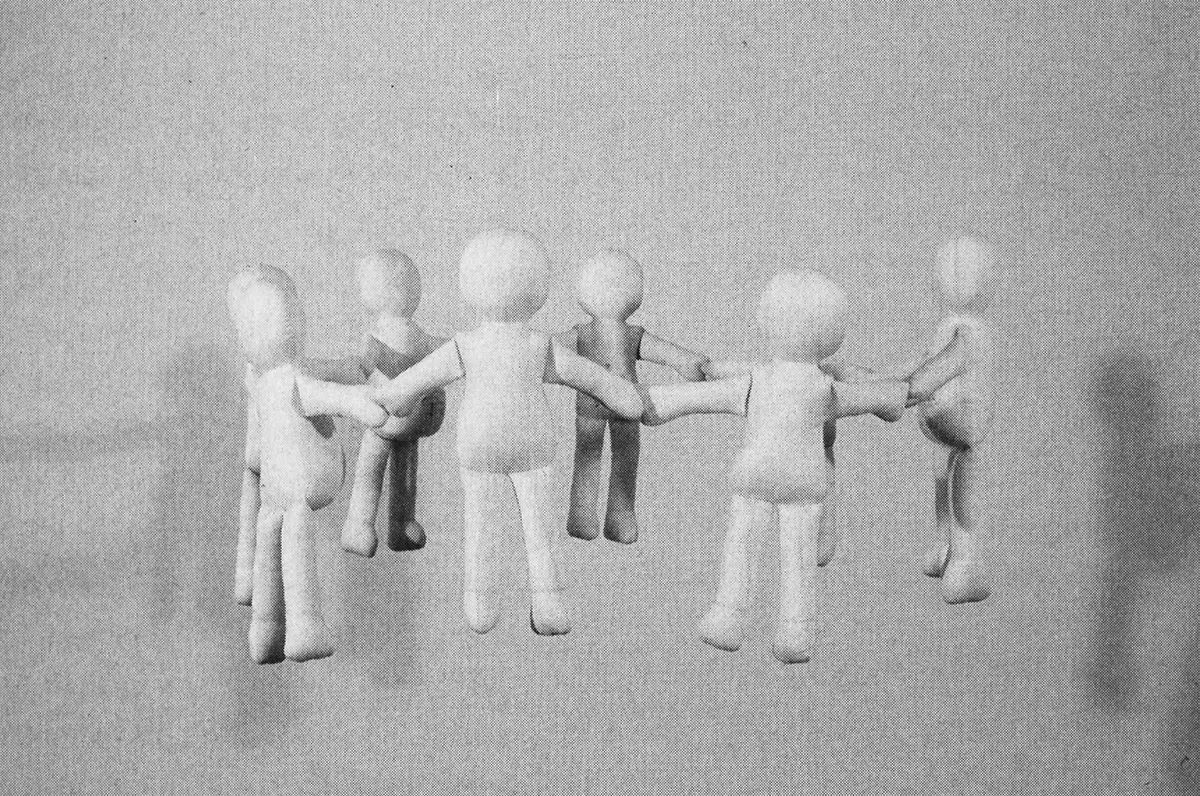
Palazyán tells the tragedy of this situation in Brazil. We have all read and heard about it, and we have all felt a sense of horror. Each letter in ink is etched in blood in the original. Before a piece of news reached the press, it has already entered the flesh of somebody. While until a decade or so ago children played such games as "ring o' ring o’ roses," when it was thought that only adults were exposed to social dangers, the circle has widened in an infernal and macabre manner. In Al Ciranda Cirandinha/Merry-go-round criminals appear to extend their hands to children. The extremes of purity and sadism would argue that little old women have been replaced by children. While this is not strictly true, since old people continue to be vulnerable and to be murdered, there has been an unimaginable increase in criminal activity both carried out by, and directed at, children. Palazyán’s exhibition was done entirely with materials that were soft, tender, intimate, and childlike, suggesting soft sculpture made with fibers or textiles. In terms of materials and technique, the works offered an impressive catalog, with the artist sewing and embroidering, and stuffing her fabrics and materials. One step more and the articles or pieces of clothing for use inside the house or for wearing close to the —body such as underwear, sheets, and pillows— would become an anti-art since this is not painting or oil or canvas on stretchers, but elements that have always been foreign to the field of art. They were in contact with the artist’s body, that of the model, and of people making the stretchers, working in banks, driving taxis or selling bread, a person jogging along the road, a school teacher, you, Rosana, or me.
In the face of such pain, the works of Palazyán in Bedtime Stories might seem ingenuous-but only for a brief fraction of a second, because in this tender and icy world there is something that alters the atmosphere and transforms the apparent ingenuity. This is pain that has been frozen. Cries that have been smothered and remembrances of childhood situations. The annihilation of the spirit brought about by persons of this generation has robbed children of their clothes, and has destroyed the children along with their dreams. Madre-Hijo/Mother-Son is an embroidered piece of clothing that belonged to the artist’s mother. In this piece, Palazyán has embroidered scenes from the life of her mother and of her own brother, who was gratuitously killed in cold blood on a corner, near a traffic stop, while waiting for the light to change. Embroider the scene of a murder? The murder of one's own brother?
Embroider an already used sheet, a pillow, or children’s underwear? Each stitch is a painful tear. Each color is a step towards the chasm of anguish and impotence in the face of what is irrevocable. Each little piece is a folding, a recreation in dreams of the stab in the stomach, the blow to the eye... The stories of children abducted, raped, and assassinated only happen when life has lost its value.
Palazyán’s works are proof of an extreme confusion of values in all age groups and of criminal, irreversible suffering. Of a world full of gangs of children and adolescents, adult drug addicts who no longer tell stories at their children’s bedsides but hammer the stories and nails of mental imbalance into open tombs, where they are buried alive. Such people are fossilized in life and have lost all contact with reality. So the artist embroiders little scenes from children's stories which, when we look closely, are the massacres that she hears, sees, and suffers through. An elegiac, white setting of tulle, cotton, and silk emerged from the clothing in the installation. Each piece had its own story and still seemed to bear the imprint of warm bodies. In the embroidery, the alternating use of baby prototypes — pinks and light blues— with reds redolent of blood, pain, and death, confirms the horror, the pain, and the impotence of someone who refuses and is unable to isolate herself from everyday life. The backstitch appears like clenched jaws, closed fists, dry eyes, and incredulity.
Oral traditions were once the stuff of our dreams; today, the crosses and stars of David accompany the deaths to which Rosana Palazyán, born in Rio de Janeiro in 1963, is more than a witness. She has seen with her own eyes the cruel situation in which hundreds of thousands of children are no longer told stories but are instead subjected daily to the most violent realities—like seeing their mothers killed for not handing over money, or a family ring, or their car, or to protect their child, or because they were hit by a bullet fired at someone else. Other children have been raped or tortured in the presence of their agonizing parents; others... but we all read the newspapers and listen to the news. Palazyán and myself are appalled by all the gratuitous deaths of all those who are assassinated every day, including Rosana's brother in Rio de Janeiro and my own sister in Buenos Aires.
GRACIELA KARTOFEL