
The United Nations and its specialized agencies throughout the world all house substantial collections of artworks, most of which have been donated by member states. However, because of the very nature of these international organizations, where criteria of geographical representation and policy guidelines are crucial factors, a certain prejudice is often felt about the “institutional” nature of this art, which is seen as less significant in purely aesthetic terms and unlikely to be found in leading museums or sold at the major commercial galleries. There are of course exceptions at both the collective and individual levels; examples of the former would include the magnificent holdings of the OAS in Washington and of the latter the outstanding Cóndor by Obregón at the International Labour Organization in Geneva.
A similar prejudice also extends to art exhibitions organized by these international organizations, where the aesthetic element is sometimes seen as merely a vehicle for promoting some other non-artistic purpose, reflected in the absence of any professional curatorial expertise. It was therefore refreshing to see the World Health Organization, on the occasion of the fiftieth anniversary of its foundation, present at its headquarters in Geneva an exhibition titled The Edge of Awareness which seemed to have taken due account of the curatorial complexities posed by the organization of a major collective exhibition and selected works by contemporary artists from around the world that came together in a powerful statement at both the political and aesthetic levels.
The exhibition, curated for the WHO by Adelina von Fürstenberg, President of the Art for the World Association (who also organized the Dialogues of Peace exhibition for the United Nations in 1996), consisted of a number of works in various media presented in a specially designed pavilion, as well as other pieces located in various parts of the WHO grounds and premises, including a series of outdoor billboards.
The show was based at the thematic level on the multi-faceted and symbiotic relationship between art, health, and life— emblematically expressed in the billboard work by Alfredo Jaar (Chile), which quoted James Baldwin’s remark that “Life is more important than Art, that's what makes Art important”. These themes were explored in a variety of ways (physical, emotional, and intellectual) and through different media (billboards, painting, sculpture, installations, video, and the Internet) to generate a multiplicity of potential readings (aesthetic, political, environmental, historical, feminist, etc.).
But the exhibition also sought to illustrate how contemporary art has managed to break out of the ghetto of its Western framework and acquired a new kind of universality which, although including magical and ritual elements that have nothing to do with Western concepts of artistic technique or function, in no way resembles the haphazard syncretism and combination of different cultures to be found in theosophy and much of the art of the inter-war period. As the curator pointed out in her catalog text, although art still remains inextricably and inexplicably linked with the exercise of reason, it also has its own raison d’être and its own irrationality which the artist can transform into an act of both conscience and consciousness. And it was this sense of consciousness as an act of conscience—the edge of awareness—which was so effectively communicated by many works in this show.
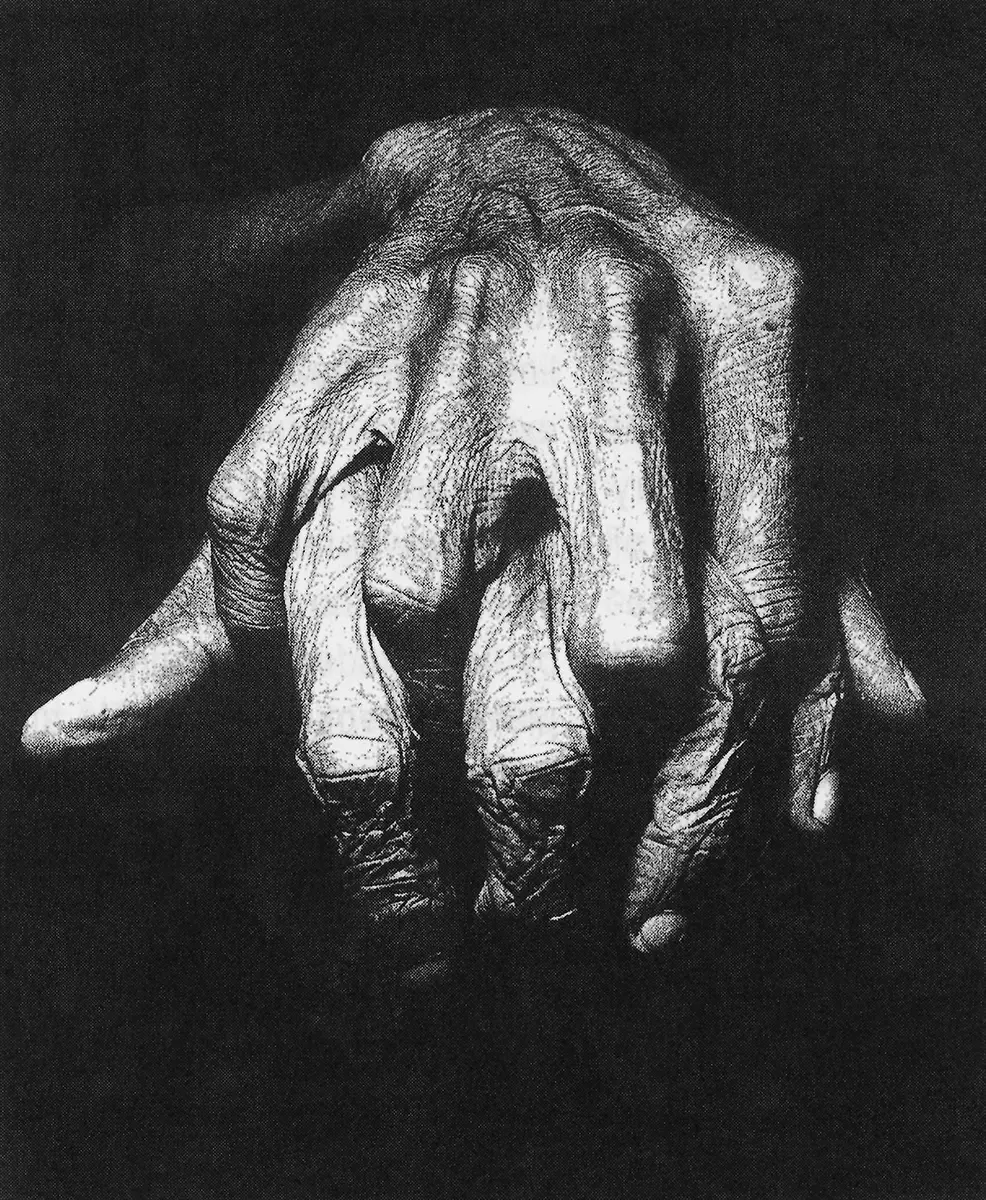
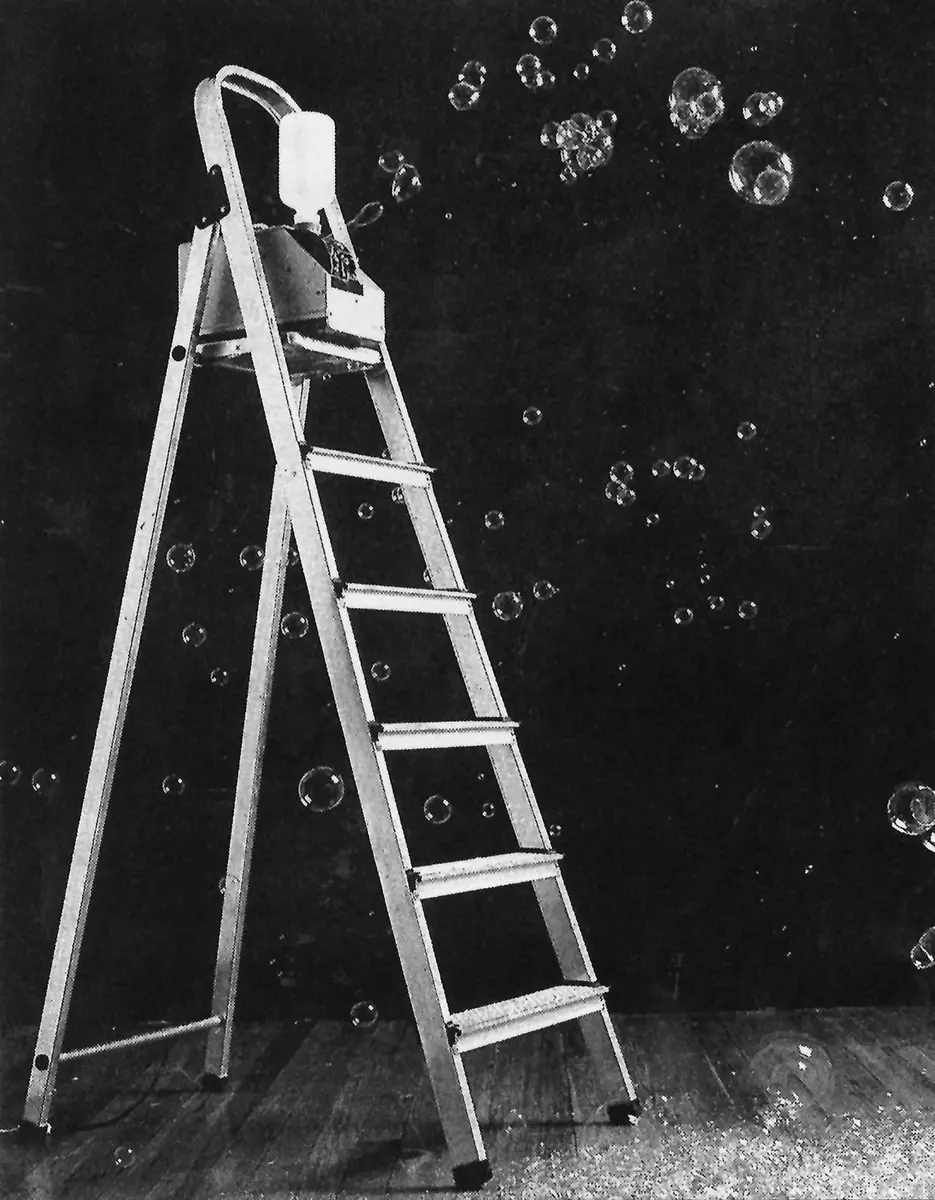
The billboards included some astonishing photographs of hands and faces-veritable human landscapes-by Touhami Ennadré (Morocco), poetic renderings at very close range of the “black light” which for the artist lies at the heart of the human experience. Equally poetic, but in a much lighter and amusing register, was the soap and bubble machine, The Perfect Moment, by Juan Galdeano (Spain), which playfully evoked the fragile and vulnerable nature of the human body. A similar sense of poetry, delicate, yet centuries old, inspired by the world picture of the Ventuari indigenous peoples in Venezuela, was evident in the handsomely structured billboard work by Miguel Ángel Ríos (Argentina), with its effective use of color, contrast, and composition. The human heart was inevitably one of the iconographic leitmotivs of the exhibition and appeared directly in the work of Maria Carmen Perlingeiro (Brazil) and Robert Rauschenberg (United States). Other inevitable thematic presences included those of birth, as in the billboard by Teresa Serrano (Mexico), and the destruction wrought by war, as in the work by Silvie Defraoui (Switzerland) and Sophie Ristelhueber (France) and in the powerful installation by Alma Suljevic (Bosnia) in the form of painted interventions on maps.
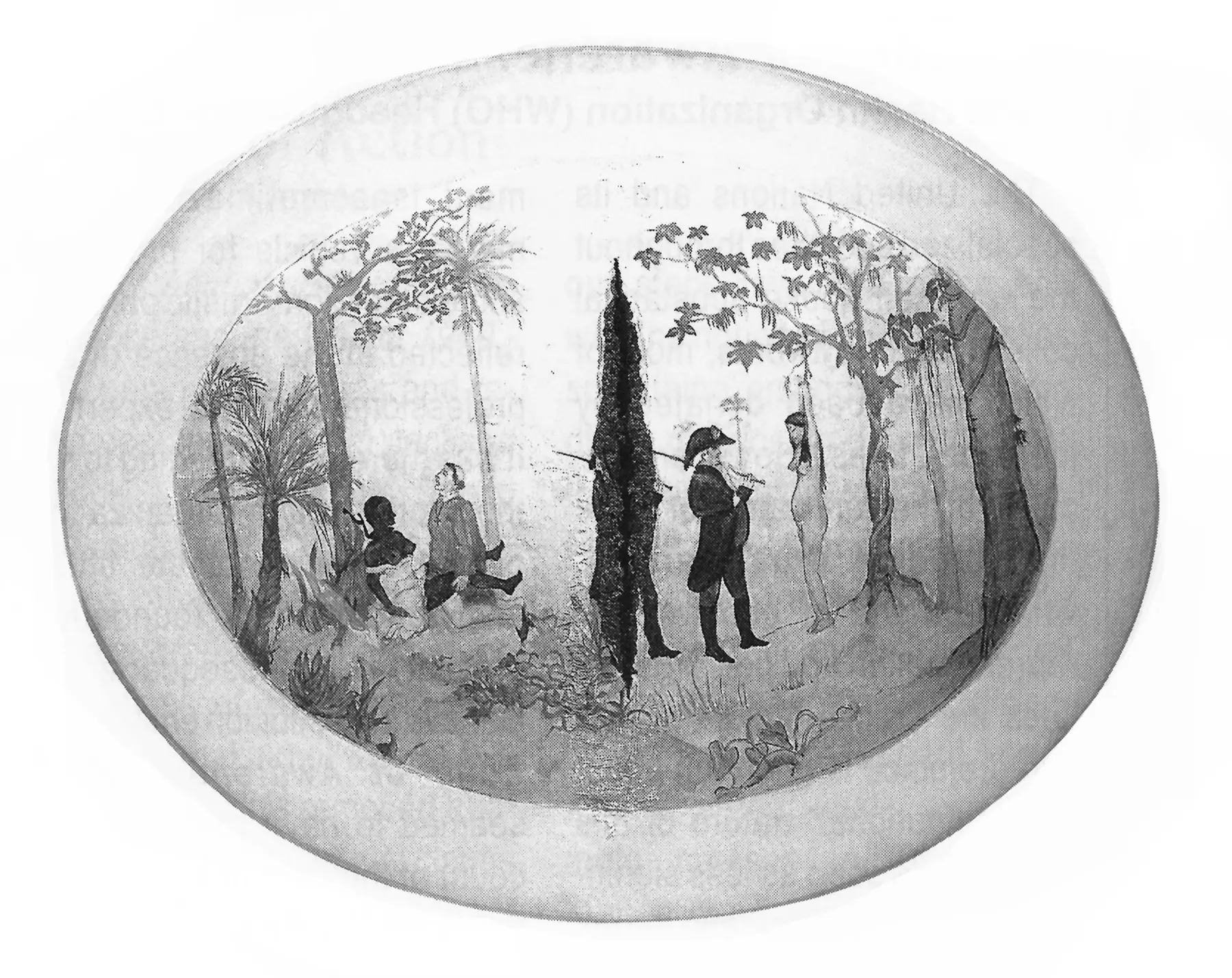
The “war" of historical colonialism and its ravages on the minds and bodies of entire nations was dramatically reflected in the oil on canvas titled Filho Bastardo by Adriana Varejão (Brazil). The painting depicted the rape of native women within a colonial setting, made all the more shocking by the delicate attention to the botanical details of the scene and the carefully chosen support of the work and its “traditional” oval form, and above all, by the searing and brutal vertical rip in the center of the picture—the vagina as a vestige of violence which lives on even today. A similar theme, but viewed in terms of the effects of patriarchal systems on women's sense of identity and empowerment, appeared in the Stories from the Womb by Rekha Rodwittiya (India), made up of schematically structured watercolors on odhanis.
Given the multi-faceted nature and purpose of the exhibition, it is not perhaps surprising that mixed media and installation-based works predominated. They included sandpainting by Joe Ben Jr. (United States); an Internet work by Fabiana de Barros (Brazil); a Bird Island project by Henrik Hakansson (Sweden); a collective video by Dimitris Kozaris (Greece) and collaborators; the Revive Time Kaki Tree Project by Tatsuo Miyajima (Japan) that involved the planting of saplings from trees which survived the Nagasaki bombing; a mixed media presentation with paper box and dolls by Olu Oguibe (Nigeria); and a complex yet delicate installation by Reamillo & Juliet (Philippines and United Kingdom) on the themes of globalization, the instruments of homogenization and the stratification of wealth and poverty.
One of the highlights of the exhibition was the installation by Nari Ward (Jamaica) titled Amazing Grace, made up of 280 abandoned children's strollers and fire hoses and housed in what can only be described as a masterful touch-in the underground carpark of the WHO grounds. To the hypnotic rhythm of Aretha Franklin's classic soul hit Amazing Grace, the visitor was drawn down the staircase into a startling visualization of intense emotions, of the lost world of childhood, and of all our lost opportunities for making the world- and ourselves-into something better. The work achieved a perfect symbiosis of politics and poignancy. Although Ward’s monumental installations are clearly indebted to such mainstream artists as Arman and Christo, they also have a spiritual quality that, as Veerle Poupeye points out in her recent study of Caribbean art, owes more to the reconciliation of the ancestral past with the "here and now’’ of urban debris and existential homelessness.
Pat Steir (United States), in her note to her billboard work in the show, defines the “edge of awareness” as “knowledge always present, known, but not addressed directly. Haunting feelings, half-conscious facts...unseen, flickering on the edge of conscious awareness." This exhibition, which also included many other notable pieces not mentioned in this review, successfully mapped out some of the contours of this “conscious awareness”, by showing that true consciousness is also inseparable from a “sense of conscience" and, therefore, that all true art is necessarily both conceptual and emotional.
Following its presentation in Geneva, Switzerland, The Edge of Awareness was shown over the past at the United Nations building in New York and the PSI Contemporary Art Center in Long Island City. It will subsequently travel on to SESC Pompeia in São Paulo, during the forthcoming Biennial, and will close in New Delhi next spring at the Rabindra Bahvan Lalitka Academy. The exhibition is accompanied by an excellent full-color bilingual catalog of more than 200 pages, with texts by a number of critics and writers, including Okwui Enwezor, director of the 1997 Johannesburg Biennial and Apinan Poshyananda, one of the commissioners for the 1998 edition of the São Paulo Biennial.
BRIAN J. MALLET