
The permanent dialogue with theory in contemporary art sometimes makes us forget that personal anecdotes and gestures are necessary for connections to be made to the small or large sources of joy and anguish of life.
This is the importance of such photographs as those of Tina Modotti, taken between 1923 and 1930, a time of intense reflection on photographic language upon which it is necessary to reflect. She raised, for example, the problem of clear and precise form by highlighting the lines or structure of objects. This is the case in one of her first photographs, of two albatrosses, that appear unexpectedly in the foreground to establish the fact that for the eye, in addition to the flowers, there are two black lines that end in white corollas. This reflection on the form is implicit in her photographs of various objects, all of which had significant forms, in these images, relationships are established that communicate something more than their appearance.
Something for example like the revolutionary spirit of Mexico, as in her photograph titled Mazorca, guitarra y canana. But the problems of composition at that time were never as significant as when they allowed her to transform the human face into symbols, in a reconciliation of two possibilities offered by the camera, its capacity to record humble details and its ability to see forms that are independent of the subject. Modotti's photographs of Mexican children reflect, more than any other images, the social situation and they go beyond the cliche here the photographer is clearly not a tourist simply observing but rather someone who feels invested, it is Modotti's sense of compassion that selects and fixes what is seen forever.
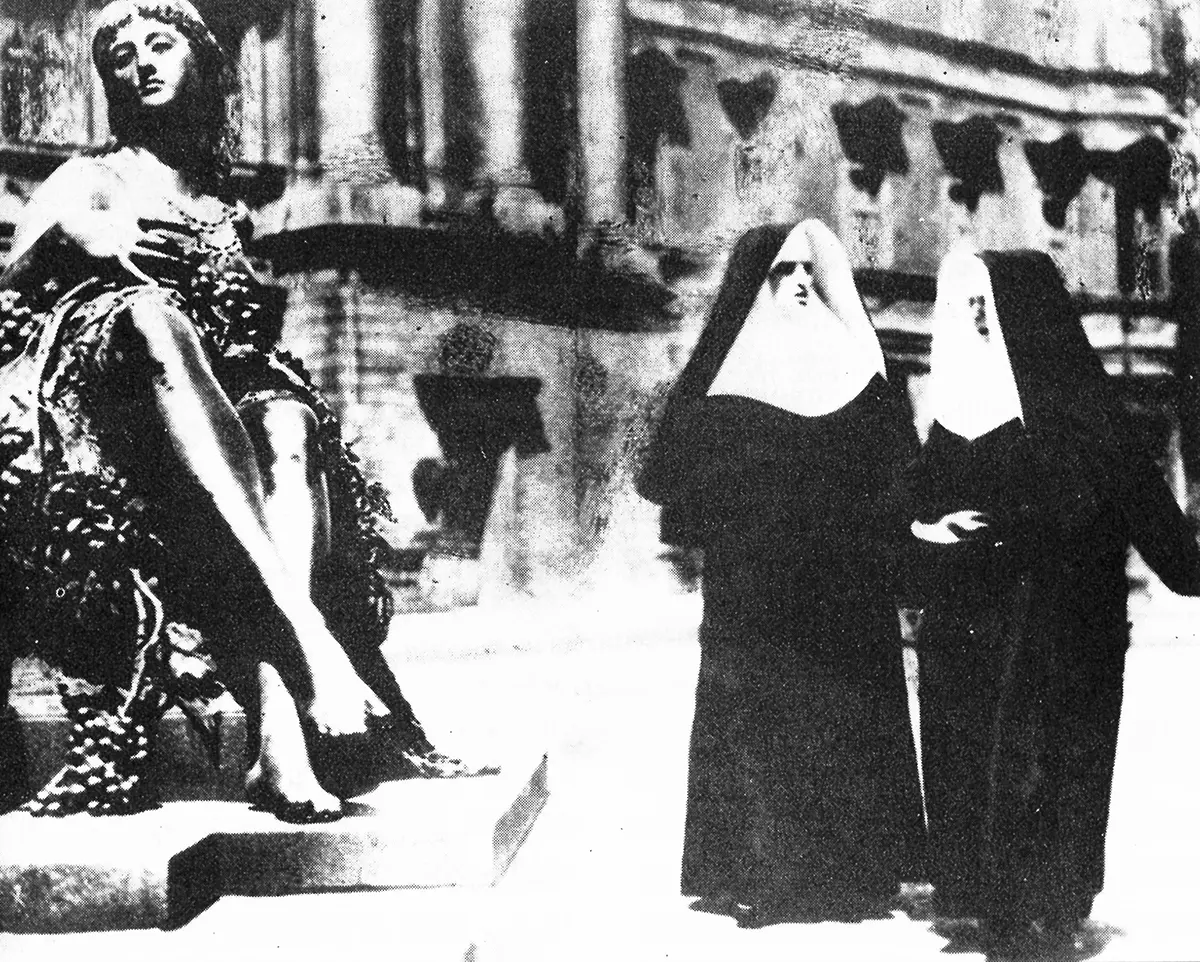
It is precisely her emotional commitment to life and revolution that differentiates Modotti’s photographs from those of other photographers of the period, like Edward Weston or Manuel Álvarez Bravo. For Modotti, photography was not an end in itself but a means of establishing closer links with the reality of a permanent immigrant who did not choose passivity but rather a relationship with events that took her out of herself, such as political commitment or love. The few photographs she took in the streets of Berlin in 1930, for example, have a touch of irony because her attitude enabled her to react in an instantaneous and vital manner to any situation and capture what was unexpected or incongruent, such as the image of two nuns passing in front of a statue of symbolic female seduction or the captured expressions of people at the zoo.
Another problem raised by the photography of the period was how to articulate exactly what was seen through the frame. In Modotti’s photographs, this problem was resolved by selecting the exact gesture which related people to one another, as in Hombres leyendo el machete or Marcha de campesinos. The syntax can therefore be seen as the protagonist of her work because of its capacity to bring together the most significant elements of two situations in a state of perpetual change.
Perhaps this alert attitude is what established the link between her images and her life, which was far from conventional she was in fact, committed to subverting conventional attitudes. Modotti was born in Udine, Italy, in 1896 in a region characterized by its traditional attitudes, but with a history of social struggles, in 1913 she emigrated with her family to San Francisco, California. Her work in a textile factory provided support for her family and marked the beginning of her interest in social and cultural change, such as the vote for women, or an interest in theater and film. Within her group of friends, she finally managed to educate herself in what might be called the spirit of the times, as reflected in the works of Joyce, Freud, and the Mexican Revolution. She arrived in Mexico in 1922, after the death of her first husband, a North American painter who had wanted to find new sources of inspiration there. She took with her some photographs by Edward Weston, whom she had met in 1921, and with whom she had lived and learned about photography in Mexico between 1923 and 1926. On her own and with Weston, she took photographs of architecture, handicrafts, and murals by Diego Rivera for various projects. Her photographs of toys were a means of emphasizing everyday elements and demonstrated the possibilities of photography to recapture texture and the essence of things. As her politics became more radical, her images showed increasing commitment to Mexican reality. It was at that time that her use of the frame became significant, reflecting an instinctive understanding of photography as a means of capturing change. Susan Sontag once said that in the real world, something is happening and nobody knows what will happen, but in the world of images something has already happened and it will always continue to be so. In her pictures from 1927 to 1929, Modotti managed to fix moments of a period of agitation in which people came together in an attempt to change their lives. She was deported to Berlin in 1930, where she made new friends, including Hannes Meyer, the director of the Bauhaus. Her political interests took her to Moscow and her final break with photography. She traveled to Spain in 1935 as a reporter and experienced the Civil War. In 1939 she went back to Mexico, where she died in 1942. As Manuel Álvarez Bravo has said, she left us a lesson in technical maturity and artistic solidity in the creation of genuine human documents.
NATALIA GUTIÉRREZ