
Claudio Bravo’s work is, simply put, an art of choice and control. His subjects have remained the same for more than three decades: still-lifes, the human figure, portraits, and interiors. His work—characterized, too, by a certain reciprocal estrangement from contemporary art circles—relies chiefly on an exquisite and transparent classical technique, a sort of privileged hand-to-eye coordination that makes possible his end-of-the-millennium revival of what is essentially a nineteenth-century art practice.
Bravo’s most recent exhibition at the Marlborough Gallery, his first solo show in New York City since 1989, includes a display of more than forty works in oil, pastel, watercolor, sanguine, and pencil. At Marlborough, Bravo the perfectionist goes back over familiar ground, advancing a few steps at a time, confirming all the while the idea that a careful and disciplined exploration of a few important themes can achieve as much as the most spontaneous expressive action.
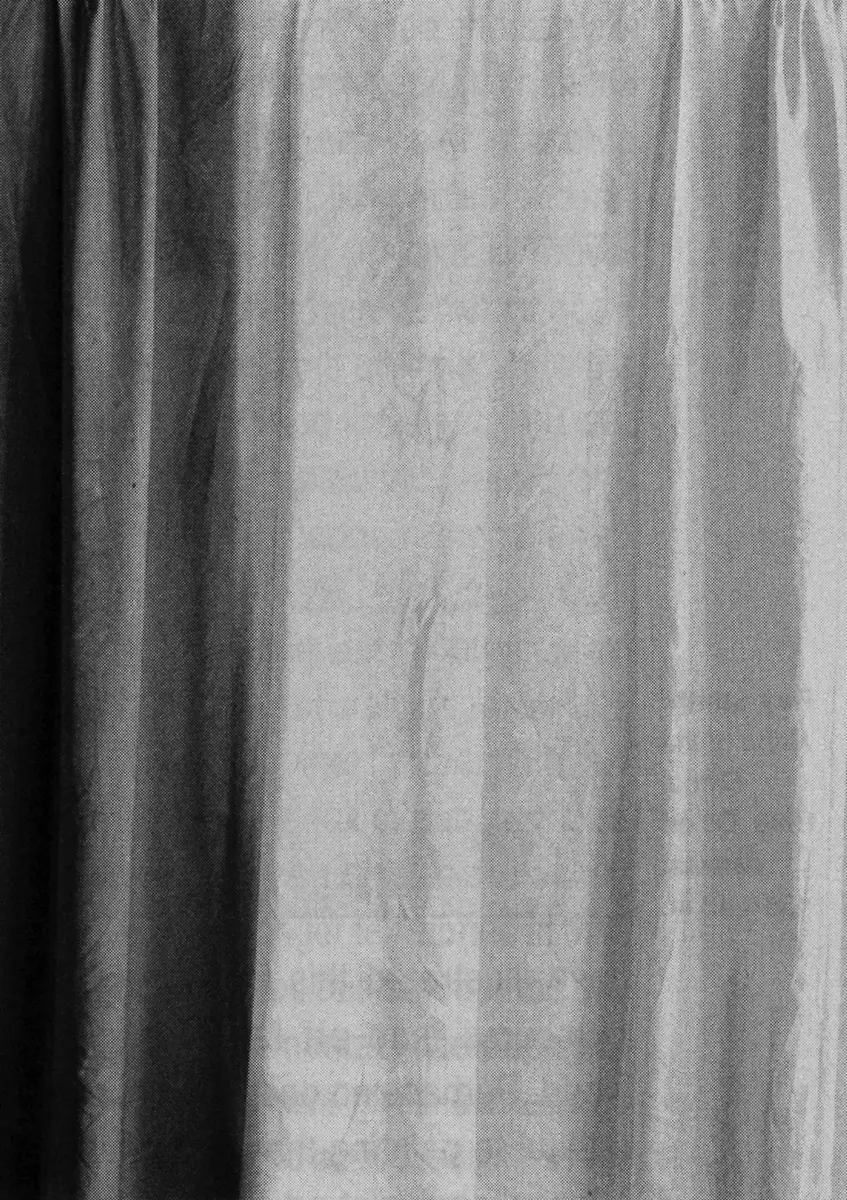
Among the works, it is chiefly three large oil paintings, Bacchus, Apollo, and Zeus, that carry much of the weight of the exhibition. The paintings are arranged as a triptych, each representing a single color—red, yellow, and blue, respectively. Bravo's canvases depict large swaths of fabric hung like drapery, displaying folds, creases, and shadows with a delicacy and formality that can easily be characterized as abstract—if we leave aside momentarily the matter of their high fidelity.
Bravo’s trio, in fact, strangely echoes Alexander Rodchenko’s three monochromatic canvases of 1921, Pure Red Color, Pure Blue Color, and Pure Yellow Color, works that culminated Rodchenko's career as a painter and which were meant to signify the end of the practice of painting (“It's all over," Rodchenko affirmed, “Basic Colors. Every plane is a plane and there is to be no representation.”). The unlikely connection between the two artists appears particularly significant in light of Bravo's commitment to realist art: Bacchus, Apollo, and Zeus achieve, through the use of precise figuration and basic colors, near non-objectiveness from the opposite end of the continuum to Rodchenko’s abstraction.
Another important group of paintings is a series of canvases Bravo dedicates to the senses. Of these, La Vista (Sight), is arguably the finest, a sort of multiple reference to Velázquez’s Las Meninas and to the sempiternal but nonetheless crucial problem of representation and perception. A picture of the artist painting, painting depicts a cloaked figure in front of an easel sketching out a fossilized nautilus. In Bravo’s painting, the artist has his back to us and the mirror captures Bravo himself rather than the Spanish sovereigns, but La Vista deals in similar metaphysics—specifically those concerning a multiplicity of points of view—as Velázquez’s masterpiece, a work that has been called "the theology of painting."
Carried to an illusionistic and mannerist extreme, naturalism has historically resulted in a certain perfectible kind of trompe I’oeil, a return to “the lost object” via paint, canvas, and the determination to avoid general spoilage in nature; for example, scarified flesh or the bruise in an apple. Bravo continually skirts the real problems surrounding his otherwise precise empiricism. Rather than fool the eye into believing they represent the real, Bravo's pictures, especially the still lives, hold us by their unreality. It is ultimately the highly conceptualized and willfully formalized character of their fiction, their elaborate artifice, that draws us into them.
CHRISTIAN VIVEROS-FAUNÉ