
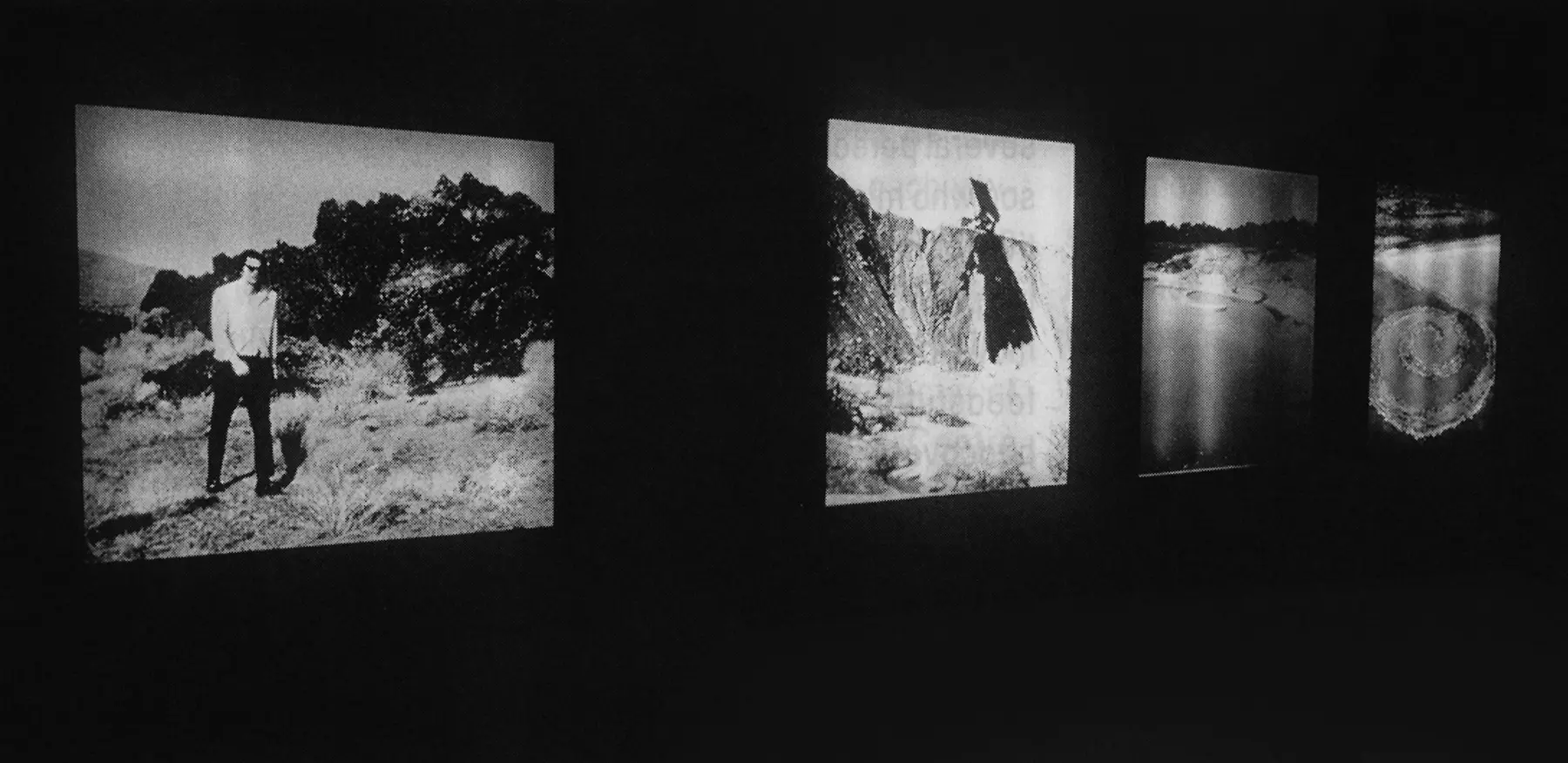
The Clay of the Americas Biennial is the project to which the critic and researcher Roberto Guevara devoted his last years. Following his recent death, the Ministry of Culture of Venezuela decided to pay tribute to his name with this third edition.
The event was held in museums in Caracas, Maracaibo, and São Paulo. This review will concern only the exhibition presented at the Museum of Contemporary Art in Caracas.
On visiting the exhibition rooms and recalling the characteristics of the last Biennial, the visitor was struck by a number of differences: there was a better selection of foreign artists, and there were many Venezuelan artists who were not up to the level required by the show; the works were better distributed within the space and thus did not suffer any interference from neighboring exhibits; there were some large scale pieces and a combination of past and present; tribute was paid to Robert Smithson, Helen Escobedo, Francisco Narvaez and Guevara himself, as well as to Stephen Cruise, (whose Hares in clay and organic earth have been on display since 1992); emphasis was placed on certain artists (Miguel Ángel Ríos, Carlos Uribe, Stephen Cruise, Mercedes Elena Gonzalez, Hugo Zapata, Lygia Reinach, and Reinhard Reitzenstein), which allowed for a closer look at their proposals. Most important of all, the conceptual aspect was highlighted in the definition of work with clay in the Americas.
While on previous occasions some artists explored pre-Columbian cultures in an attempt to reformulate the culture of the Americas from the standpoint of the present, this time attention was paid to the inaugural objects of American man. Guevara used to say that throughout our continent, and from the beginnings of culture, clay has been the first and essential projection of man. Hence the vessels, receptacles, figures, and everyday and ritual objects reflect the human qualities of the first inhabitants of the continent. In the case of Venezuela, the show included some pieces from Lara and Valencia, illustrating the awareness of the cosmos and sense of territory.
In the same way, the account was taken of Spanish and English porcelain from the colonial and republican periods, when domestic use was associated with the celebration of dates recalling Bolivar or Carabobo as synonymous with freedom.
Of the large works on view at this third edition, mention must be made of Forest for Roberto, by the Canadian artist Reinhard Reitzenstein, which consisted of wooden disks and beeswax in the form of trees, placed on the floor, with the shadow of the work expressing in large scale the best desires of creators; the drawings and preparatory sketches for a utopia by Francisco Narvaez, such as the sculpting of Bolivar’s face in a tepuy (project from 1971); Tower, by the Colombian artist Carlos Uribe, consisting of the reconstruction of a sugar mill —with tower, patio and canal— with brown sugar sheet leftovers as a means of evoking both the earth and memory; the blue room with the white roof by the United States artist Barbara Bloom, where the careful placing of each object served to alter our perception of up/down, sky/earth, and where the light came from the back. On the table, there was a replica of the porcelain from the Titanic and on the ceiling were instruments lost by the astronauts. The message would seem to indicate that the adventure should continue despite the setbacks and that the spherical element is synonymous with the circulation of ideas.
The Colombian artist Hugo Zapata used elements evoking the transformation of matter and time-stones, water, and the effects of corrosion while María Fernanda Cardoso presented an underwater landscape. The Venezuelan Juan Felix Sánchez established a spiritual dialogue between himself and his country from the solitude of the Andean highlands, using a chair, two wooden carvings, and his idea of the town of Bethlehem, in small clay pieces with exquisite handicraft work. The Venezuelan artist Milton Becerra explored the theme of urban change by means of slides of brick and mud houses of one or two floors and enormous buildings in an old district of Caracas, to evoke the sense of uprooting.
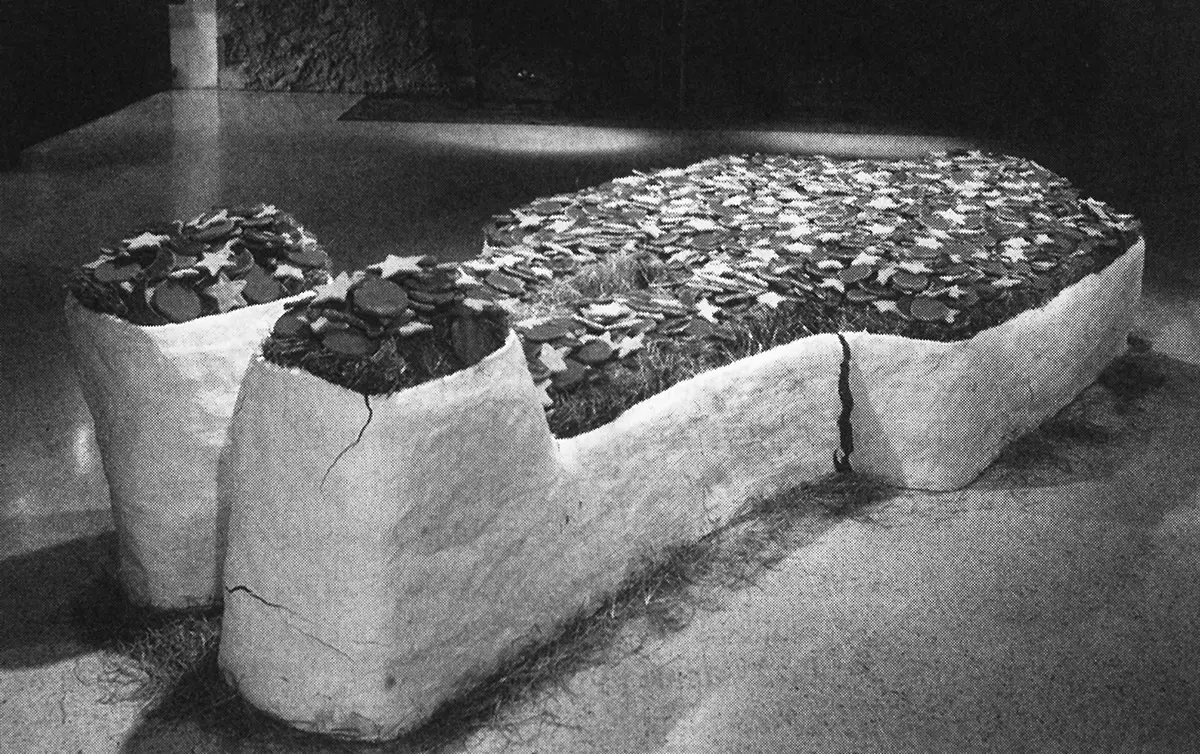
Maps are the instruments of the Argentinian artist, Miguel Ángel Ríos, in long strips which fill the space, a work opening up into a geography of feelings. Stephen Cruise, from Canada, using mud and straw, emphasized perennial dreams: the silhouette of a man, who is at the same time his tomb, is covered by hundreds of stars, moons, and suns, in yellow, blue, and red. Sergio Vega, from Argentina, revisited the modernist urinal of Duchamp, while Charles Simonds, from the United States, explored places of residence, and Sigfredo Chacón, from Venezuela, recalled the figures of Adam and Eve.
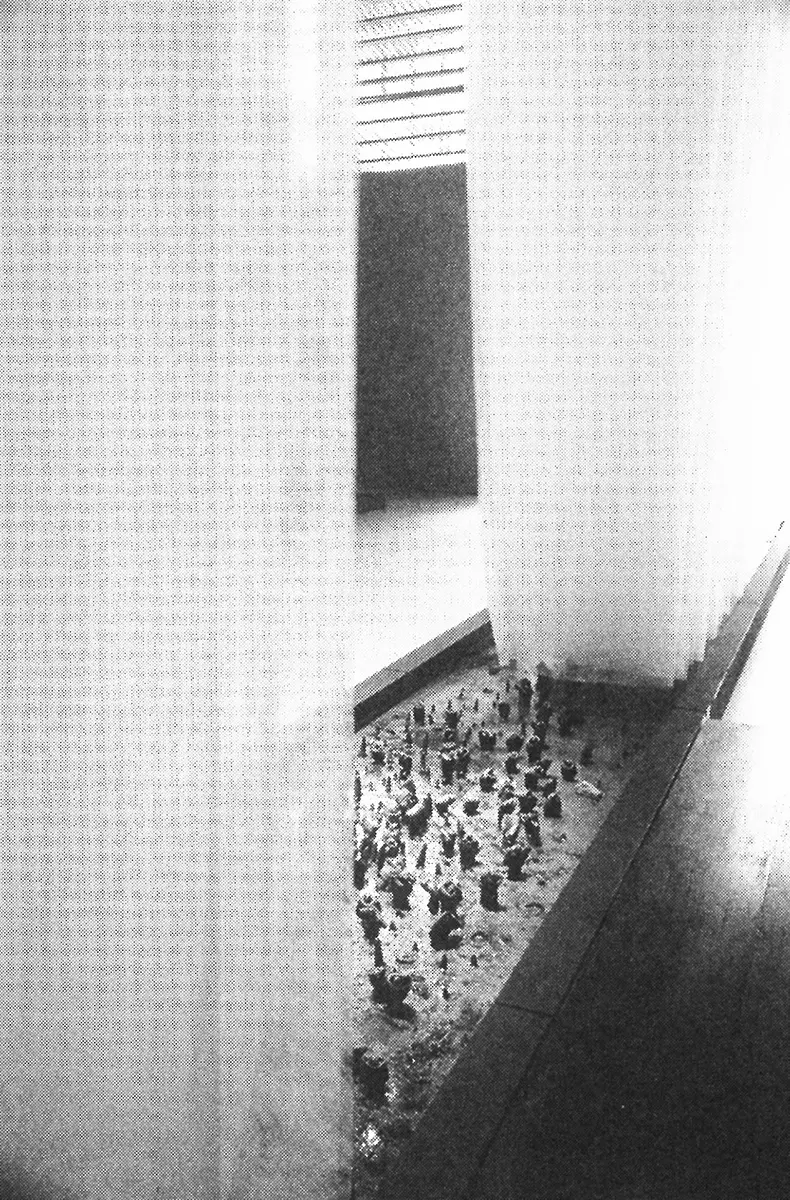
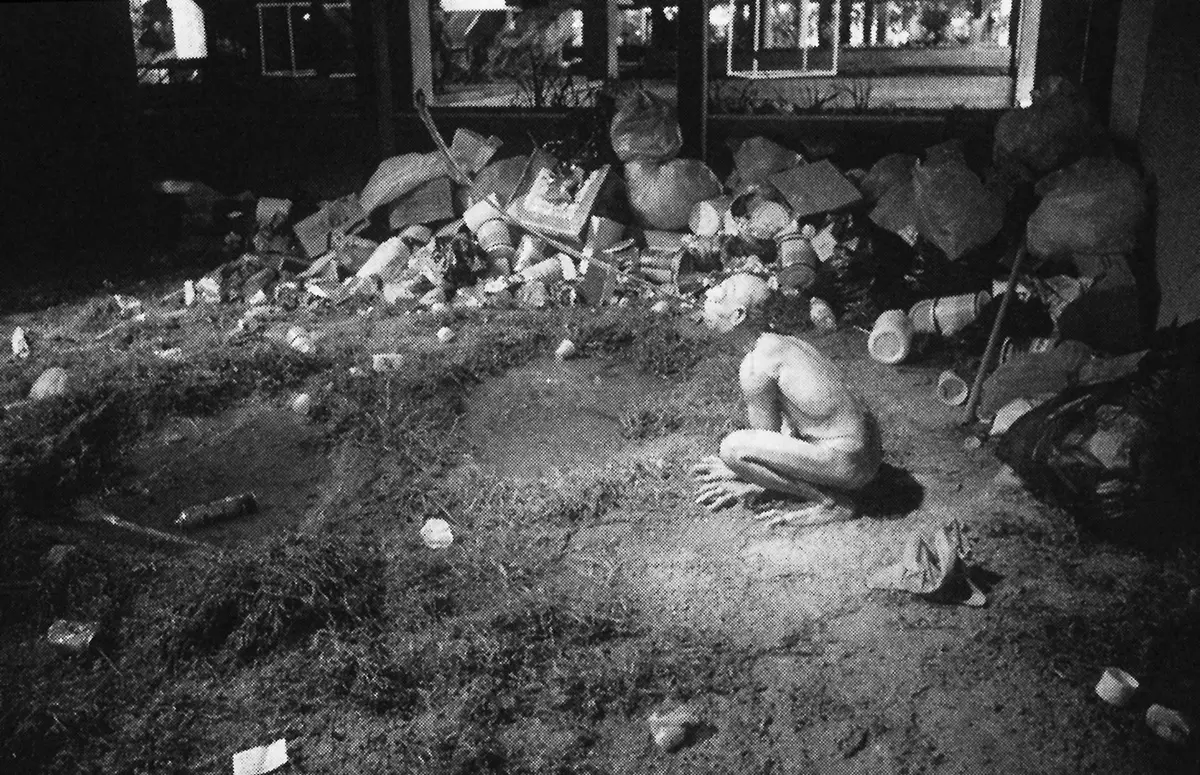
There were two other major works: that of the Venezuelan artists Mercedes Elena González and Miguel A. Sucre, who in a closed and barely lit space, divided into four parts and worked with dry earth, marked out the city, with emblems, epitaphs, and flowers as the only accompanying elements; and that of Pablo Suárez, who created a piece of waste ground as a critique of the filthy space surrounding the inhabitants of Caracas. An urban garbage dump where a batracian-man spends the night. And yet, surprisingly, in the midst of all this desolation, a few green leaves were growing.
JUAN CARLOS PALENZUELA