
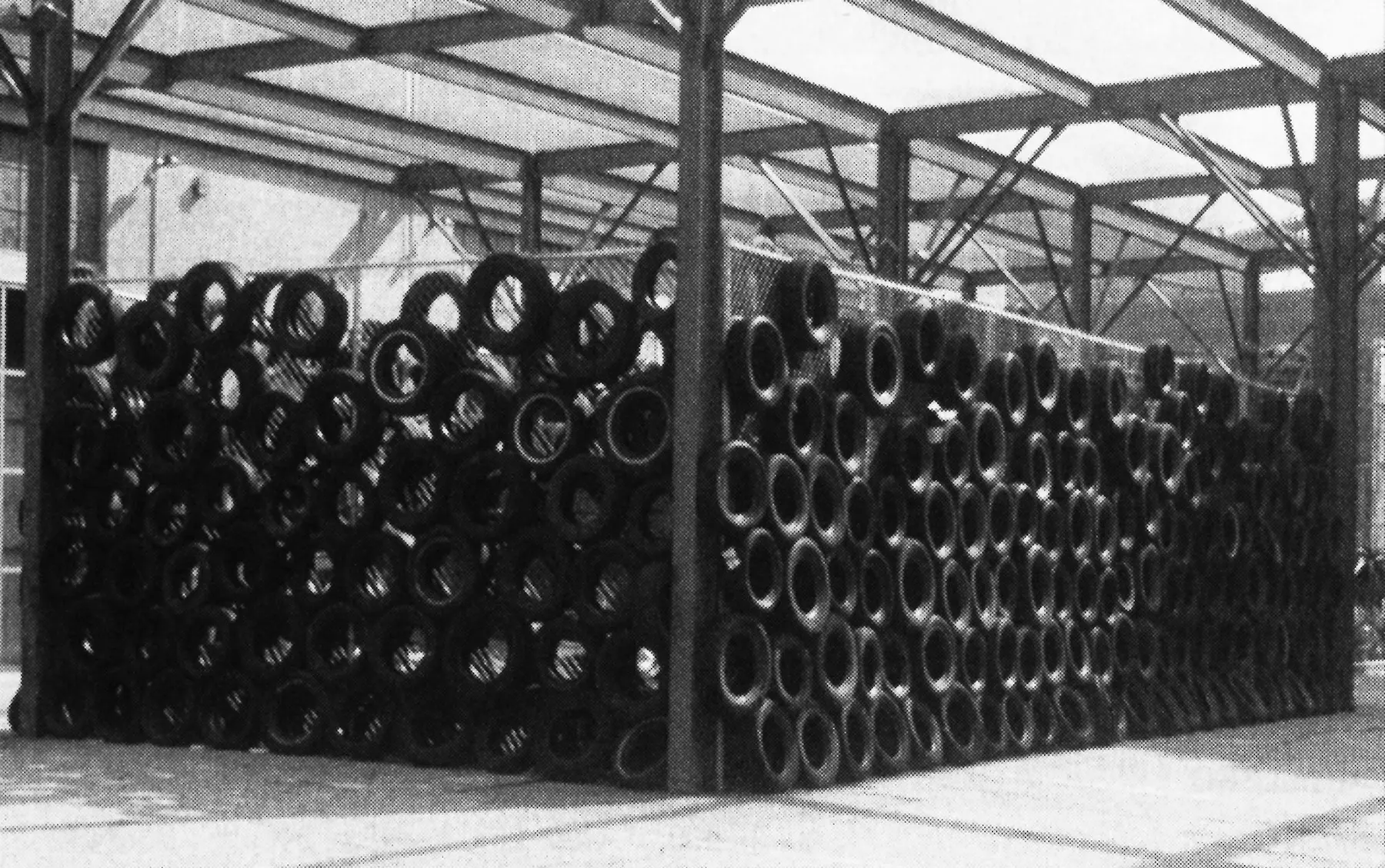
Out of Actions: Between Performance and the Object 1949 - 1979 begins with works and related documentation of Jackson Pollock, Lucio Fontana, Shozo Shinamoto, and Kazuo Shiraga, among other post-WWII artists who explored and expanded the implications of action and gesture in the making of art. In this context, Pollock is removed from the formal and intellectual claims commonly attached to Abstract Expressionism, and for which Pollock generally is remembered. Instead, he exemplifies a generation of artists who took definitive steps in replacing the idea of an art object made by carrying out steps toward a given end with the notion of an art object as something embodying a record of the physical and psychic acts that contributed to its making. Pollock and other contemporaries around the world laid the groundwork for materially minded and phenomenologically preoccupied artists like Richard Serra, whose precariously arranged metal masses and sculptures formed from splattered molten lead (works that bear absolute witness to the actions of their creator) are conspicuously absent from this exhibition.
There could be a long list of practical reasons for the absence of Serra and other artists such as Bruce Nauman working in a similar vein, not the least of which might be that even in a survey exhibition of this scale, one cannot hope to include every work or practitioner. But there seems a more clear reason for the non-appearance of these artists. Serra and his contemporaries didn’t gain attention until the 1960s, and by the time this show gets around to addressing that period, the curatorial focus has shifted gears, and artists who seem appropriate but are absent have been replaced by artists who are fascinating, but unlikely as inheritors of the legacy of action painting and gestural sculpture from the 50s.
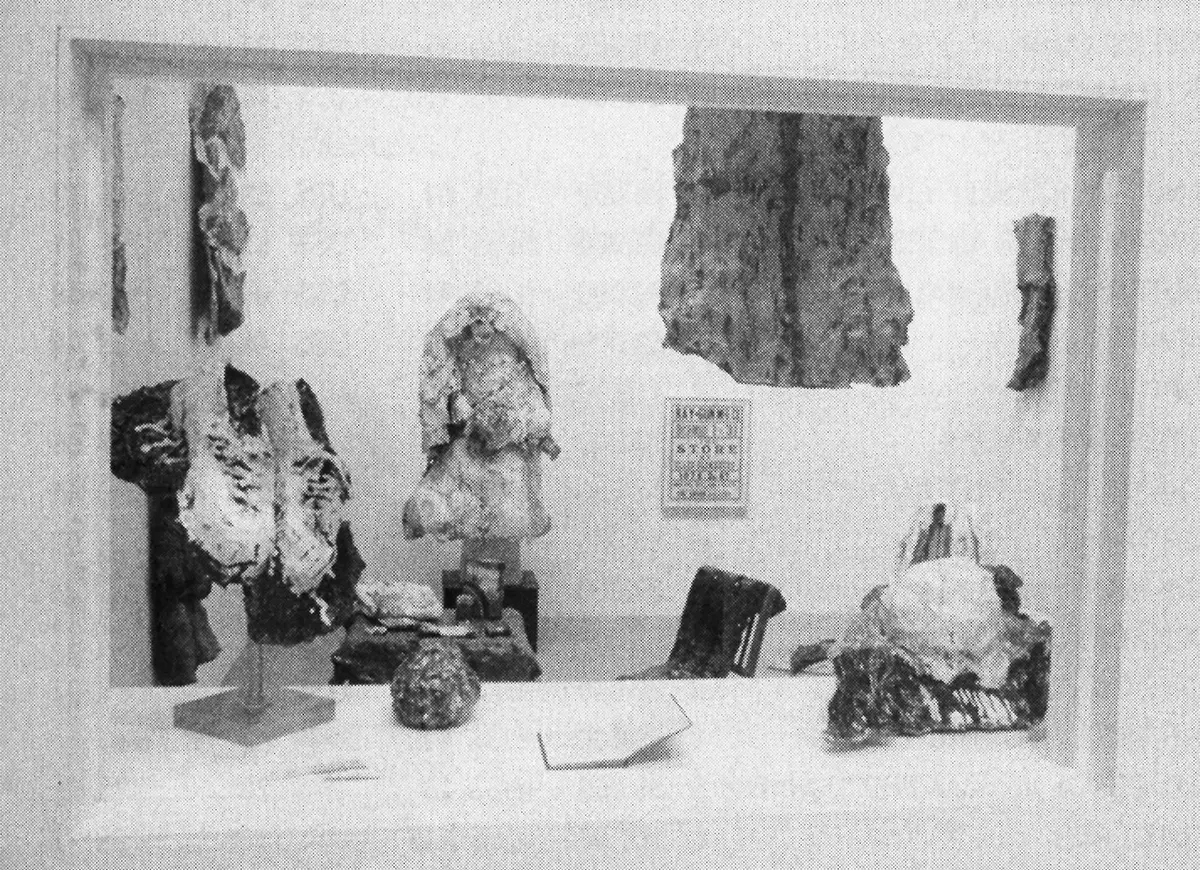
What we wind up with is not unlike a grafting of a rootstock to branches that grew out of other roots, and which bear fruit their new roots never would have generated. In this case, we begin with artists who, despite their predilection for action and gesture, were clearly interested in producing objects and paintings. Despite its capacity to record every stab and slash of the artist, for example, one of Lucio Fontana's shredded canvases is still an art object, intended to function as such by the artist and visibly present as such to the viewer, with its lineage belonging to a history of paintings and objects rather than a history of acts or performances.
The artists grafted onto the roots of Fontana, Pollock, and others, however, are artists who placed emphasis on the acts in which they engaged, with related objects possessing secondary, if any, importance —artists like Chris Burden who redefined the boundaries of physical experience or Lygia Clark, who took performance art into the realm of alternative psychotherapy. Even those who the exhibition presents as mediators between these two groups —artists like Yves Klein, who generated awkward paintings out of events in which models were slathered with paint and dragged across or pressed against canvases, or Lygia Pape, whose metaphor-laden rituals of rebirth, sensory perception, and interpersonal relation were undeniably formal on a visual level— seem clearly rooted in the fascination with the act. The art for these later artists, who opened up performance as a medium, lies primarily in the moment as it was played out in a specific place and time, and most of what this exhibition presents on behalf of these artists falls into the categories of documentation, souvenirs, and leftover props.
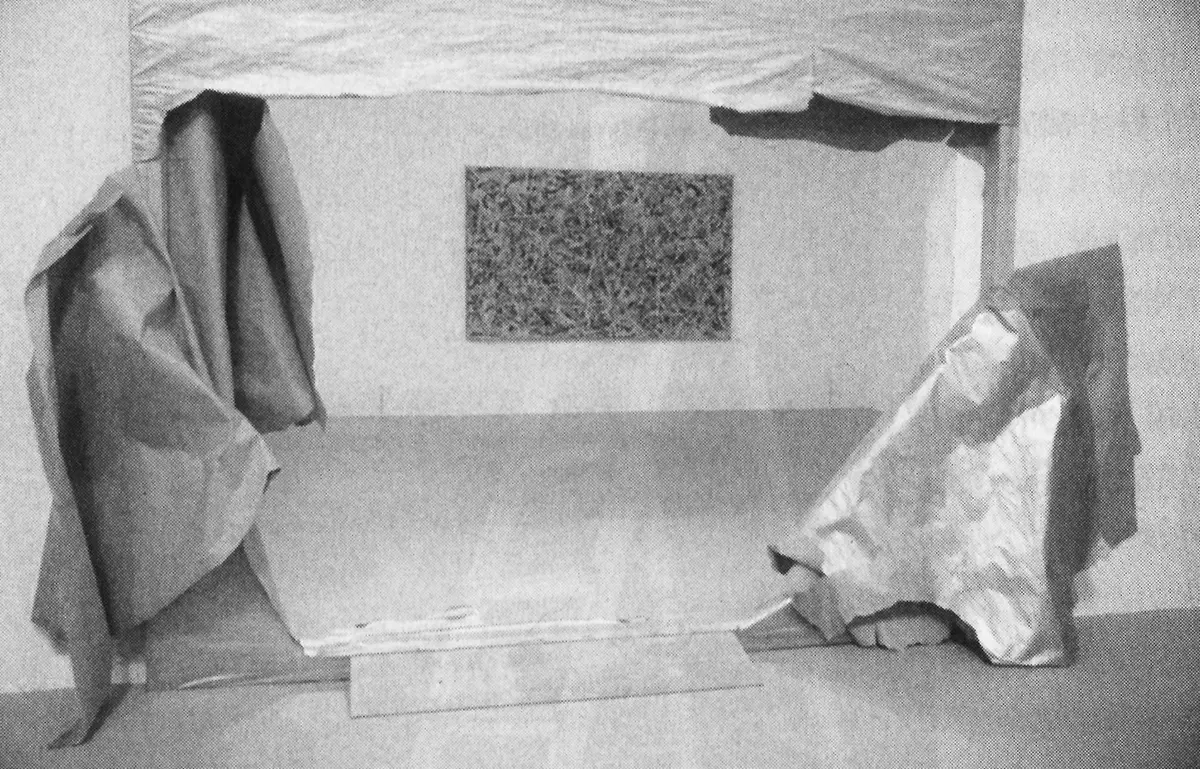
The transition from what begins as a show of art objects to what becomes a show of art byproducts —a mixing of the works of a group concerned with the implications of action in the making of art and a group concerned with the artistic implications of action— is not unsatisfying. Yes, there is action in all of it, and just as much as I enjoyed examining the traces of movement in Pollock's paintings, I also enjoyed standing in the presence of the blood-splattered garments Hermann Nitsch wore in his violent sacraments of the 1960s, or the long, narrow scroll Carolee Schneemann read as she slowly pulled it from her vagina in 1975, or the photo-documentation of Arthur Barrio's sensory minefields known as Situations, which inundated the viewer with pungent smells and nauseating sights one could only hope were not built to last. Having not had the chance to be present at the events that were the actual art, I was happy to be presented with the opportunity to go to a museum and at least bask in the aura of these relics. No harm, no foul, perhaps, but in this mistranslation and mingling of two traditions with only occasionally overlapping paths, a disservice is done to both.
In a survey that plugs together precursors and successors that don’t truly belong together, we never get a sense of the legacies inherited or left behind by either; moreover, neither is looked at in a substantive fashion. Should we look at paintings and objects which are visceral, physical, and intended to function as objects in the world as evidence of acts that happened to result in their creation? Should we be hanging onto and revering (tempting though it may be) the leftovers of actions that were intended to be experienced directly, temporally, and which in many cases were intended to defy historicization, objectification, and commodification via their transient nature —performances that were meant to be timely rather than timeless?
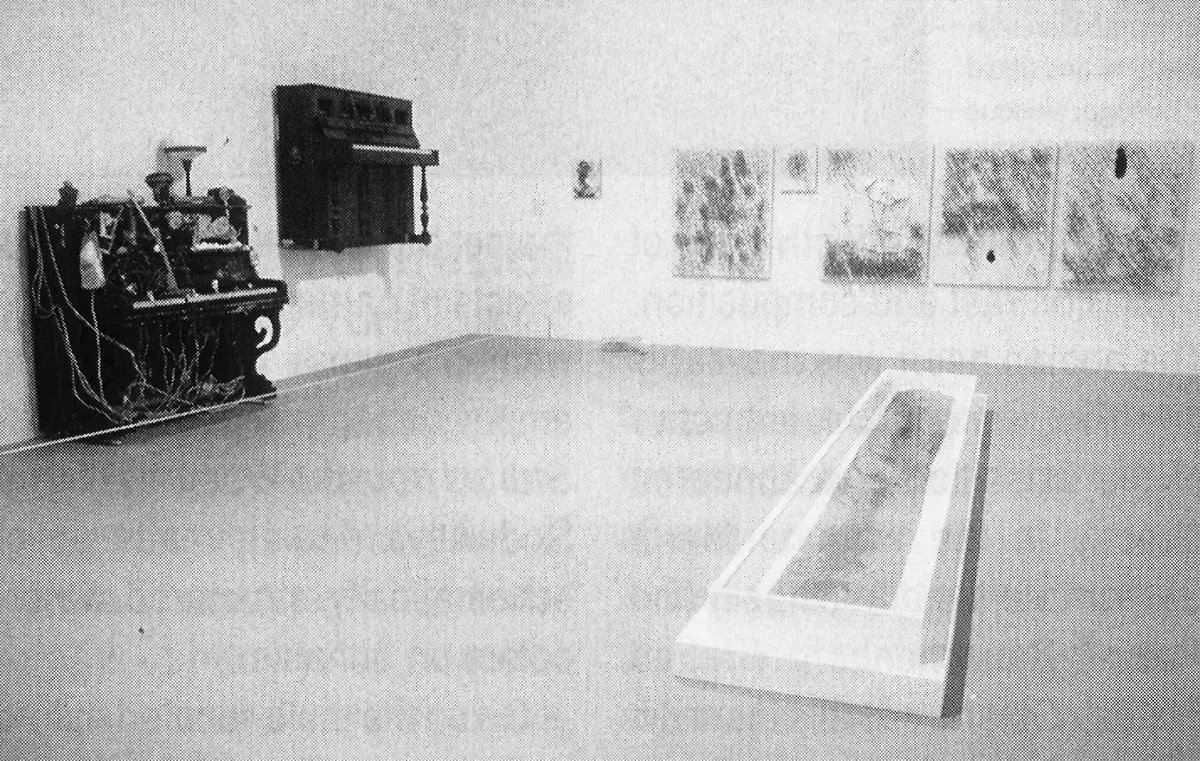
Arguably, there are three exhibitions thrown together in this one: an art retrospective of objects born of intense action in a brief period that had both its own forebears and offspring; a history display attempting to retrace the steps of artists whose art existed momentarily within actions and is now gone; and a show of installations, kinetic art, and interactive work intended to fill in the gaps, but which have separate histories and concerns of their own. I won't deny that I got a kick out of wading through this jumble, but I might have gotten more out of it if it had there been three separate shows covering separate stories, each with its own before, during, and after.
CHRISTOPHER MILES