It was the end of February and FotoFest got started in Houston. Around the Rice University area, pedestrians began to appear! No other trait is necessary for Houston to identify you as a foreigner. If you are not driving or jogging and you are walking, you do not live in Houston. Its empty streets might make Houston appear pretty inhospitable, but Houstonians themselves are —all things being equal— pretty hospitable. Moreover, in 1998, when El Niño is wreaking havoc all over the world, fair weather welcomed FotoFest's guests. All flowers bloomed, all trees were green, and all sixty-some exhibits opened. In what follows I will only review or mention this year's Latin American exhibits.
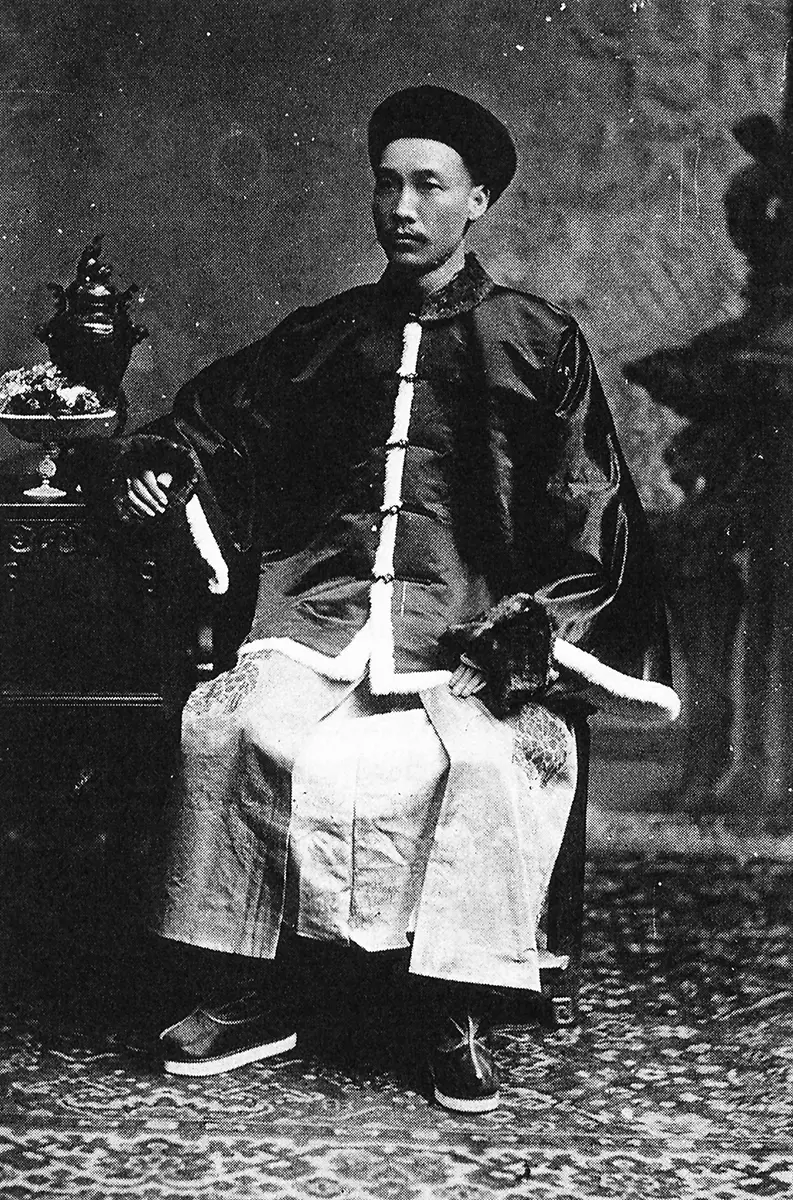
The historical exhibit Memory of a City: The Photography Studio of Eugene Courret 1863-1935 was shown at the Transco Tower. Curiously, the building itself, a sort of Empire State for the eighties, is a modern architectural landmark in Houston just as much as the Courret studio is an art nouveau architectural landmark in Lima. Memory of a City was first presented at the Museo de la Nación in Lima in 1994. It is based on a rather idiosyncratic selection by curator/photographer Jorge Deustua from the thousands of negatives at the Courret Archive currently housed in the Biblioteca Nacional of Lima.
The importance of the work of Courret in Peru cannot be over-emphasized. It encompasses over seventy years of republican Peruvian life: from the guano economic boom of the 1860s, through the War of the Pacific, the Aristocratic Republic (The term, perhaps too benevolent, belongs to historian Jorge Basadre), and the thrust for modernization of the so-called Oncenio Leguiísta. Although there is some validity to the curator's premise that the Courret studio—the most expensive studio in Lima— represented a well-to-do clientele; it is not the case that the studio did not depict anything but the world of the well-to-do. Memory of a City, however, pursues the memories of a white European upper-class ancestor. At least the 1994 version of the exhibit had a few images of the thriving mestizo middle classes—although shown in groups and in smaller prints. In Houston, these last images were altogether gone. Courret seems to have been a complex character undeserving of easy simplifications. Eduardo Pineda, the curator from the San Francisco Museum of Modern Art, traced him to Tahiti, shortly before his arrival in Lima. It would not be unreasonable to suppose, therefore, that he might have been influenced by the more humanist side of the Enlightenment insofar as the "other" is concerned.
In spite of its class perspective, however, Memory of a City is exceptional for its compelling visual power. To its conceptual credit, it does show how the power to shape national ideology was—for a crucial period of Peruvian history—in the hands of the landowning oligarchy and new industrialists and businessmen.
Recent research shows that, at the turn of the century, economic power shifted from old landowning families to more recent European immigrants; among them, Germans and Italians.
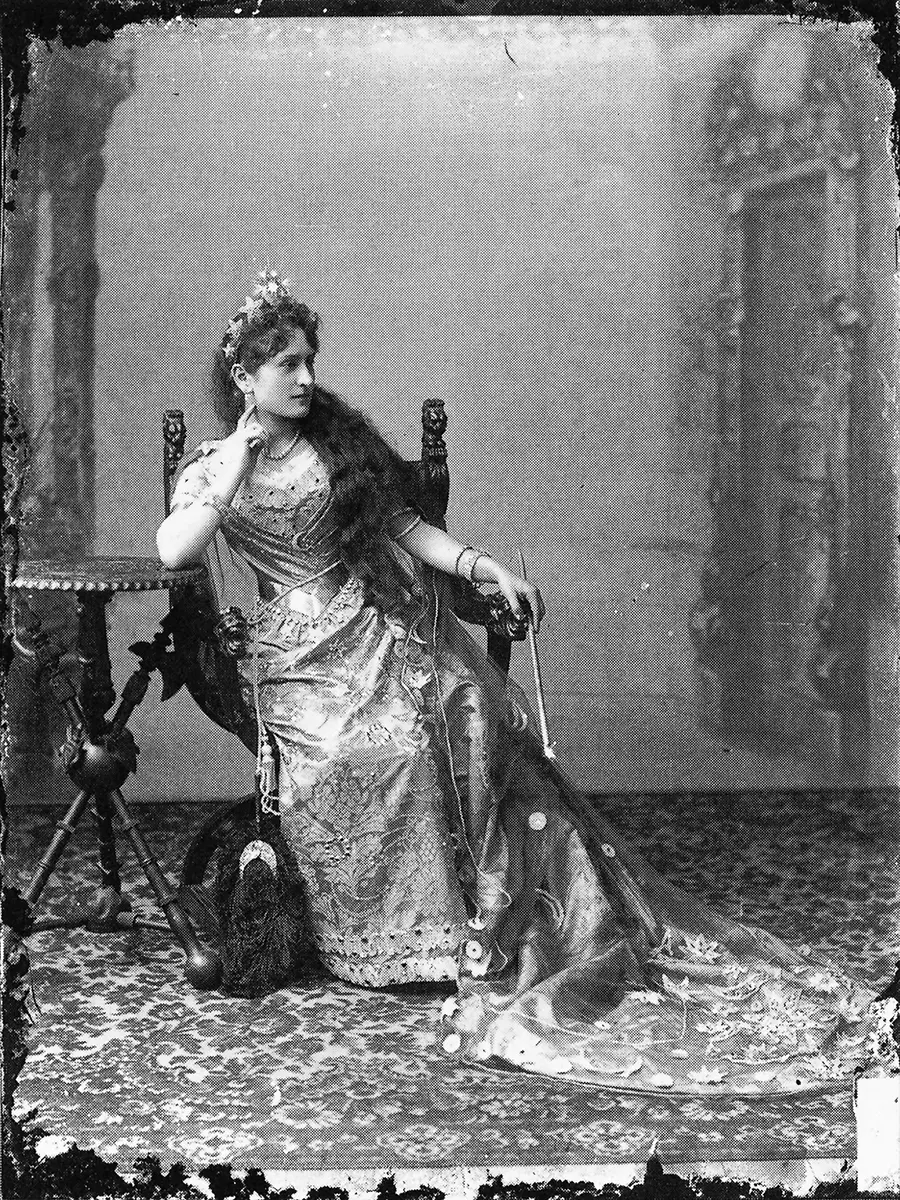
The images in the exhibition revolve around the social world of the economic elites who, if given a chance at many a "costume party", would merrily imitate the eighteenth-century European aristocrats—in spite of the fact that their heads had already rolled during the French Revolution. Perhaps the most moving images in the exhibit are the black and mestizo-wet nurses, who breastfed the children of the wealthy. In fact, in Lima, the exhibit showed vis à vis these images a list of the going prices of the day for wet nurses of different ethnic origins (none white).
Equally compelling are the portraits of Japanese and Chinese immigrants. Many of the latter were brought to Peru as coolies to provide cheap labor for the landowning oligarchy. Courret's family portraits show how readily the Asian immigrants became integrated with the local population and how soon many became prosperous members of Peruvian society.
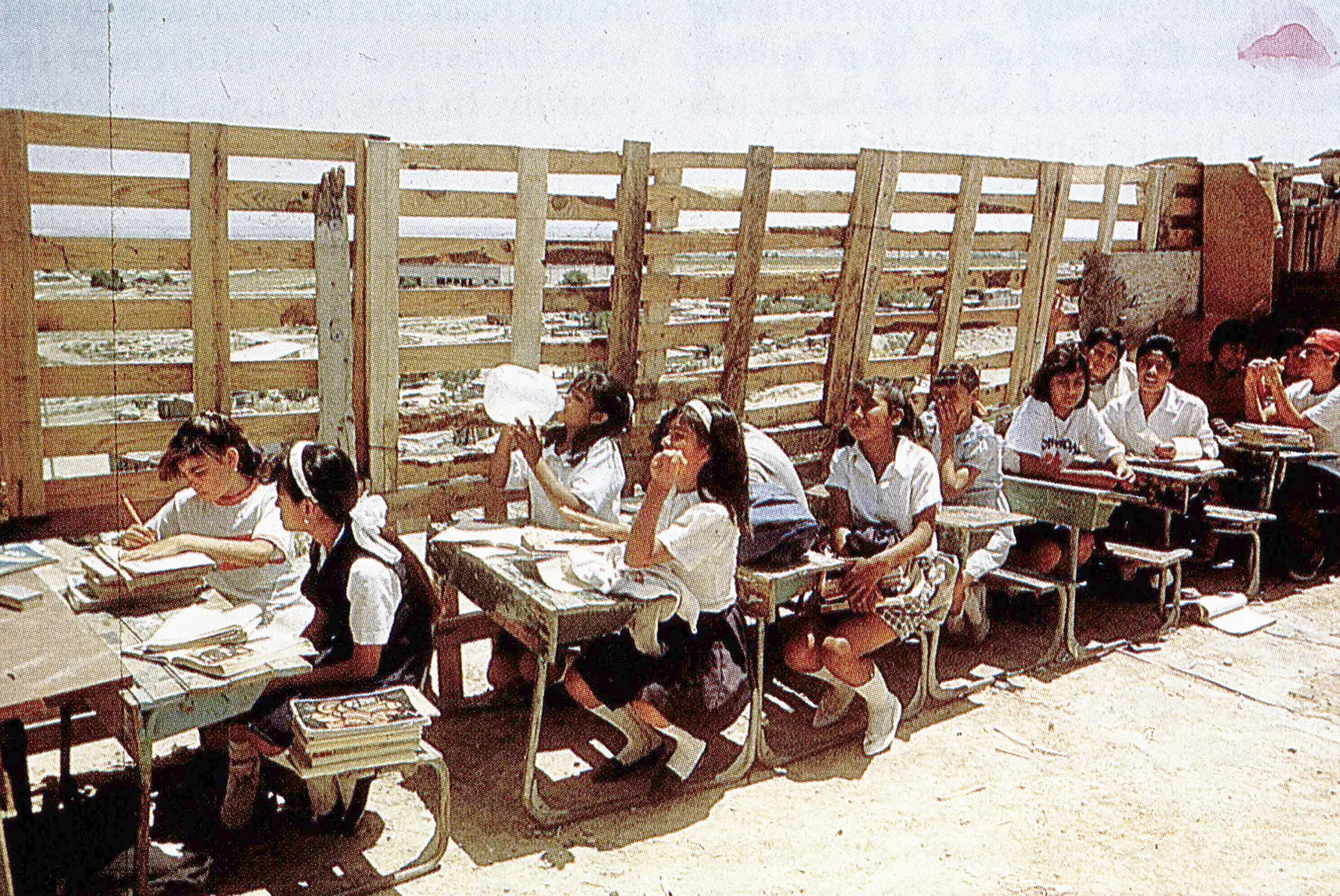
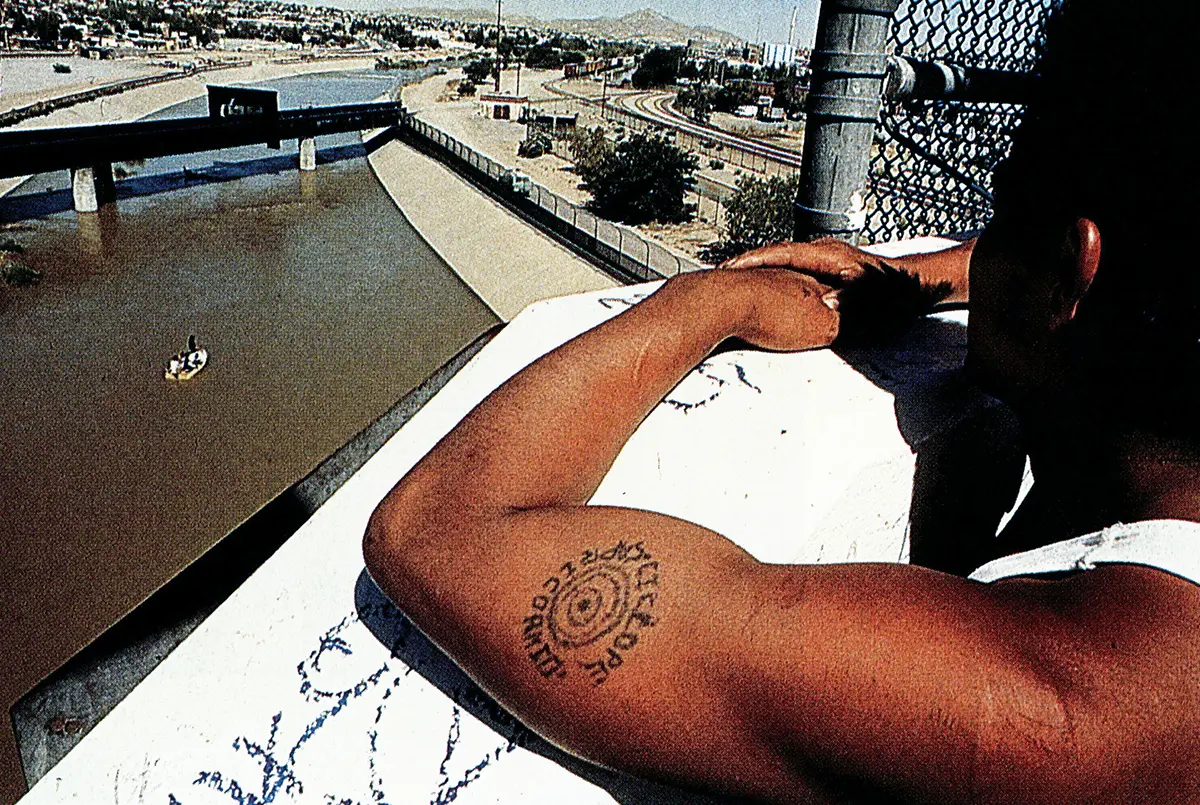
At one of Houston's most interesting exhibition spaces, Diverse Works, another exhibit titled Stories About Us: Photographs from Juárez, made its point of view conspicuous. Here the vision came from photojournalists native to the El Paso/Juárez area, on the Mexico-U.S. border. The clash of cultures and lifestyles plus the border syndrome result in violence whose density may very well be unmatched in the continent. The images give testimony to the impact unscrupulous industry, drug traffic and illegal migration have on the city of Juárez/El Paso.
This exhibit is, in a sense, antithetical to the one at Transco Tower: gone are the elegant and strict conventions of nineteenth-century studio portraiture; they have been substituted for the spontaneous and flexible compositions of contemporary photojournalism. In fact, here we have a clear case in which the parameters of art are beside the point; instead, it is image making the more important cultural category that is relevant. Images in the documentary mode of the south-to-north crossing of the Rio Grande or the daily walk of a young woman towards a maquiladora, acquire epic dimensions, unexpected symbolism, and poetic grandeur. They could very well be visual verses of that great epic poem, The Sunstone, of the recently deceased Mexican man-of-letters, Octavio Paz.
Then, of course, there are the corpses. Their display poses difficult issues in a world where the media has almost immunized us as spectators to undiluted death. Contextualization and textualization are tools that give meaning back to the corpses. Viewing them is "easier" if we know who they are and that their death resulted from drug-related violence, or simply from living in the margins of the dominion of law— as is the case of young girls who are continually found in the desert murdered and raped. Perhaps that is another important aspect of this show: that it brings forth, issues of representation in the documentary mode with a renewed sense of urgency. Finally, the exhibit is of political interest as it shows a possible microcosm of any Latin American country whose fortune has been left in the hands of uncontrolled forces.
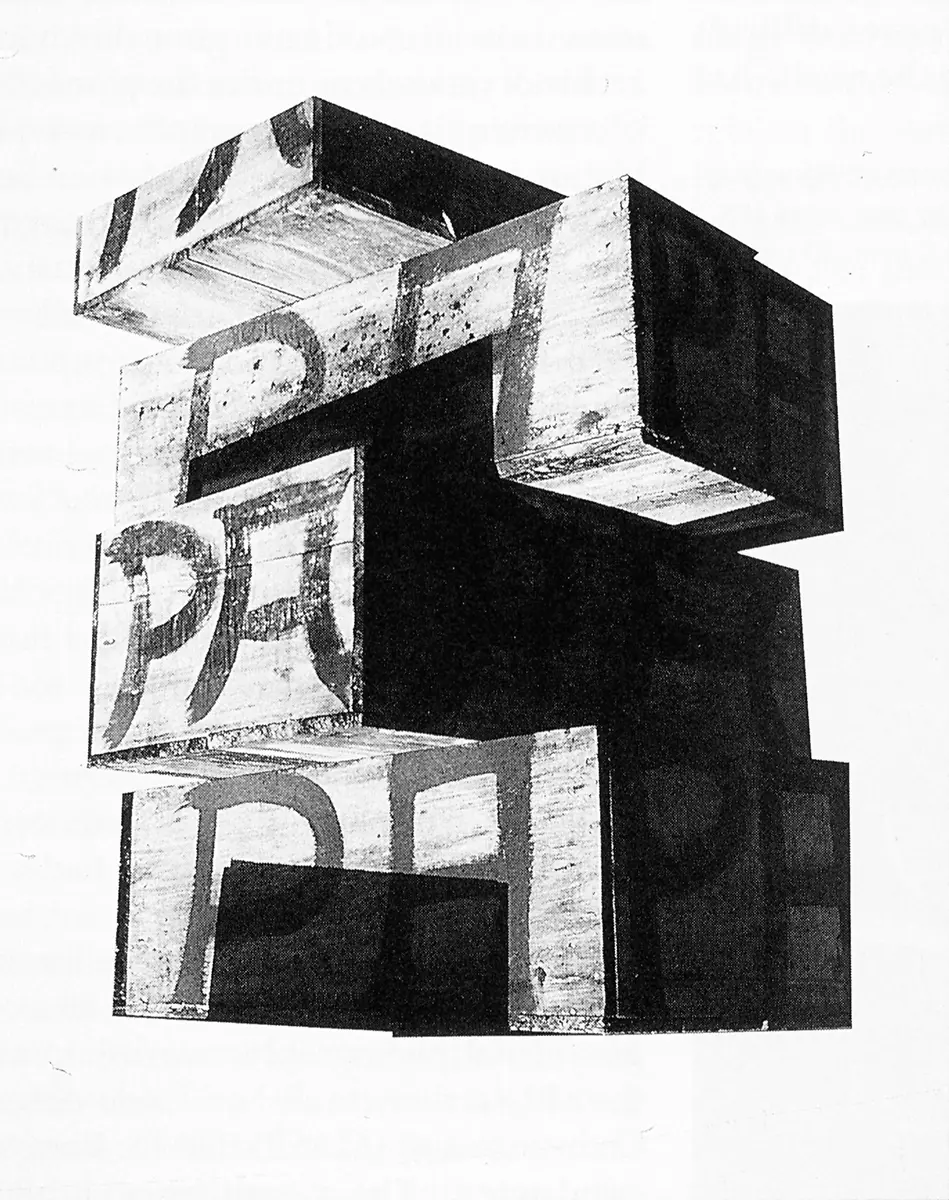
Sicardi-Sanders Gallery, the Latin American art gallery of Houston, opted for a more subdued exhibit for FotoFest '98: Traces on the Glass: The Photographic Work of Geraldo de Barros 1948-1951. It was a long overdue tribute to the Brazilian pioneer of avant-garde photography in Latin America. Seventy-five-year-old De Barros died shortly after this exhibition. His daughter Fabiana reports that the renewed interest in his work had brought him a great deal of happiness and had inspired him to take up photography again. Until recently, De Barros was virtually unknown outside his native Brazil and even there he could have gone down in art history merely as one of the pioneers of concrete art. His photographic revival began in 1993 when the Musée de L'Elysée of Lausanne showed a major retrospective of his work. Curiously, some of his images surfaced in the 1978 Latin American Colloquium of Photography in Mexico City, and one of them, Menina do sapato, is featured updated in the catalog Hecho en Latinoamérica (Made in Latin America). Whether it was because the ideological preferences of that colloquium did not favor the kind of expressionistic manipulated image of De Barros, or because its date, 1949, was not noticed or known, De Barros' true recognition as a pioneer in Latin American photography had to wait fifteen more years.
Most of the work featured in the Traces on the Glass exhibit resulted from an experimental photographic workshop at the Museu de Arte de São Paulo Assis Chateaubriand (MASP) that De Barros conducted. The resulting exhibit, Fotoformas, earned De Barros a fellowship from the French government to study art in Paris in 1951. In that French city, he apparently came in contact with some members of the earlier European photographic avant-garde like Cartier-Bresson, and Brassai. Ironically, his European experience seems to have taken De Barros on a path away from photography. In Zurich, he met Max Bill and became extremely interested in graphic design, the concept of serial production, and the mass delivery of artwork.
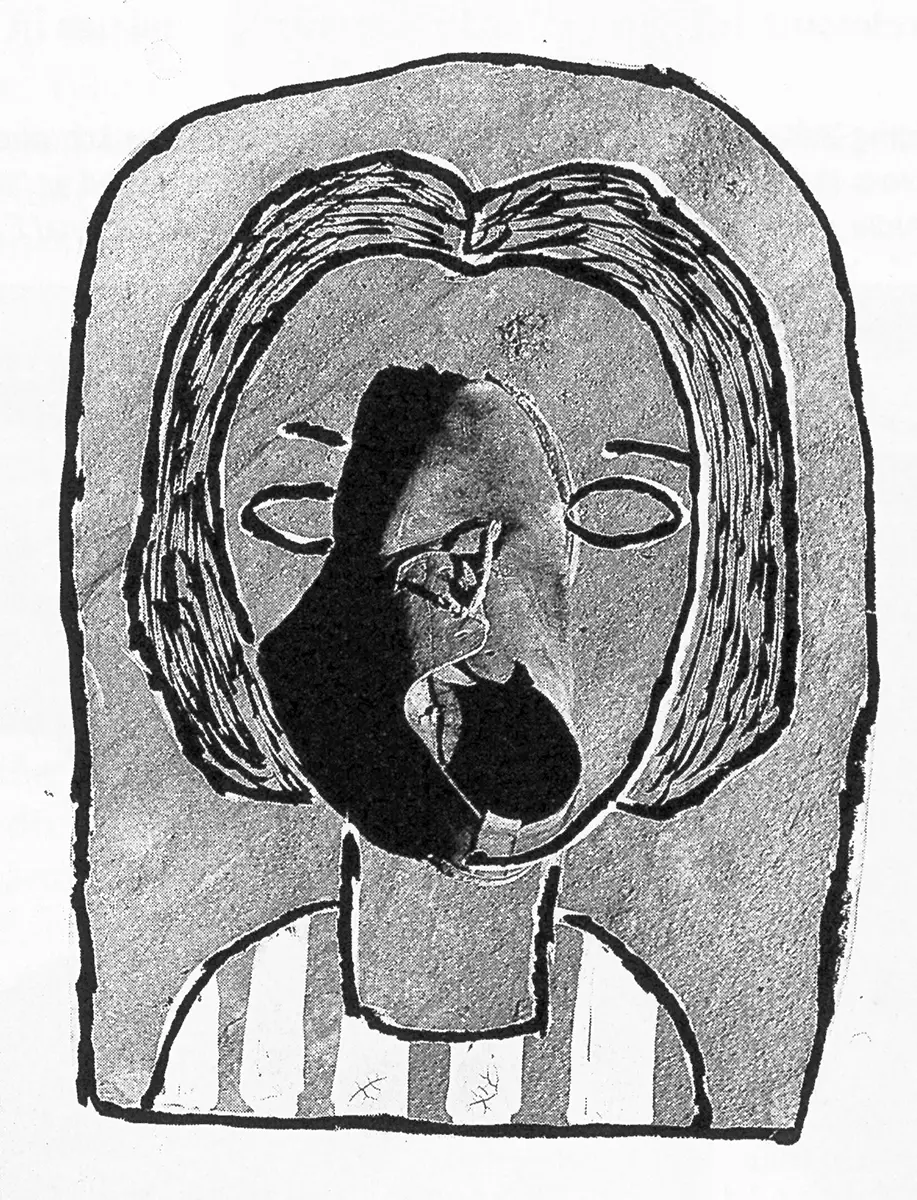
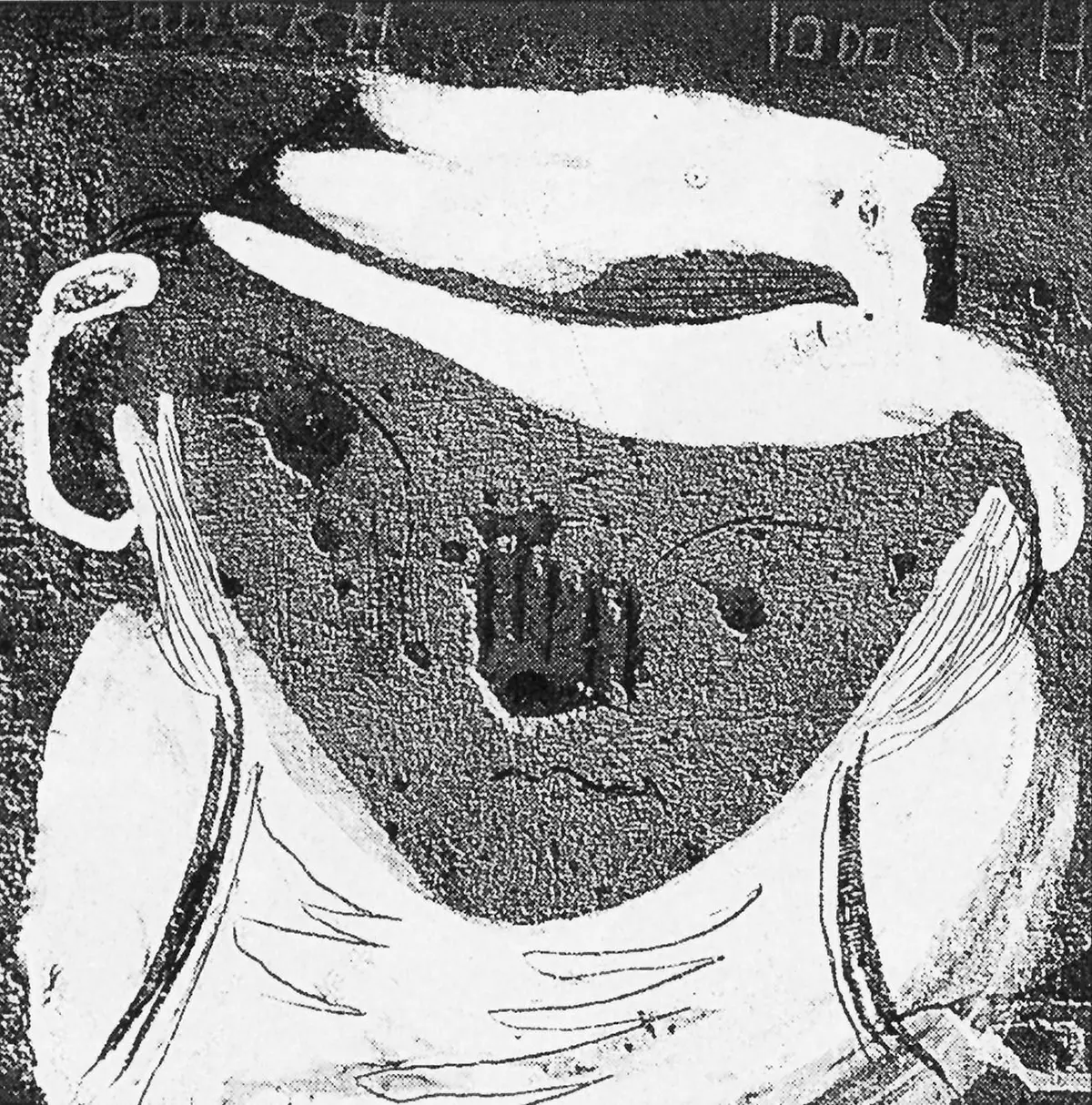
Charles Henri Favrod, the chief commentator of his retrospective at Lausanne, has noted that when De Barros produced FotoFormas (Photo-shapes) he had never seen the works of Man Ray; nor, one may guess, of Laszlo Moholy-Nagy. Indeed, some of De Barros' abstract photograms suggest a certain proximity to the work of those artists, but De Barros' point of departure was different: namely, to test the photographic negative as a medium for printing on a par with lithography, woodcut, etching, etc. It was almost inevitable that one of the results should have been photograms.
The more interesting and unique of De Barros' works, however, are not the abstract photograms but rather the expressionistic images where he started with a photographic negative obtained with a camera and then scraped, painted on, and/or cut the negatives. It is this work that separates him from Man Ray and Moholy-Nagy and brings him visually closer to a painterly Paul Klee. In addition, his shaped photographic prints, whose technique resembles that of Frank Stella's non-rectangular canvas, are quite unique even today, when Latin American photography is still feeling its way through image manipulation.
The other important Latin American exhibition at FotoFest this year was really four exhibitions grouped as one under the title Looking at the 90s: Four Views of Current Mexican Photography. Four Mexican curators —José Antonio Rodríguez, Ana Casas, Osvaldo Sánchez (a Cuban living in México), and Miguel Fematt—, were invited by FotoFest to address the topic. It is important to note that this curatorial tetralogy follows a model first rehearsed by FotoFest in 1994 at the American Voices exhibition. In the said exhibition, Fred Baldwin and Wendy Watriss, the directors of FotoFest, invited four different curators to put together an exhibition of Cuban-American, Puerto Rican-American, and Mexican-American photographers. The idea of doing so was to consciously give up the power to decide what others ought to decide—for better or worse. It is remarkable that this gesture and its ensuing practice are not yet widespread even in this age of political correctness.
At any rate, all four curators of Looking at the 90s made risky propositions and that trait is the strength and weakness of the project. The visual eclecticism of the exhibitions is spelled out by the title of Fematt's exhibit The Eclectic Nineties. Where there is coherence, it must be found not in the intrinsic iconic properties of the works but rather in the way they relate to an element extrinsic to them. In the case of Osvaldo Sánchez, the curatorial line is to unite by dissension with the icons of Mexican-ness. Ana Casas, on the other hand, proposes works in documentary mode where the works point to something beyond the mere record. Some of José Antonio Rodríguez's chosen few might have very well fit Sánchez's intention, but Rodríguez does not seem to be concerned with Mexican-ness as a positive or negative parameter, but rather with images that somehow show the vestiges of our modern century in the imminent century that is yet to be defined. Rodriguez's vision is a kind of archaeology for the future. Fematt, in turn, seems to miss the opportunity to elaborate on the state of portraiture. Where he could have drawn a curatorial line from the wrinkled portraits of Hildegard Moreno to the homophilic portraits of street youths by Pedro Slim, he chooses instead to believe a bit too much in his own title.

Having commented on curatorship I will now like to comment independently on the work of a few artists. Marianna Dellekamp's series In situ (On-Site) of digitally manipulated images rendered in oversize prints open a stimulating reflection about the nude body, women, and water. To undress before immersion seems almost natural. In the only vertical image of the series, a nude woman dives into aquatic depths. She splits up seamlessly thanks to the digital technology that helped create the image. Water is, of course, a primordial substance: source and symbol of life. In Spanish, "agua", the word for "water", is feminine, although it takes a masculine article. We drink from its surface, and perish at its depths. Woman sustains life in the amniotic fluid around her womb carrying within her the mystery of procreation. Yet, woman who is fluid, who is life-sustaining, must dive into her own depths to find herself, to find in-depth a habitable territory.
Maruch Santíz Gómez's works from the series Creencias chamula (Chamula Beliefs) are intended, according to curator Ana Casas, to preserve and transmit traditional beliefs to her Native-American people from Chiapas. In spite of her didactic motivations, however, her simple images are extraordinarily beautiful, conceptually powerful, and ironically persuasive. If Casas's statement is correct, only by accident do we find Chamula's Beliefs in this exhibit—as if we were privy to a conversation that does not really concern us.
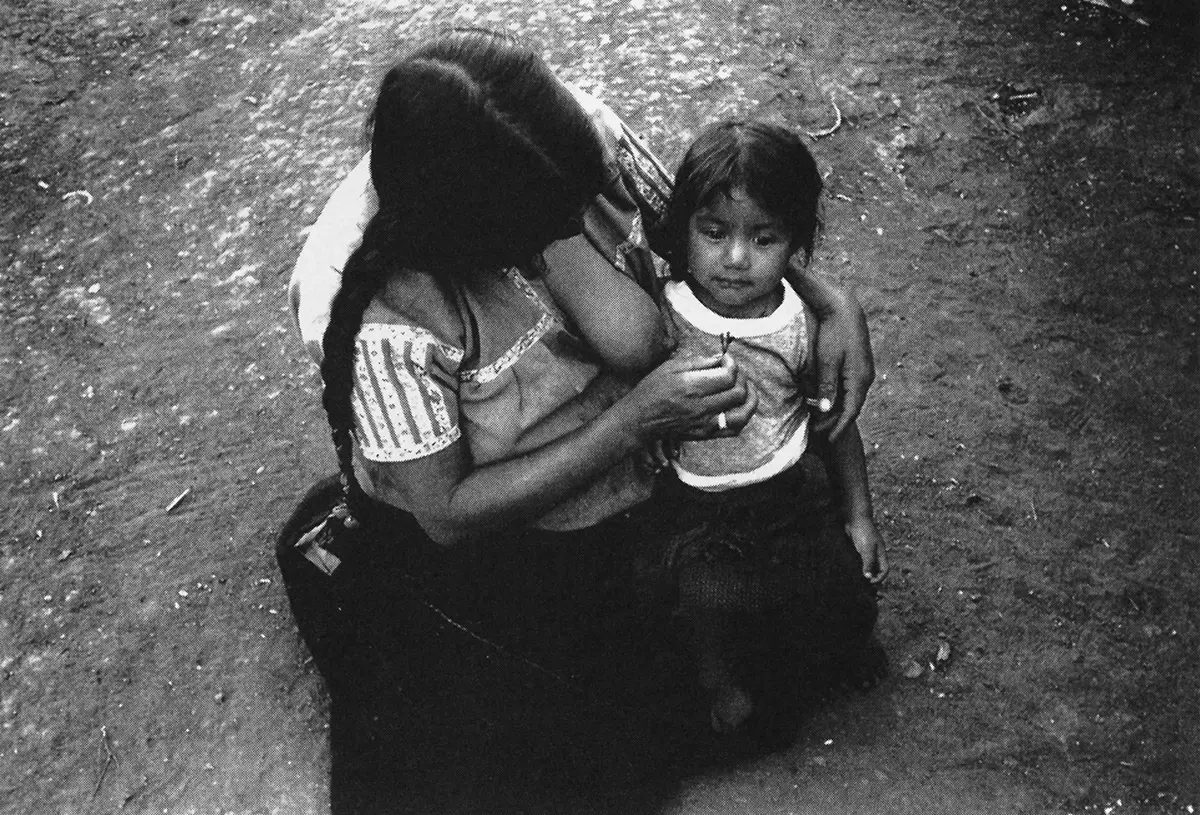
The phenomenon of the medium of photography as a tool for communication among peoples for whom it is alien, and who, until recently, were only the subjects and not the agents of photography, is of great ethnographic interest. This photographic communication act that begins and ends in the same Native- American community is reminiscent of TAFOS' (Talleres de Fotografía Social) efforts to integrate Andean communities through photography. TAFOS photographers are elected by their own communities to be their image-makers. The images thus obtained are addressed to their own communities and other similar communities. Thus all members of the communication act belong to the same community: the image-maker, the subject, and the viewer.
Although this review addresses only four Latin American exhibits at FotoFest '98, other Latin American exhibits should be, at least, mentioned. Contemporary Brazilian Photography from the Joaquim Paiva Collection, was important insofar as Paiva is one of the few Latin American art collectors who has focused on photography. Other notable exhibits were Caos urbano (Urban Chaos) by Eustaquio Neves, El filo del tiempo: fotografías de México (The Edge of Time: Photographs of Mexico) by Mariana Yampolsky, Paisajes inventados (Invented Landscapes) by Carlos Díaz, and the work of Valdir Cruz in Descubrimientos del Meeting Place (Discoveries of the Meeting Place).
On the ninth day of FotoFest an unusually strong and cold wind surprised and chilled the few foreigners who had not yet left Houston. It broke off the branches of many a strong oak tree dislodging new nests and blowing away autumn leaves that had not yet become part of the soil. Perhaps it was a warning that El Niño had yet expressed itself fully in this region. As I write this essay, the air over Houston is almost unbreathable on account of the smoke from the many fires in the dry Mexican forests. El Niño sees no borders, respects no schedule, promises nothing, and spares nobody.
FERNANDO CASTRO RAMÍREZ
Art critic.