
The small elegant drawings by Jorge Pantoja communicate his responses to the world with the same precision and lyricism as Japanese Haiku poetry. This ancient poetic form responds to nature with words arranged in a fixed form of three succinct lines. Just as the poet's sensations, thoughts, and emotions are reduced to a few words, Pantoja uses minimal shapes, lines, and collages to express his own transcendental vision of life's experiences. Working on one hundred three-by-five-inch cards, he composes his drawings with exquisite efficiency, leaving the void of the paper as an integral component of the success of the work and as an invitation to the viewer to fill in the spaces with their own responses. The small format of the works arranged in this space mimics the effect of the small drawings on the empty spaces of the paper cards. The viewer is drawn to their smallness and moves close in an effort to possess each one, but they can not be removed. Magnifying glasses are provided to assist in viewing their details, adding another unexpected visual dimension to the exhibit's installation. Magnified or not, each drawing remains as precious and captivating as the poetry that serves as its inspiration.
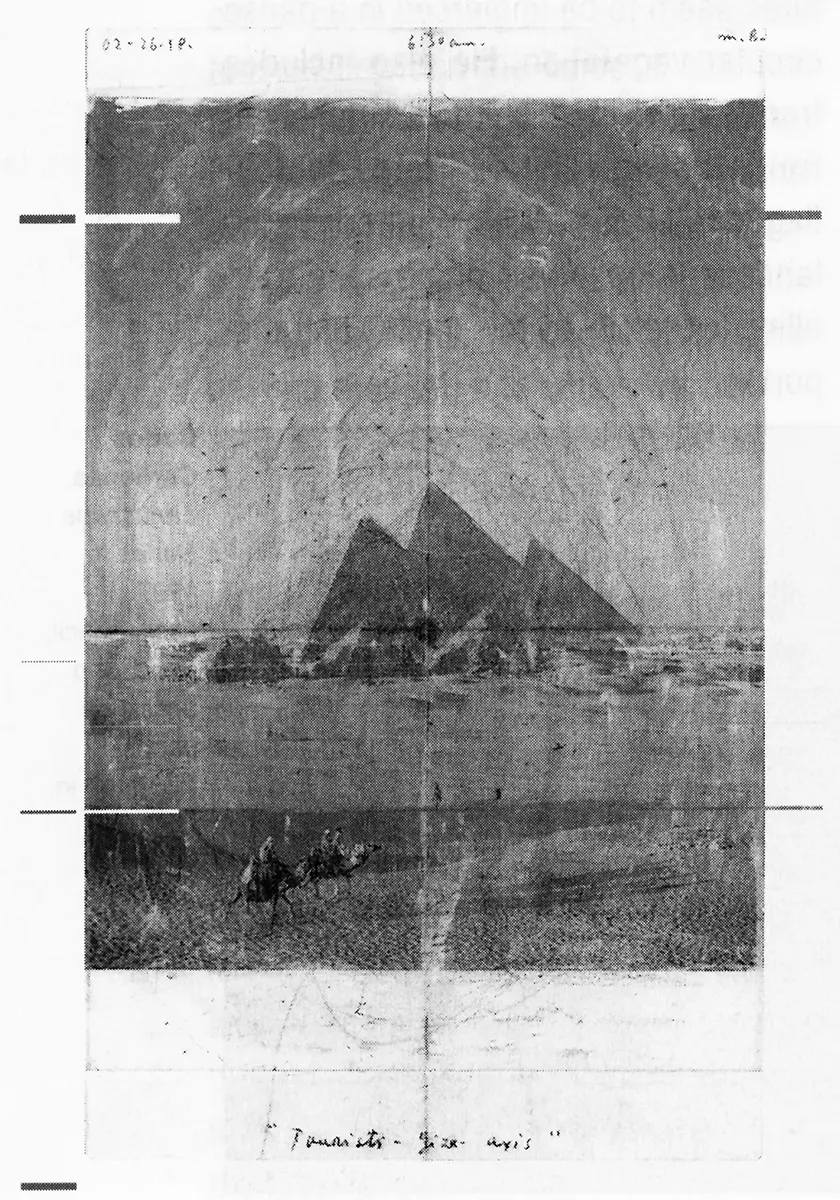
Jorge Pantoja moved to Miami from Cuba in 1994 and his experiences in a foreign country combined with childhood memories inspired the drawings. An astute observer of human nature and the arena of social interaction, he has long recorded his responses in copious sketchbooks and drawings. A cartographer in Cuba, he has an innate precision of line and a keen sense of place, real or imagined. He also has the ability to distill ideas and reminiscences from the most ordinary of things. A candy wrapper, an envelope, a piece of tape or metallic paper, the mere notation of a date or letter, a personal experience, or even a person, become the basis for his drawing. Visible in comments on the rage for cellular phones with the outline of a man talking on a telephone seemingly unaware of the irony of communicating publicity to the invisible voice at the other end. A man wearing a helmet rides a motorcycle and is the basis for Motor. He suggests the presence of sound in World music. Working in what may easily be described as true abstraction, Pantoja depicts the most essential shape or linear form, triggered from a memory or an idea. The formal elements of each composition are the unifying elements, rather than any narrative or chronological sequence. While each drawing refers to a moment in time, now frozen, and his own notations of date and time often appear as well, his intention is not to lure the viewer into recreating a story. Nothing that simply occurs. Each drawing is too fragmentary and too ambiguous. Even the titles can be misleading and he enjoys playing with words to add to the confusion. In Valué, time is marked by a row of zeroes and in Seconds second he plays with the letter “B" appropriated from a stock market listing and as it is used in Shakespeare’s Hamlet, while the state of being second is quizzically demonstrated at the same time.
As Pantoja subverts the obvious, the viewer is required to bring imagination to appreciate each drawing, to delve into his/her own subconscious for answers and connections. There are no sophisticated materials or techniques involved. In fact, the use of index cards was motivated by his fascination with the American custom of collecting football and baseball trading cards. The index cards can just as easily be handled, shuffled, and traded. Although these one hundred cards are now too unique to be treated as such, the museum has published a facsimile of forty of the Haiku drawings that permits just such interaction.
The last two cards in the exhibitions are aptly titled: Two index cards. Just two index cards, their arrangement enveloping one another transforms them into a metaphor for relationships. It is a work of literal simplicity that can be read at multiple levels, or seen merely as two index cards and recognized for what they are—or what things so ordinary can become in the hands of an artist.
CAROL DAMIAN