
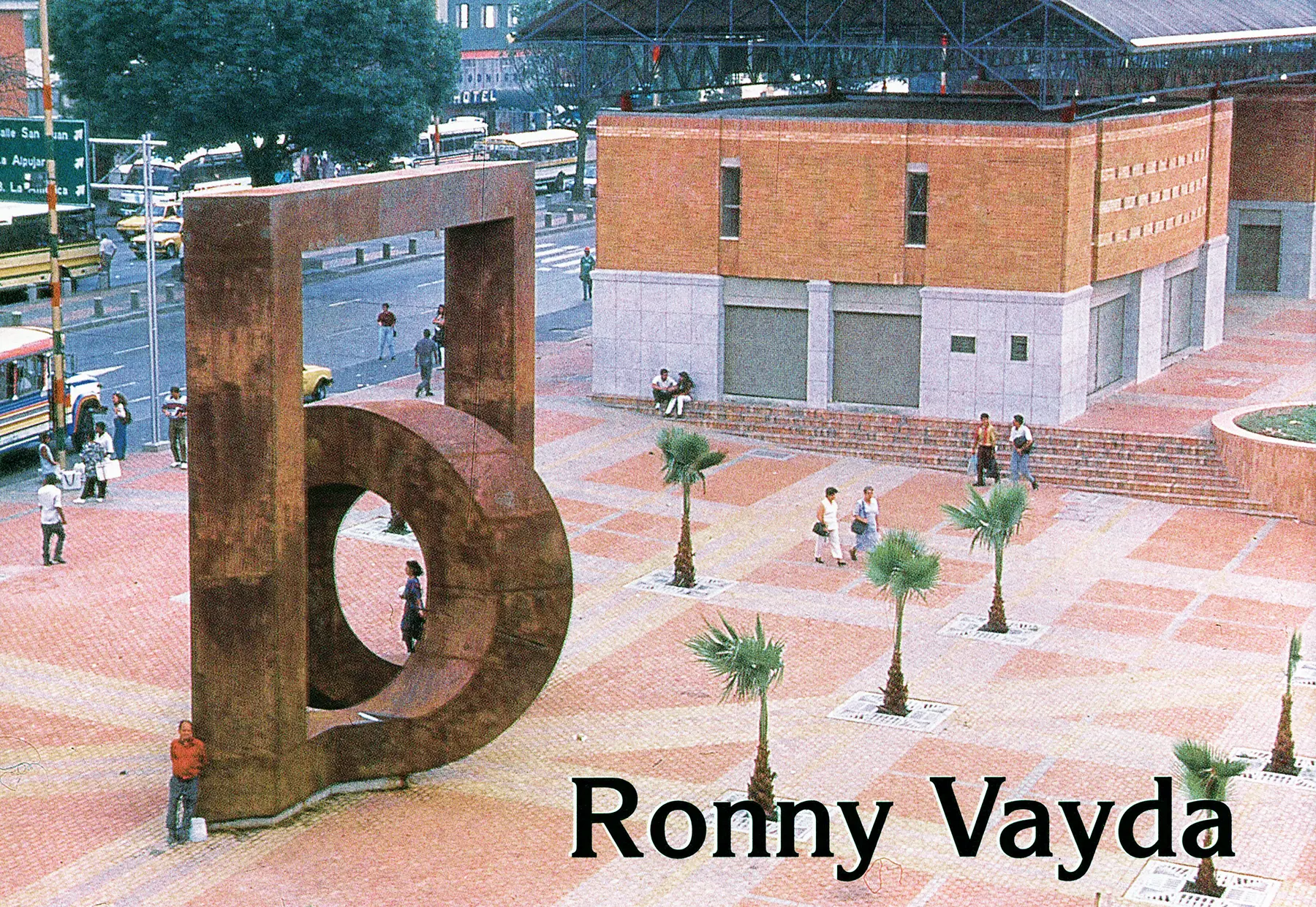
This discussion of the work of Ronny Vayda (1954) has been conceived of equally as an homage to the city of Medellín in which the sculptor has a large presence. The capital of the department of Antioquia is the second most important city in Colombia and without a doubt, one of its most beautiful cities. In recent years it is also noteworthy for its progress and organization. The urban transformation of Medellín over the course of this century has been extraordinary and has been the focus of many publications. Along with imposing buildings and expansive avenues the city also has quite a number of public works of art, including many noteworthy sculptures. From the José María Cordoba Airport, located at Rionegro where a number of sculptures are located, presided over by a red Sol (Sun) by Edgar Negret, to the reservoir of Riogrande, where trumpetwood trees still grow beside Hugo Zapatas' Sendero (Path), a seventy-kilometer-long path of crushed gravel—the most beautiful work of land art in the country—winding around the reservoir, Medellín displays a variety of public sculptures of the highest quality. These works have been created not only by Colombia's finest artists of recent decades, from Negret and Ramírez Villamizar—responsible for the spectacular piece Muro abriéndose (Wall Opening Up), among others—to Vayda, who, together with Ramírez Villamizar, has the greatest number of public works in Colombia, surpassing John Castles, Germán Botero, Alberto Uribe, Hugo Zapata, Luis Fernando Peláez, and Clemencia Echeverri, and noted Latin American masters such as Carlos Cruz-Diez, Sergio de Camargo, Manuel Felgueréz, and Julio Le Parc.
The sculptors mentioned above, along with various Colombians— Negret, Carlos Rojas, Castles, Alberto Uribe, and Vayda—adorn the Nutibara crest, one of the most beautiful artistic parks to be found on the continent. Other prestigious Latin American sculptors whose works are found in Medellín include Federico Assler, from Chile, whose work dates back to the last biennial held in the city, in 1981, and Marta Minujin, from Argentina, whose Venus de Milo fragmentándose con platanillos (Venus de Milo Shattering With Bananas), was commissioned for the International Festival of Art in 1997. Botero, Castles —both in the first years of their careers—, Alberto Uribe, Zapata, Peláez, and Vayda have created some of the most important public works of art in the city. Vayda's now extensive production dates back to the beginning of the seventies. With the exception of his figurative sculpture Monalisa of 1975, the artist has developed an exclusively abstract body of work, dominated by geometry. It is worth mentioning, albeit in passing, that due to the universal tendency to search for representations in non-objective art, people see "figures" in several of his works; in those of the Sables (Sabers) series for example. But in this respect, Vayda wrote toward the end of 1997 that "I am not interested in continuing the old argument between figuration and abstraction. The line that divides them follows reasons that have nothing to do with the possibilities and challenges of art today."1 The artist's production includes indoor pieces, some of them rather small, and more than thirty public sculptures, many of them on a large scale. In recent years, the sculptor has also required the complete restyling of the surroundings, including sidewalks, lawns, and landscaping in general. Without a doubt, he is the artist most interested not only in making sure his works become familiar—even functional—but also that his projects interact with the urban space. For these reasons, apart from his beautiful designs, Vayda's sculptures make art out of Medellin's most important public works—that in the Colombian city with the greatest number of urban artworks: more than eight hundred.
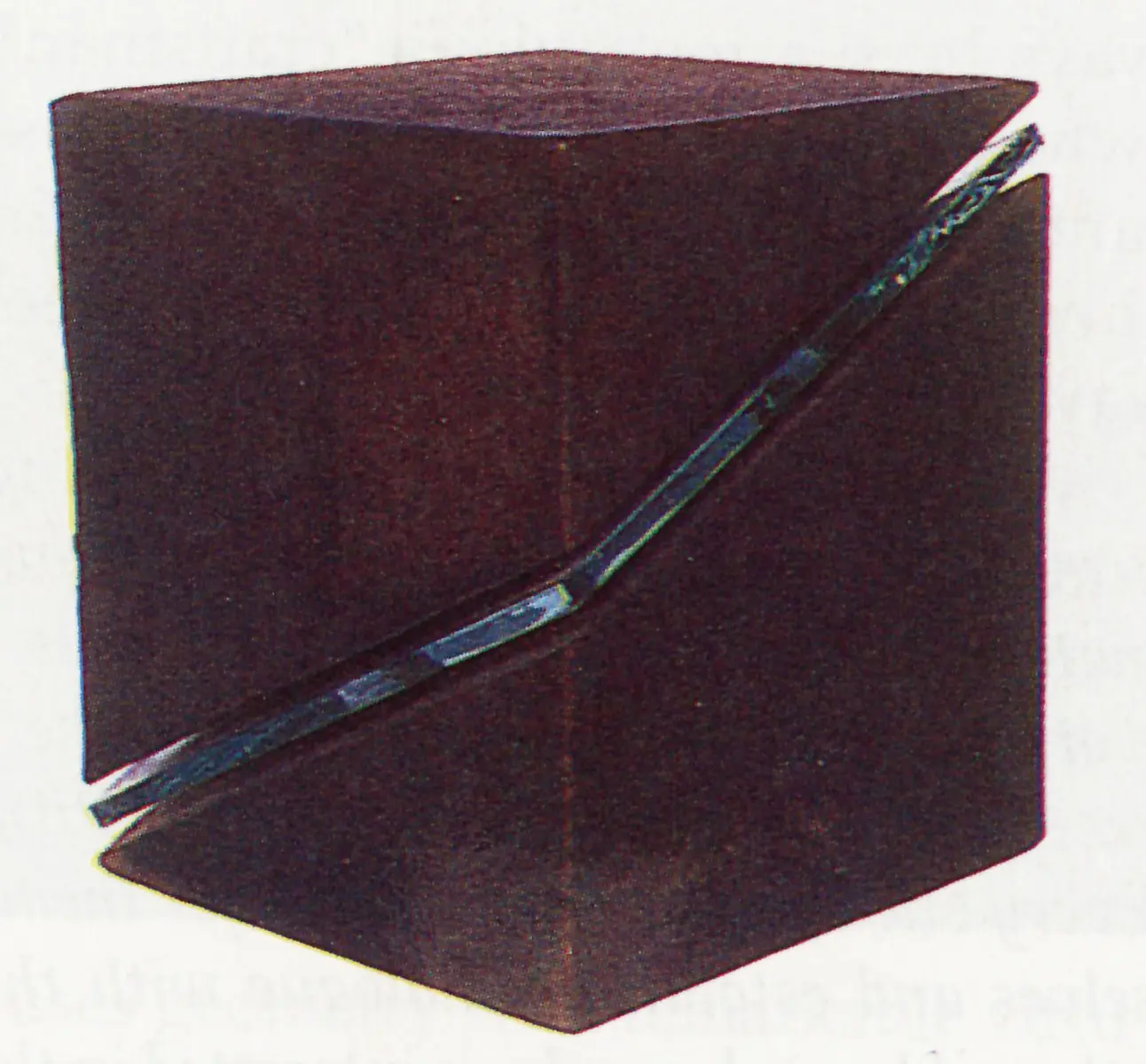
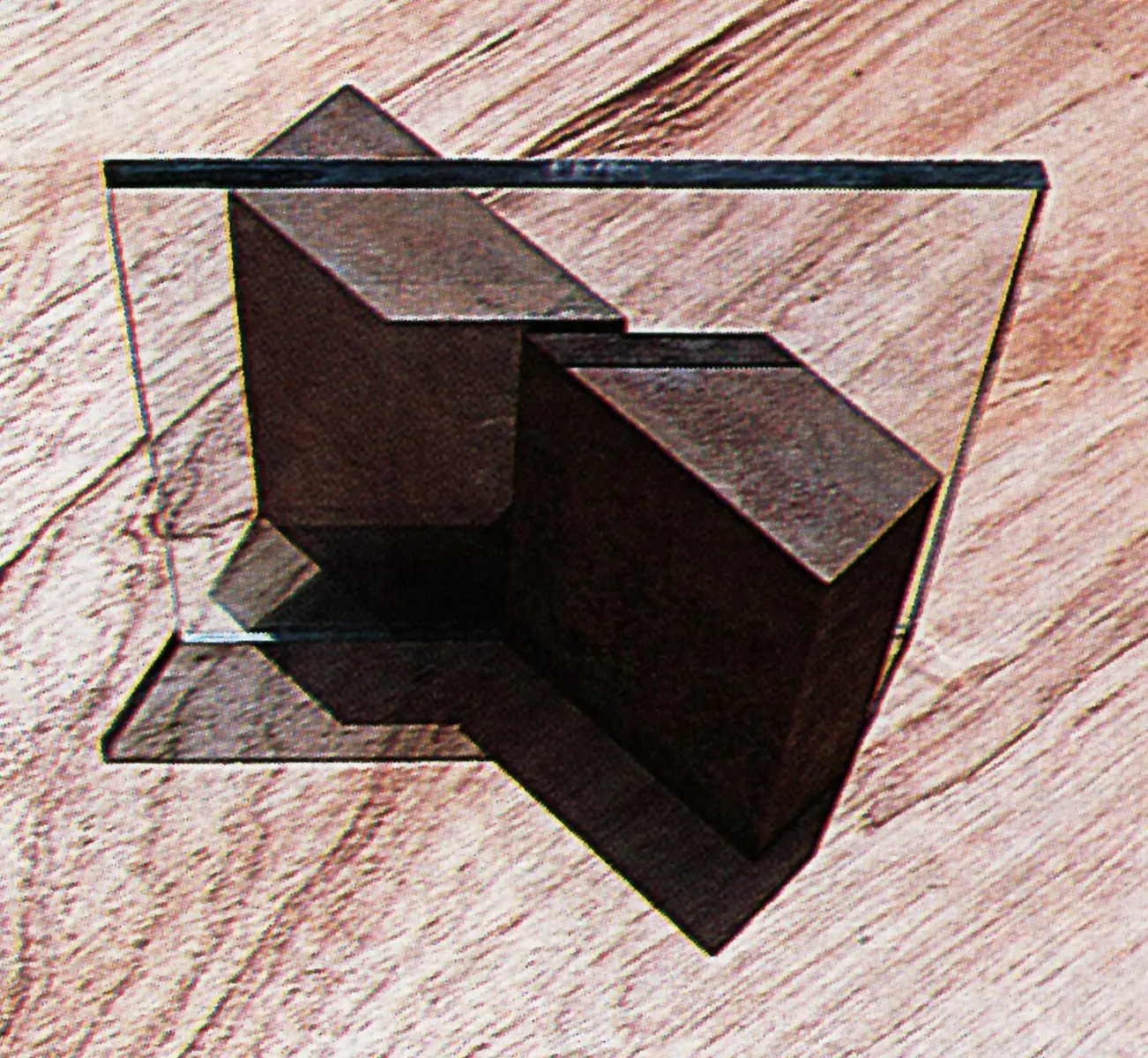
Before commenting on these sculptures, it is necessary to analyze his indoor pieces. At one time they all were characterized by two materials: iron and glass. Between the end of the seventies and the beginning of the eighties, the artist, in line with his comments, sought only to conceive of a structure that would allow him to emphasize contrasts of light and shadow, surface and depth. In an identical fashion, his principal objective was to develop concepts regarding the inside of objects as well as to establish relationships between opaque bodies and transparent regions.2 In 1982, he produced numerous iron cubes that were entirely transformed by their textures and inlayed designs or from having been forcibly twisted in a pronounced fashion. These pieces manifested the first curved lines in Vayda's abstract production. Many pieces constructed of iron and glass followed and several others made of iron and copper, the latter works insisting on highly concentrated volumes, dramatic shadows, surprising rotations, golden sections, and neat and elegant profiles. In a good number of these pieces, glass acquired a leading role, not only because of its physical presence—enhanced furthermore by a variety of characteristics— and linearity, but also because of its deliberately complex disposition. In light of the quality of his advanced work, the artist won one of the first prizes at the 24th National Salon in 1985. Eduardo Márceles made this comment concerning the piece Sin título (Untitled)— as most of his works during the 80's—:
"Ronny Vayda's sculpture very successfully combines the hardness of unpolished iron with the patina of natural rust and the fragility of glass. In this dialectical relationship of elements, the metal assumes opacity that contrasts with the shining dark blues of the transparent material. Vayda's work has come to denote the conceptual leaning of fairly unconventional aesthetic propositions in its physical form, lacking any realist pretensions."3
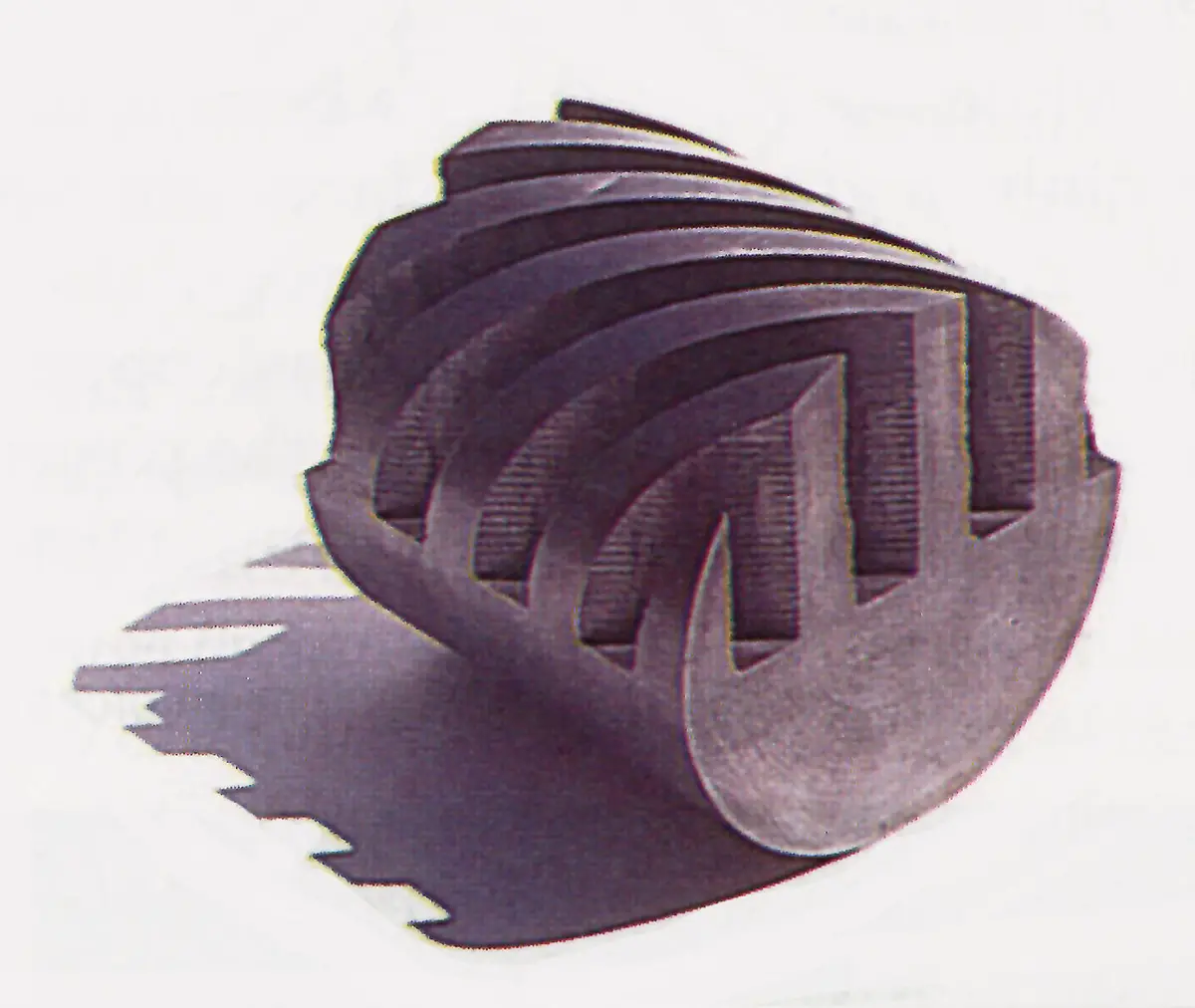
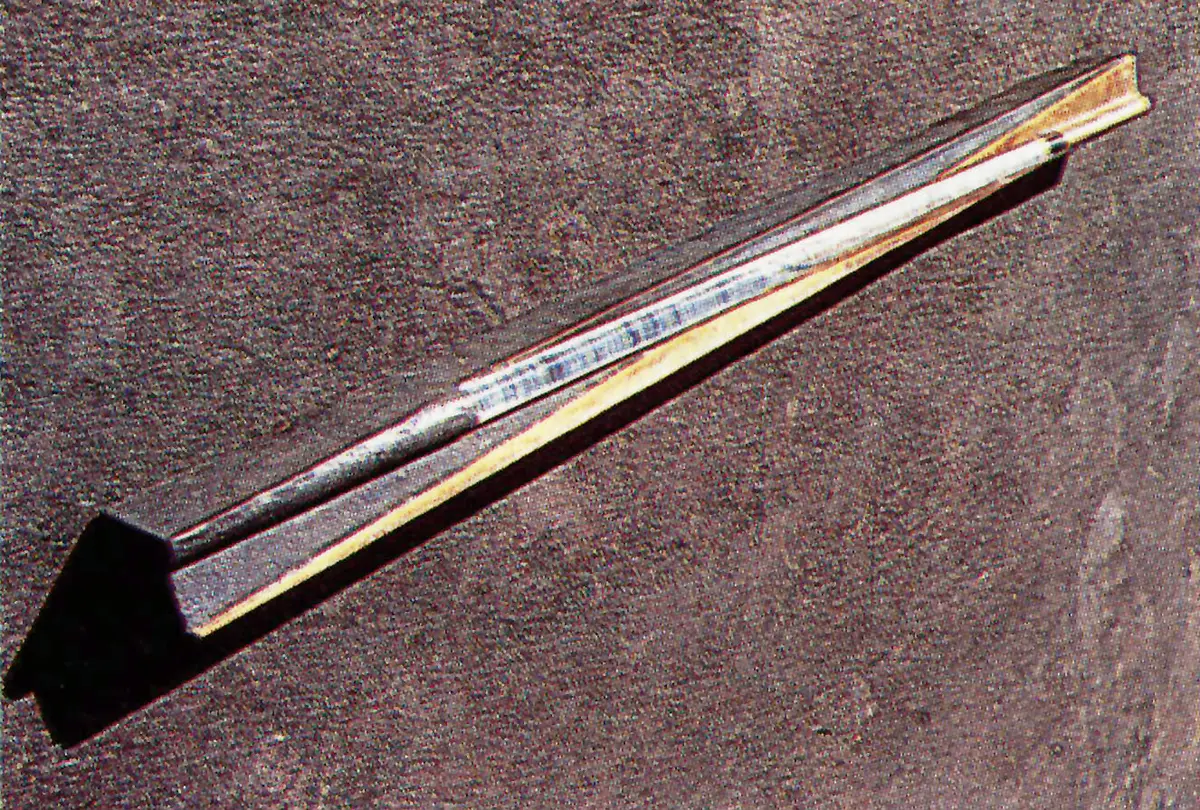
In this decade the artist has already produced the series titled Yelmos (Helmets) and Sables (Sabers) —initiated in 1990—, in which the sculptures have a horizontal presence; the first of these, made of cylinders lying on their sides, bearing diagonal grooves, rather deep at times; the second, recalling long "guns" with inlays of copper, stainless steel, bronze, or glass. Of these last works, Luis Fernando Valencia wrote:
"The four works of sculpture that make up Vayda's participation in the final group of CEMENT pieces at the Casa Negret constitute, without a shadow of a doubt, the best the exhibit has to offer. Entitled Sabers, they are works possessing a powerful and calm appearance whose ample horizontality is pleasing to the eye. The combination of materials ... is balanced with confidence, and the principles of construction are so superbly utilized that the pieces elude any decorative connotation whatsoever."4
Other connoisseurs have also commented positively on these works with respect to their outstanding elaboration and finish. As the sculptor has always been a meticulous "craftsman" (who tends to work with careful assistants), the high level he achieves in these productions is plain to see. Vayda has said:
"As a sculptor, I aspire to extract beauty, harmony, and simplicity from materials. I am drawn to the materials I work with because of their solidity, their resistance, their fragility, and their nobility. Every one of them should speak for themselves and establish a dialogue with others. I have always been interested in the nature of materials, their skin, their rusting, and their transparency. They are the ones, in their affinities and rejections, that generate the execution of the work."5
While the Helmets have been made mainly of gray, machined iron, the Sabers combine two or three materials— iron containing inlays of glass, copper, steel, or bronze. As always, the pieces ought to be looked at with care for they are filled with subtleties. In the Helmets, the edges with slight irregularities are very important as are the parallel lines that can be glimpsed in the grooves; in the Sabers, it is the lights, transparencies, colors, and contrasting textures. In both series, it is the geometry that dominates everything and, as usual, causes the sculptures to appear neat and logical, but in the Helmets, a concealed geometry is also at work to convert the pieces into truly protean objects. In recent years, works done on a small scale have predominated, not always in such a tiny format in some cases. In many of these pieces curves are preserved that are in no way organic and in most of them there are diagonals, closed or split volumes, attractive and, on occasion, unusual outlines. A few Sabers have reappeared and a number of reliefs have made their appearance.
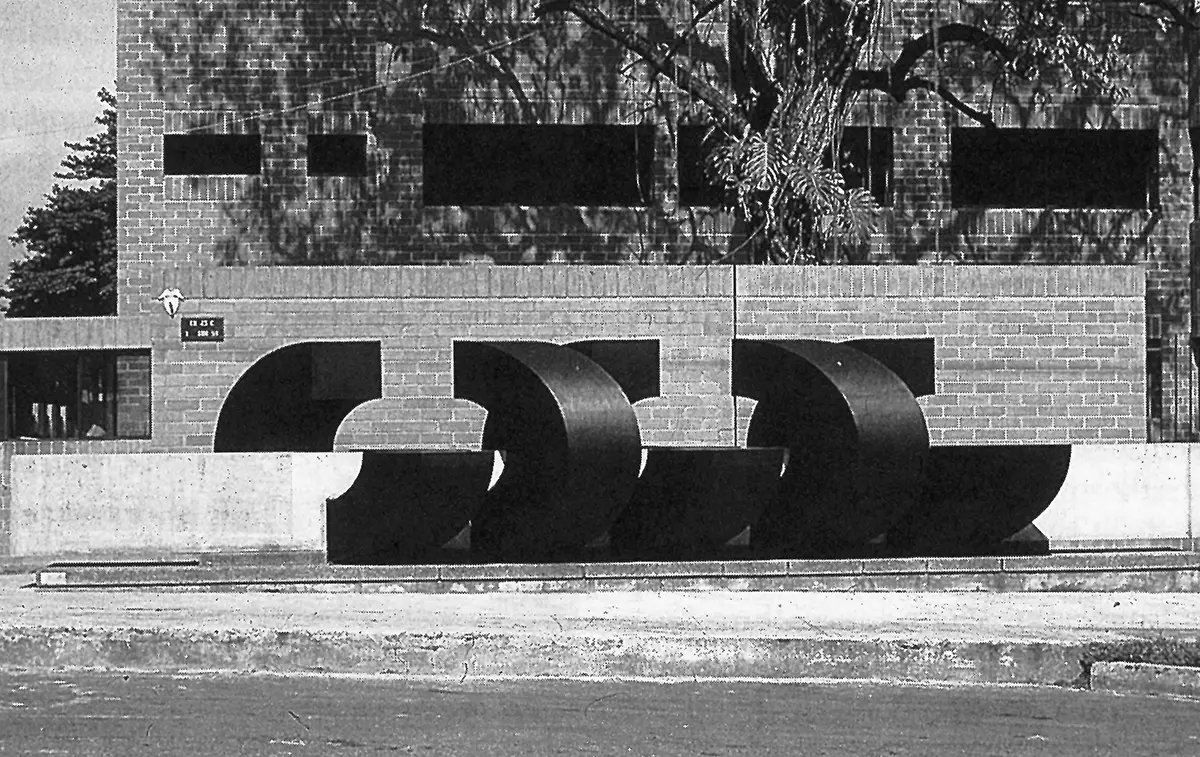
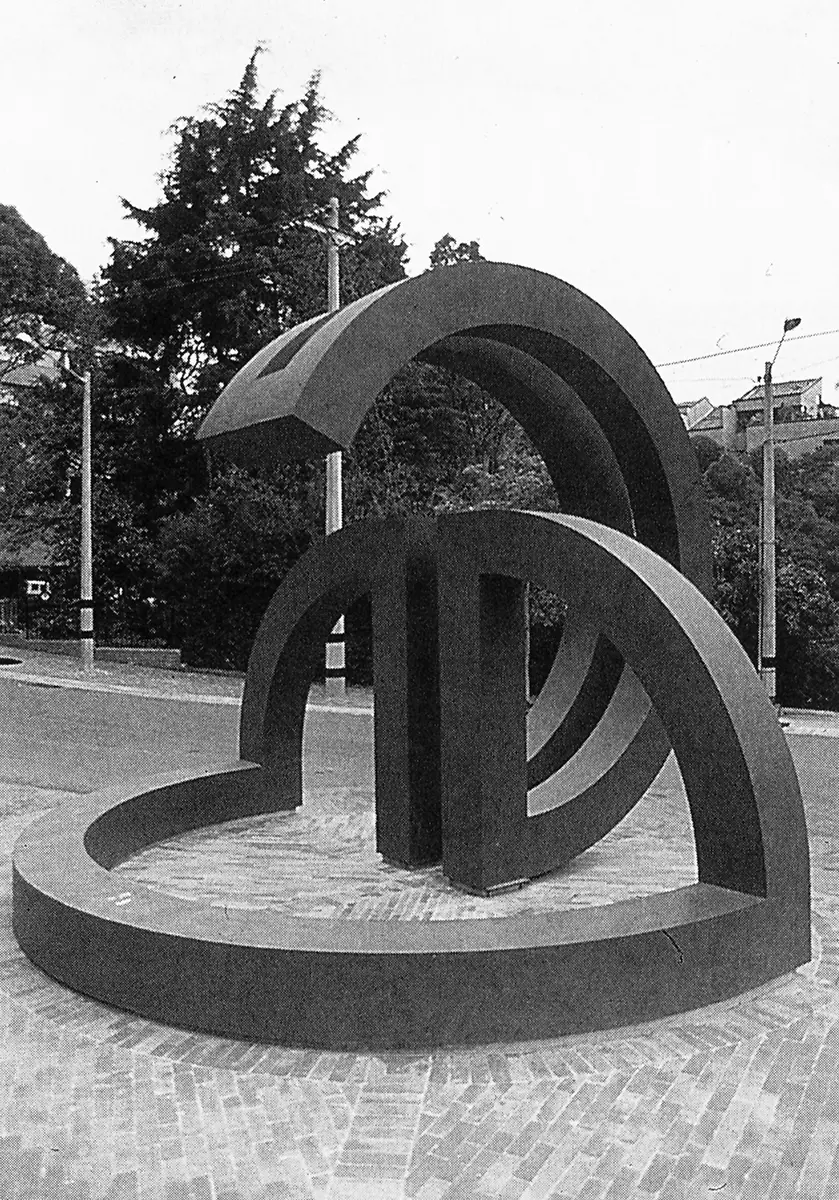
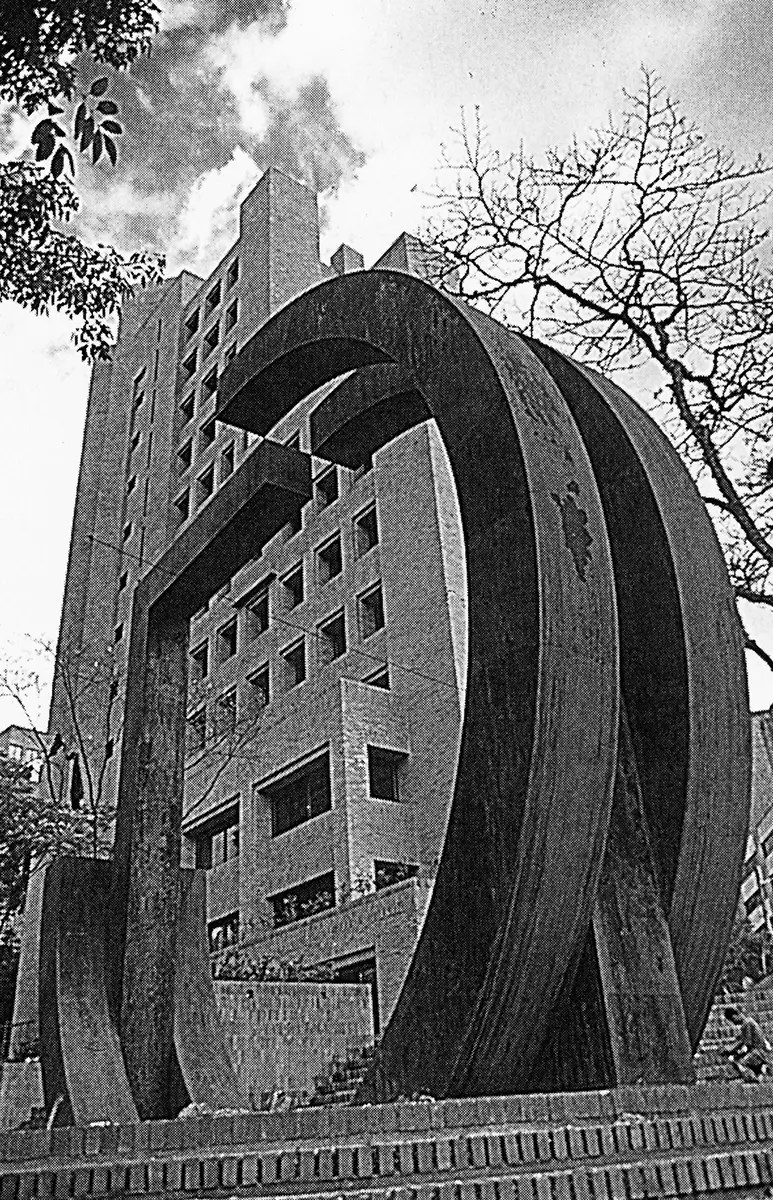
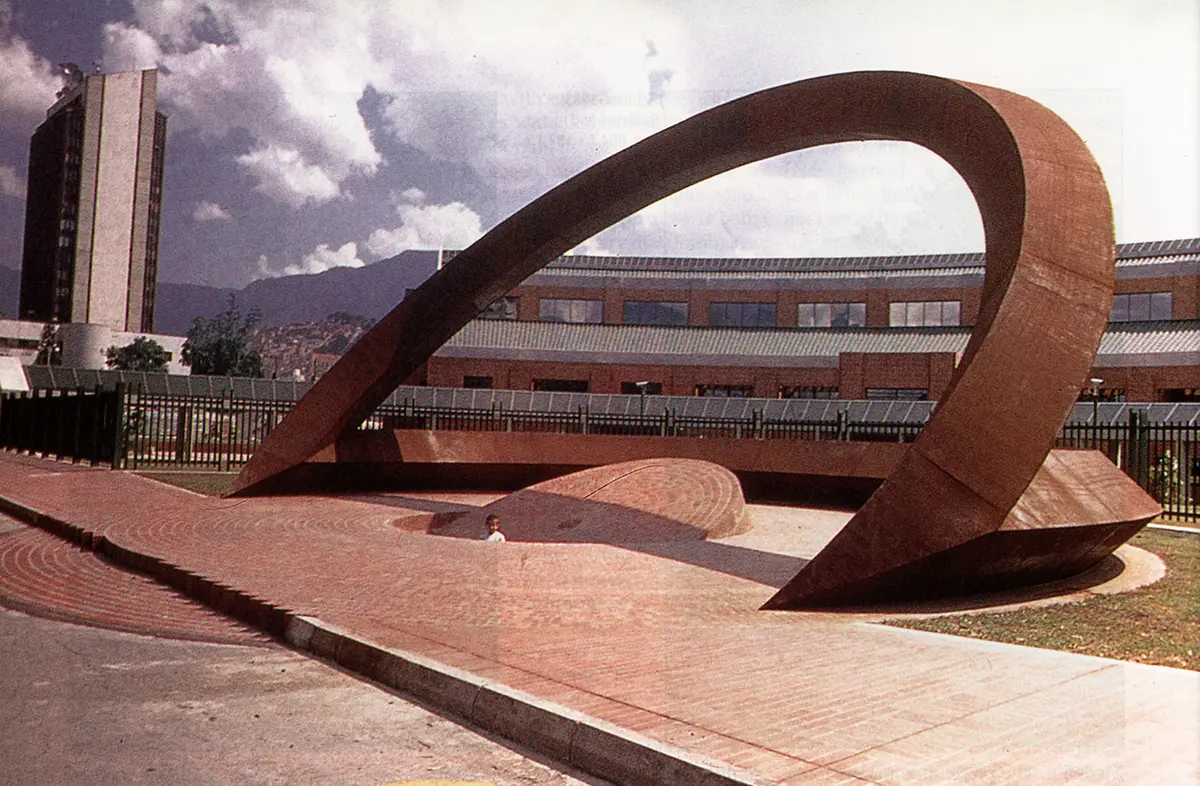
Between 1983 and the end of 1998, which is to say, over fifteen years, Vayda produced over thirty public works, some of them fairly large. We will only highlight a few of them: the one on the crest of Nutibara, the first of them all— if we except the piece in the Museum of Modern Art of Medellín, from 1979, which, because of its scale, could be an interior piece—, a sort of very thick wall of iron sheets soldered together and a band of glass sheets, a material that here serves to make allusion to the water that actually flows at the base of the sculpture along a canal that springs from the band itself. Pórticos (Porticos), from 1985, at the La Cordillera Building, three tall doors made of soldering iron on black cement crowned with "lintels" that echo the gaps of those doors in the forms of a square, an arc, and a triangle. Hexaedro (Hexahedron) from 1986, at the Combeima Building, an open cube missing two of its vertical profiles, made of soldering iron on black cement, a piece with a minimalist appearance in its great simplicity and clarity. Asteriscos (Asterisks), from 1987, at the Rincón de Castilla residential complex, four large interlocked frames made of soldering iron on black cement, one set vertically, another horizontally, and two leaning at angles, one to the right and the other to the left. Gnodmón from 1988, at the La Visitación residential complex, four spiral walls made of soldering iron on black cement which on the back side blends into a single curved surface. Óvalo (Oval), from 1988, in front of the San Lorenzo residential complex in El Poblado, a ten-meter-long, horizontal, virtual cylinder made of soldering iron, reinforced concrete on black cement, composed of a series of open and separate rings. Arcos (Arcs), from 1991, at the Recinto de Viscaya residential complex, two large arcs made of soldering iron, "drawn" based on a continuous element which, after designing the larger arc in an imperceptible fashion, shifts over to design another, smaller one placed at an angle. In this beautiful sculpture, as in the majority of his most recent ones, the surrounding space was carefully organized by Vayda—in this particular case with usable pathways. Equinoccio (Equinox), from 1993, in front of Park 10 Hotel, in El Poblado, composed of five arcs made of soldering iron, tightly related, distributed as follows: one on the floor, two quadrants parallel to the building and two arcs parallel to one another and pointing toward the street. One constant element is that which "draws" these curved figures with only two straight, vertical sections at the inside top of the quadrants. This admirable work is installed on a brick base designed with three levels of semicircles. This base is set on the pavement, requiring traffic to slow down as it approaches the sculpture thus, obviously, preventing accidents (which occurred frequently in this area where two quick roads merge). La puerta de San Antonio (Saint Antonio's Gate), from 1994-95, at the entrance to the park of the same name, which is also a plaza, garden, and gallery, is one of the main sites of greatest urban renewal in Medellín. The piece, nine meters long, eight meters twenty centimeters high, and five meters eight centimeters wide, made of hot-rolled carbon steel, is the most important sculpture Vayda has made to date and one of the most outstanding in Colombia. It is composed of a large framework and an extensive knotted curve that relates the two tall, vertical elements. Truly imposing, Saint Antonio's Gate stands as a symbol of vigor and development, recalls the large doors of traditional Antioquian architecture, crowns the metro boulevard (which begins at the San Antonio station), and invites the viewer to stroll through the park which has a free theater that holds a thousand people and three sculptures by Fernando Botero: El pájaro (The Bird) — destroyed —, Torso masculino (Masculine Torso) and Venus durmiente (Sleeping Venus). Agora from 1997, made of hot-rolled steel, on Boliviariana Avenue, is a large arc, twenty meters in diameter and one meter tall, which stretches over the ground making a complete twist and creating a sheltered space that lends the piece its name.
In reviewing Vayda's public works, one can conclude that they are not only very distinct from one another—although all bear the indelible mark, characterized by the geometry, and the sensibility of the artist—, but also constitute a distinct production from that of his small-scale sculptures. There are only a few cases in which can one say that the artist has made use of a smaller creation to produce an urban piece —the Helmets, for example, to produce Eclipse, of 1992, at the Mompox Building or, recalling earlier works, the various Untitled pieces in iron and glass from the beginning of the eighties, a prelude to the piece, also Untitled, on the Nutibara Crest—or that he had made two very similar sculptures in a small and a large scale—the case of the Untitled pieces of 1985, whose prime example can be found in the Torres del Castillo residential complex, an open and transparent hexahedron partially "covered" by opaque, triangular elements. Those differences mentioned above are equivalent to those that exist between the constructions, quite varied, large and small, by Anthony Caro in the second half of the sixties. Nevertheless, as is normal, the parallels persist in Vayda's global production. In the long run, one need not be a devoted connoisseur of his works to identify all of his pieces. One finds in them, as has already been mentioned, a powerful predominance of geometry and thus, of the most rational of abstraction. To go even further, the sculptor —an architect as well—, uses geometry with remarkable virtuosity: volumes inserted within others, diagonals pointing in various directions, torques pronounced to a greater or lesser extent, continuous though seemingly labyrinthine passages, contrasting facets, all in the pursuit of a provocative, responsive, nearly 'baroque' creation. The artist has written:
"There is in my sculptures a visible form that, nevertheless, proposes multiple and diverse gazes in relation to the spectator. Although they are abstract objects they—in one way or another—refer to some aspect of the world. But beyond that tangible, visible form are shadows that allude to, create, or conceal something. So I intend my works too, more than anything else, produce a surprise."6
Another very important aspect that brings together all of Vayda's works is the construction and finish. What needs to be emphasized here is that the artist has a veritable passion for perfection and that the whole of his works bears a careful finish and a serene and refined presence by calculation—determined by many details that range from a loving relationship of the materials to the millimetric rifts frequently present in his constructions—that make the small sculptures very attractive objects and the public ones, urban landmarks that project statements of order and moderation. That zeal for perfection can be seen equally in every aspect of his artistic work, from the preliminary sketches to the finishing of pieces, passing through the impeccable computer designs with which he currently enters sculpture competitions. One thinks, for example, of the designs he made in 1997 for Tornamesa—which garnered first prize— a semicircular work fifteen meters in diameter and nearly eleven meters high, located at the entrance to the Casa Redonda of the Institute for the Development of Antioquia. This zeal continues through the preparation of materials and the rigor of his installations, recalling, to cite one case, Saturno (Saturn), the enormous metallic curve that invaded the space of the Santa Fe Gallery in Bogota in 1997, as part of the artist”s presentation at the Luis Caballero Prize.
Vayda's production is of extraordinary quality. His public works belong solely to Medellín (but hopefully will be seen someday in other locations), a city that, due to its varied topography as well as being the city that has planned and restored its urban space the most, has been the most appropriate city to house them. His small-scale work is scattered among a variety of sites, including several foreign cities. For the artist, the corpus of his sculptural production has not come without effort: it is the fruit of orthodoxy and dedication to the professional craft. For Vayda, orthodoxy has to do with the great tradition of modem art that dates back to the Russian constructivists and to Mondrian; it has to do with intelligence, purity, a high degree of finishing, anti-illusion- ism, simple forms, and spaces within sculptures. And regarding the craft, the sculptor has explicitly stated that:
"I have never believed in inspiration by itself. Rather, I think that it is only through working that concrete, precise, clear ideas emerge. My creative work does not distinguish between that of the architect, the mathematician, or the worker. My case is not that of someone who conceives of a brilliant idea, but rather of someone who faces multiple problems and challenges which he must solve with limited means and possibilities."7
NOTES
1. Ronny Vayda, "Ronny Vayda, Saturno”, District Institute of Culture and Tourism. Santa Fe Gallery, Planetario of Bogotá, 1997.
2. Ronny Vayda, "Tres artistas de Medellín: Julian Posada, Juan Camilo Uribe, and Ronny Vayda," Center for Contemporary Art, Pereira, 1981.
3. Eduard Márceles Daconte, "XXIX Salón Nacional de Artes Visuales: "De todo como en botica", El Espectador, Bogotá, October 13,1985.
4. Luis Fernando Valencia, “Retomo rotundo," El Mundo, Medellín, November 24,1990.
5. Ronny Vayda, "Ronny Vayda, Saturno". op. cit.
6. Ronny Vayda, "Ronny Vayda, Saturno”, op. cit.
7. Ronny Vayda, "Ronny Vayda, Saturno”. op. cit.
GERMÁN RUBIANO CABALLERO
Honorary and Emeritus Professor of the National University (Bogotá) and at the Andes University (Bogotá).