The Botello Gallery recently presented an exhibition of work by Víctor Vázquez, whose art is the result of multiple aesthetic discourses. On the one hand, the overall rhetoric seems to be accessible to the public in general, since it involves aspects based on oral narratives from the public domain. However, Vázquez’s proposals are also subject to a potentially anthropological interpretation. His capacity to express simultaneously various ideas and interdisciplinary situations is the result of a conceptual elasticity, allowing us to explore autonomous aesthetic spheres in which multiple marginal elements are brought into play. It is clear that the artist is aware of the many possible kinds of reading of these mixed media works, which are characterized by imaginative impressions derived from photography.
The works on display included those depicting blurred emotional states of such power that they created physical transfigurations. Vázquez titled the show The House of Souls, alluding to Alan Kardec, the pioneering researcher in the field of paranormal studies. The works prolong at the artistic level those moments in which the doors of the unconscious open up to phenomena lurking in the depths of memory, with the artist finding the means of bringing to the level of perceptible reality the angelical/mephistofelian dichotomy latent in the self. This may be due to the artist’s ability to handle the setting in such a way as to encourage the spectator to fix his attention on what he is doing, thus strengthening the visual power of the spectator as he attempts to define the action. It is then that we are confronted with a multitude of “marginal” elements, whose importance increases as we try to explore their meanings. One of the ways in which he focuses attention is through the violent conflicts operating at the psychic level, and the way they rise up to the surface.
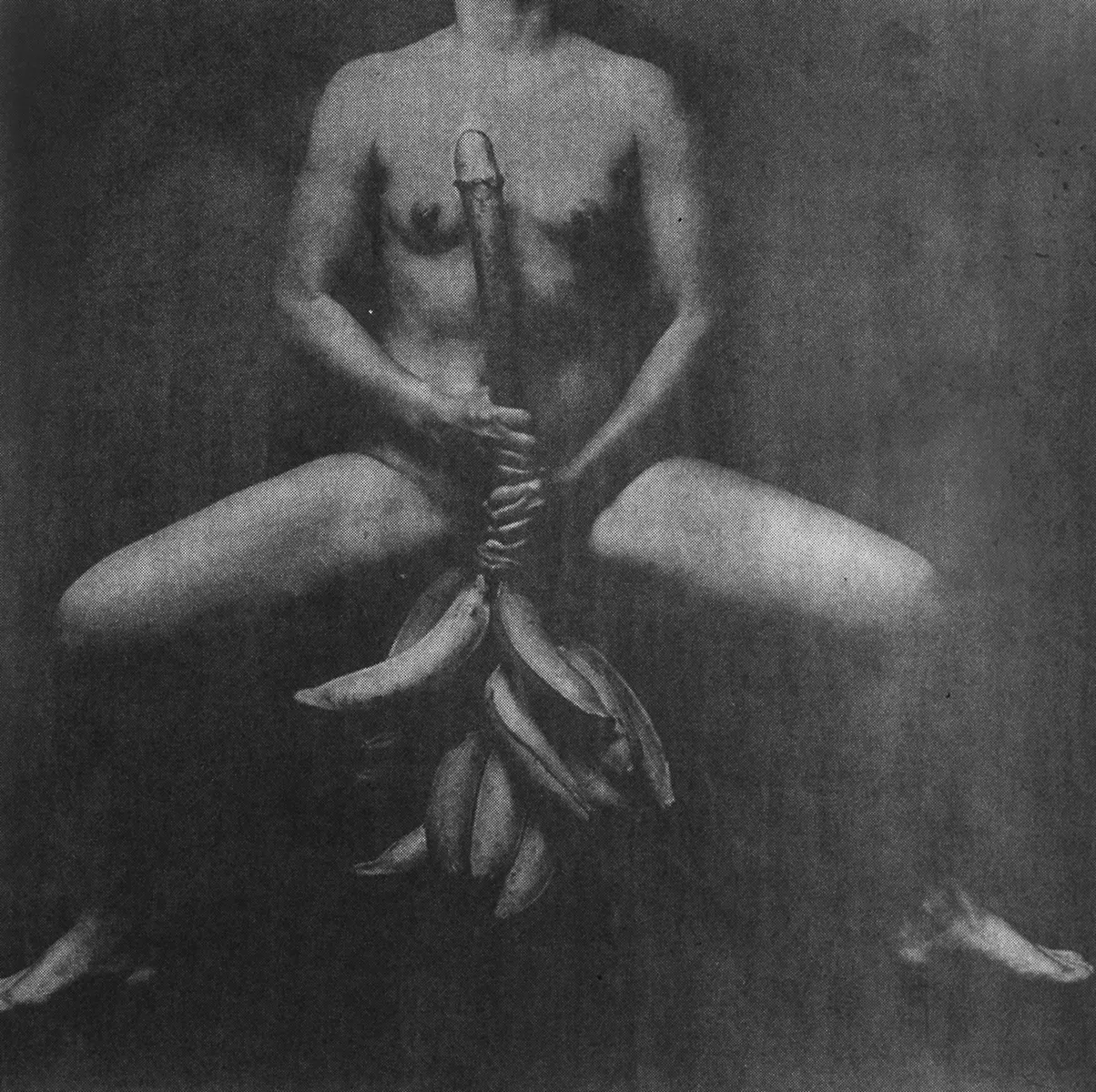
In his compositions, national, religious, cultural, ethnic, and behavioral elements are linked with history. We realize that it is the non-visible factors that give continuity and contiguity to his works, which embody everyday situations that have been assembled as if they were altarpieces dedicated to the few remaining instances of purity. In this way, Vázquez presents a spiritual panorama that projects syncretic images based on profane perspectives, mobilizing Manichean resources in response to existential antinomias. The beautiful and the monstrous may co-exist in his work, as in everyday life. The artist maintains a dramatic tension by decontextualizing real life and transposing it to the work of art. In order to understand his pictures, we must cross a frontier that is fragile but basically resistant, like the surface of a mirror. The goal is to lead us from ordinary logic to that of the parallel world of aesthetics. In this respect, the dialectic is similar to the narrative technique used in Lewis Carroll’s Alice in Wonderland.
Vázquez uses autobiographical elements and moves into the subjective sphere, resulting in the use of the sources of feeling to cross the threshold of metaphysics and exploiting the tension between the celestial and the terrestrial, the visible and the invisible, the human and the animal. Similarly, the senses become a gateway to higher levels of existence, enabling us to establish contact with reactions that are beyond thought, and which we call instincts. The poetic nature of his work leads the artist to an evident kind of eclecticism, in which he explores individual and collective beliefs through which people reaffirm the identifying axis of the self. Once this goal is achieved, we can leave behind us our territorial limits and enter the cosmic sphere. In this way, pristine and contemporary elements are fused together to create something which is recognizable at all times. The cosmopolitan nature of Vázquez's production springs from the universal principles at work at the local level.
This exhibition by Víctor Vázquez was the first of a series of very important events for the artist. On July 10th, another show of his work opened at the Couturier Gallery in Los Angeles, California. Four days later, he inaugurated another at the Martha Schneider Gallery in Chicago, Illinois and this fruitful year will reach a climax with the presentation of his work at the Three Continents Festival in Nantes, France, which opens on 25 November, and with his pictures subsequently being shown in Paris.
JOSÉ ANTONIO PÉREZ RUIZ