
In the latest number of the Spanish magazine Lápiz (Pencil), Rosa Olivares wrote an editorial about her concern for the artists of Central America, which was devastated by Hurricane Mitch at the end of 1998. It is almost uncustomary to say it anymore, but her words moved me; in her text I saw our existence portrayed, surrounded by the voracity of human beings and nature. But, I also saw that history is always the same and that this type of news is necessary to reveal the existence of a practically unknown world, to which the art produced in Central America belongs.
Rosa Olivares was right in saying that disaster had parked in this area. A few months before Hurricane Mitch, a good part of the region was covered by a thick layer of smoke, the product of forest fires. A few days later in Guatemala, a strong volcanic eruption spewed out a great quantity of sand onto the country's capital. In 1996, the peace agreement promised the end of a schizoid period, but the pillaging at the war's end continued its march and the political assassinations took new victims. During all this time, some shrugged their shoulders and repeated an ironic phrase, doubtless woven into the mind of some colonizer: "such is life in the tropics."
However, as in any corner of the planet, the processes of creation are never detained. In spite of the fact that in Guatemala there would seem to be no gateway to the future, its art has always been a valuable interlocutor of distinct moments and a testimony of wishing not to succumb to adversity. And today, at the end of the '90s, it seems to take on unexpected energy. The articulation of a process of social transformations, with its consequent will to openness and dialogue, seems to be making way for an interesting spirit that floats around art and enthusiastically sees the new contemporary languages.
We could say that the antecedents of this moment are registered in the phenomenon developed in the '80s when some groupings of artists intuited the need to change attitudes. Among these, the contribution of the group Imaginaria was one of the most important, due to its initiative to open an alternative space to commercial art galleries and, especially, to propose a space for discussion. Later, the '90s arrived with isolated initiatives, which were experiences that, to some extent, contributed to the formation of a new sensibility. Among these are included activities like Indagaciones (Inquiries), a show of installations where young artists came together, some of whom had belonged to the group Imaginaria, while others belonged to older generations, precursors to environmental montages and body art in Guatemala, like Luis Díaz and Margarita Azurdia. But one of the events that brought the Guatemalan public in full force to the new profile of international art of the '90s was the Triangular initiative, of Swedish origin, where artists from Mexico and Sweden, with a proven international trajectory, participated in conjunction with artists from Guatemala, selected by the throws of destiny. The presence of Triangular was, to be sure, a showcase of the glamour of transcultural experiments stimulated by the notions of globalization and limitless resources, in addition to a first approach to concepts like that of curatorship and its implications.
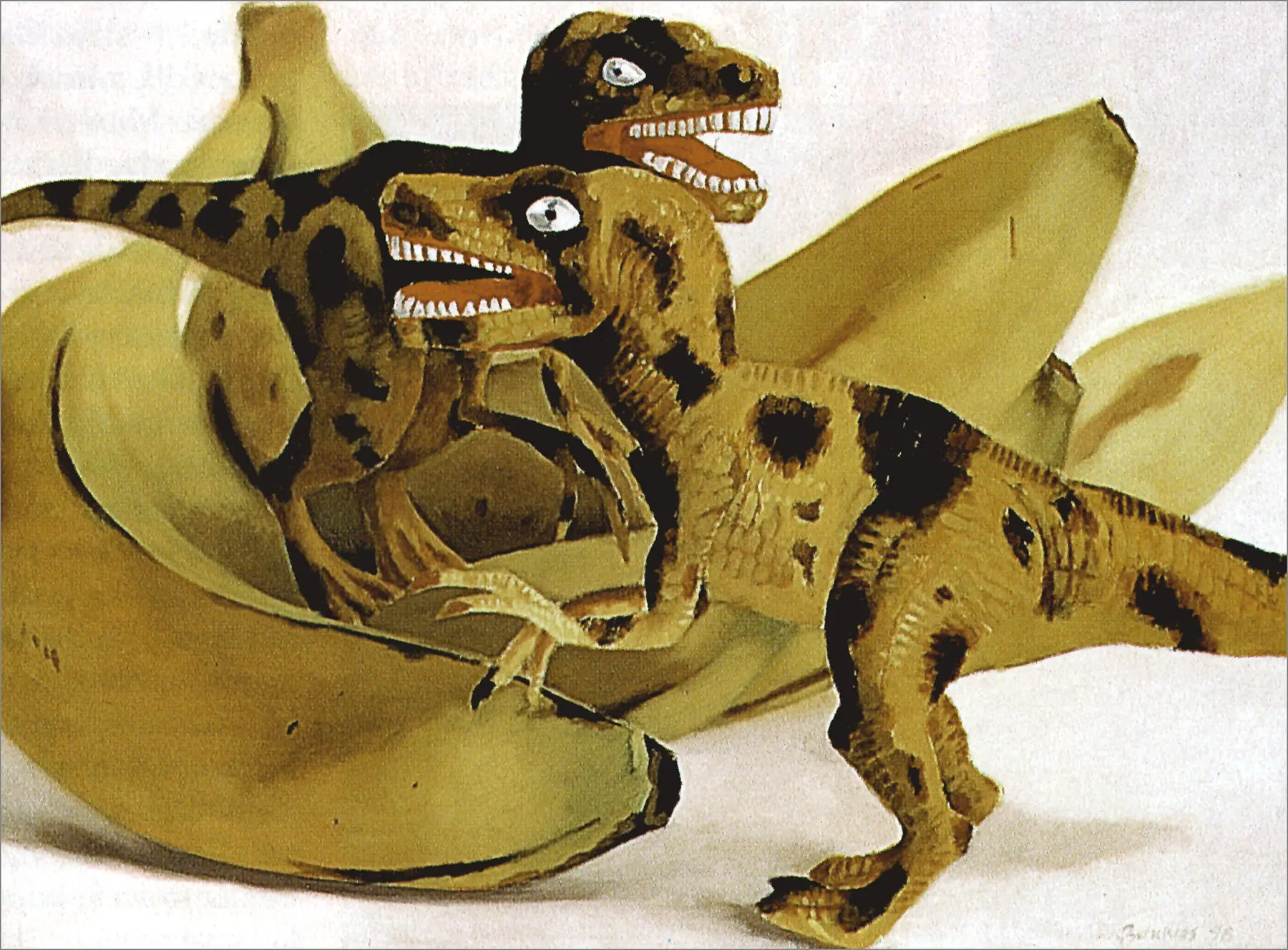
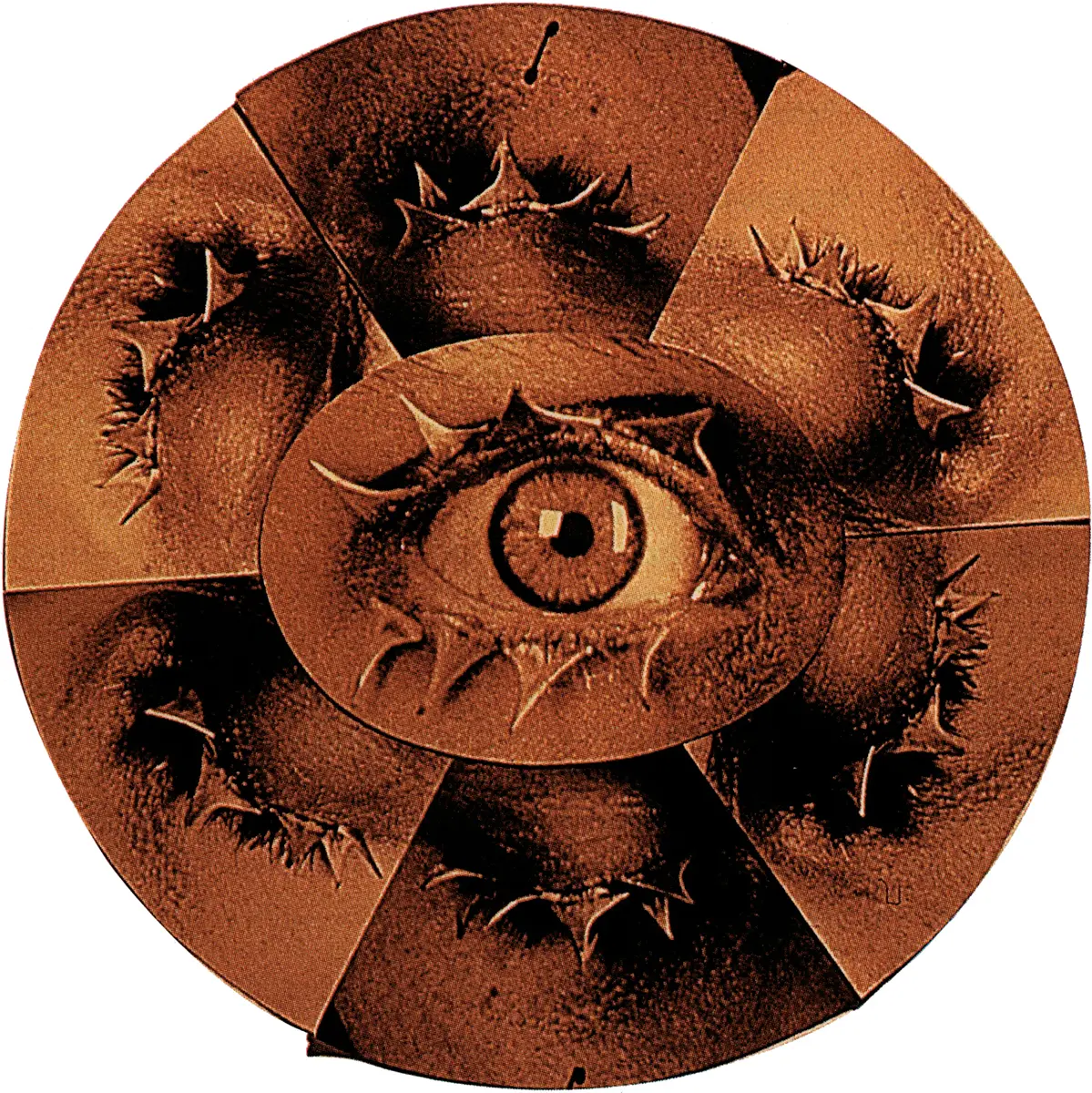
In 1997, one of the key links in this history occurred: the show titled Mesótica II/Centroamerica: re-generación, curated by Virginia Pérez-Ratton and Rolando Castellón, and presented at Costa Rica's Museum of Contemporary Art and Design. This exhibition, besides gathering the art of Central America —after a long period of indifference and silence among the countries of the isthmus—certified the existence of contemporary art and a growing plurality of media. Important formal changes were registered there, like that of Moisés Barrios, when he initiated his obsessive series of banana trees which, to date, has come to shape a refined reflection on the banana republics. It also included works that offered fresh and unexpected views, like the photographs of Irene Torrebiarte, an artist who belongs to the youngest generation of Guatemalan creators. The photographic support that participated with objects with their own meanings, and the treatment of images with sepia colors, undoubtedly recall the work of Luis González Palma. But their formal images and solutions gave samples of distinct and intimist poetics. Until then, the tendencies of art in Guatemala seemed to oscillate between the reference to a social reflection and total evasion of the same.
In this sense, Irene Torrebiarte was the first artist who uncovered her existentialist concerns associated with the high social stratum to which she belongs, without avoiding the context that generates those concerns.
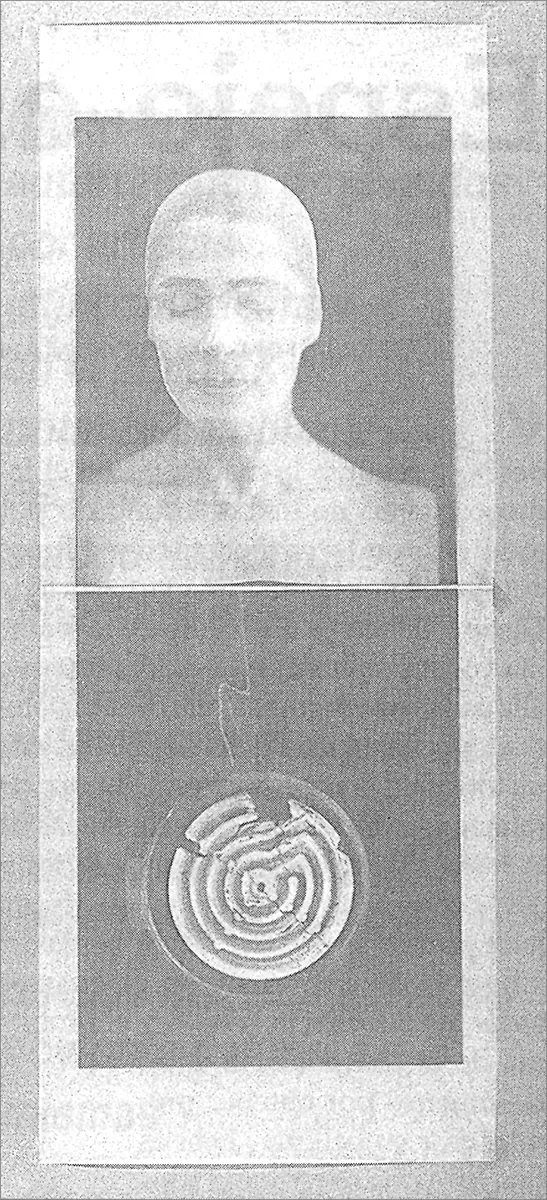
The importance of this preamble is rooted in the fact that these events nourished the interest in art's new languages. In spite of the few forums for discussing issues and the lack of critical tradition, the last two years have witnessed a growth of determination to become part of this non-predeterm ined project. As a consequence, in a certain sense expected, new names and collective initiatives have sprung forth, contributing to the accumulation of the aforementioned energy. Artists who were realizing works with a complacent effect have drastically changed. María Dolores Castellanos and Diana de Solares are the clearest examples of this metamorphosis, which has led them to create works that are more sophisticated in their imprint and meanings. To be sure, this step has characterized the breaking of a pattern until recently assigned to women artists in Guatemala, where they seemed to be condemned to creating in accord with acceptable and typically female values. María Dolores Castellanos and Diana de Solares, through exquisitely personal images, discuss the conditions of the female, the quotidian, and the fetishization of the domestic.
We must observe the presence of artists associated with a singularly chaotic urban and marginal culture, artists who are realizing works with a legitimate right to bitter commentary. Such is the case of Aníbal López who, in one of his most successful pieces, proposes a dismantling of the theories of identity formulated by anthropologists and sociologists. Over cardboard boxes, which were originally the packaging for products of popular consumption, he overlaps surnames familiar to Guatemalans, and others whose mere mention alludes to an oligarchic origin and/or status of power. This implies an affront, something like (in the eyes of the artist) a revision of labels of what it means to be mestizo or Indian in this country. Likewise, an inner reflection on his permanent recycling, especially in recent years, in which discussions, that are not always so deep, on topics of ethnicity have grown and have contributed to tensions and important contributions.
But what is most interesting about this moment is the formulation of a common space. It would seem that art depended on the interaction between creators in order to join together in a genuine desire for artistic and human growth. Within this mysticism, we find the project for contemporary art Colloquia, a collective that has formulated the opening of a space for dialogue without the pretensions of consolidating itself as a center of culture and power. In a country marked by silence, Colloquia is profiled as an important window of communication with local artists and art critics from other countries with whom an exchange of voices and thoughts has been established. Colloquia have invited artists like Silvia Gruner, Cecilia Paredes, Carlos Capelán, and Ibrahim Miranda, among others. Likewise, critics like Gerardo Mosquera, Ticio Escobar, Santiago Olmo, Patricia Mendoza, and Catherine David have also participated in the collective.
Before the emptiness of government-supported initiatives, the existence of galleries like Sol del Rio, which has acquired an important role as interlocutors with the cultural activity abroad, has turned out to be most favorable. In fact, the gallery recently organized a show of contemporary Guatemalan art in Havana's prestigious Wifredo Lam Center.1 Within a dynamic that is more flexible than the conventional role of art galleries, Sol del Rio has become a significant nexus with artists and cultural institutions abroad. Analogously, the Paiz Foundation for Culture is a private institution that organizes the only biennial of local art, and in its latest editions, it has opened the doors to works that denote a concern for the most current tendencies and artistic questions. As one of the most longed-for activities every two years, the Paiz Biennial has also generated an important exchange with art critics and artists specialized in Latin American art. Likewise, for the first time in history, a private bank opens its doors to a project that supports young artists. Advertised as a laboratory for art, this project, named Jóvenes Creadores Bancafé (Young Creators Bancafe), has given artists the incentive to present projects in the traditional media: installations, video installations, or performances.
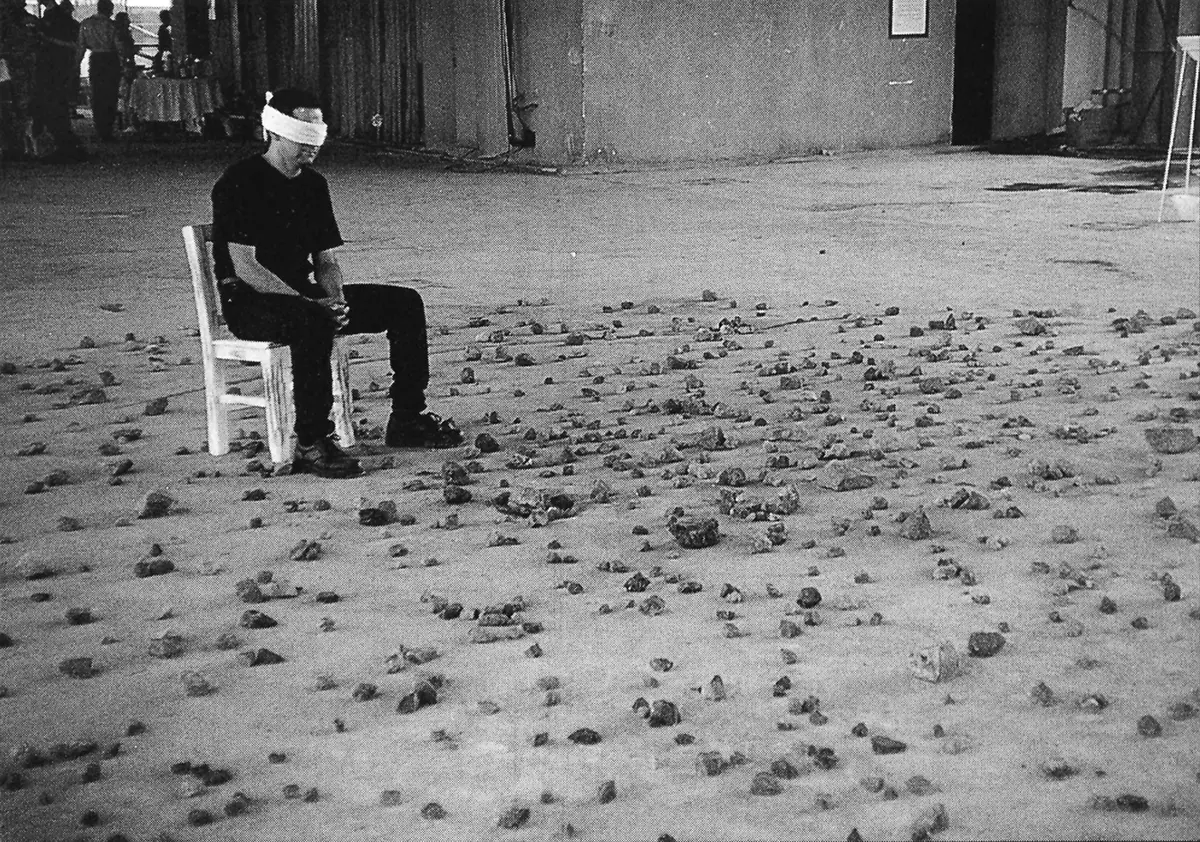
However, one of the most interesting and representative efforts of the youngest generation of artists is doubtless the show Sin título, por falta de imagination (Untitled, for lack of imagination). The title's vagueness is grounded in a declaration of principles that, with an ironic tone, attempts to lead the public into a necessary questioning of the figures of power which give legitimacy to art: curators, critics, institutions dedicated to culture, the news media, gallery owners, and museum directors. Thus, it attempts to encompass the strategy of irony, of accepting beforehand, and with no prejudices, that the installations, performance pieces, and video installations presented there are copies of what is seen in the various art magazines that circulate internationally. The foolish discussion that has confronted the local and paternal vision with the uncontainable evolving force of art itself is thus vented.
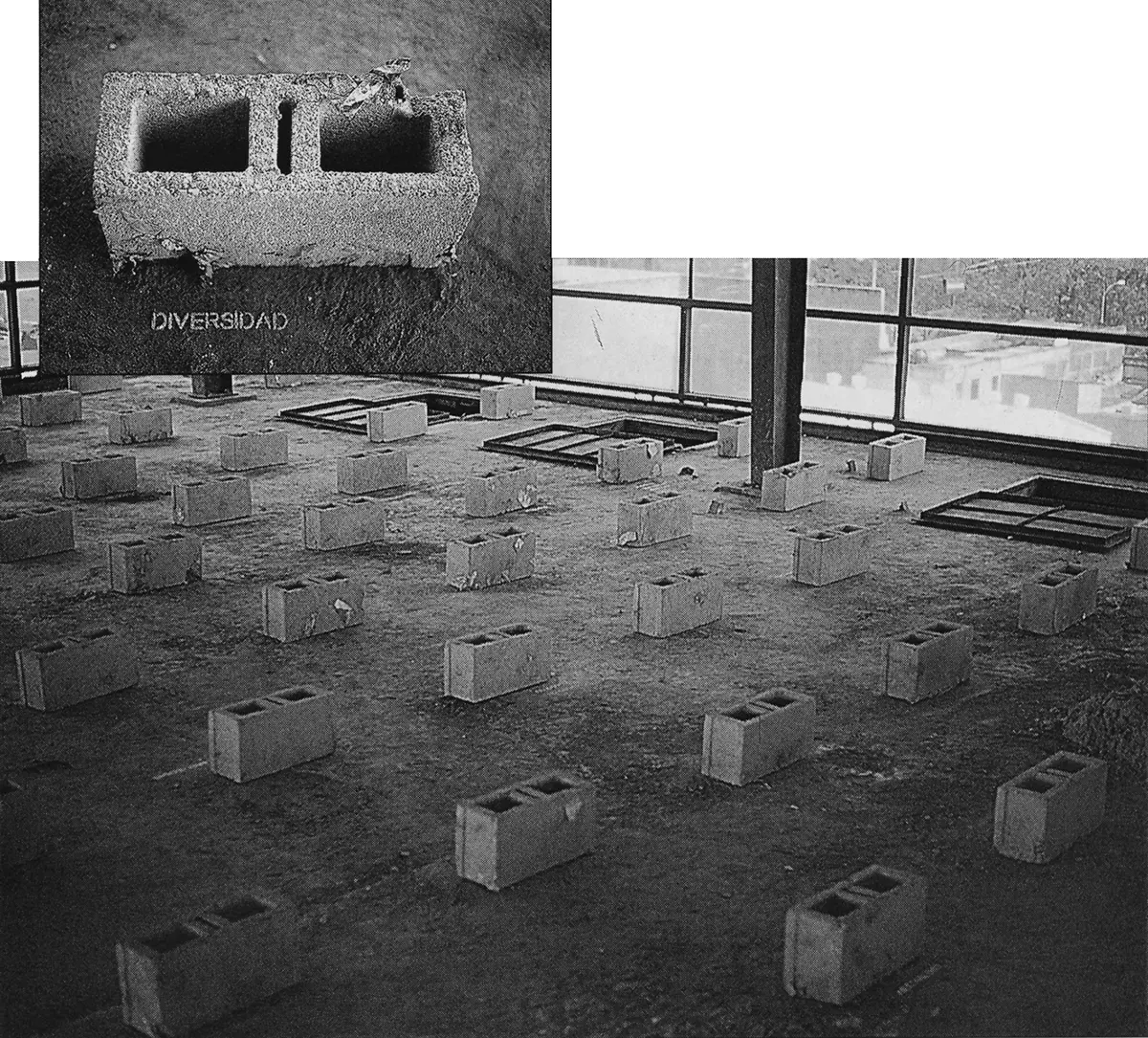
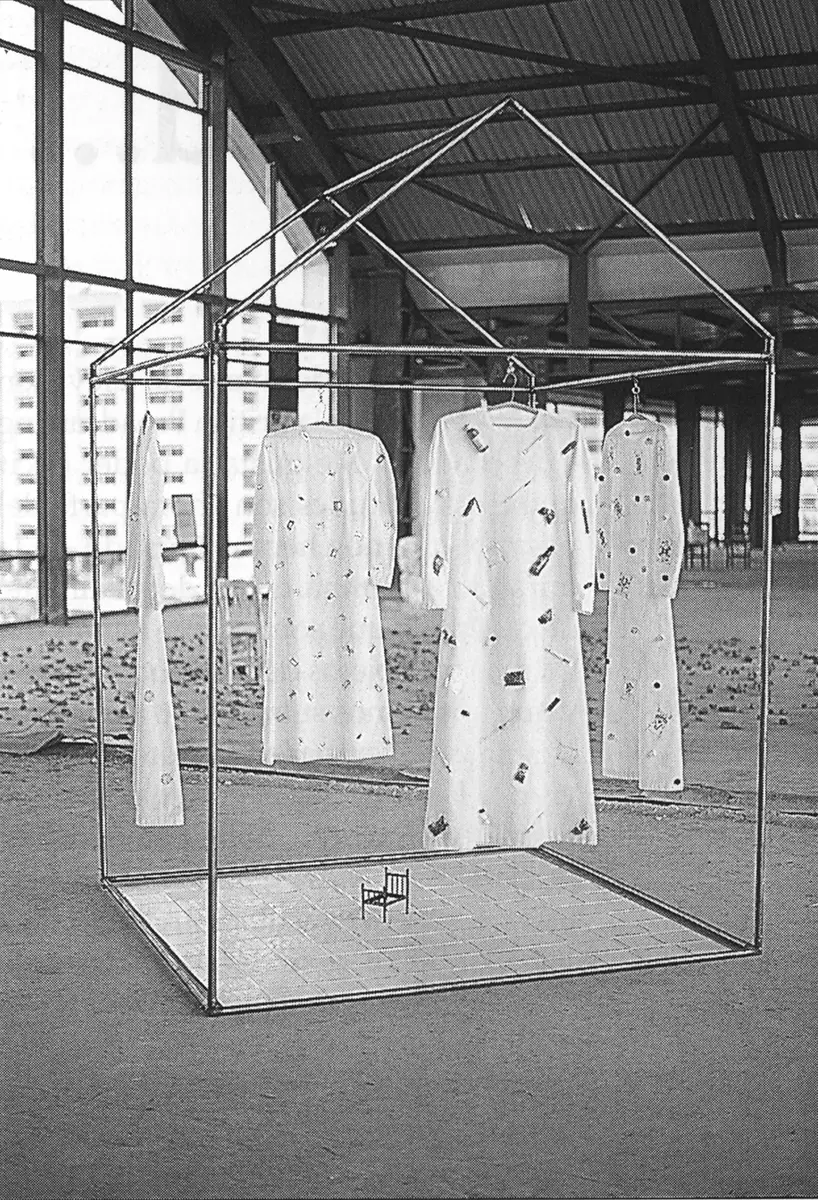
On the rooftop of a building, in November of 1998, Untitled was presented on the first sunny day after Hurricane Mitch had passed. This enclosure, completely surrounded by glass, is situated in one of the most central areas of the city. From there, the borders and the fusion between the richest economic neighborhoods and the most depressed zones of the city can be seen. By relating the imagery between the outside landscape and the works present in the show, critical commentary was generated to all these poles of opposition and to the situations of duality, which are the daily bread in Guatemala. Darío Escobar's work, for example, composed of a series of blocks, made with traditional construction materials that trap pages of books from the country's educational system, questions the incongruence between the accelerated and disorganized growth of construction and the inefficacy of the local educational system, which implies a dissection of our values and the confession of its fragility. Aníbal López, through a video installation titled 506 D.O., proposes a reflection on the multiple nuances of information and its dogmas. Artists like Daniel Hernández, Rodolfo Walsh, Veronique Simar, María del Carmen Pellecer, and Francisco Auyón resort to the image of prayer, metaphors, and mysticism in order to suggest actual processes of the transformation of our society. Diego Britt, Reinhard Frotscher, and Ruth Habermehl, as foreign artists who reside in the country, certified the importance of the register of the cultural overlappings in the collective memory of the individual. María Dolores Castellanos, in her installation titled De los hábitos (On habits), composed of four suits that hung from a fragile metallic structure in the shape of a house, suggests the importance of customs and their consequent state of alienation. And Diana de Solares, with minimum resources, like plastic canvases and latex gloves pierced by natural light, built her installation Las manos limpias (Clean hands), in which she expressed an interest in conceptual and psychological connections established with the objects, beings, and phenomena that surround us, and which sop up and reflect our life.
With a website2 and advertisements that were printed on signs with the Pepsi logotype, the show marks an important step in Guatemala's art history. It declares the need for a state of autonomy and, in a strange way, stimulates an experience that is generating continuity through the invitation of even younger artists in order that they show their work in this space.
This history will surely not be new to anyone. In general, the symptoms of enthusiasm and great intentions with a creative power that in their moment would seem to have no limits, are interpreted, from the heights of arrogance, as naivete or a state of catharsis. There is probably someone who could foresee its disappearance, and someone else would say that this smells like gasoline. It is true that cultural infrastructures are fragile and that the tradition of documenting and theorizing on the facts in order that the public may understand the reason for the moment in which we are living does not exist. But there is nothing more refreshing than to be part of a cycle of regeneration that not only involves a society but also its creative processes. Besides, if we take into account the disquiet produced by living with disaster in a permanent fashion, these are the events that continue to shift the gears of art. What is happening today in Guatemala is probably an important contribution to that old world of art, proof that it can still learn something new.
NOTES
1. The show cited is titled "1265 kilometers. Arte contemporaneo de Guatemala en Cuba’ (1, 265 Kilometers: Contemporary Guatemalan Art in Cuba). It was presented in September and October of 1998 in the Centro Wifredo Lam. Its title corresponds to the distance in kilometers between both countries and raises the question of how to overcome the lack of cultural communication between Cuba and Guatemala established now for many years.
2. The site of the show Sin título can be found at http:/www.geocities.com/SoHo/Workshop/8638/
ROSSINA CAZALI
Curator and art critic, she lives in Guatemala City.