The sinister is that sensation of terror that clings to things familiar and known for a long time. 1
Sigmund Freud
In the photographs of the Peruvian artist Milagros de la Torre, objects predominate, even when the subject appears. The objects are seen with their weight of meanings that refer back to the absent subject. There is a mark, or rather an accumulation of marks, which gives the object its powerful emotive and experiential force: the elision of the subject merely accentuates its presence.
In some of her work de la Torre also documents, though not explicitly, the taxonomic desire of social institutions: the classification of the subject and the world. If we tried to read her work in the light of Foucault, it would not be difficult to see parallels between the latent content of some of the photographs and the archaeology which the French philosopher developed in his epistemological worlds, in particular in Les mots et les choses, or in his investigations into prison society and psychiatric institutions. These questions underlie such works as En Blanco, where the fifteenth-century censi of the city of San Marino have been photographed, with luminous parchments appearing where the names of those included in the censi are no longer legible. As the explanatory fiche noted: "What is it that determines whether things are documented or not, what defines the selective mind which constructs the dispersed elements that survive the passage of time?" I believe that the reply might involve more directly the socially classifying impulse of the modern episteme studied by Foucault than the abstract selectivity of the mind. A census is, in addition to many other things, a form of social and political control, a variant of the subjection suffered by individuals at the hands of institutions, the processes of classification and categorization, the guiding principle that regulates the gaze on the world. A sort of Chinese encyclopedia syndrome, as in the story by Borges, has influenced rational thought since the beginning of modernity.
In the Final Things series, the artist presents objects used for the rehabilitation of mental patients. These objects are shown in all their coldness and nakedness as an allegory of internment, the confinement to which society has condemned those it considers crazy by making them lose the dignity of their meaningful senselessness. The objects emerge from an atmosphere of oppression and remind us of an ominous silence broken by a furtive cry or distant sobbing. Here, everything refers to the subject, who is however not present. To the subject, artifice, and recipient. When we look at these photographs, we understand why there are no neutral or unpolluted objects: they all have something to say to us, and even the silent recyclable waste products of post-industrial societies are full of some kind of meaning. They are in themselves witnesses, although now we almost never question them.
This quality is most evident in de la Torre's political works, such as Untitled (The Disappeared), in which the pieces of clothing simulate the presence of the subject. In The Lost Steps, the objects taken from the hall of the Palace of Justice in Lima have their own story of suffering and, perhaps, of a call for justice. Mute witnesses to crimes of passion or political massacres, the objects speak to us. At first, they murmur some unintelligible sounds, then tell us stories and engage in a dialogue with our gaze. As we see them, we start up a music box. These are little worlds of meaning.
This illuminating capacity of the artist who focuses our attention on an object which is revealed before our eyes are more evident and less reproachful in Hook/Long Stockings/ Skirt Stockings/Dress/Shoes/Hand, in which a fine thread of memory seems to be reflected, interspersed with some trivial story.
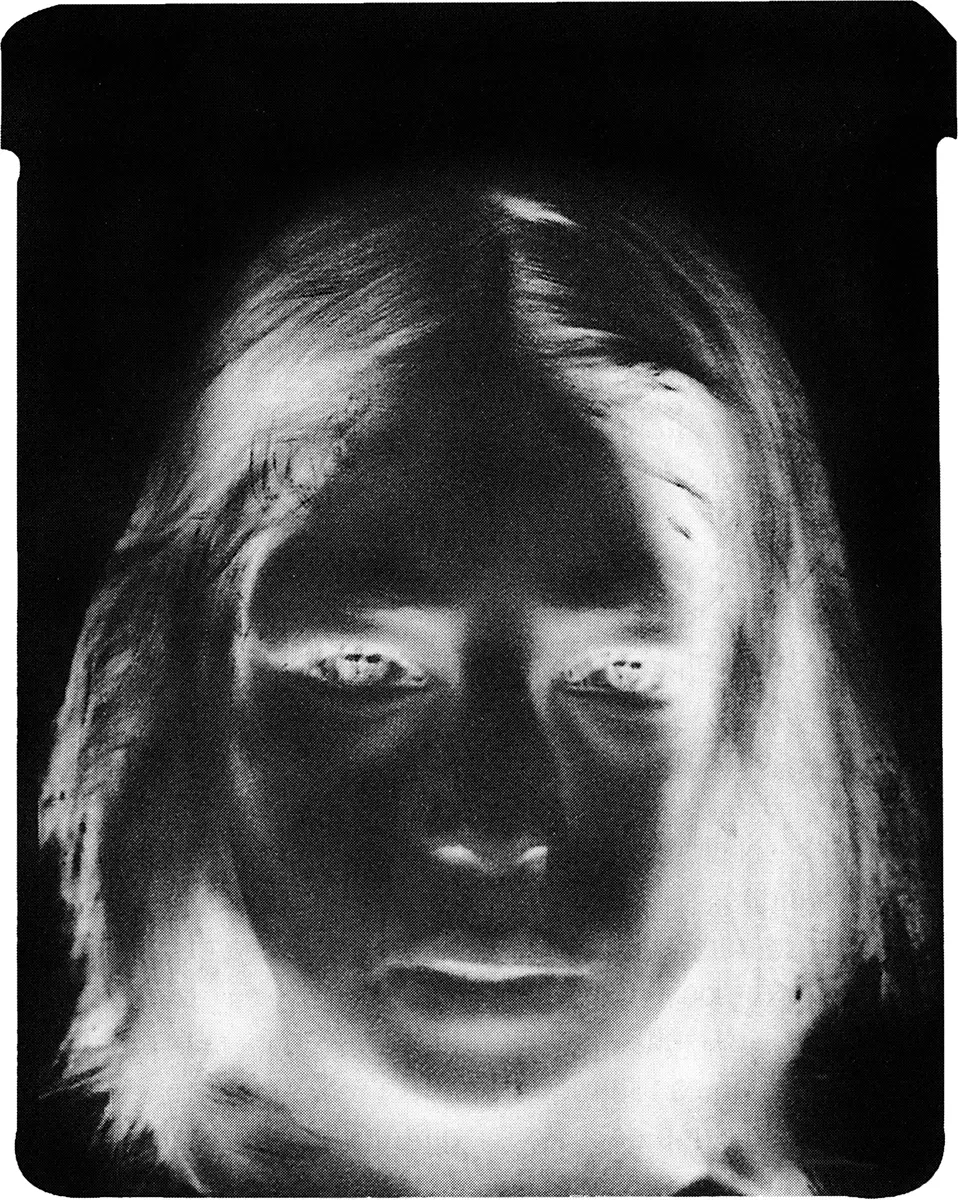
In Under the Black Sun she assumes the role of a local portrait photographer. The subject reappears in a de-personalized and anonymous manner. You have your photograph taken for amusement or some need, and in the process, an object is generated, i.e., the first step is taken towards a future meaningful mechanism that will remain there until someone comes along and starts it up. When we look at an anonymous photograph, whether old or new, just as when we read something which is ours or somebody else's, we seem to acquire some kind of "suggestion machine" that is different for each one of us and for each place and time. Perhaps our machine has become a bit run down under the avalanche of silent objects and the loss of our capacity to evoke things, which has been made worse by the homogenization of global society.
There is a sinister air in some of the photographs of de la Torre, and the sinister element is one of the categories that photography can rework, that is if people are still interested in aesthetic categories. In its Latin sense, "sinister" means left, i.e., the opposite of right or what is "right", something that is twisted and also strange, as in objects which when we look at them lose their everyday qualities and familiarity and appear new, as if they are being seen for the first time.
NOTE
1. Eugenio Trias. The Beautiful and The Sinister, Seix Barral Editorial, Barcelona, 1984, pp. 190.
ERNESTO SOSA