
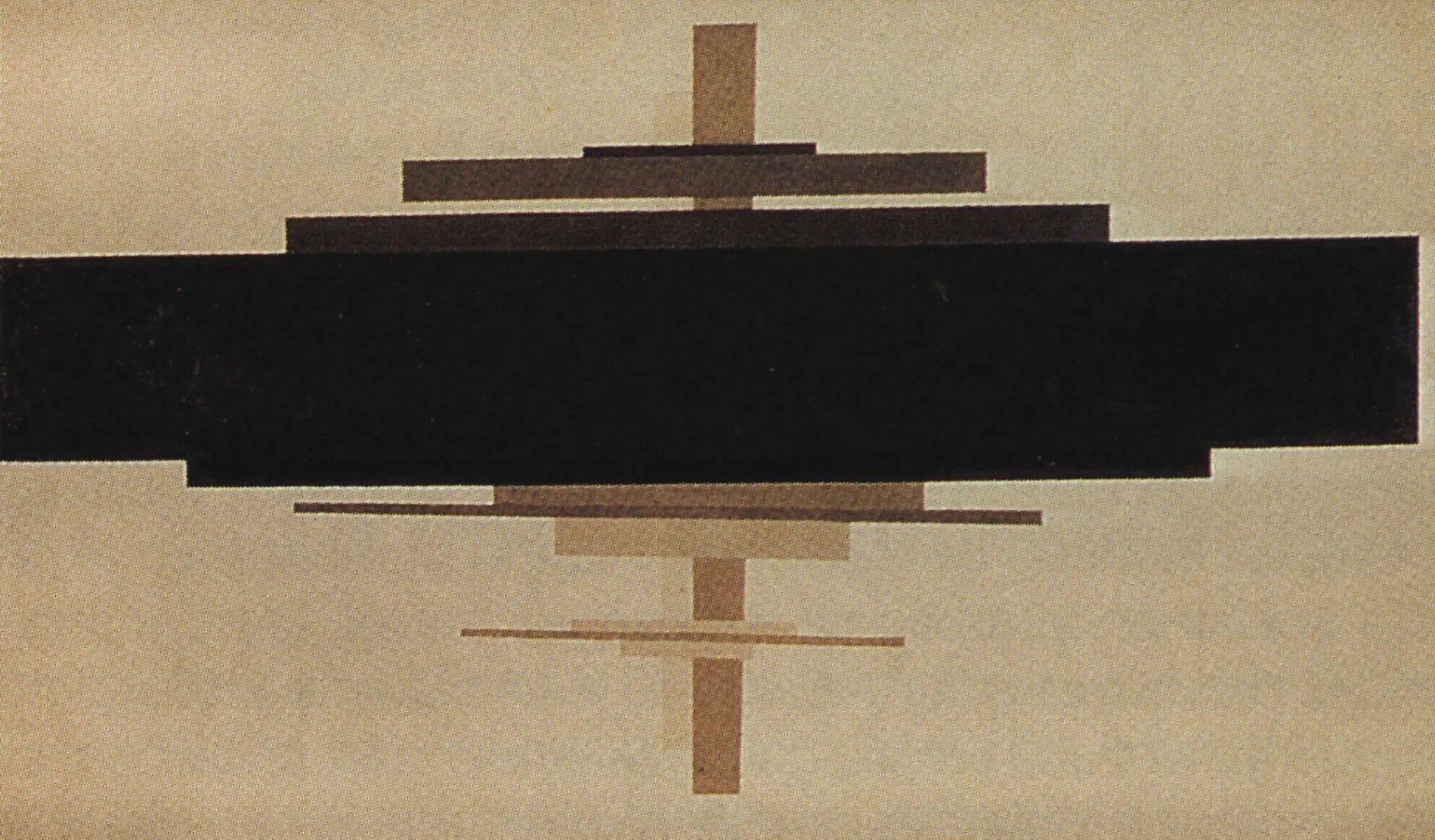
The Luis Angel Arango Library inaugurated the exhibition Pioneers of modern art: Russian and Soviet art 1900-19301 at its Republican House. The show forms part of the collection of Moscow's Tretyakov Gallery whose origins may be traced back to 1856. In 1918, at the beginning of the Lenin regime, it was turned into the National Gallery. This produced significant growth in the collection which received works from palaces, churches, the Moscow Historical Museum, and private collectors. Currently, the Tretyakov Gallery- National Gallery houses a collection of over 300,000 pieces of Russian art.
The thirty-year excursion incorporated into the 51 pieces displayed at Bogota is an especially significant stage because of the intensity of political and social acts, as well as the dimensions of change proposed in the artistic field. The show's curator, Juan Camilo Sierra, invites us to look at eight of the plastic tendencies that took the lead role in those three fruitful decades.
The exhibition begins with the origins of the avant-garde in order to underscore the significance of symbolism which, since the end of the nineteenth century, has become a source of reference for all those who opposed the realism of foreseeable dailiness, the world of dreams and intuitions. Followers of this tendency made up the group "The Blue Rose", inquiring early into the magic of children's stories, into popular art, and into the Middle Ages in search of sources they could identify as their own, sources from which to create.
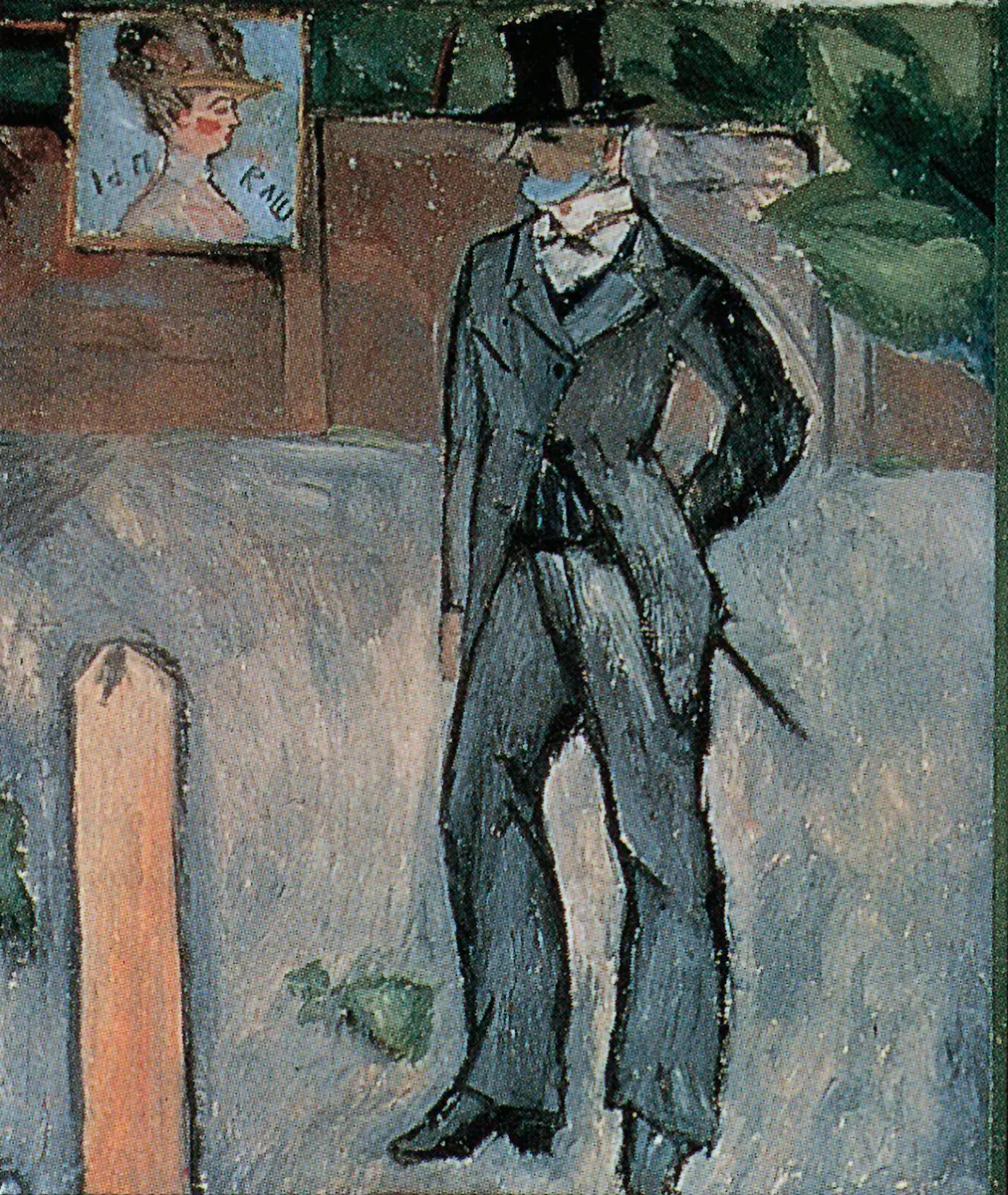
The gaze toward the East—ever present in many contemporary European artists—was indicative of that search that led to Primitivism. This is the second milestone of the journey: Neo-primitivism, whose protagonists were figures like Mikhail Larionov and Natalia Goncharova. The former's Provincial Dandy (1907) and the latter's Autumn Park (1909) are examples of the search that was undertaken. Both Larionov and Goncharova had ties to the group of artists gathered around the Golden Fleece and Jack of Diamonds groups. Between 1908 and 1910, these associations sponsored shows which joined the works of Russian artists to pieces by Matisse, Marc, Derain, Braque, Vlaminick, Picasso, and Léger. The artistic activity in Moscow in the early part of the century was intense. Various collectors gathered French paintings that ranged from Fauvism to Cubism, including works by Picasso, Matisse, and Cézanne. They were aware of what was going on in Paris, not enough to follow faithfully what they were doing there, but enough to think about those western experiences from their own perspective. Larionov and Goncharova, after integrating the teachings of European art into their work, decisively separated themselves from that influence and looked toward the East, for Russia seemed eastern to them.2 It would be neither African nor Polynesian art that attracted them, but rather their own folkloric and popular traditions. Games and popular signs, icons, and crafts like embroidery. Goncharova declared: "My country's art is incomparably more profound and significant than the western art with which I am familiar (I am referring to true art, and not what our institutions and unions impose). I have found once more my road toward the East and I am sure that many will follow me."3 Artists like Malevich and Chagall also went through a Neo-primitive period. Chagall's Dacha Window(1915), a painting based on his daily experiences of life in the country, appears in the show.
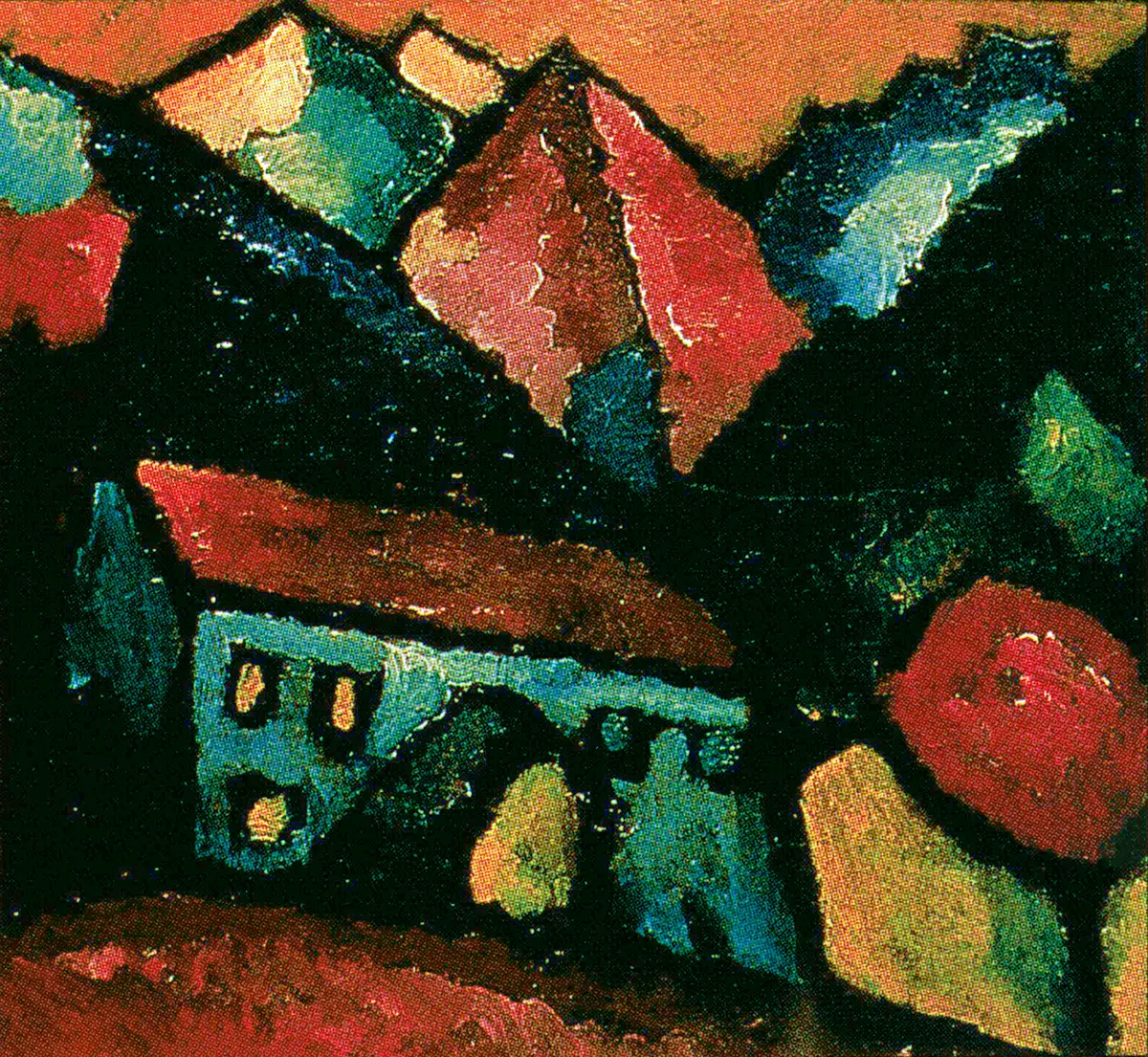
The third tendency refers to Cezannism and Fauvism. Within the "Jack of Diamonds" group, enthusiasm for Primitivism was not shared by all its constituents in the same way, and some were inclined to use elements like color and its expressiveness. Cézanne became one of their fundamental pillars, to the point that one critic of the period baptized them as "Moscovian Cézannists."4 Together with Cézanne, the fauvist experience and the beginning of Cubism were present in their searches. That attempt to evaluate painting as a basic material element brought them in touch with French painting and The Blue Rider. Alexis Jawlensky's Mountain home (1912) and Robert Falk's Sun. Crimea. Kozy (1916) is a witness to that intent.
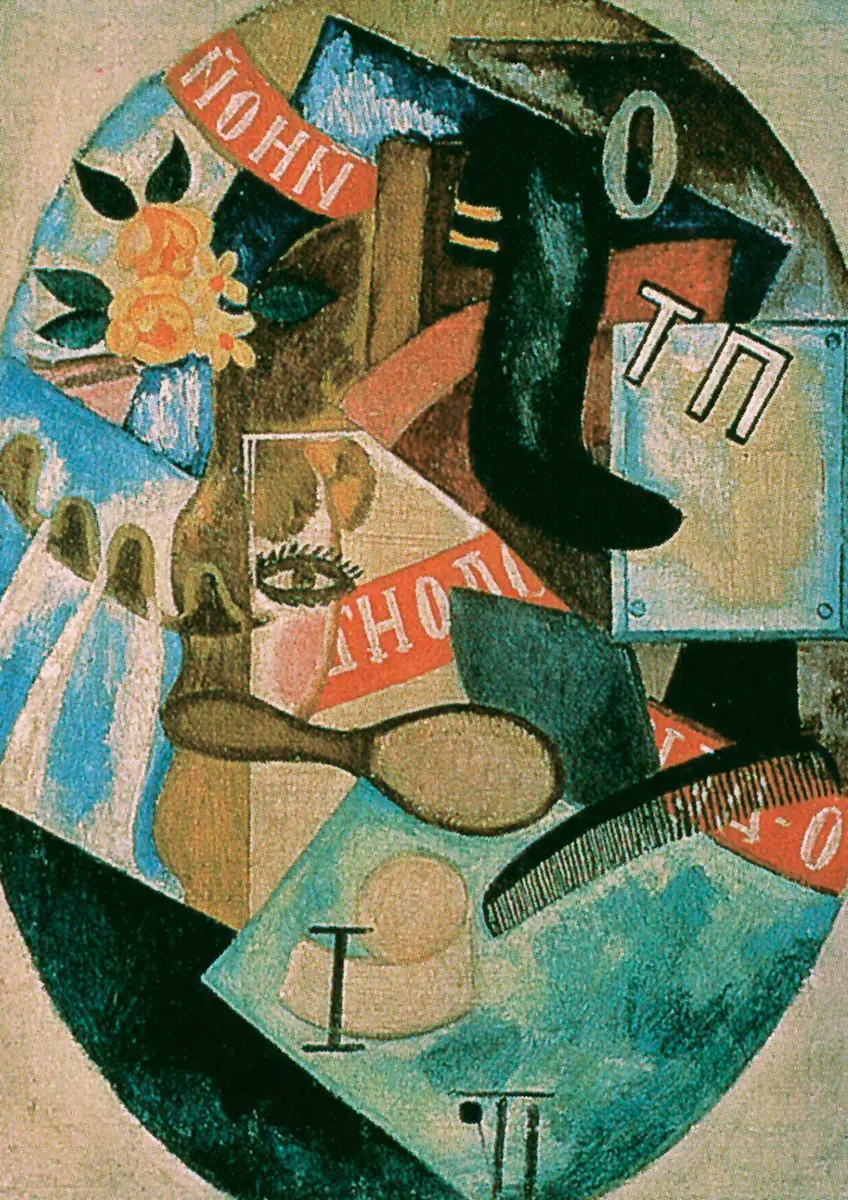
The fourth look is directed at Cubism and Cubo-futurism. The Cubist movement was discovered early in Russia, almost simultaneous with the developments led by Picasso and Braque in Paris. But it was between 1912 and 1915 that the artists actively incorporated both Cubism and Futurism into their pieces. Figures like Malevich and Tatlin, together with other artists,5 were the ones who analyzed the Cubist principles in order to elaborate theoretical reflections that led Cubism toward abstraction.6 Together with Cubism, Fauvism burst into Russia with great acceptance. Its familiarity spread through the Italian manifestos and some of the exhibitions that reached Moscow. However, the approach to Futurism did not suppose the acceptance of its more controversial theoretical postulates, like militarism and the relationship between man and technology. For Russian artists, it was the possibility to reflect on the innovation of Cubism and Futurism; hence the term Cubo-futurism was coined in 1913. As an example of this integration, the show displays two pieces by Malevich (among other works): Station With No Stop and Dressing-Table Box (both from 1913). Art began to free itself both from narrative and from the object; the possibility of representing a decidedly non-objectual world was opening up. The simultaneity with which such diverse tendencies and searches hit Russia means that, contemporaneously, artists were undertaking reflections leading to distinct paths. In the same stage of Cubo-futurism, both Rayism7 and abstract Expressionism were conceived.
Larionov and Goncharova formed the center of Rayism, and the absence of objects and references to the real world is its final aim. Its play with rays of light allows the creation of structures that reflect forms created by the artists will alone. It was a question of recovering chromatic properties and laws as the defining event of the painted surface. Larionov's Bull's Head (1913) exemplifies the initial stage of Rayism.
The other key figure in this process of abstraction is Vasily Kandinsky. His step from Expressionism to abstraction supposes the integration of the traditions of Russian and German art, the basic sources of his formation. For Kandinsky, art was based on the principle of inner need. Color, line, and movement are fundamental activators of that postulate since color is the medium through which a direct influence is exerted onto the soul. Thus his affirmation is that "Color is the keyboard, the eyes are the hammers, and the soul is the piano with the strings. The artist is the hand that plays, touching one key or another, to cause vibrations in the soul. The artist should make the colors conform to the principle of inner need."8 In his Improvisation of Cold Forms (1914), Kandinsky began to create a new reality out of his inner processes.
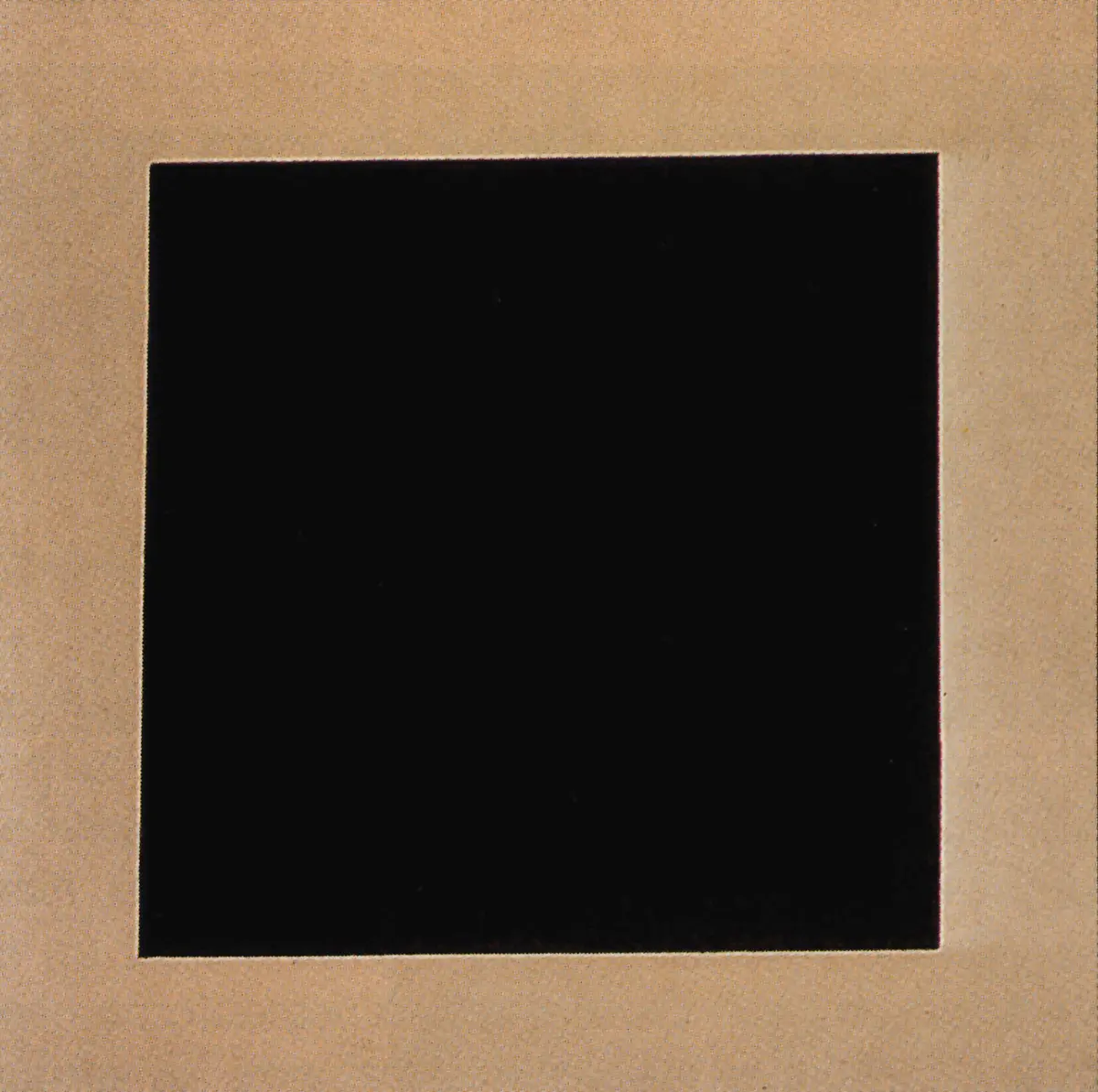
Non-objectivity in its entire dimension opens the show with Malevich's Black Square (1929), a paradigmatic work of Suprematism. The black square was used by Malevich for the first time in 19139 and then again in the 1915 "0-10" exhibition in St. Petersburg, thus coming to identify his entire program since the piece had no symbolic meaning, becoming a mere "zero in form." The central aim of Malevich's search was achieved: to reduce objectual forms to zero.10 He finally arrived at a total abandonment of the real world in order to attain the true aim of art, the supremacy of pure sensibility, stripped of all content. Disciples and followers of Malevich make their own interpretation of Suprematism and, as examples, the show includes (among others) Olga Rozanova's Composition With No Object (1916) and Ilia Cheshnik's Suprematism (1924-1925).
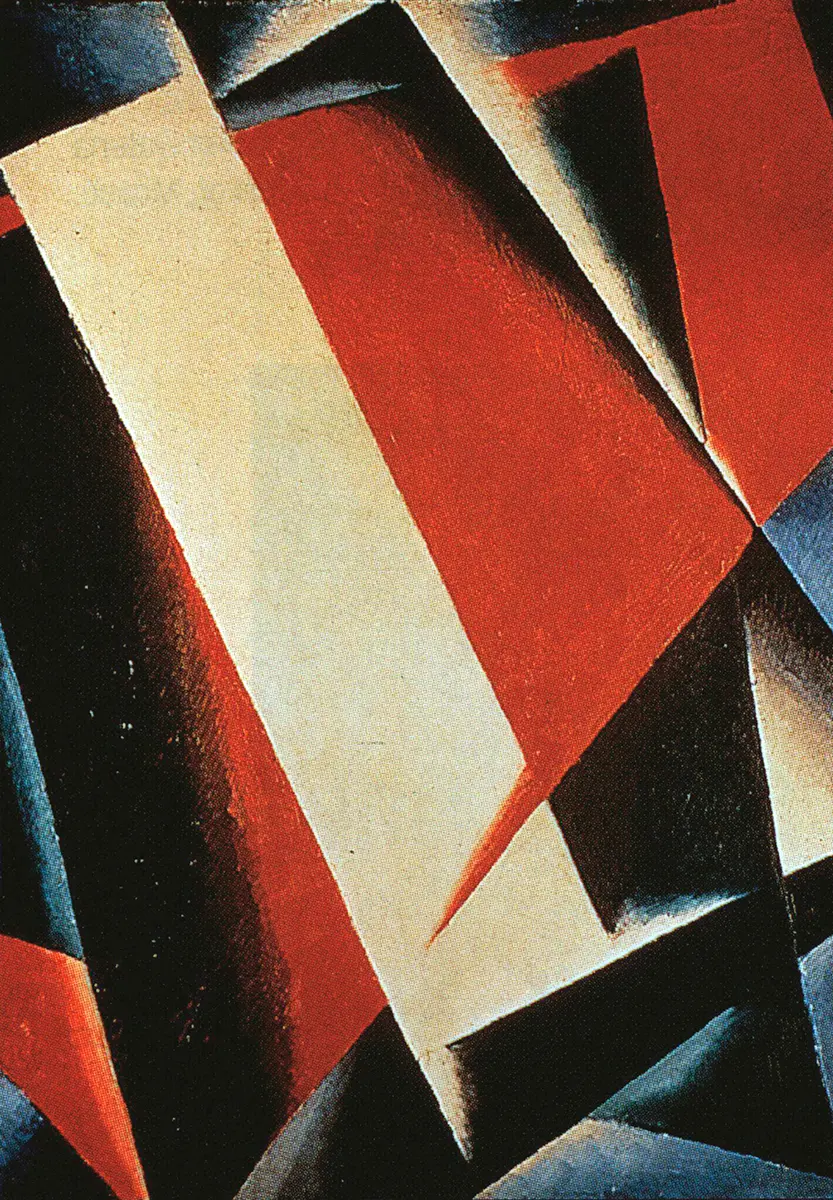
The penultimate stage of the visit is dedicated to Constructivism. The figure of Vladimir Tatlin is central to his Counterreliefs (1914-1917) which propose a peculiar way of integrating diverse materials, foretelling a fascination with a technique that would be key in his later definition of art's function. The taking of this position was tied to the October Revolution; he, like other artists and intellectuals of the period, sought an accord between art and the artists of the period, between art and the new times. Art should leave pure experimentation in order to fulfill a role that is useful to the new society. Hence the meaning acquired by working in the field of design is oriented toward the new needs of architecture, advertising, theater, and, obviously, industry. Constructivism turned into a creative current with enormous influence on the art of the twentieth century. Mayakovsky was aware of this fact when, upon returning to Paris in 1923, he asserted: "For the first time a new word in art, not the Constructivism of artists who transform the excellent wire and the can into useful structures, but the Constructivism that understands the artist's formal elaboration only as engineering, as an indispensable work for giving a form to our practical life..."11
Besides pieces by Tatlin, this show also displays works by Rodchenko, Stenberg, and Popova (among others).
The step from Constructivism to Realism marks the end of the visit. The ten pieces on display recount the peculiar process lived out in that stage of Soviet art, full of new possibilities, but also of contradictions. The change of direction toward Realism is ever more ostensible, and the controversies concerning the highly polemic Realist easel art led to deep divisions and to the formation of organizations like the OST (Society of Easel Artists), founded in 1925. The themes developed by its constituents centered on urban changes, the beauty of new engineering works, and exalting the material achievements of the Bolshevik revolution in order to reject the distancing of the object and to evaluate the return of painting inserted into daily reality. Verism made way for itself with decisive official support. The final point for the possibility that diverse tendencies might coexist arrived in 1932 when the numerous groups and associations of artists were replaced by the Union of Soviet Artists that supported a single artistic proposal: Socialist Realism.12
Through the eight thematic axes selected, this excellent exhibition allows the viewer to measure the artistic meaning of that period within the configuration of modern art. In spite of the abrupt cut produced in its place of origin, the influence of this art was felt by artists in other countries who, upon appropriating the proposals and theories that upheld this work, continued to investigate the possibilities that were opening up for experimentation and formal invention.
NOTES
1. Bogota, 17 February through May 2, 1999.
2. Alla Gusarova, "Neoprimitivismo," Pioneros del arte modemo [Pioneers of modern art] (Bogota: Banco de la Republica, 1999) 38,
3. Liudmila Brobovskaya, "Arte ruso: 1900-1930." Pioneros, 17.
4. Ibid., 65.
5. For example, Nadiezhda Udaltsova, Alexander Ekster. Liubov Popova, who had studied in Paris with Metzinger and Le Fauconnier.
6. Alla Lukanova, "Cubismo y Cubofuturismo" [Cubism and Cubo-futurism], Pioneros, 78.
7. The translator of the texts in this catalog, Rubén Darío Flórez, explains that the publications in Spanish on this stage of Russian art were mainly translations from English, French, or German. Thus, he substitutes words like Rayonismo, from the French Rayonisme, with Rayismo, making use of a translation that adapts to the morphological system of Spanish. He applied the same criterion in order to speak of Supremacism, instead of Suprematism (from the French Suprématisme), since the term created by Malevich comes from the Latin supremus.
8. Cited in Mario de Michelli, Las vanguardias artisticas del siglo XX, 105.
9. It was a drawing that formed part of the curtain in the Futurist opera Victory Over the Sun.
10. Pioneros, 98.
11. Cited in Michelli, 271.
12. L. Brobovska, Pioneros, 23.
IVONNE PINI
Professor at the National University of Colombia and executive editor of the magazine Arte en Colombia/ArtNexus.