Under the title Rendezvous, the Guggenheim Museum exhibited a combination of its own examples in conjunction with selected works from the collection of Paris's Centre Georges Pompidou.1 The Pompidou closed its doors in order to renovate the building for a couple of years, and the Guggenheim offered to take care of the expenses of the joint show. The result of this combination, a most spectacular exhibition, requires several speculations. For starters, it offers a memorable opportunity to see works that are normally separated and which may only be compared through books or memory. In this sense, the show sharpens the perception of drama in the separation of works of art, condemned to live in a diaspora dictated by the material property of things.
The experience of this type of encounter with dispersed compositions is nothing new. It is repeated in all important retrospectives and, thus, one sees them as historically punctual events, both in the artist's biography as well as in one's own life. However, the combination of collections, a less common event, seems to accentuate the dramatic aspect of the experience. Only a specialist travels the globe to see the entire work of one artist in particular. For affluent tourists, it is more common to see collections in several museums and draw conclusions. And here, there are obstacles to the process, not only due to the deterioration of memory but because in the museums themselves, the collections are not always accessible.
When works are gathered for a large exhibition, the intention is generally thematic. The present show, on the other hand, studies the physical property of the objects: who possesses what work. This is why it inevitably invites us to question the aforementioned diaspora. We ask ourselves if it would not be more logical to centralize all the important pieces of the world in one place, thus centralizing the pilgrimage. Besides the fact that this would create controversy about what place to choose, the solution brings to mind Hitler's project for the city of Linz. Hitler wanted to house his Nazi super museum there, with all the artistic trophies gathered in Europe. The contrary alternative would be to distribute all of the pieces in an equitable manner throughout the world so that each city would have its Cézanne or its Picasso.
These are the examples brought to mind because the show is so incredibly American-Eurocentric.
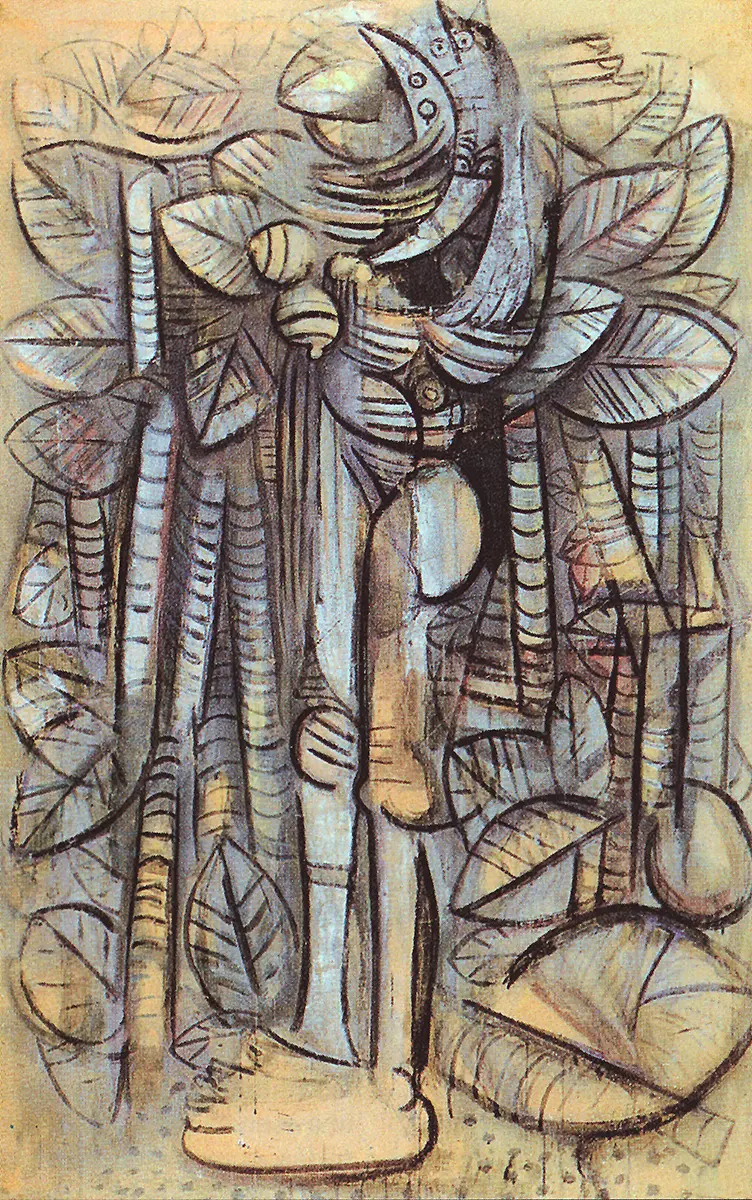
Matta, Lam, and Fontana are the only artists shown who have any contact with the periphery. We may also speculate on the alternative of attaining a faithful reproduction or copy of all works in order that they may be in all places at the same time, losing experience for the benefit of instruction, and sacrificing the famous golden quality of the original.
The problems associated with the museum collection institution obviously have no solution. The structure represents, in an overly faithful manner, the society in which we live. Property, trade, fetishism, chauvinism, and imperialism are all gathered here, and every move costs money ($10 to see the show, $45 for the catalog, prices that are normal for the museums here, but which illustrate the point). But after all, this goes through our mind, we are left with an exhibition of tremendous quality, at times revealing. In spite of the limitations imposed by collections —there is always something in another collection, and the absence is painful—, the combination selected here is exceptional.
For the unprepared viewer, there is, however, a constant distraction that diminishes the pleasure of the visit. The placards that explain each section seem to express a battle and tension between both institutions which affects the atmosphere of contemplation. We soon fall into the temptation of counting the goals to see who wins (generally, the Pompidou). With the first placard, we conclude that they are chauvinists at the Pompidou (and at its preceding institution, the National Museum of Modern Art). They dedicated themselves, for a long time, to celebrating the modern art produced in France. The Guggenheim, on the other hand, which from its beginning has been dedicated to an aesthetic and not a country (non-objective or abstract art), is eminently part of an international network of museums. The second placard justifies the fact that, precisely because of the aforementioned (French for the French, abstract for the New Yorkers), the fauvists are better represented at the Pompidou. Inexplicably, the first Matisse acquired by the Guggenheim, a sad and not very interesting lady, was barely obtained in 1982 (L'ltalienne, 1916). And also inexplicably, a painting by Matisse so abstract that it looks like a Rothko lying down, Porte-fenêtre à Collioure (1914), belongs to the Pompidou (since 1983) and not the Guggenheim. In a manner less than elegant, the painting's card explains that the composition passed into the hands of the French collection as payment of inheritance taxes.
Further ahead, a placard underscores once more what seems to be French provinciality. While the Guggenheim collected Moholy-Nagy and Mondrian, the French museum ignored foreign abstract artists. Only in 1974 (with the designation of Pontus Hulten as director) did the situation begin to improve and, as the placard makes clear, Mondrian's New York City I (1942) was acquired in 1984, thanks to the help of the French government and the Scaler Foundation of the United States. This does not take away from the fact that, of the three Mondrians in the show, two belong to the Pompidou. Another placard explains in detail why the Guggenheim, although it had the opportunity from early on, never collected the work of Miró (the first director, Hilla Rebay did not like his work). The National Museum, and later the Pompidou (we do not know if due to problems of taste or ignorance), only began to collect Miró in 1970. When they acquired the triptych Bleu, one of his most impressive works, in 1981, it was again thanks to a generous budget by the government and the help of another American foundation, the Menil. In the text that corresponds to Nouveau Réalisme and pop art, we are told that in 1983 both institutions showed the retrospective of Yves Klein. Since then, the French began to collect him seriously, while the Guggenheim has only one piece. But, states the placard, in 1997 the Guggenheim of Bilbao bought La Grande Anthropométrie bleu (1960), apparently to correct its previous errors.
Only when we read catalog 2 do we realize that the idea of the show is to historicize, often critically, the evolution of both institutions. In the essays, the authors maintain objectivity in terms of the role of the institutions and the circumstances that surrounded their creation. The texts of the placards, which are also in the catalog as introductions to each section, acquire a more comprehensible quality of synthesis. It is only isolated from the theoretical context that they acquire a disconcerting and unfortunate shade.
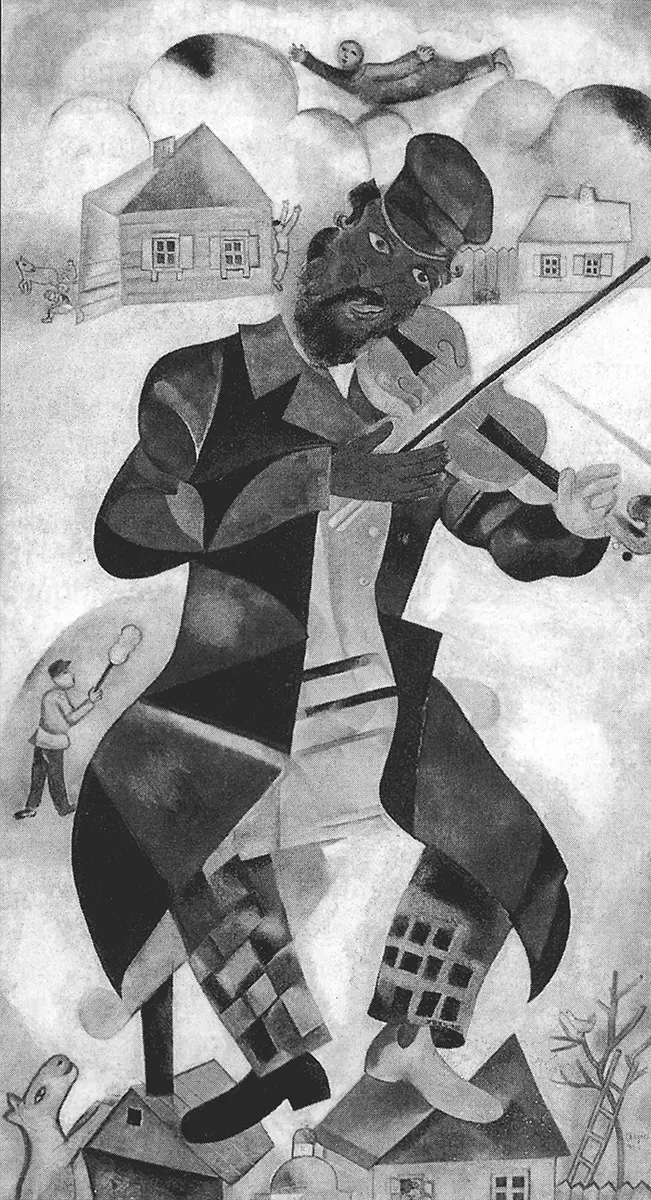
In spite of this, the works are triumphant. Perhaps the greatest pleasures offered by the show are the chance meetings between the studies and the final versions. Two studies by Kupka (Pompidou) are gathered with the final version (Guggenheim) in a nude from 1909 that announces the later abstract work, more interesting and in large part held by the Pompidou. The same thing happens in the case of Chagall's Green Violinist. A water-color drawing (Pompidou) from 1918 is only executed as a painting (Guggenheim) in 1923, thus becoming one of Chagall's most emblematic pieces. The drawing was clearly a project (it is cross-sectioned for its later amplification) and it is surprising how little he strays from the final version of this sketch. Unexpectedly, the detour is much greater in the case of Kandinsky, whose Im schwarzen Viereck (In the black square, 1923), one of his cerebral geometric compositions, seems to debilitate the work's final product (Guggenheim). And, thanks to both institutions, Brancusi appears with a good personal mini-show of a dozen pieces.
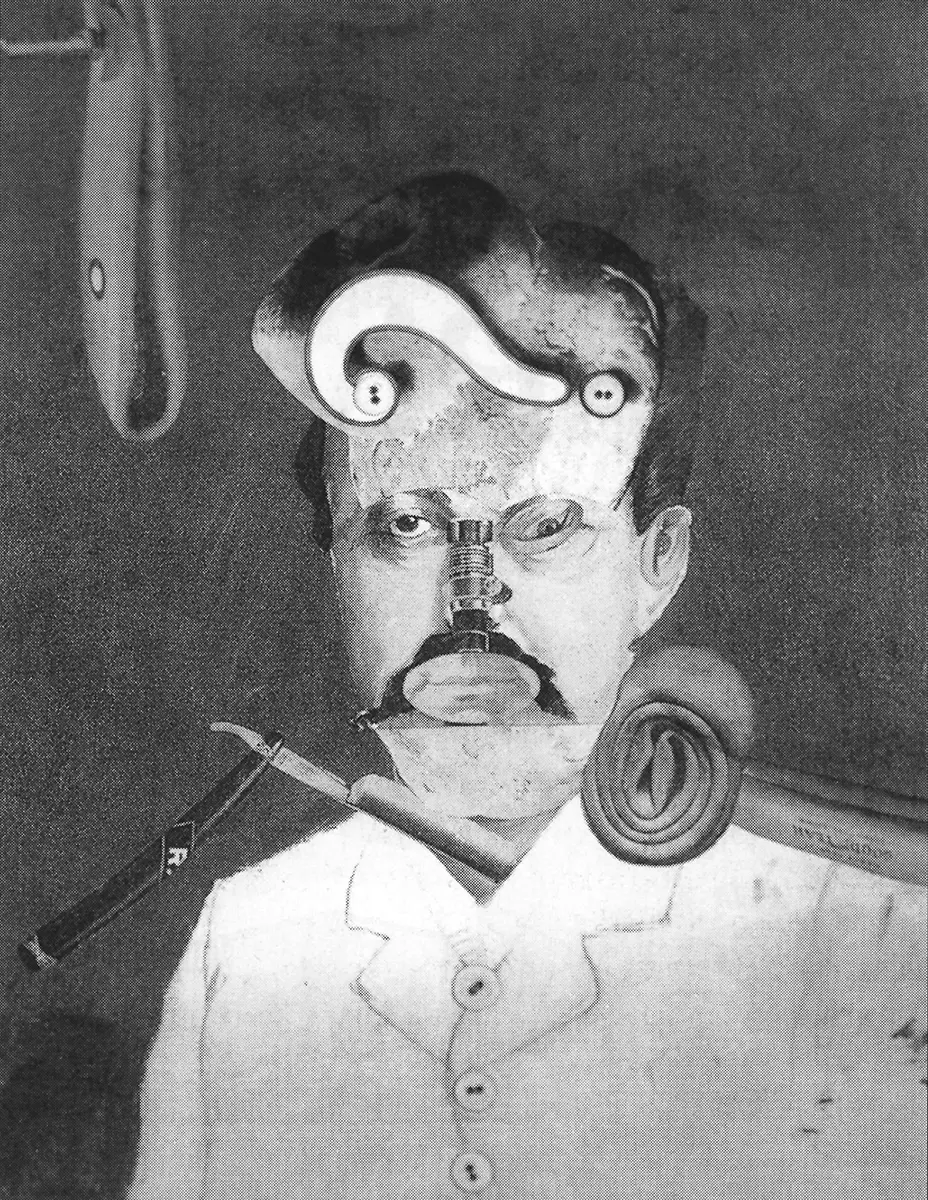
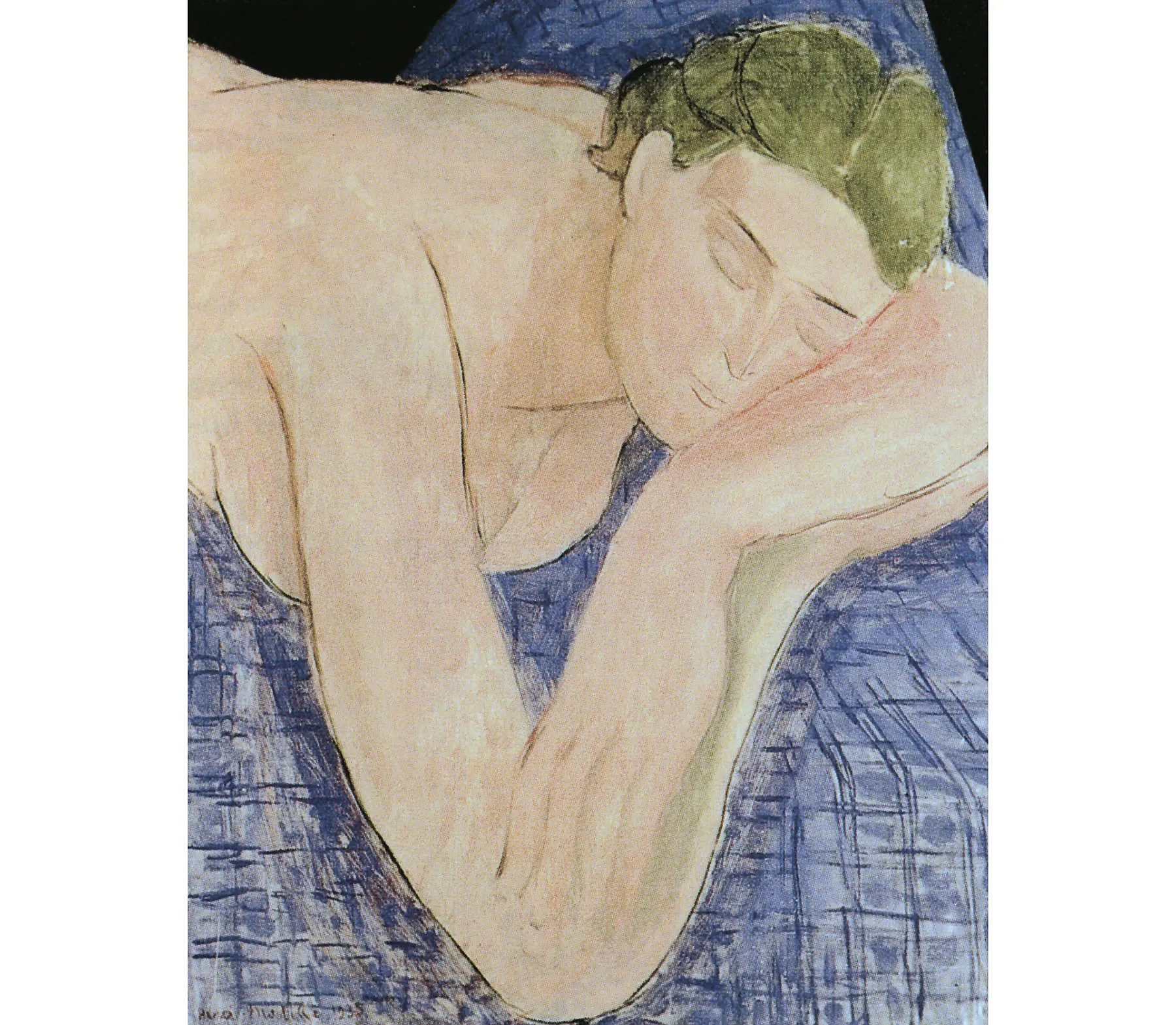
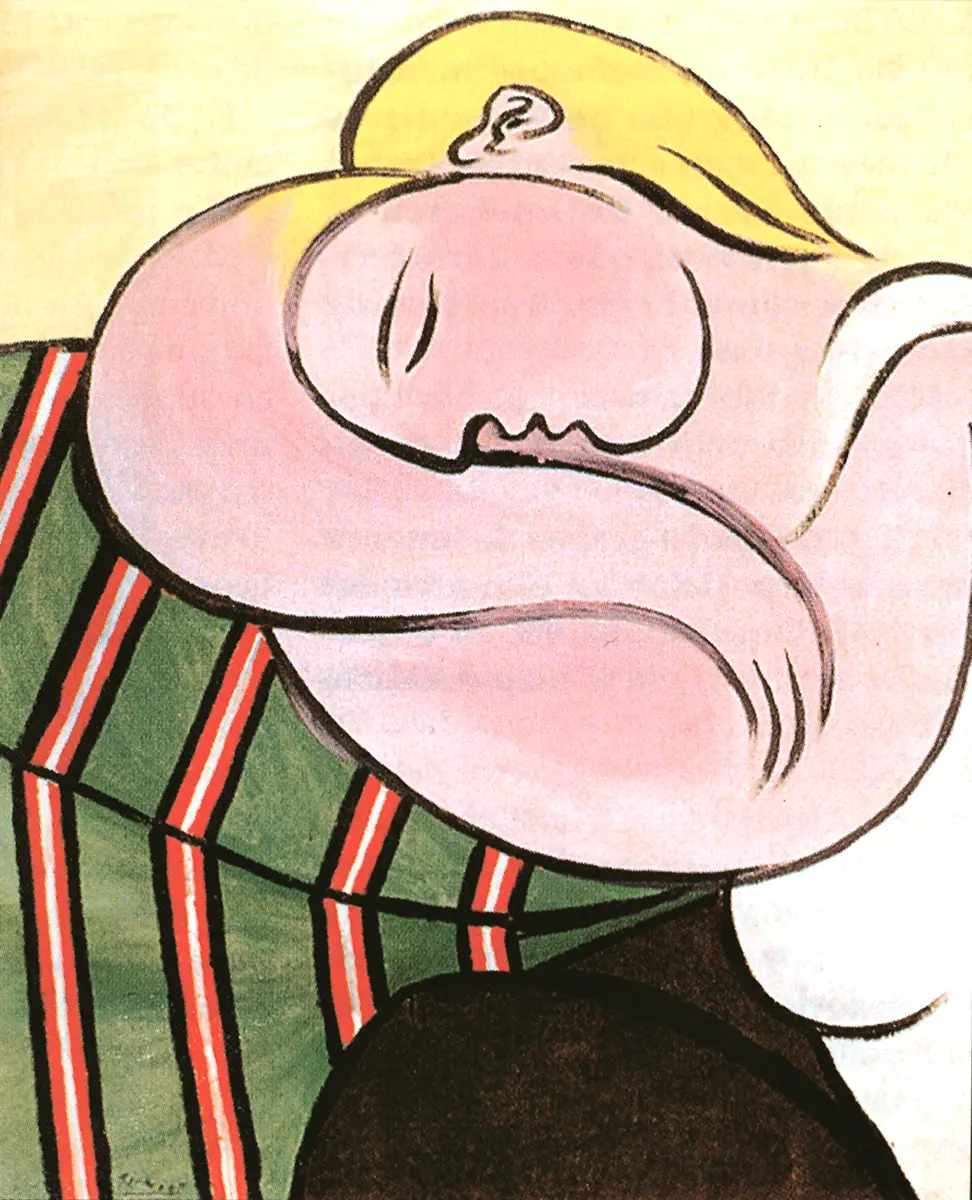
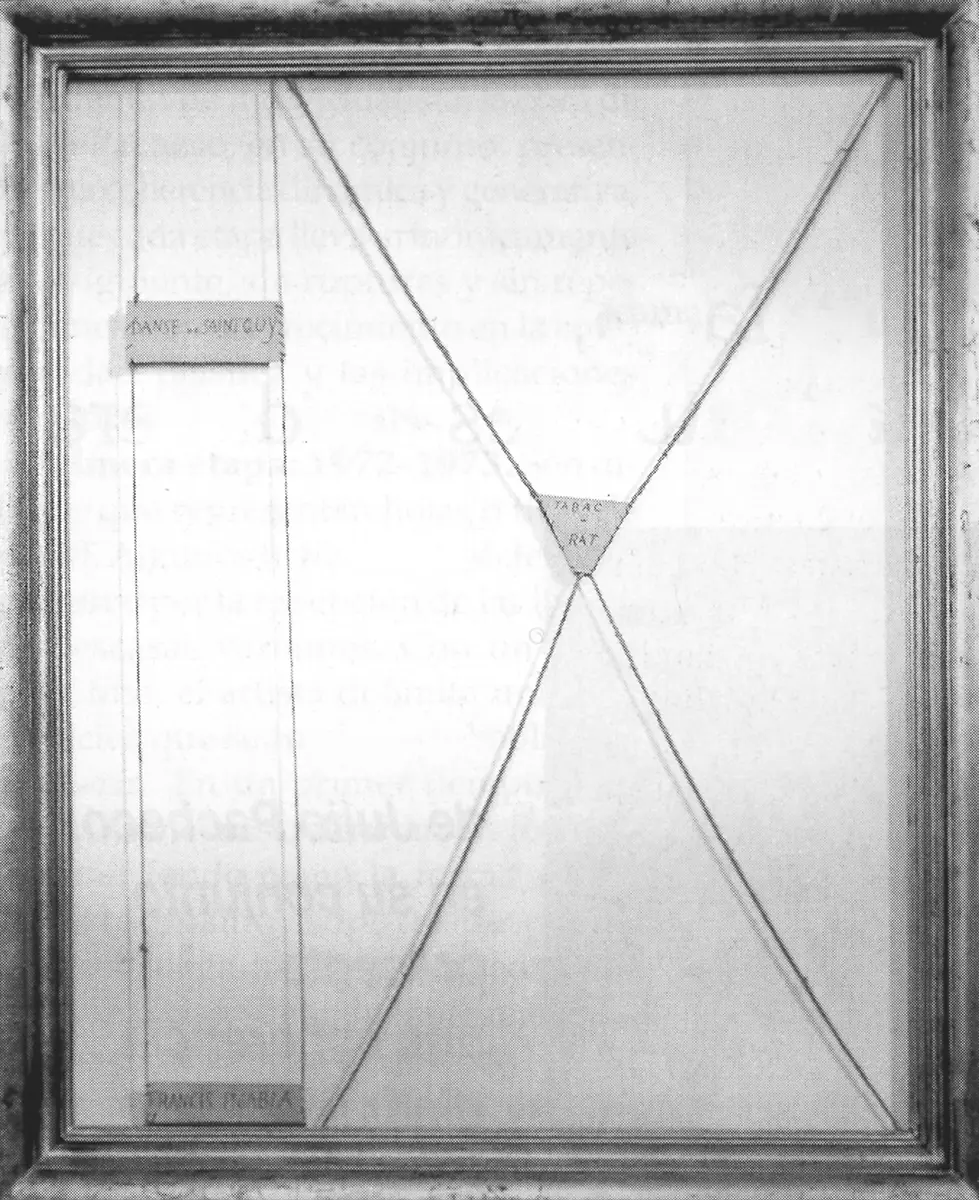
The meetings are not only of works by the same artists. There is an attempt to represent the friendship between Calder and Miró, a successful combination of Giacometti and Antonin Artaud, an obvious grouping of Duchamp, Picabia, and Man Ray, and a demagogic, allegorical superposition with respect to the rendezvous of museums between Matisse and Picasso. This serves as the show's advertisement, using Matisse's Le rêve (1935) and Femme aux cheveux jaunes (1931). Both women act as a mutual reflection in their position with their heads supported by their arms. But there are also individual pieces that stand out luminously. The Cubist sculptures of Henri Laurens save that artist from undeserved oblivion. George Grosz is represented by his Remember Uncle August, the Unhappy Inventor (1919), a masterpiece of Dadaist painting and collage. Three crude, strong, and radical works by Picabia situate him as a prophetic proto-conceptual artist who accompanies Duchamp with dignity. When, further ahead in the show, the combination is repeated with a later piece, the balance is broken and bis Veuve (1948) is reduced to anecdotal interest.
Closer to the present, the contributions are less regular. The Pompidou makes some important contributions (Wols, Fautrier, Manzoni), while others cannot be seen from a historical perspective (De Staël, Dezeuze). The Guggenheim underscores De Kooning and Lichtenstein, while Clyfford Still and Chillida are lost. There are revealing comparisons, like Soulages (Pompidou) with Kline (Guggenheim). Today, Soulage appears as a chic artist, totally aestheticized and lacking drama. Kline's work, on the other hand, is a reduction to a perfect essence. And there are also boring comparisons, like that of Hans Hartung (Pompidou) and Hans Hoffman (Guggenheim), through works that today seem muted.
The exhibition is complemented by an excellent show of design, property of the Pompidou, and a show of environments (art, design, and architecture in France between 1958 and 1998) titled Premises, at the Guggenheim Soho. The latter show tries to unify art, film, and architecture, without achieving its goal. It is, however, an important exhibition because it gives us the opportunity to see old classic installations by Ben Vautier, Daniel Spoerri, and Robert Filliou, in addition to two great recent pieces by Louise Bourgeoise and Daniel Buren.
By comparing the works in the collections of both museums, we can illustrate two radically different policies of acquisition. The Pompidou collection, regardless of a certain undeniable nationalism that is demonstrated through the presence of certain works more than the absence of others, seems to possess what it wishes to possess. The Guggenheim collection, on the other hand, gives the impression of being subjected to what it is given. Throughout its history, the Guggenheim was a recipient of complete private collections that reflect the personal taste of the ex-owners more than a historical vision proper to a museum. When the Guggenheim displayed, in 1987, it's Latin American collection, it illustrated in an extreme fashion this lack of an acquisitive curatorship.
But beyond the comparative evaluation of the collections, the curatorial policies, or the quality of the pieces, the questions regarding the role of a museum today remain. The director of New York's MoMA recently speculated on this topic. In a note he underscored the importance of the museum because it offers the real presence of work, in opposition to the experiences of the virtual reality of the Internet: "The specific locale of museums—each one can exist physically in one given moment—may be their most powerful attribute in an era of interconnection and globalization."3
This position may possibly explain why the MoMA has relatively few projects on the web. The Guggenheim, on the other hand, is launching a full-scale operation with its Virtual Museum (the weekly Village Voice compared the magnitude of the project to the Frank Gehry building in Bilbao). The weight of this undertaking does not lie in the reproduction of works of the collection, an activity in which most museums are immersed,4 but rather in the acquisition of works that only exist in virtual reality. The first Guggenheim project is Brandon, a composition by Shue Lea Chang on the rape and death of Teena Brandon, who was a transsexual assassinated in Nebraska in 1993.
With virtual works, the future opens up to all those who have access to a computer and a modem. The specific locale of the museum enters into the home of every person and, suddenly, the old works, like Picasso, Duchamp, or Lam remain as objects that represent a period in which art was possessed in objects. If the virtual museum triumphs, going to see these artifacts will be like visiting a Mayan pyramid or the Parthenon. It is a fun, instructive experience, but one that is no longer necessary.
To conclude, I attempted to compare Guggenheim's virtual collection to that of Pompidou. Unfortunately, Internet Explorer told me that I could not open the corresponding pages on the web. No matter. I decided that, after all, the specific locale comes to situate itself in the mind of us all. I turned off my computer and I went to imagine.
NOTES
1. Guggenheim Museum, 16 October 1998 to 24 January 1999.
2. Rendezvous: Masterpieces from the Centre Georges Pompidou and the Guggenheim Museum. Guggenheim Museum Publications: New York, 1998.
3. Glenn Lowry, "The State of the Art Museum, Ever Changing," The New York Times, January 10, 1999: P.1,40 AR.
4. See Mario Trajtenberg, "MUVA," Art Nexus, no.29 (1998) 22-23.
LUIS CAMNITZER
Uruguayan artist, Professor at the Visual Arts Department in the University of the State of New York, College at Old Westbury.