Under the director of Elín Luque the Fine Arts Department of Casa Lamm has been venturing into other terrains apart from painting and sculpture such as photo-based and conceptual work. This shift was evident in the recent show Talleres. Curated by Jaime Ashida, the director of the Guadalajara-based gallery, Arena Mexico: Arte Contemporáneo in coordination with Luque, Talleres is a collaborative mixed media project between eleven contemporary artists and the Contemporary Ceramics Workshop (Taller de Cerámica) under the direction of Noé Suro and the Mexican Tapestry Workshop (Taller Mexicano de Gobelinos) directed by of Carlos Ashida.
The artists who were part of this collaboration—Marco Arce, Fernando Brunet, Eduardo Cervantes, Gil García, Peter Glassford, Thomas Glassford, Silvia Gruner, Diego Medina, Luis Miguel Suro, and Robert Turnbull—executed different projects in such materials as acrylic, clay, fiberglass, lead, plastic, wood, and fiber in collaboration with artisans versed in the use of the most traditional, as well as the most contemporary, of materials.
The metropolitan area of Guadalajara, one of the most important industrial and manufacturing centers in Mexico, is still home to a fine tradition of crafts production. Among the most important sites are the towns of Tlaquepaque and Tonal-, where the persistence and innovation of traditional crafts are key economically and culturally. Talleres brings together the knowledge and practice of these traditions and in doing so, brings to mind a whole range of issues pertaining to the so-called high arts and popular expressions—between manufactured, hand-made, and ready-made execution of work, and between the original and its multiples.
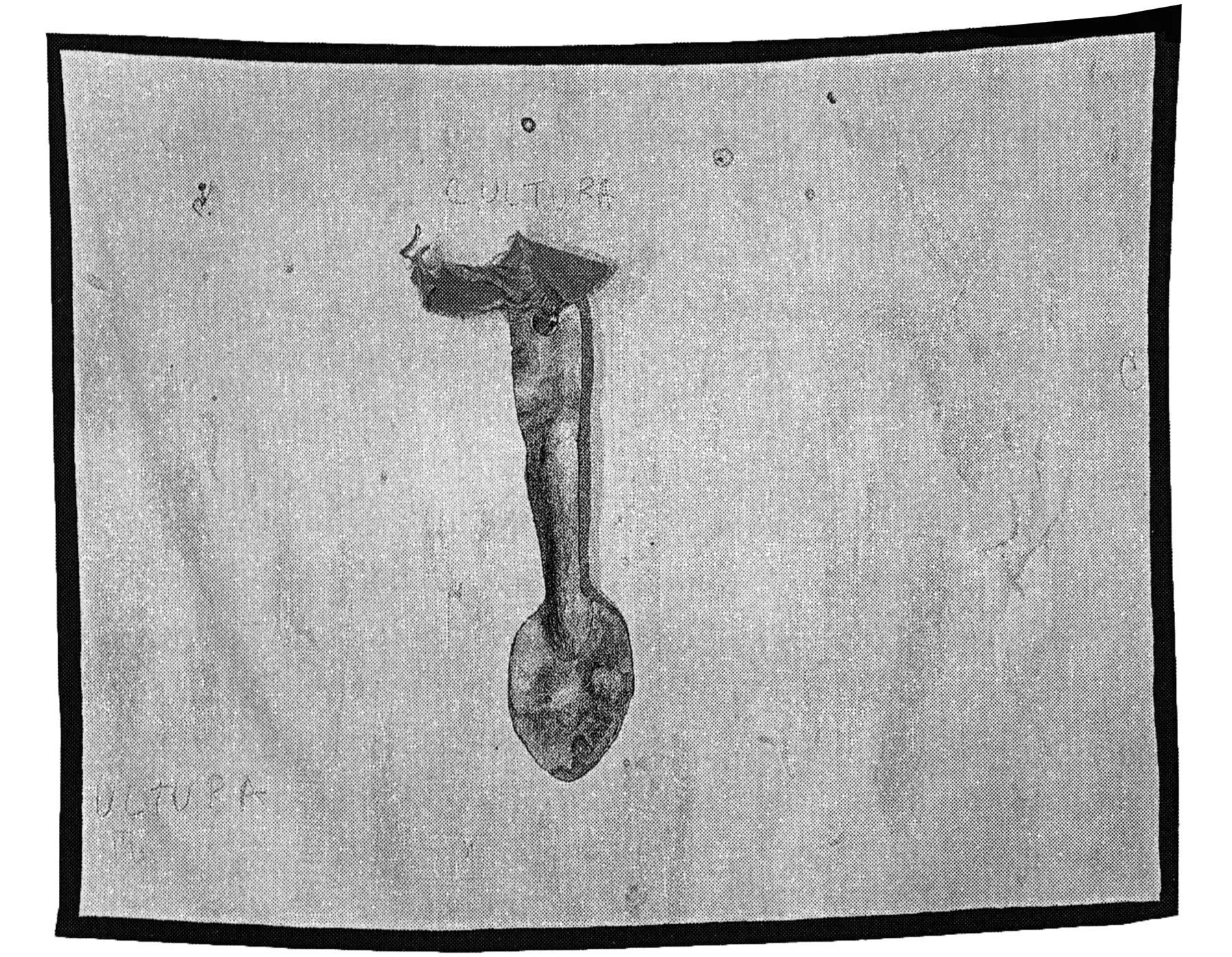
Both Robert Turnbull and Silvia Gruner had tapestries based on their work produced by the Taller Mexicano de Gobelinos. Turnbull's Colonia Roma, influenced by a painting or drawing, in a palette of mauves, grays, and reds, and superbly executed, had a rather plain yet pleasing decorative quality. It could have been that the cartoon or study of the tapestry, as is the case with many artists, was far more interesting and complex than the resulting piece. Gruner's work, on the other hand, was based on process-based series of photographic works entitled Natura/Cultura (1996). The iconic quality of the series, as critic Oswaldo Sánchez has highlighted, has an ascetic and cryptic quality. They are well-focused and in the full foreground, with no other mediation. Sánchez's reading helps to explain why Gruner's work translated so beautifully to the traditional media. The inventory-like images in the Natura/Cultura tapestries: a spoon and a little leg of an iguana tied with a red ribbon, highlighted in silver and gray metallic hues against off-whites, pale sepias, and beiges, acquire their own individuality as textiles and visual texts in terms no longer configured by the works they were based on.
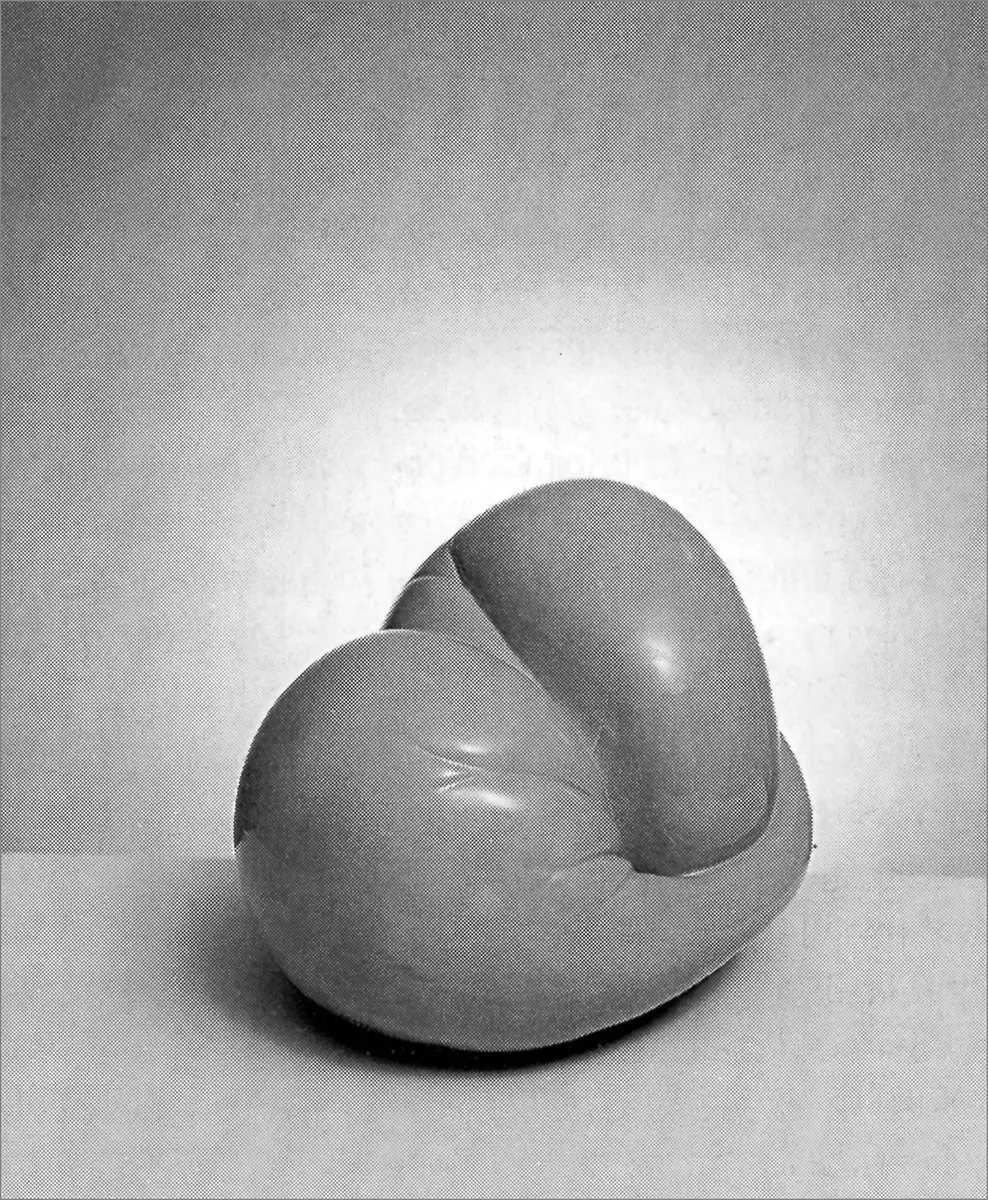
Another translation that stood out on its own terms, was the traditional ceramic crafting of Thomas Glassford's ongoing autogol theme, one that he has worked on over the years in different materials and scales. The autogol refers to a soccer play, whereby a member scores a goal in error against his own team. As numerous critics have noted, the calabas gourd refers to different levels of the body and the bodies of cultures: sexualities, flux, and migrations. For Artisania, skilled ceramicists rendered the narcissistic autogoTm various traditional floral and arabesque patterns and in diverse popularly inspired color schemes like yellow and pale orange, Talavera-like hues of blue, varied pinks, and yellows.
The work of another artist working with experimental materials a most everyday image stands out. Gabriel Kuri produced in fiberglass a sculpture of a pork rind (chicharrón) that was displayed in a glass case. Doy Fe recalled popular arrangements of culinary delights in open-air markets and stands as well as artistic endeavors inspired by food. While a one-liner, Kuri's piece was sharp yet humorous and managed to inscribe itself in the tradition of artists utilizing animal fat as a metaphorically charged material from Joseph Beuys, Jesse Amado to José Antonio Hernádez Diez.
Foundational aspects of modern art and its relation to popular traditions as well as sociocultural contexts still need to be reconsidered as more than just pre-modern impulses and romances with folklore. Until recently, artists were framed within the sources they drew from and the spirit they rekindled. Kasmir Malevich, for example, is a case where the appraisal or the critique functioned teleologically—namely that he took his relations to popular culture to another level, to that of the fine arts.
Alongside issues pertaining to popular culture, the disdain or mystification of kitsch and other expressions of mass culture in the high modernism/post-modernism discussion still deserves attention. This is particularly relevant to cultures that are characterized by the juxtaposition and layering of diverse chronologies resulting from the negotiation and translation of modernity and postmodernity. What is refreshing about Talleres is the way that some of the artists have dealt with these issues in a humorous, ironic, and critical manner without the work suffering from a surplus of meaning and difficulty.
What is evident in Talleres is not only the pastiche of cultural specificities and processes related to the craft and decorative arts tradition., but also the ways in which these formal strategies and collaborations are an expression and/or cultural index of globalization that problematize the binaries of high and low, fine and popular arts, modern and postmodern, good and bad, local and global.
VÍCTOR ZAMUDIO TAYLOR