For a long time, the Arturo Michelena Salon has fulfilled its function as a center of renovation of the plastic arts in Venezuela. But the time has now come for it to take on new challenges. In the past, it has been of the most important national salons and still is, but for some unknown reason, each new edition gives the impression that it has become bogged down and repetitive. It would be interesting to explore why this is so despite the fact that the Salon's infrastructure is very attractive. I believe that if the Salon was to change something, just as it has already changed its physical space, then it could become a more successful enterprise. Unfortunately, the State, through its bureaucratic machinery, has prevented it from acquiring any real transcendence, restricting it to a rather monotonous and useless kind of competition. After fifty-six years it needs to take the next step; to fail to do so would lead to irreversible decline.
As in the past, this year many young artists, mostly from the provinces, participated. In the invited artist's section, there was a significant group of mature artists, whose work is widely known in the country. Once again, too, the event included all the traditional expressions and media of contemporary art are the same we have been witnessing for over two decades without much variation: photography, painting, sculpture, and installation.
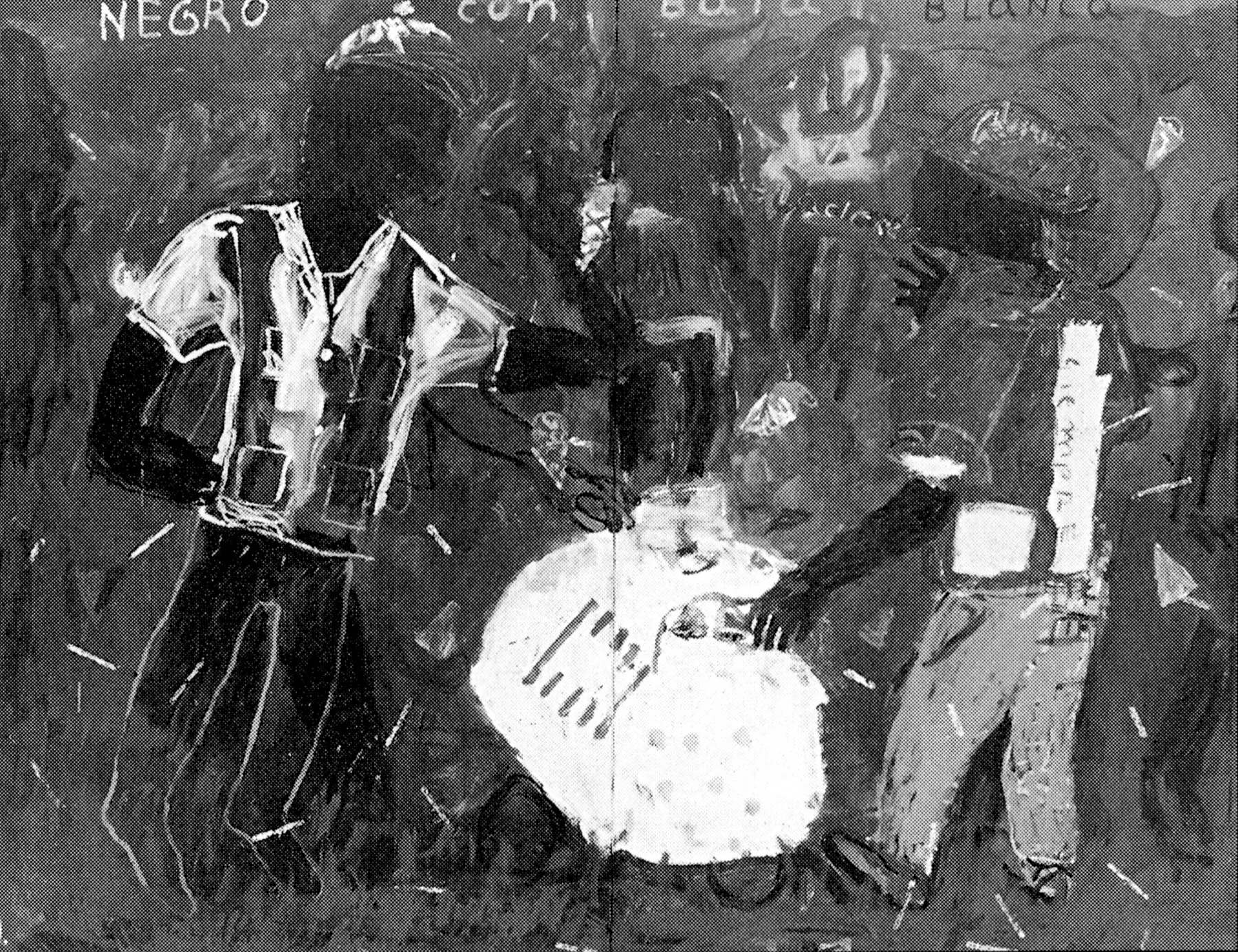
There was one interesting revelation in the painting of very young artists working on the fringe of the most unusual kind of poverty. These artists work with an idiosyncratic language, in which the most important thing is to defend their condition as marginalized artists without any hope. Of these artists, Julio Chavez, the winner of the Braulio Salazar Scholarship, powerfully demonstrated how painting could once again be used to respond to more complex needs, where poetry and emotion could replace the boredom of a programmed and codified kind of art which is constantly being institutionalized around us. Chavez is a painter with a great popular sensibility. He develops his themes in a way that many painters try to imitate when they want to be spontaneous. He is right to disregard the rules and the craft that have undermined the sensibility of so many painters. His own painting bubbles over with an uncontrollable need to draw closer to the circumstances of man (as inevitably in the paintings of Ernesto Zales, the prince of darkness).
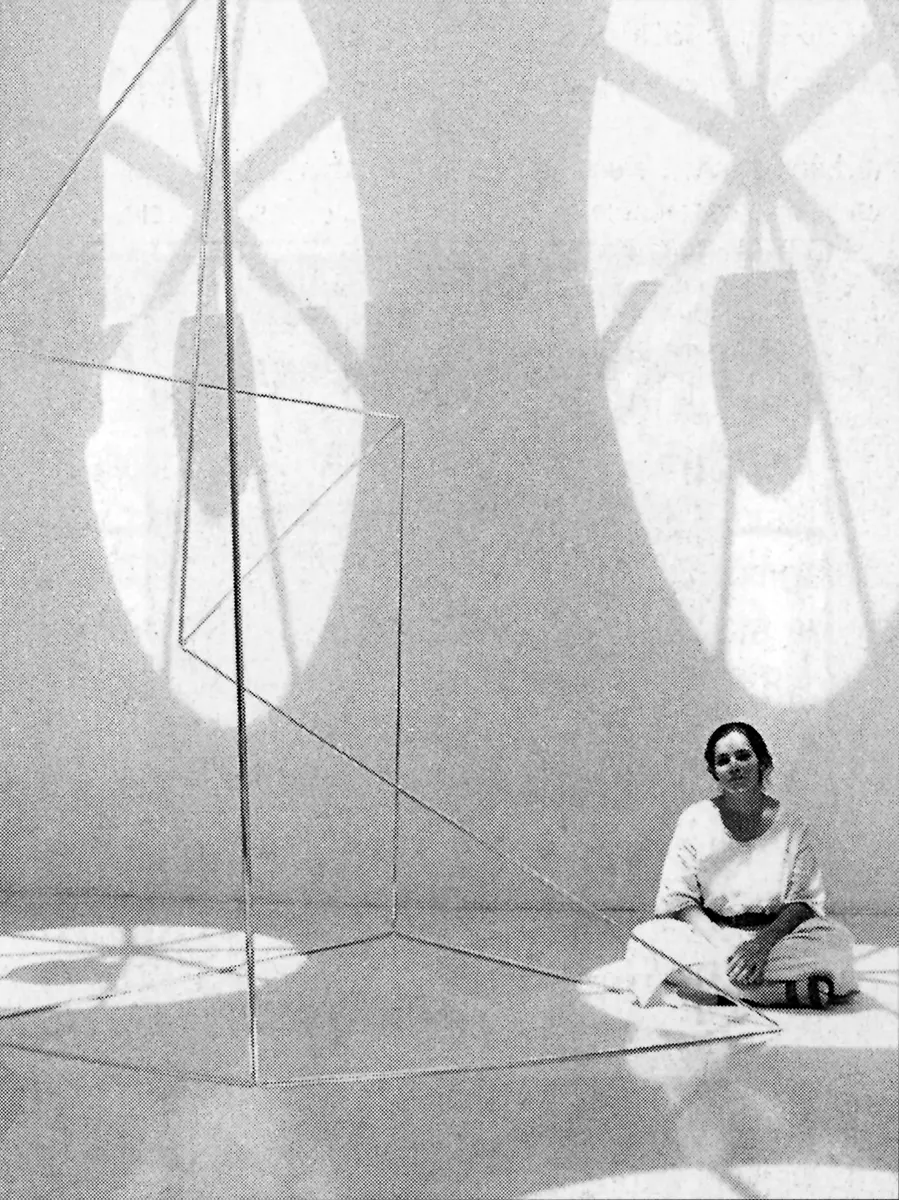
Magdalena Fernández (winner of the Arturo Michelena Prize), who may joyfully be called a constructivist, not to say conceptual, artist, has inherited a tradition that was broken in the mid-1970s, and which her own work goes beyond. Her use of these tendencies evokes some of the charm and magic of Gego's work as a result of its freshness and optimism. Her art is characterized by an amorphous mass of constructivism or kineticism and a special kind of sensibility that cannot yet be defined with any certainty. Her interests are rather of a poetic kind, centered on an obstinate search for beauty hidden in the articulations of structures that are both clumsy and fragile- characteristics that are often synonymous with human joints. Her prize was well-deserved.
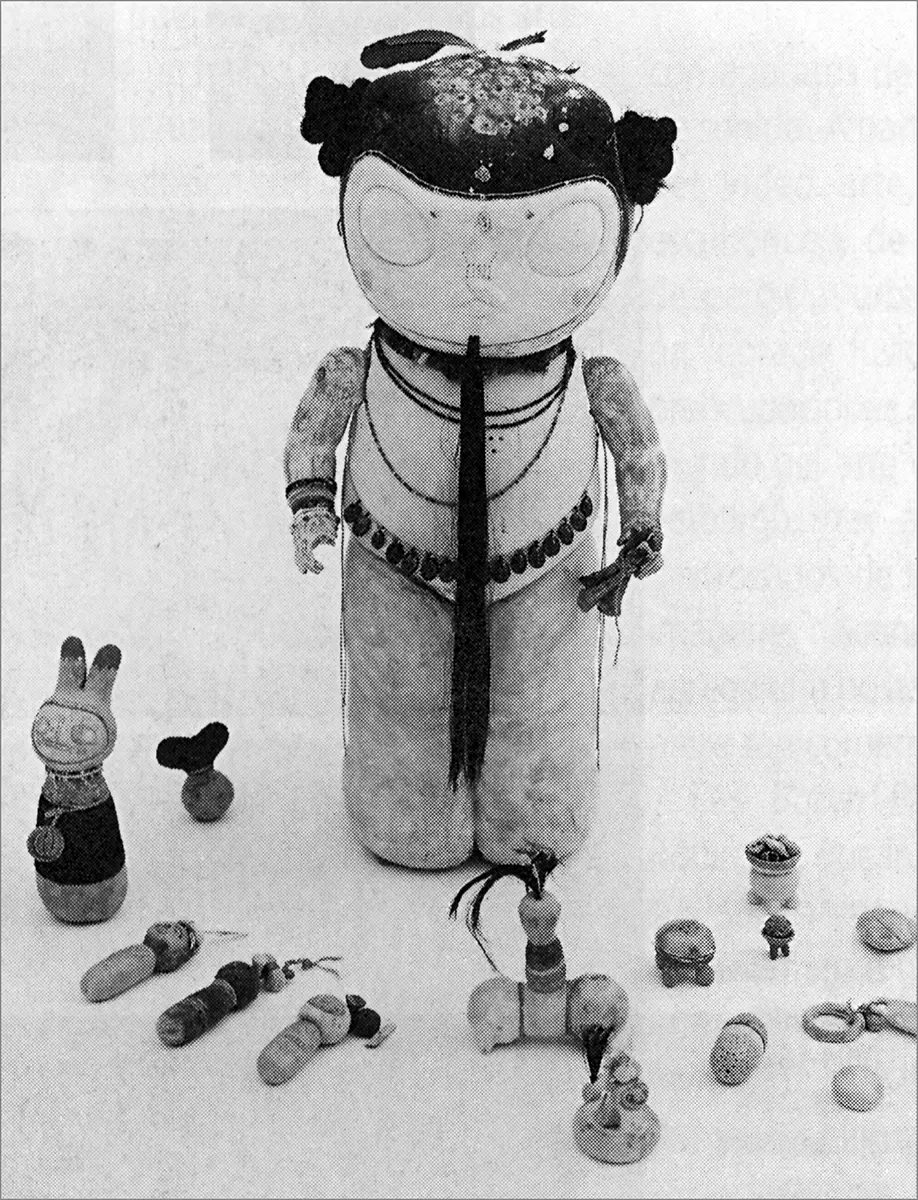
Mariana Monteagudo (winner of the Francisco Narvaez Prize) was outstanding, not only for the quality of her work but because she confronted the public with something unforeseeable. This sense of surprise is an important quality. Her work reflects a clear sculptural conscience. Monteagudo works with a small image from a Japanese comic strip, transformed into a kind of pre-Columbian Venus covered with amulets and other shamanistic objects. The atmosphere of contemporary art, particularly in New York, is now full of this sort of talismans. The childhood traumas suffered by artists seem to find an outlet through the transformation of these doll-like creatures into art objects. The work of Monteagudo moves in directions of an anthropological kind and seems to be full of supernatural forces which inspire both sweetness and terror.
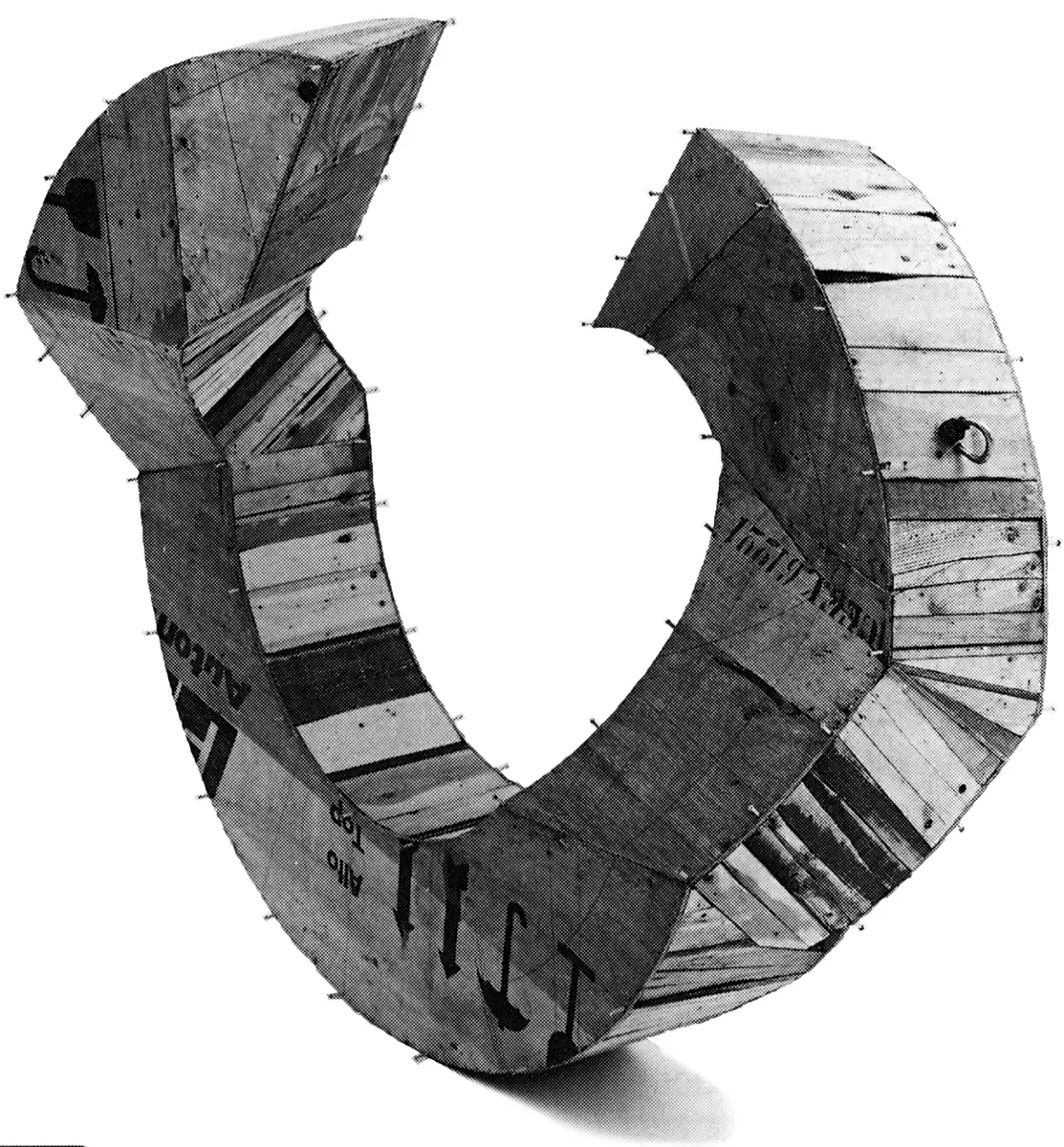
Luis Lovera (winner of the Andres Perez Mujica Prize) has already demonstrated in various salons and group shows that his work offers a way of exploring the problems of sculpture that have remained unresolved for more than a decade as young artists have given more attention perhaps to their search for the real and the social through strategies underwritten by the virtual and ephemeral dimensions of conceptual art. His sculptures nevertheless reflect a culture that is hungry and dependent on technology. The twisted volumes are constructed with the waste material of wooden boxes from the automobile industry and are always hung like strange pinatas that are impossible to hit. Lovera seems to still believe in the infinite possibilities of space penetrating into volume, as in the case of Moore, and more recently, Chillida. However, it is the construction of the volume itself with wooden waste materials that make his work a humble revision of the sculptural tradition. In this way, he establishes, from within a marginal zone, a different kind of perspective.
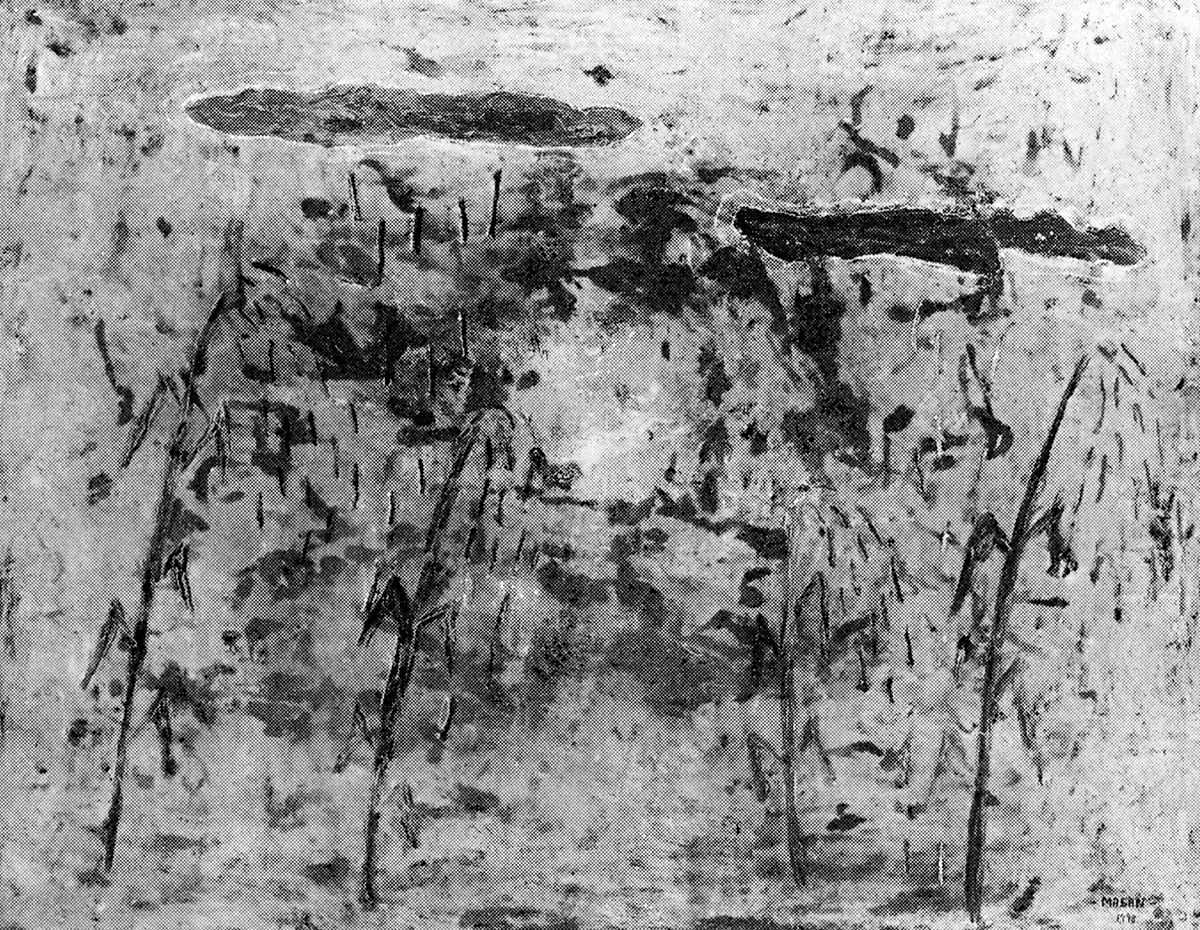
The marked participation of artists who might be considered naïf or ingenious characterized this edition. In my opinion, they were the most audacious group of painters in the Salon, with considerable poetic force and expression. Perhaps their lack of technical and artistic expertise allows them to remain within a privileged domain where the strength of rupestrian innocence gives them a sort of transcendent dexterity. A clear example, in addition to Julián Chávez, is the work of Luis Méndez who, with his spontaneous talent, creates compositions that would be impossible for professional artists to imagine.
Then there was the work, spectacular in its great humility, of Mauricio Sánchez (winner of the Juan Lovera Prize), who fortunately paints with more poetry than a concept. I have always thought that a good picture is better than a bad installation and that therefore a good ingenuous picture is preferable to a bad conceptual painting. The painting thus becomes an act of profound expressive need, an act of absolute giving of oneself, and not a mere strategy of postmodern intelligence. Most of the artists in this Salon who identified with such strategies automatically become artists whose work is devoid of any real goals. As such, they lose themselves in their constant ironic provocations.
Similar to Mauricio Sánchez was Oscar Sjostrand (Antonio Edmundo Monsanto Prize), another unknown, self-taught artist, whose work is full of erotic insinuation. Without any hint of vulgarity or poor taste, it pays homage to the charms of women, with handsome women holding up their breasts in front of themselves, conscious that they are caressing one of the most divine parts of what they are.
In a completely different vein was the work of Edison Parra, with his volumes woven with cotton. Volume has fallen out of fashion in contemporary art circles, perhaps because of its strong primitive and organic connotations, which are different from the mechanical and seductive images of mass impressions, whether photographic or deriving from other transfers very common in conceptual art. Parra constructs closed volumes like new pieces of pottery, with tapestry decorated with graphic elements or hieroglyphics of a pre-Columbian kind. The result is highly sophisticated, a homemade solution to sculptural problems, resolved within an artisanal tradition and an acute pictorial sense. The pieces could be described as conceptual sculptures in which the sculptural material has been replaced by a flat surface of a pictorial kind, such as a piece of tapestry. Parra's project and that of Magdalena Fernandez have in common their desire to contain the three-dimensional space using fewer materials and physical effort. After a long career as a painter, Parra suddenly finds himself confronted with one of the great ambitions of many painters: to transform painting into a three-dimensional enterprise. Frank Stella is one of the most ambitious artists who have taken this concern to a monstrous level.
Photography, one of the most dynamic artistic expressions in recent editions, can take two approaches. One is based on tradition, and the other on its use by the artist as a perfect means of expressing his or her conceptual intentions. Rafael Salvatore (winner of the Eladio Aleman Sucre Prize)has for many years been producing photographic work based on social problems. However, the aesthetic concerns of his work are a means of emphasizing the inhuman situation of his characters forever being tortured, or what remains of their bodies lying between pools of blood.
Amalia Caputo (winner of the Henrique Avril Prize), Gabriela Gamboa, Nam González, Antonio Lazo, Nacho Marín, Antolín Sánchez, Corina Rodríguez, and Vasco Szinetar explored the limits and possibilities of photography, in an attempt to expand it as a medium, as other more traditional expressions have managed to do. It is curious to see how a painting is writhing in an attempt to reassert itself, at the risk of disappearing as a result of neglect, whereas media such as photography and other related expressions are bombarding an audience ready to devour stories and games. This Salon once again reflected this conflict.
Other prize-winning artists at the Salon included Víctor Hugo Irázabal (winner of the Iván Petrovszky Prize), Pedro Terán (winner of the Armando Reverón Prize), Hernán Alvarado (winner of the Antonio Herrera Toro Prize) and Nela Ochoa (winner of the Harinjs Liepins Prize).
EUGENIO ESPINOZA