
A few years ago, Ernesto Pujol said, in reference to Winter —a series of oil paintings with direct, obsessive images salvaged from the memory of an infant— that sometimes there is no way to escape the past, that you can feel trapped in a nightmarish world from which death alone can free you.
Ernesto Pujol's use of memory in his work is not, therefore, an innocent, sweet, or nostalgic evocation of landscapes, climates, and scenes of childhood, but rather it's opposite: an implied, repossessing, and audacious memory, as trenchant as a well sharpened surgical knife, a memory learned from Artaud's cruelty, a symbol of creative rigor. This cruelty is symbolized in his work through icons like the machete or the knife which recall, in the last analysis, Latin machismo.
In Cuchillos y cunas (Knives and cribs, 1995), he repeats six times the same sequenced image of a knife that points at a crib, suggesting castration, one of his most widely repeated metaphors, which can be figuratively inflicted upon the child's psyche from his most tender infancy. It is a question of the memory of a child, the witness to socio-political events, a boy whose sensibility lay on his skin's surface, an exceptionally lucid and perceptive child who lived the apparently typical and daily as unique experiences, as if they concerned only him, protagonist of his own reality: My work does not center on castration as much as on the construction of a notion of the masculinity and violence that tend to flourish among the men in our societies. I revert to my studies in psychology and I make use of the fear that men have of castration as a basic Freudian metaphor. But castration as such is not the key to my work, or at least it is not as crucial, for example, as the construction and reconstruction of all hegemonic political ideology seen through its expression and impact on the personal, on the domestic, exemplified in the white patriarch, concordant to the questions raised by Louise Bourgeois, my favorite sculptor."
Related to Cuchillos y cunas is another Cuna (1997) that the artist presented in New York's Linda Kirkland Gallery and which consists of a very white crib made of wood; over the headboard, there are subtle drawings made with a metal punch. Knives hang from the rails like toys. It is not the crib of a victimized boy, but rather the crib where this boy will grow up in the practice of violence so that when he is older he will be an individual called upon to lead, to be socially dominant, to attain power.
As we analyze memory time and again, his sharp perception allows him to see the hand of brutality and manipulation in concepts that appear as innocuous and innocent as those that refer to purity and virginity. Once the trap is discovered, he digs and analyzes it, extending it into other areas, detailing countless nuances and aspects in such a vast and profound fashion that they end up becoming a generalized and ever-present obsession. This intense creative process has led him to the invention of an entire language whose symbols and metaphors are enriched as projects are added one after another, inevitably related, like links in a single chain that join recoveries and recollections in a sort of extensive visual autobiography. Recollections that subject him to a process of patient construction and reconstruction, as well as to prolix and detailed decoding. All of this is based on a posterior denouncement of stereotypes, cliches, deceit, and manipulation: "In the early '90s, I was very interested in the construction of a non-verbal language, of a language of signs. In fact, I had already completed my Art Therapy studies at New York's Pratt Institute, because, at a certain moment in my youth, I had wanted to be a psychologist and practice psychotherapy. I am not interested in decoding my personal language for the public so that everyone understands it. I think that the interesting thing is to know that it is a language, that it exists, and that there are some fragmented narratives implied that the public can read, intimately engaging themselves with the work in that act of reading."
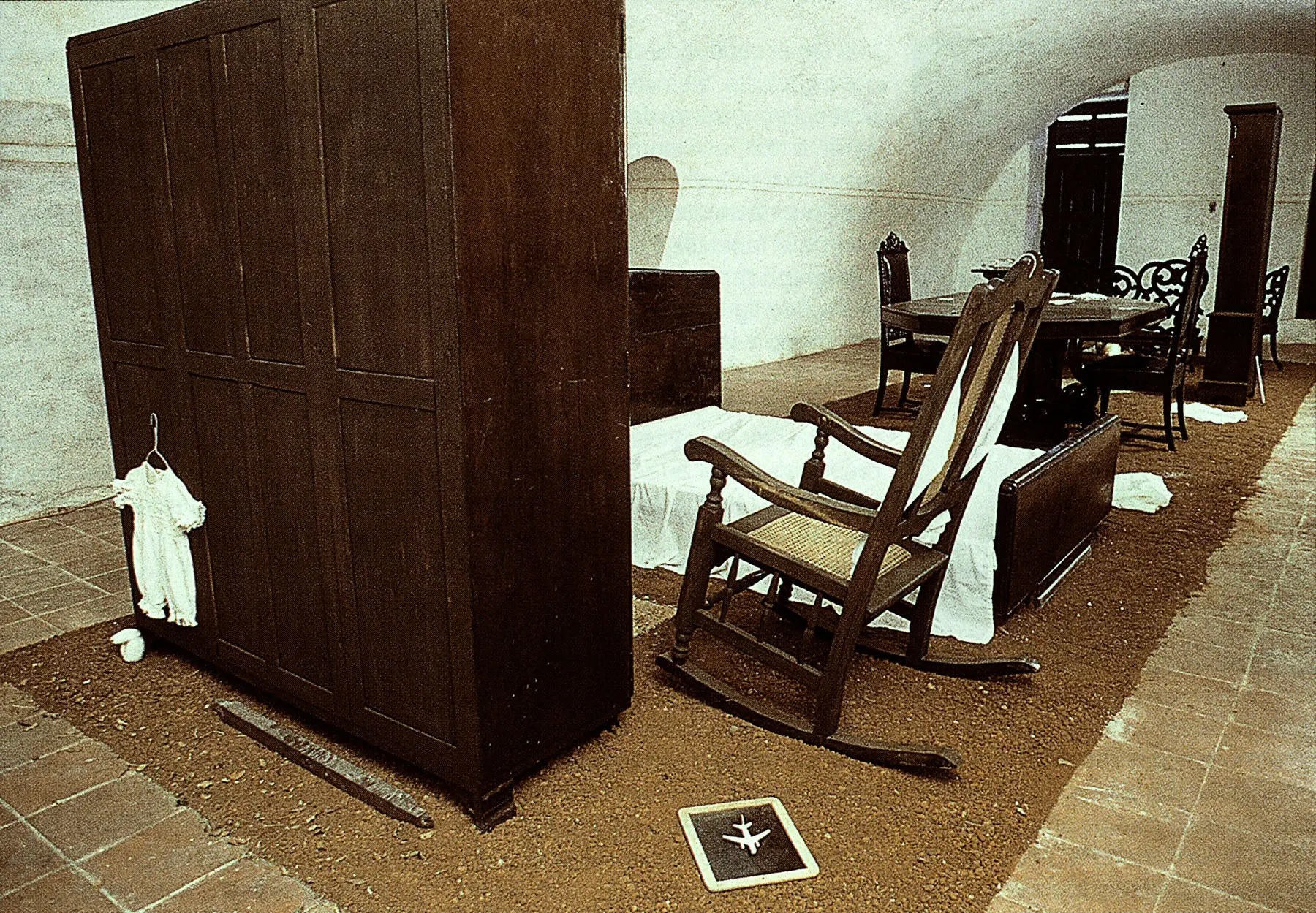
Because he is a perfectionist, he subjects each of his ideas and each of his compositions to a long, precise, and detailed work in progress, always open and expanding, in which he recontextualizes experience and memory with a rotund rejection of exoticism, nostalgia and, of course, all rhetoric. His past analyses are cold, distant, objective, always ruled by an implacable logic that supplies plastic versions of an extraordinary perfection that does not respond to mere aestheticism, but rather to an internal structure that is perfectly classic: "During this decade, I have made an effort to go beyond the formal academic conception of painting and I have painted with acrylic on old bedclothes sewn by anonymous women, what Americans call patchwork and Spaniards to call jarapas. Homemade fabrics, the product of silenced domestic labor which I have mostly painted on the back side, on the reverse, where that secret face of the blanket that touches the body, the human flesh, is supposedly not to be seen. A sort of skin of the domestic, skin of the familiar. I chose crude skins on purpose with the intention of violating the notion of painting with a capital "p," which is sometimes overly decorative. Its execution represents a difficult exercise in texture since the surfaces are very ungrateful, and very difficult to tame because they fully reject the brush as well as any aesthetic display. They do connect, however, with a sign language proper to popular ads, very flat, with clear influences from pop art. There are no true zones of color in them, but a rather crude fabric that nevertheless visually communicates the notion of color zones." Lately, however, he prefers to express himself through installations, sometimes poetic and sometimes ironic, but always with the formal rigor of a classic. At the 6th Havana Biennial, in which Pujol was the first Cuban- American artist invited to participate, and whose theme was precisely the individual and his/her memory, Pujol's installation El vacío (The void, 1997) achieved a milestone difficult to surpass. He proceeded to reconstruct a Cuban mansion as if the dramatis personæ had barely left. The pieces of furniture—wicker chair and sofa, dining-room table and chair, bedside chair, living room chair, chest of drawers, and dresser—selected with painstaking care and extreme historical rigor, belonged to the Havana of the '50s. Pujol showed them to the public as an "after," retained by a memory that obviously tended to decipher signifieds beyond all practical function, in an unsurpassable example of his habitual archaeology of the past, a past evoked with an eye to studying and comprehending the present, and contributing to a better future.
The reconstruction of memory and its formal expression through metaphors is a frequent resource. He represents the traumatic moment in which his family, in the early '60s, decided to leave Cuba; and he does so through an installation exempt from theatrical mannerisms: Maletas (Suitcases, 1994). He paints on one of the three cases a series of cups, an allusion to the unique and unsubstitutable coffee; on the other two, little cribs and shirts of a boy, childhood memories that exile would mythologize.
In Indios y vaqueros (Cowboys and Indians) it suffices for him to gather the weapons of both groups—cowboy rifles, Indian arrowheads—in order to question the legitimacy that is always granted to the soldier and the cowardice with which the Indian is identified. One of the pieces of this series, titled Invasión (Invasion, 1996), is a metaphor for colonialism in Puerto Rico and the invasion of American pop culture in the local culture.
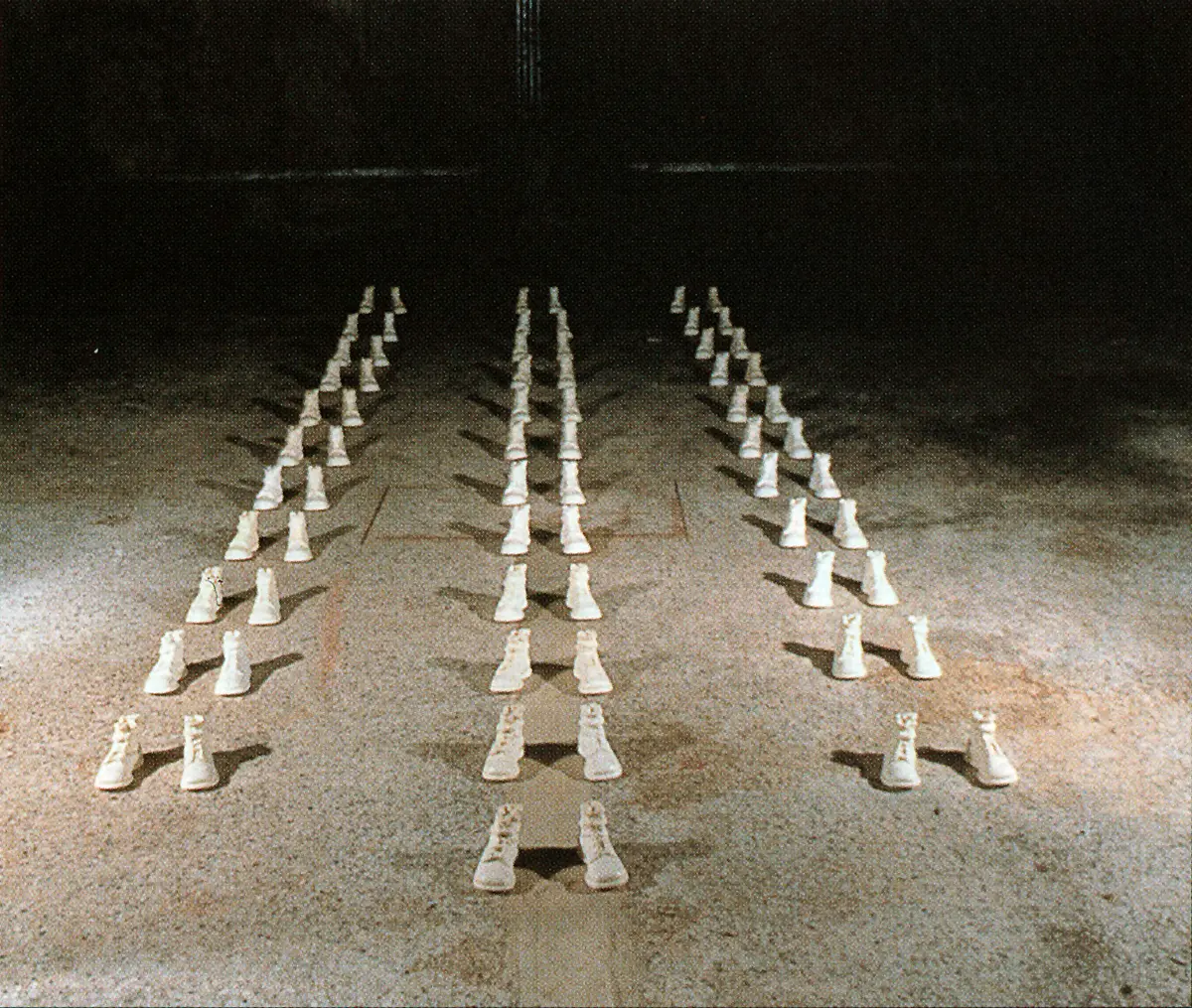
In Formación (Formation, 1998), he arranges directly the floor pairs of white baby booties, simulating a perfect line as if going to take first communion, while the noisy stomps of a platoon of soldiers approach and keep marching on.
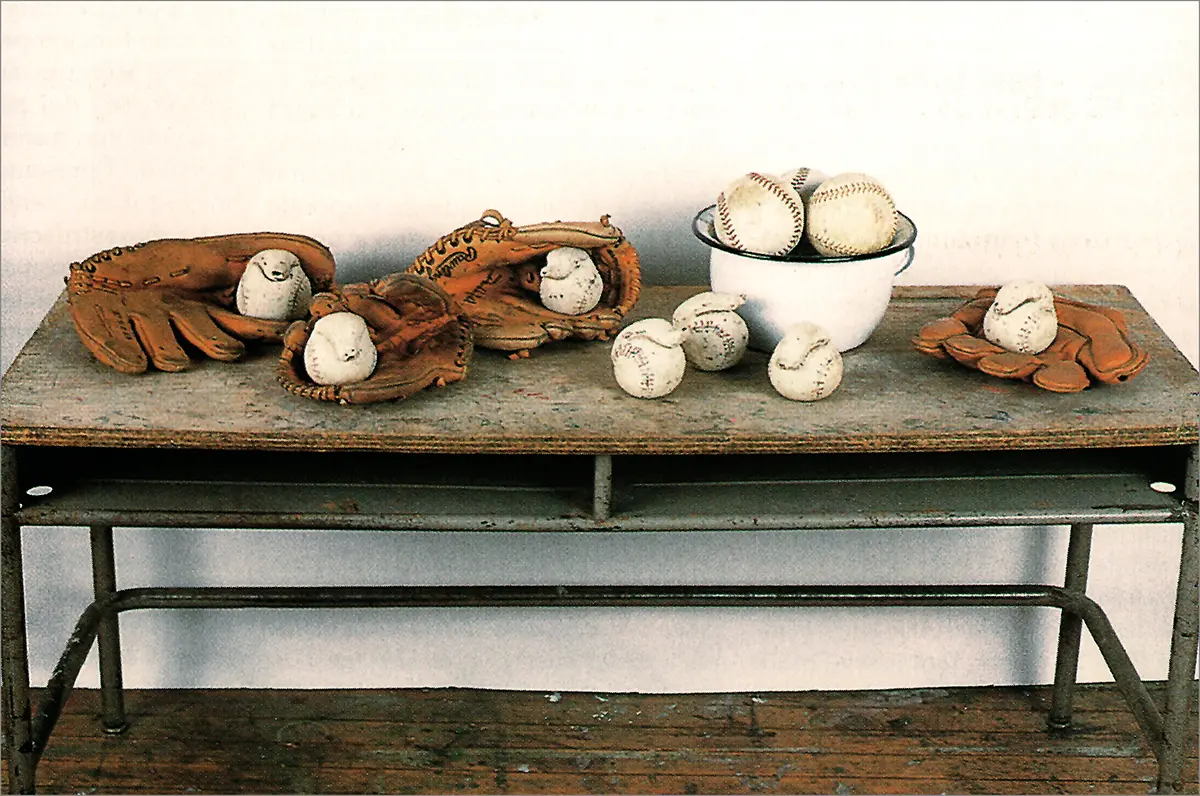
In La pajarera (The aviary, 1997), he relives a presumably adventurous childhood episode: his father built him an aviary, inviting him to help. But in his childhood excitement, the vision of the bird enclosed within the cage seemed to him the mirror of his own solitary condition, and it sank him even deeper into his sense of solitude. However, the installation lacks all sense of victimization, oozing instead with irony: each cage encloses, not a bird, but rather that strange element of his invention, half genitalia, half toy, a sort of alter ego and article repeated throughout his work. We find it in El equipo (The team, 1997), among baseballs, resting on the voluptuous concavity of a baseball glove, a metaphor full of the humor of the relationship between machismo and sports.
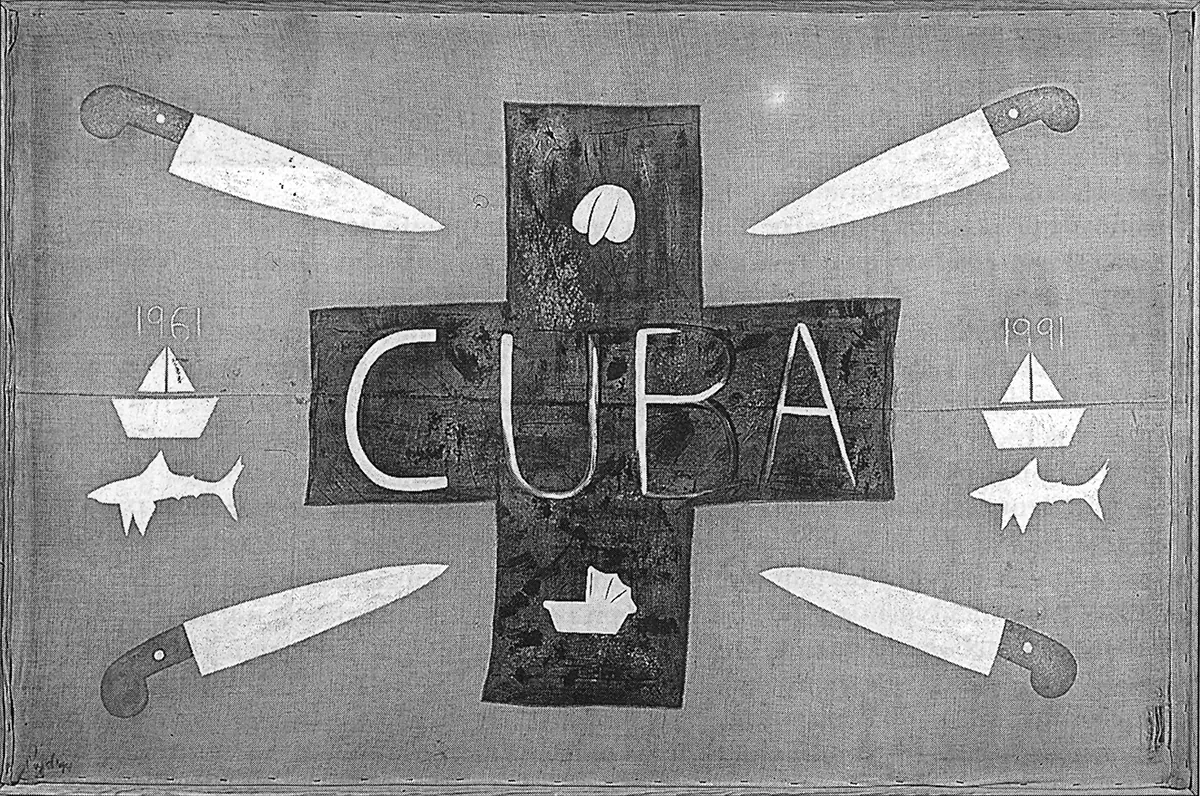
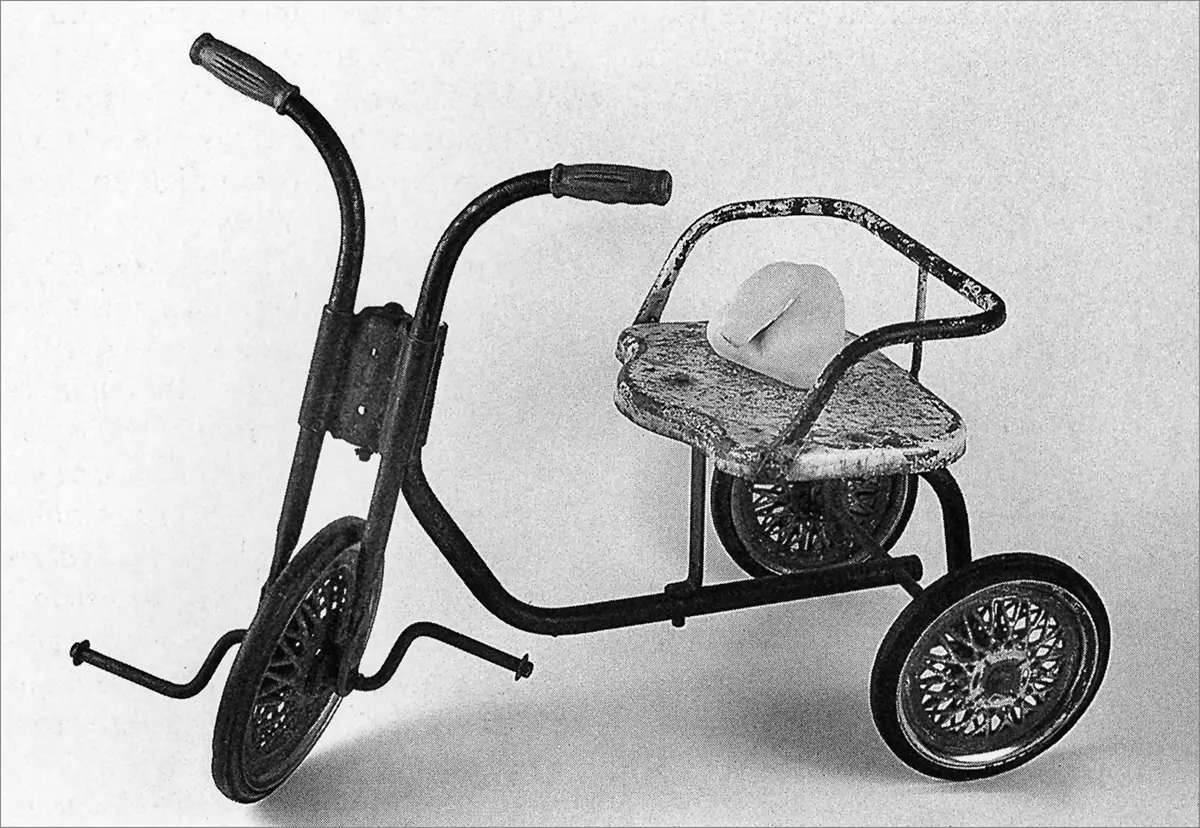
That strange element of his invention, perhaps inspired by the male genitalia in the process of formation, flaccid and folded down upon itself, as if representing the precise moment at which the boy becomes an adult, is invariably (and not by chance) an unpolluted target. It can appear unexpectedly upon the seat of a Triciclo (Tricycle, 1996), on the floor (as if forgotten) in El vacío, or upon a table, La mesa de Pedro Pan (Peter Pan's table, 1994), a sculpture as an ironic commentary on bureaucracy, and especially the bureaucratization of displacement. A metaphor for the rustic desk of the bureaucrat who coldly sits to regulate the displacement of people.
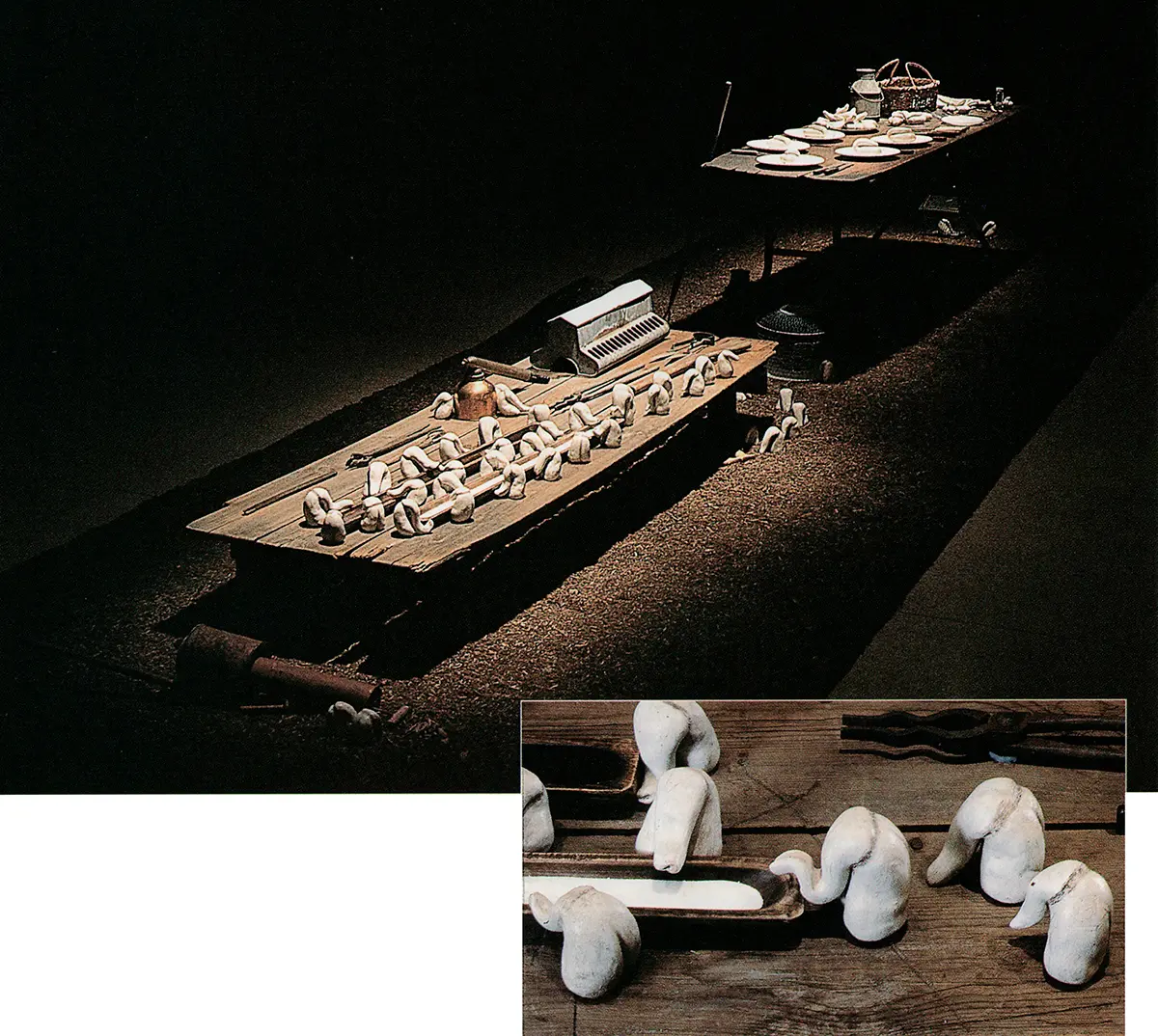
The key to that article's omnipresence is made explicit in El picnic (The picnic, 1997), which greatly exceeds the admirable installation El vacío that seemed unsurpassable. In a darkened room that suggests a clearing in the woods, Pujol arranges two long tables for a picnic. One is presided over by the mother, the other by the father; both parents are absent though represented through their attributes: a parasol, a shopping basket, and a bottle of aspirin for the mother; for the father, a display of sharpened tools. Here the toy/genitalia invented by the artist is a principal element, and it represents the children, an entire generation of males: it appears in the center of the plates, about to be devoured; or thrown into a sort of manger where cows, horses, and pigs find food—the animals are transformed into beings with interchangeable personalities, mere servants of the progenitor.
As Pujol explains, this installation is inspired by the Joshua Logan film that was shown on the big screen around the world in the '50s, and which thus reflects aspects of American society that the artist was able to observe in his childhood. That childhood was lived in the bosom of a cultural notion of empire, within the United States, whose heroes were heroic prototypes of cinema: William Holden, the star of Picnic (with Kim Novak), John Wayne, Burt Lancaster, and Clint Eastwood, among others: "I grew up watching television, the sophisticated technological babysitter of the early '60s. My brother and I, impressionable TV viewers, -watched as much TV as we were allowed to see before being sent off to bed. In Picnic, Wiliam Holden represented for me the American boy who, upon returning from war, no longer fits into American society, a character not very different from the cowboy who became a bum when the adventures of the West had ended."
Ernesto Pujol adds that his work is not only based on film, and he cites Judy Chicago: "At the end of the '60s, I remember seeing at the university a series of slides that naturally had an impact on me: American feminists recovered their sexual attributes from males, rape being their metaphor of choice for the violence exerted against zoomen. That impelled me to look for a visual analogy that could represent the legitimacy of physical and mental violence that the overbearing male exerted against all those deemed weak by society, especially against homosexuals and women. I realized that it is a practically untouched topic, with a couple of exceptions, the most noteworthy being that of Saturno devorando a sus hijos (Saturn devouring his children) by Goya."
The weak, the marginalized, due to sexual orientation or some other reason, are the new heroes of Ernesto Pujol's work, as complex as it is richly nuanced. A denouncement of the structures of patriarchal society and of hyper-heterosexual models of the legitimacy of the violence of the powerful against the weak. A denouncement that is, for him, the furious evidence of psychic mutilation that refuses to remain secret, to go unnoticed, and which must not be fodder for oblivion because, consequently, it is a question of something that has been repeating itself without a solution of continuity, from the very beginning of time until today.
What is truly noteworthy is that Ernesto Pujol formulates plastically, in a cold and objective fashion, with a uniquely contained language in accord with the canon, perfectly rooted in the European pictorial tradition of Velázquez and Goya, and which continues in our century in the classics of modernity, with Dada and Marcel Duchamp, Francis Bacon, the social conscience of Joseph Beuys, American minimalism, without forgetting the exercises on white by the painter Robert Ryman, or American feminism (Judy Chicago). His work winds up becoming postmodern, but with such roots assimilated in what is profound, the interior structure of his compositions achieves a prodigious coherence. This, in addition to his totally purified language, is why it may be categorically affirmed that Ernesto Pujol has well earned an indisputable place among the classics of High Postmodernity.
MARIA LLUÏSA BORRÀS
Earned her doctorate in Art History from the University of Barcelona