
Upon entering the hushed antiseptic environment of this site-specific installation by Chilean artist Eugenia Vargas, the viewer becomes an intruder, lured by the oddly repetitive sounds of a hospital nursery and whatever occupies six dimly illuminated plastic enclosures. With the realization that each plastic preemie crib contains a video monitor illuminating a horribly deformed baby or fetus, the immediate response is one of fear and repulsion. If one function of art is to act as a vehicle to provoke an emotional response, this installation succeeds on numerous levels. Using nineteenth-century medical photographs, video technology, authentic hospital equipment (How often is an art installation sponsored by a hospital child care unit?), carefully edited sound, and precise lighting effects, Eugenia Vargas transports the viewer into a realm of life's aberrant realities that one would not willingly choose to visit. She does not do so to create a sensational response to nature's mistakes, but rather to force each of us to consider these creatures and our immediate reactions to their presence. Why do we feel fear and repulsion and not compassion for these poor specimens of humanity? After the initial shock of the images, it is not long before the sounds and sights lure the unsuspecting to move closer to what does become a poignant and disturbing experience. Curated by Tami Katz-Freiman, who wrote the excellent catalog, this site-specific installation continues Vargas' long-time exploration of the body and its environments, but from a startlingly new perspective.
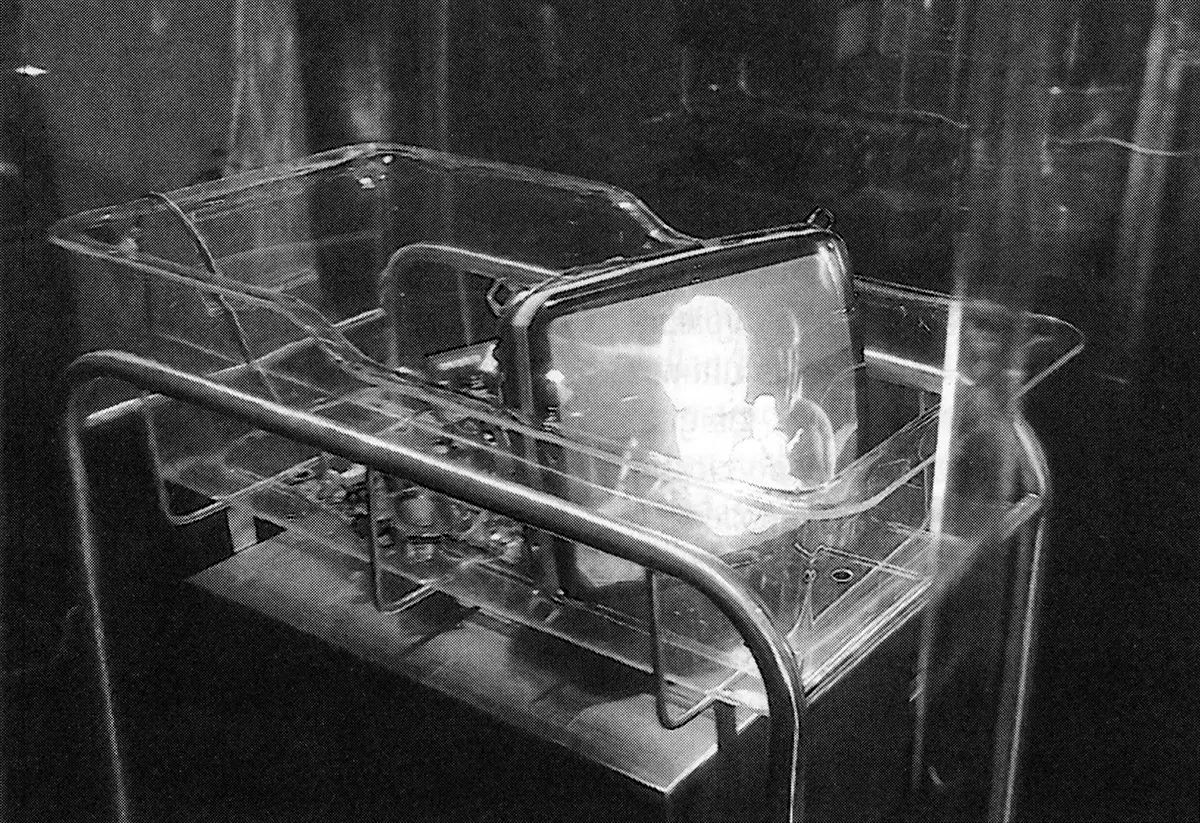
Recreating the medical aberrations with a computer and giving them the faintest signs of life and sound, Vargas brings each baby to life. Each fragile creature is literally and visually hooked up to the video, and the video's wires spill onto the crib's pristine surface. The organic nature of the human baby takes on the energy of the machine for life and the machine becomes the lifeline in an organic way that is especially strange. After all, there is no hope for these creatures except through machines (and then they will not really survive either, will they?) The sounds and slight movements created by the machine remove the pathological curiosities from being mere computer-generated recreation, while making them especially disquieting as images.
In the sterile environment of oxygen tents, fragile monitors, and antiseptic plastic, everything exists in a precarious state, ready to break apart as we know technology is prone to do. As a case in point, one of the monitors was not functioning on the day I visited, leaving the baby in a prolonged coma. Always attracted to the clean precise designs of hospital equipment, Vargas has created a place outside of the realm of its true reality, while somehow capturing its aura. Each clear plastic baby crib/container replicates a neo-natal unit, but a monitor replaces the baby. The sounds for each crib are different, from the thumping heartbeat in the womb to the repetition of a nursery rhyme that is no longer comforting. As much as you try to reject what is happening, and know it is only a computer image, these sounds of life evoke a different response at each crib. The abject body, the body that conceals multiple layers of meaning and questions established categories of social taboos, confronts the issues of repulsion and fascination with the unknown and rejected. These babies are no longer pathological images in a medical book, they are technical marvels.
The only thing missing from the installation is a hospital attendant, so we become the attendants, unsure of our role. A hospital is a place to attend to the body at all stages of life, from birth to death. It is a sacred place and somehow, in the quiet of this gallery, the aura of its most significant and awesome responsibilities takes over and fright is subdued.
CAROL DAMIAN