
The question of how to contextualize Latin American artists properly at the international level continues to concern both curators and critics. Dan Cameron, the curator of the New Museum of New York, recently asked at a roundtable discussion whether the criterion for integrating Latin America should be governed by historical rectification, since this region did not receive the attention it deserved in earlier decades from North American museums, or simply because the work in fact merited such an approach. Obviously, the answer lies in a combination of both. But although no one can question the need to show more works by Latin American artists in the United States or Europe, geography in itself cannot satisfy the need to devise a convincing reading of work by a group of artists whose similarities do not extend beyond that of living in the same city. To present shows such as Contemporary Art of China may make sense, but a curatorial decision to group together a number of artists on exclusively geographical grounds is risky today when matters of nationality or cultural specificity are increasingly less important in the making of a work.
Aware of all this, the curators of Mexico Now: Point of Departure, Maria Guerra and Robert Streams, tackled the challenge of creating a show which, although based on the idea of presenting the kind of work being done in Mexico, tried to erase the stereotyped visions of what we call Mexican art. Mexico Now: Point of Departure, which traveled to San Juan, Porto Rico, as well as Charlotte, Pittsburgh, Chicago, and Delaware, included work by artists born between 1944 and 1968 in Mexico itself or who have as foreigners settled in the country and whose work has been really produced within that physical framework.
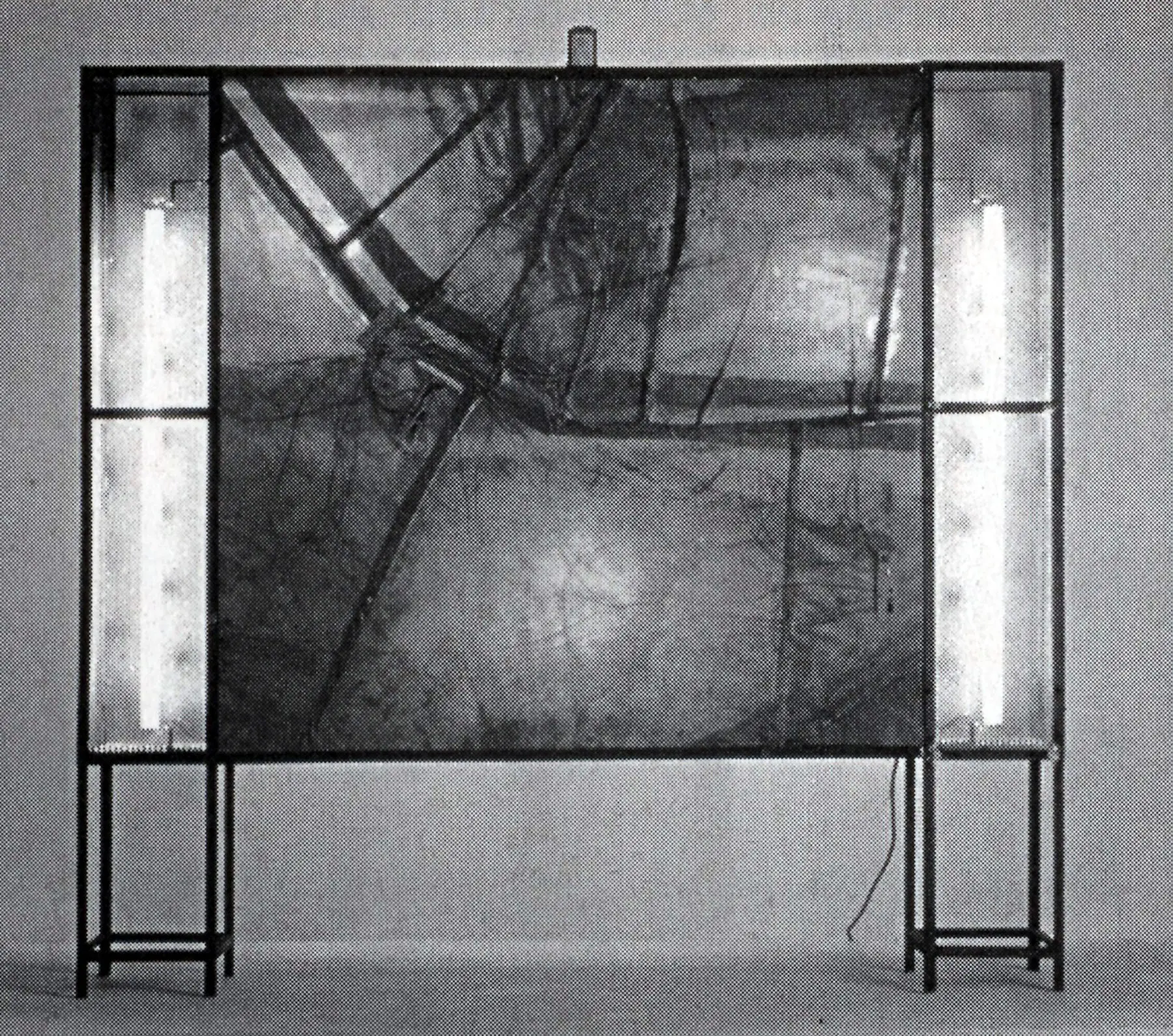
Guerra and Streams showed work by figures such as the English artist Melanie Smith, whose indulgent fascination with plastic and kitsch elements is apparently connected to themes independent of any particular culture. And yet, looking at Smith's orange constructions, it is clear that she is responding to an urban reality that is inevitably Mexican. Mexico Now included works that were so different from one another that it is difficult to see any clear links between the artists apart from the fact that they are all waging the same battle to find a defining voice that transcends time, tradition, and place.
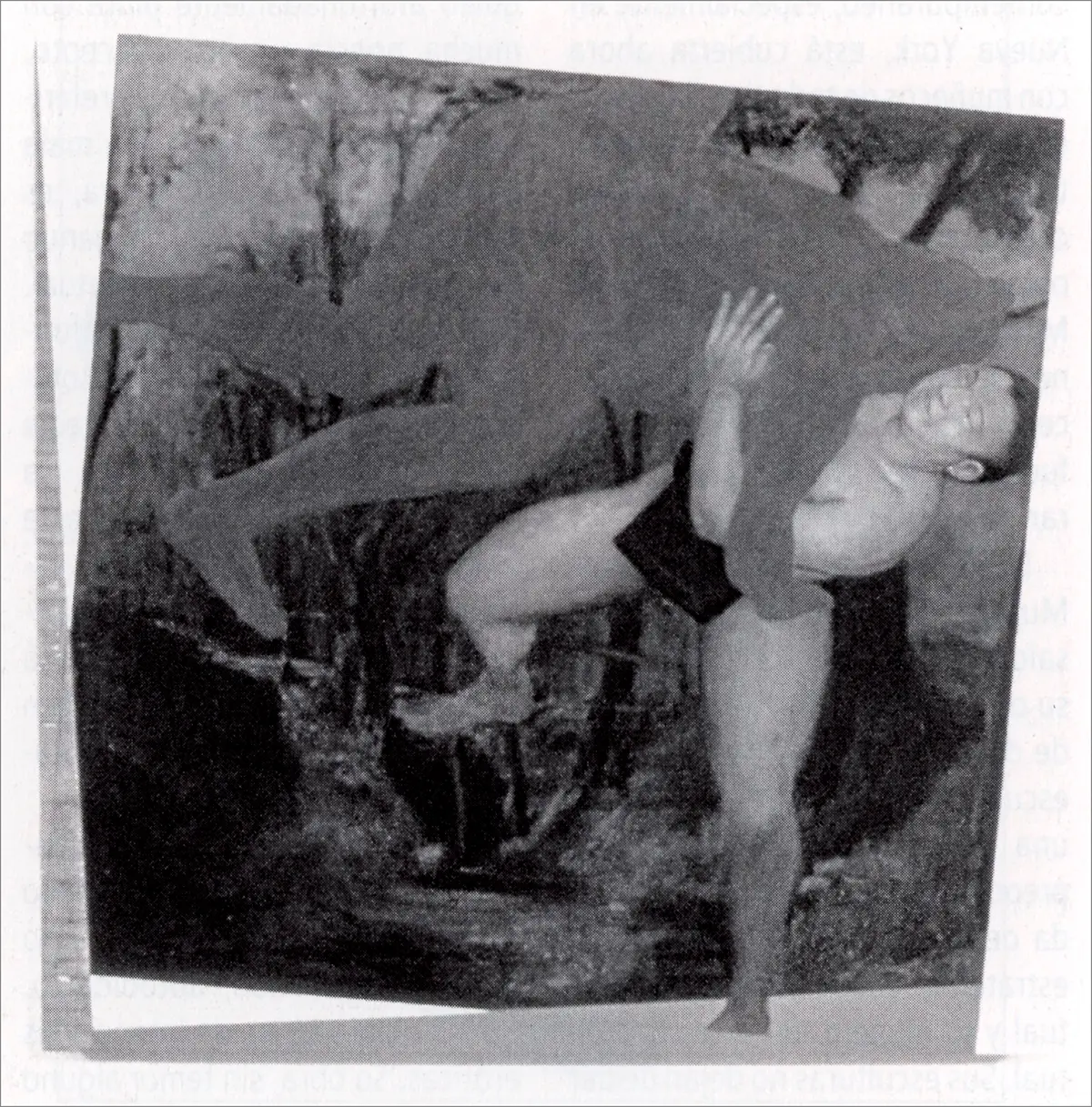
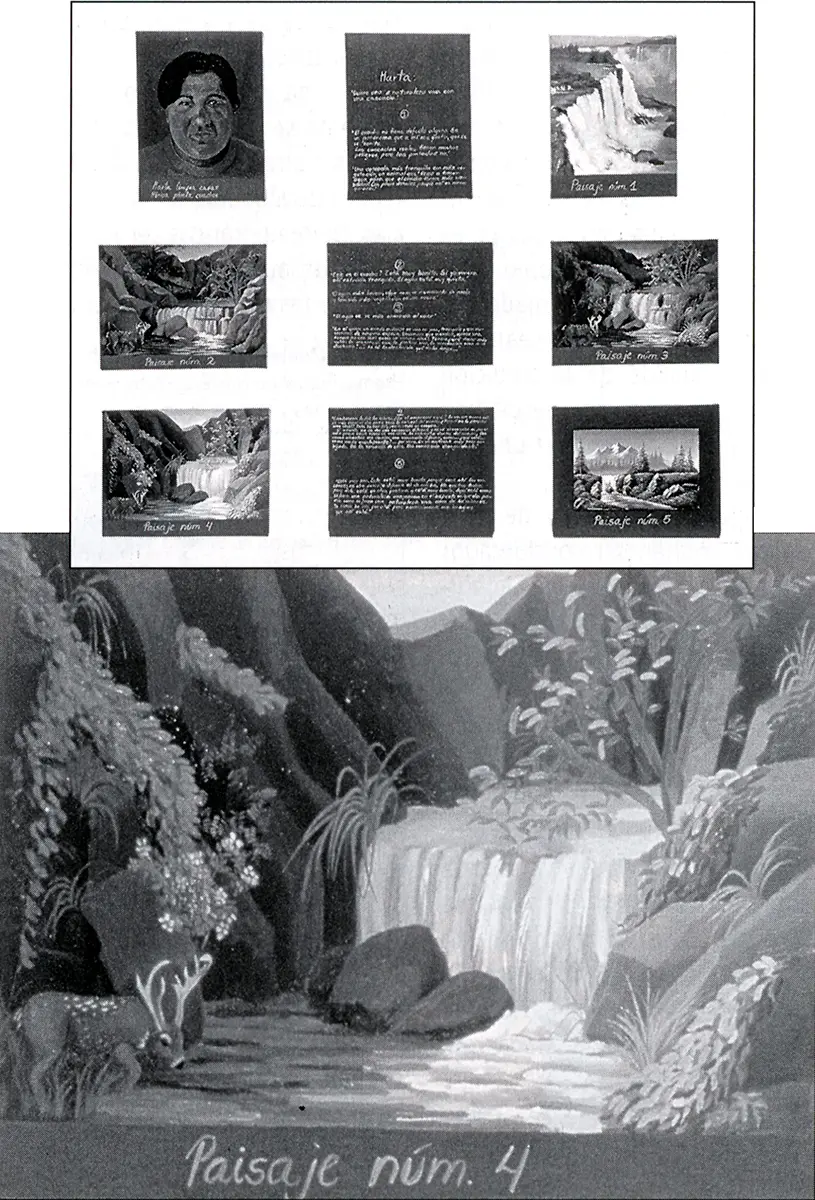
But although it is now even more difficult to group together or to generationalize about artists in Mexico, there are some points of connection. Yishai Jusidman, for example, who presented works from his series of sumo wrestlers and the half-invisible faces of clowns, explores themes that have to do with perception, composition, and the act itself of painting. The same theme, but from a different perspective, appears in the work of Monica Castillo, in a series of landscapes prepared under the direction of a domestic employee. In a sequence of various pictures based on dialogue, the painter tries to create the ideal picture for Marta. While Jusidman maintains a philosophical distance, Castillo poses in a more direct and unusual manner the question of the role of our social condition in the determination of our aesthetic judgments.
Silvia Gruner, Betsabé Romero, and Yolanda Gutiérrez, artists from different generations, share the same passion for poetic iconography, using elements from their reflections on both natural and social history. While Romero juxtaposes traditional and contemporary elements (covering a couch or fire extinguisher with dried flowers), Gruner proposes a visual language —a series of photographs of objects apparently taken from an excavation site— which uses similar processes and strategies to those of Gutiérrez, who constructs fictitious skeletons of birds made with the jaw-bones of cattle.
Other artists were less interested in the reflection of poetic serenity than in the incarnation of the visceral aspects of a convulsed society. Carlos Aguirre's work titled With the Weight of the Law consisted of a machine with a weight of books that fall violently onto the photographic image of an anonymous individual. Diego Toledo used the impact, which sometimes becomes oppressiveness, of illuminated letter signs to create disturbing epigrams with open-ended questions (with the words without and more). In this way, he plays with the tension between the ambiguity of words and our instinctive impulse to formulate a meaning which is both immediate and easily digestible, conditioned as we are by the language of advertising.
Mexico Now proposed a general overview, which was not very novel but rather introductory, of the kind of work now being done in Mexico. At the end of the show, the visitor had the impression that the only way of overcoming the internationalism/nationalism dilemma is to face up to it squarely and directly and, in the process, move on to other possible readings.
PABLO HELGUERA