
An installation can offer a wide scope of perceptions occasionally surrounding the viewer, sometimes interfering with the space of the spectator, sometimes creating a significant method to underline alienation, and in some situations implying solitude or distress. After years of seeing art as mainly one piece after another, nowadays one can perceive the liveliness of some exhibitions where the art is an ensemble. Most of the pieces are sold individually but in the gallery, they reinforce themselves in togetherness which does not necessarily happen in a museum, office, or private home.
Pablo Helguera's exhibition at the Leonora Vega Gallery is a perfect example of the above. The reduction of results and emotions in the aesthetic arena points out some of the shows which have a good level of personal creativity and embrace the viewer with some outpourings of emotion. Helguera allows us to return to childhood a place in time when fantasies can take over for one or more days only to be interrupted by the urgent call of parents and everyday obligations.
The operatic dreams of Helguera, the light in which the exhibition was presented, and the parts constituting the whole could be framed as if one visited a kind of Enrico Caruso in Wonderland. His work reveals how fond the artist is of the world of opera and the fantastic inventions that create a universe of apparent lies. It is a world of rich fantasies that allow him to create and maintain an adult level of playing.
An artist fantasizing about the voices of the singer, the philosopher, the writer, and the voice of the wine(that blood-colored inducer that speaks alchemy through men and women. Technically speaking, the exhibitions consisted of ceramic objects and sculpted heads, some mounted on structures and wrapped in cloth, electrical connections, music, musical instruments, a collection of wine bottles with a special edition of labels, some photographs, collage, and an array of objects.
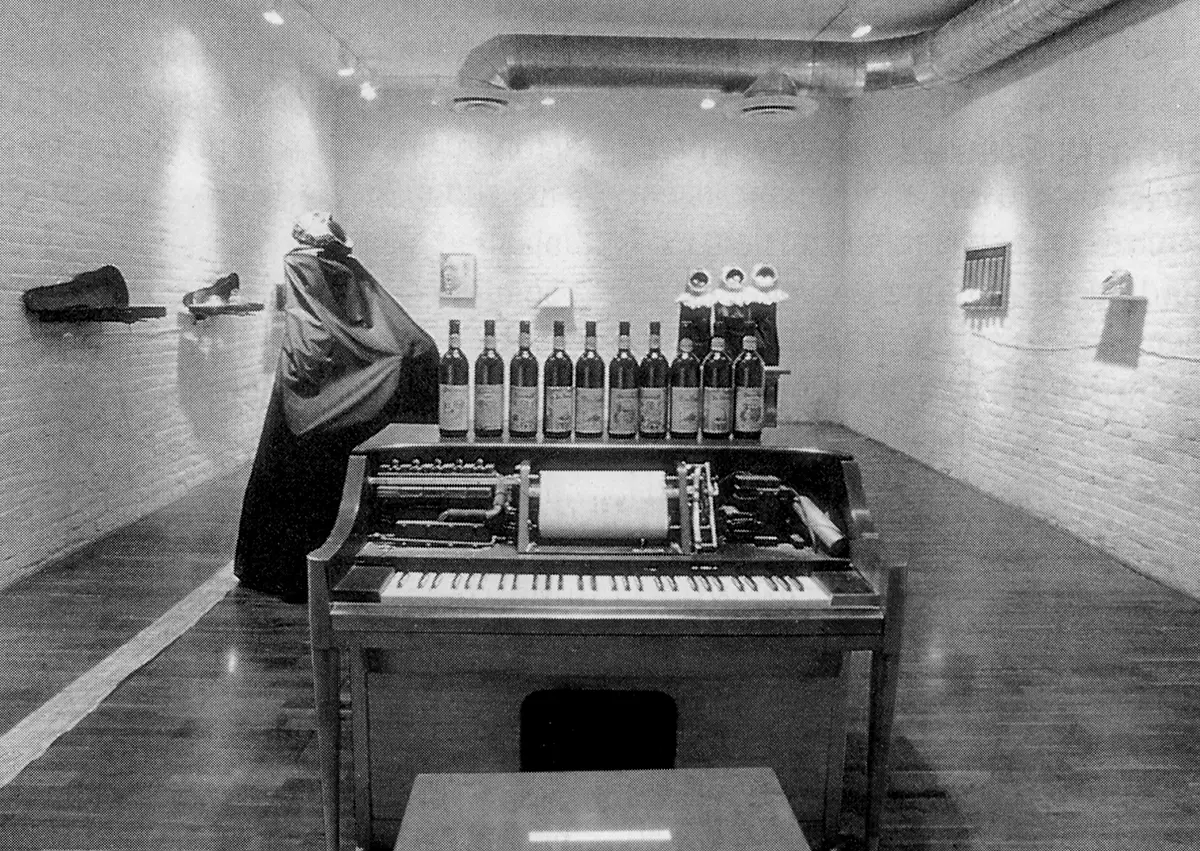
How does a visual artist represent the sound of the voice apart from playing music? Pablo Helguera found that huge heads with open mouths could convey the sound experience through light. Coming out of the throat, a light bulb suggests the warm feeling of a low, deep musical sound. Coming out of the human caverns of ceramic heads yellow, red, and blue bulbs "sing" opera. Some are dressed in black canvases, others are just standing heads. The artist portrays himself in a perpetrated apocryphal story of the great Helguerazi.
GRACIELA KARTOFEL