
The idea of a sculpture park in Puerto Rico materialized thanks to the initiative and continuous work of the sculptor Pablo Rubio, who realized early in this decade that the smallest of the Greater Antilles —so engaged with the visual arts and with such a rich artistic output— was ready to have a space dedicated to monumental sculptures by contemporary artists.
After having participated in several international symposia on sculpture, and specifically after his significant visit to the sculpture park in Seoul, Korea, Rubio decided to organize a sculpture symposium in Puerto Rico. A group of internationally acclaimed sculptors would travel to the island, all sharing the aim of participating in the symposium and the commitment to create —in a very short period of time— a monumental work of sculpture. Rubio thus founded Puerto Rico's sculpture park.
The University of Puerto Rico welcomed the project enthusiastically and decided that the First International Symposium on Sculpture in Puerto Rico would take place in 1993 at Río Piedras Hall and that the sculpture park would be developed in the beautiful Botanical Garden, both located at the University of Puerto Rico in San Juan.
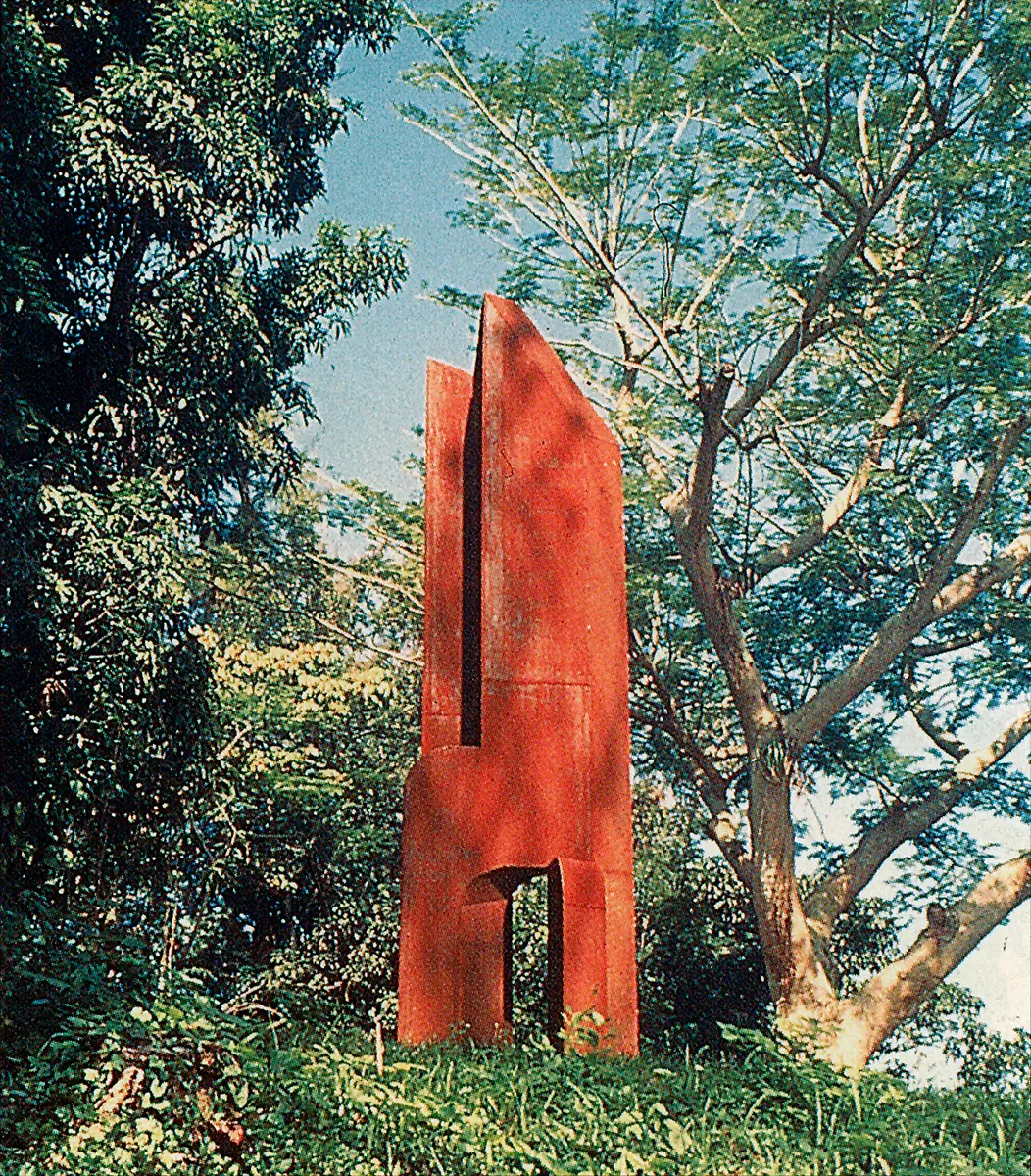
Six sculptors were chosen for the First Symposium: the Venezuelan Cruz Diez; the Colombian Ted Carrasco; the Spaniard Amadeo Gabino; the Cuban Rolando López (who has been living in Puerto Rico since 1962); and two Puerto Ricans: Luis Hernández Cruz and Carmen Inés Blondet.
With the help of an enthusiastic group of students from the various visual arts schools in Puerto Rico, these artists constructed their sculptures in less than three weeks. The splendid flora of the University of Puerto Rico's Botanical Garden had to begin to share the gaze of hundreds of visitors.
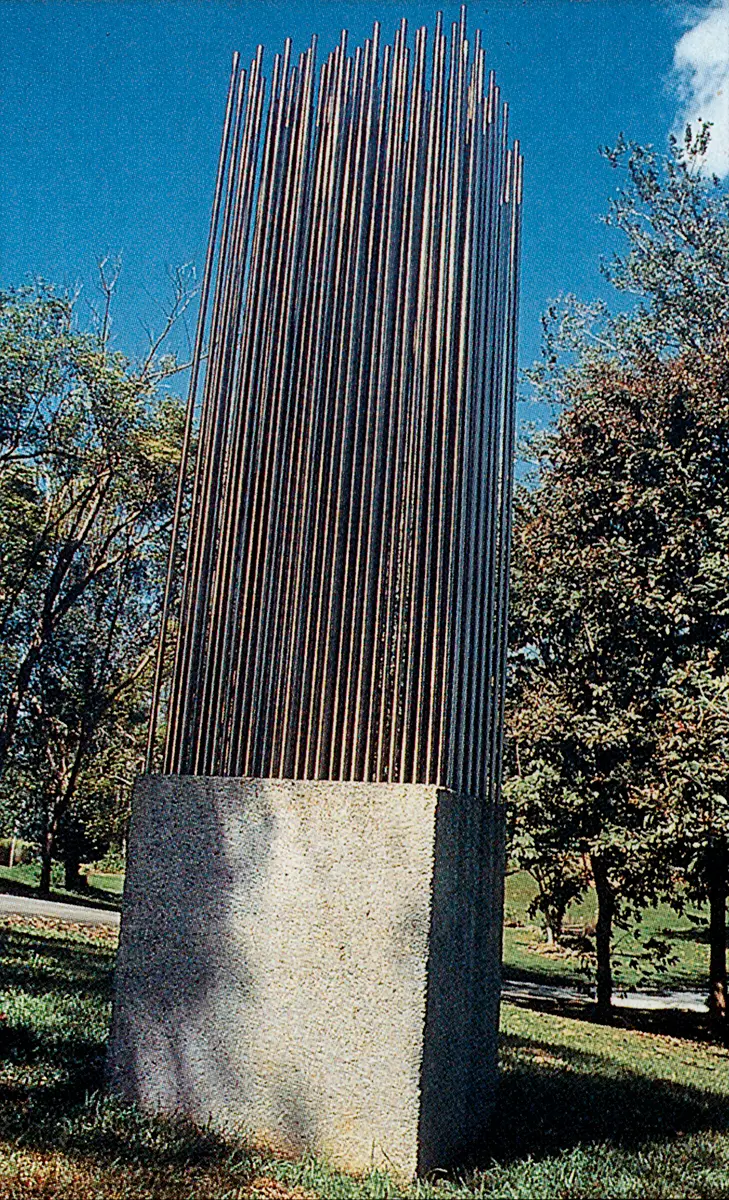
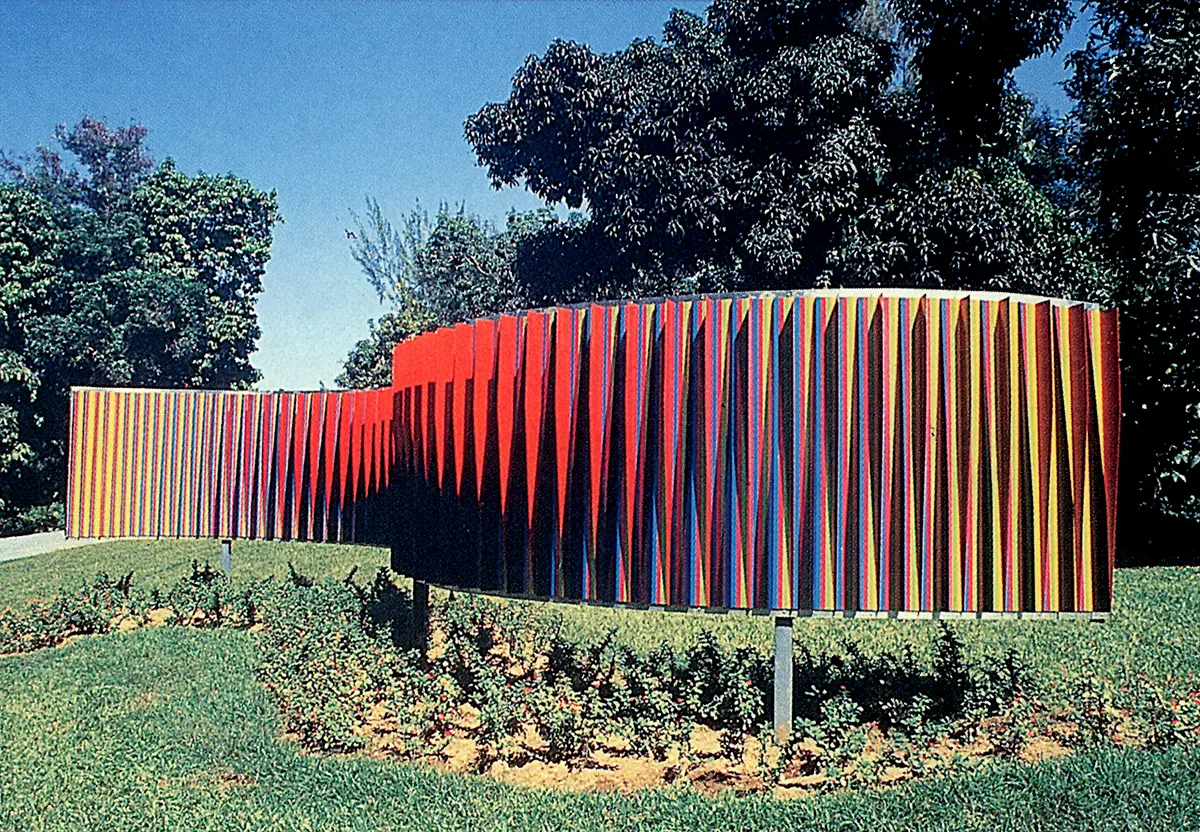
The controversial Eva Hess said that, for her, art was a total risk, freedom, and discipline. And this is precisely how we may define this group of extraordinary sculptors. Suddenly, Puerto Rico, with a limited tradition of public sculptures, was magnificently entering into contemporaneity. Suddenly, a chorus of voices had formed where Cruz Diez's geometrical carnival of colors harmonized with the sobriety of Amadeo Gabino and the acrobatics of Ted Carrasco; where López Dirube's brilliant star Antares listened most satisfied to the wind blowing through Hernández Cruz's Bosque (Woods) and Blondet's Puerta (Gate).
In 1996, Puerto Rico celebrated the Second International Symposium on Sculpture in Puerto Rico. Already in 1995, an interesting council (in which I had the honor of participating) had selected —from among many proposals— the sculptural projects of Jorge DuBon (Mexico/ France), Leopoldo Maler (Argentina/Dominican Republic), Soucy de Pellerano (Dominican Republic), Claudia Stern (Brazil), Eduardo Moras (Cuba/Puerto Rico), and the Puerto Rican Carlos Guzmán.
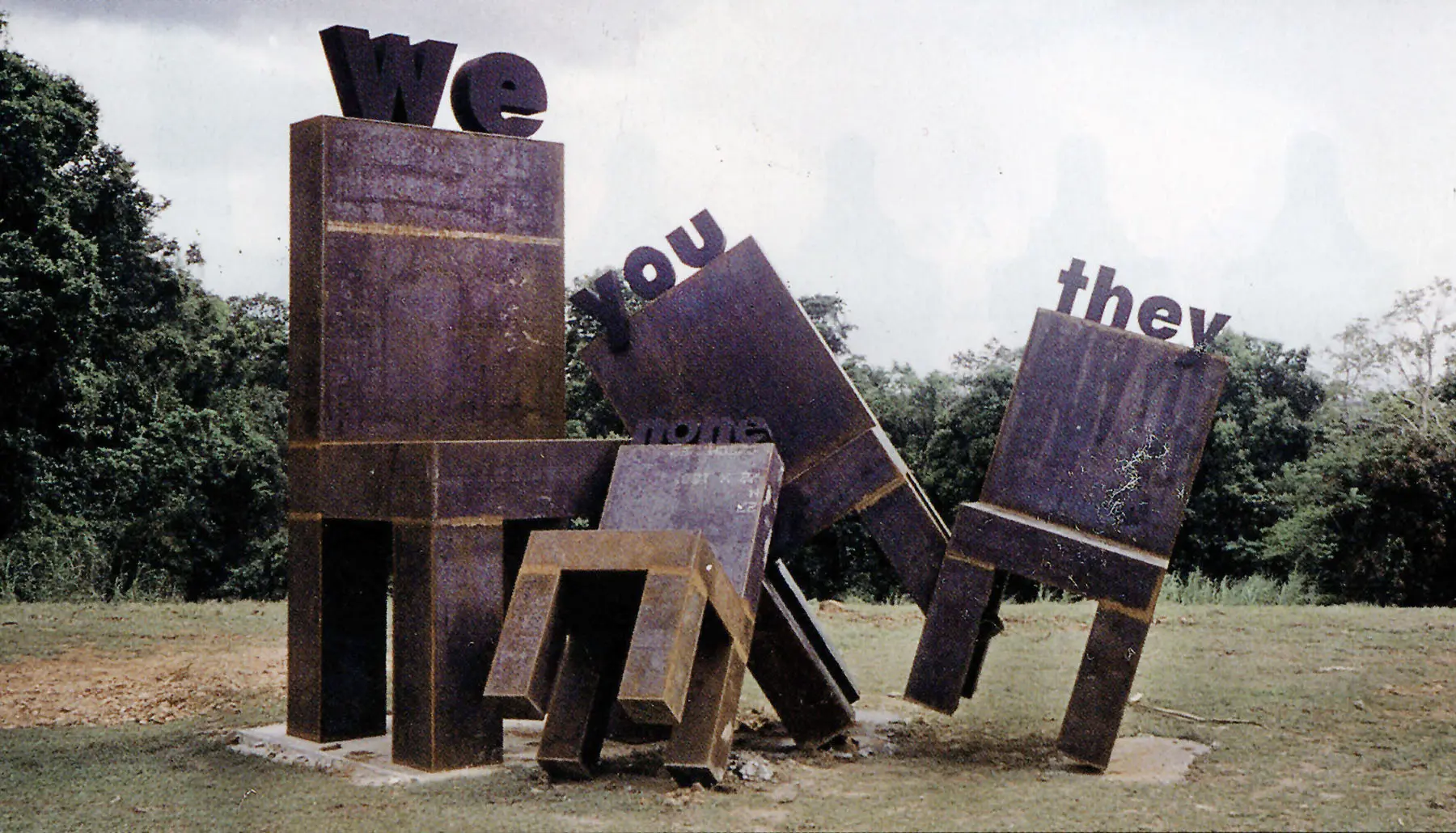
During the two weeks that the Second Symposium lasted, I was able to see and participate in the complex process of constructing these six monumental sculptures, all quite different and very provocative. Impressive both for its size and its geometric magic is DuBon's work. Al paso del ritmo puertorriqueño (Moving to the Puerto Rican rhythm; steel), a true play of angles and transparencies. Maler’s four steel chairs (We, They, You, None) which make up the piece titled La conciencia empírica (Empirical awareness), reveal how this master of performance can with remarkable humor combine the most elemental pop with a delirious, globalized existentialism.
Stern's sundial, Prophesia (30 x 30 x 50 cm) is a meticulous and elegant creation where copper, aluminum, and concrete recall the mystery of Stonehenge and the genius of Heraclitus. Above all, it reminds us that time never stops and that this ship that we call the body must approach immortality.
With a sophisticated ecological vision, De Pellerano uses car scraps, a la John Chamberlain, in order to construct Maquinotrón aire-tierra (Machinetron air-earth), a bold piece in which humor and poetry complement one another in making us understand that what Duchamp started at the beginning of the twentieth century has taken on new and unimaginable strength.
Moras's work, titled Arquiescultura (Archisculpture; plastic and cement), is a gigantic window/box/cage that plays rather well with the light, wind, and colors of the Botanical Garden. Finally, Cardumen para un jardín (School of fish for a garden; steel), Guzmán's nine modules —nine playful dolphins— make up a work full of movement and happiness. And this piece may be seen as a celebration of life and of what is known in Puerto Rico as the "garden" of sculptures.
I believe that these twelve sculptures, marvelously integrated into a privileged space, have put Puerto Rico on the map of the most ingenious and interesting sculptural projects of the smaller countries of the world. I truly hope to see a Third International Symposium on Sculpture, and I also hope that Puerto Rico's sculpture park may very soon be able to count on six or more new sculptures.
MANUEL ÁLVAREZ LEZAMA
Professor in the humanities area at the Faculty of General Studies at the University of Puerto Rico.