
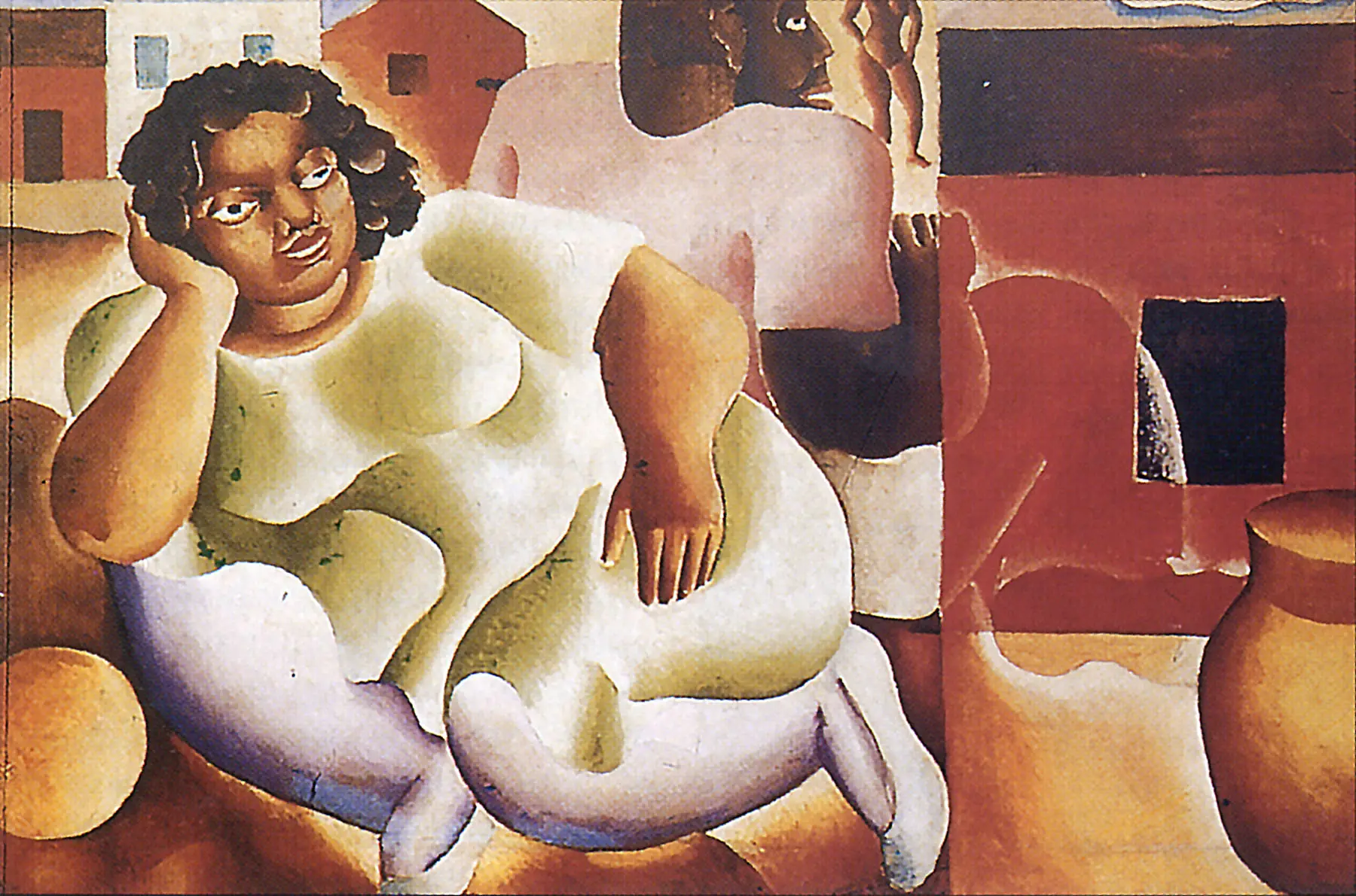
There was a long period when there were no exhibitions of the work of the Brazilian artist Emiliano Di Cavalcanti.
On the hundredth anniversary of his birth, which was commemorated last year, various events focused on his importance in the history of Brazilian art. The public was able to see retrospective shows at Rio de Janeiro's Museum of Modern Art and the Museum of Brazilian Art of the Armando Alvares Penteado Foundation in São Paulo. There was also an exhibition of his drawings at the Museum of Contemporary Art of the University of São Paulo, as well as shows in various art galleries.
Exhibitions of his drawings were also presented in Chile and Argentina and other exhibitions abroad are being planned.
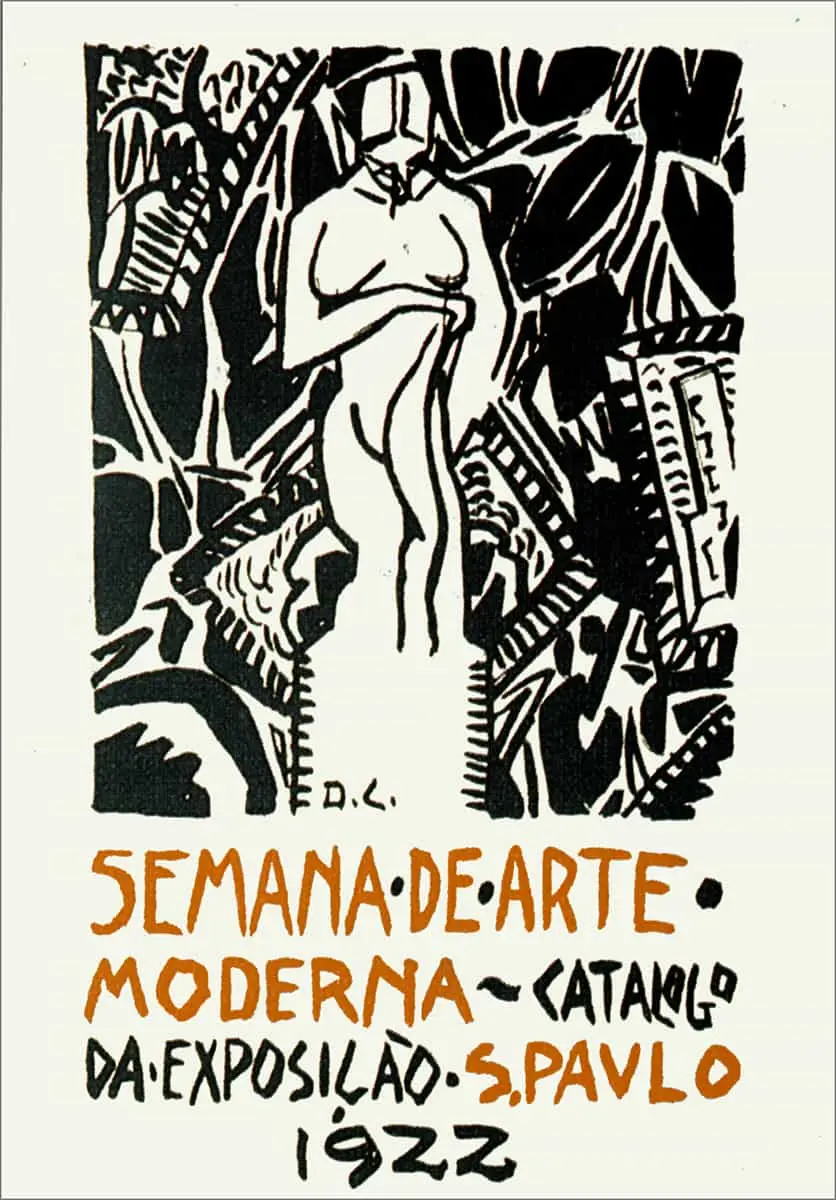
Di Cavalcanti developed his work during an important period in Brazilian art. He played a fundamental role in the artistic history of the 1920s, as a participant in the movement that rejected the status quo in the arts—the Modernist Movement. The movement began with Modern Art Week—multiple events that brought together concerts, poetry and prose readings, dance, and an exhibition of plastic arts.
The Week established in the country an aesthetic project that sought to "revive and remodel the national intelligence" by creating a "new spirit" in art and culture. Modern Art Week reaffirmed the search for cultural identity, as well as a process of artistic modernization.
Historians who have systematically studied the art of the 1920s and Modern Art Week suggest that it was probably Di Cavalcanti who had the idea of organizing an event, in the form of an "art week", to mark a break in the arts.1
In fact, the process of organizing the modernists into a group began with the first exhibition which the artist held in São Paulo, in the Jacinto Silva bookshop, where the young intellectuals of the city gathered to meet the writer and diplomat Graga Aranha, who was to give them his support. The contemporary nature of Di Cavalcanti's work was therefore already recognized at the beginning of his career in the plastic arts.
Di Cavalcanti was one of the persons who helped to raise money for the event; he was also responsible for the visual programming of the Week, including designing the cover of the catalog and the poster of this art festival. Along with Ronaldo de Carvalho in Rio de Janeiro, Di Cavalcanti was also responsible for inviting artists to participate in the plastic art exhibition held during the event. Without a doubt, Di Cavalcanti was one of the most enthusiastic participants of Modem Art Week and played a crucial role in its organization.
The artist's rich personality is evident from his biography. Di Cavalcanti was baptized Emiliano Augusto de Albuquerque Cavalcanti e Melo. He later adopted Di Cavalcanti as his artistic name. His vocation manifested itself early on: at the age of 17, in 1914, he published his first caricature in the magazine Fon Fon. The following year, he illustrated the cover of another magazine A vida moderna. In 1916, at the age of 19, when he entered the Law Faculty in Rio de Janeiro, he also participated in the First Salon of Humorism which was being held in that city. The same year he moved to São Paulo to study at the Law Faculty of that city, but he left before graduating to concentrate on his artistic career.
Di Cavalcanti arrived in São Paulo at a time when people were discussing the need for new directions in the arts.
In 1916 he became a corrector in the newspaper O Estado de S. Paulo. In 1917, he held his first one-man show, in the editorial offices of the magazine A Cigarra. He began to study art with the German painter Georg Fischer Elpons,2 who settled in São Paulo in 1922, and whose studio was also frequented by other young people who ended up joining the modernist movement.
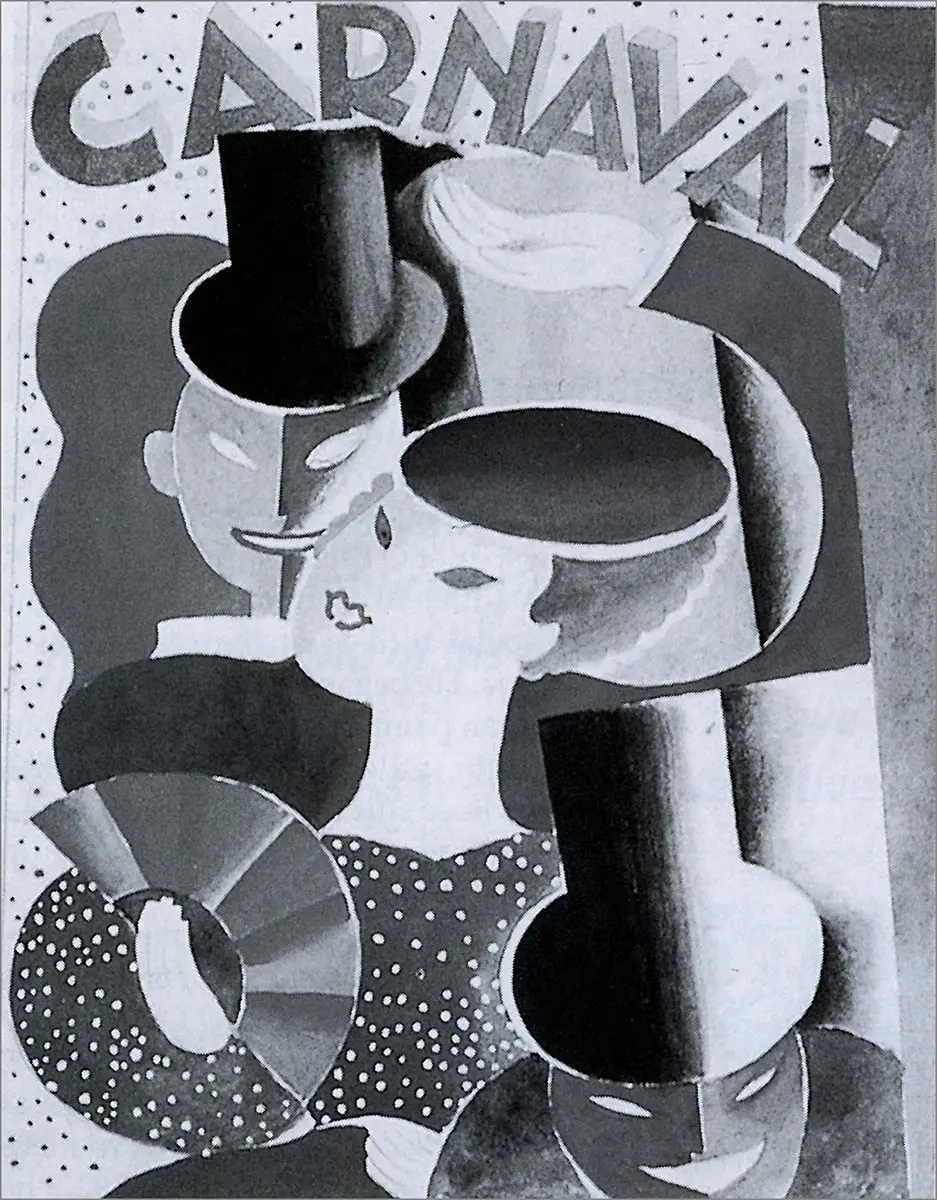
In São Paulo, Di Cavalcanti continued to do illustrations for magazines (O Piralho) and books (O Carnaval by Manuel Bandeira, Balada de Carcere, and the Brazilian translation of Oscar Wilde's Ballad of Reading Goal, to mention just a few examples). In 1922, he published drawings in an album titled Os Fantoches da Meia Noite, with a preface by Ribeiro Couto.
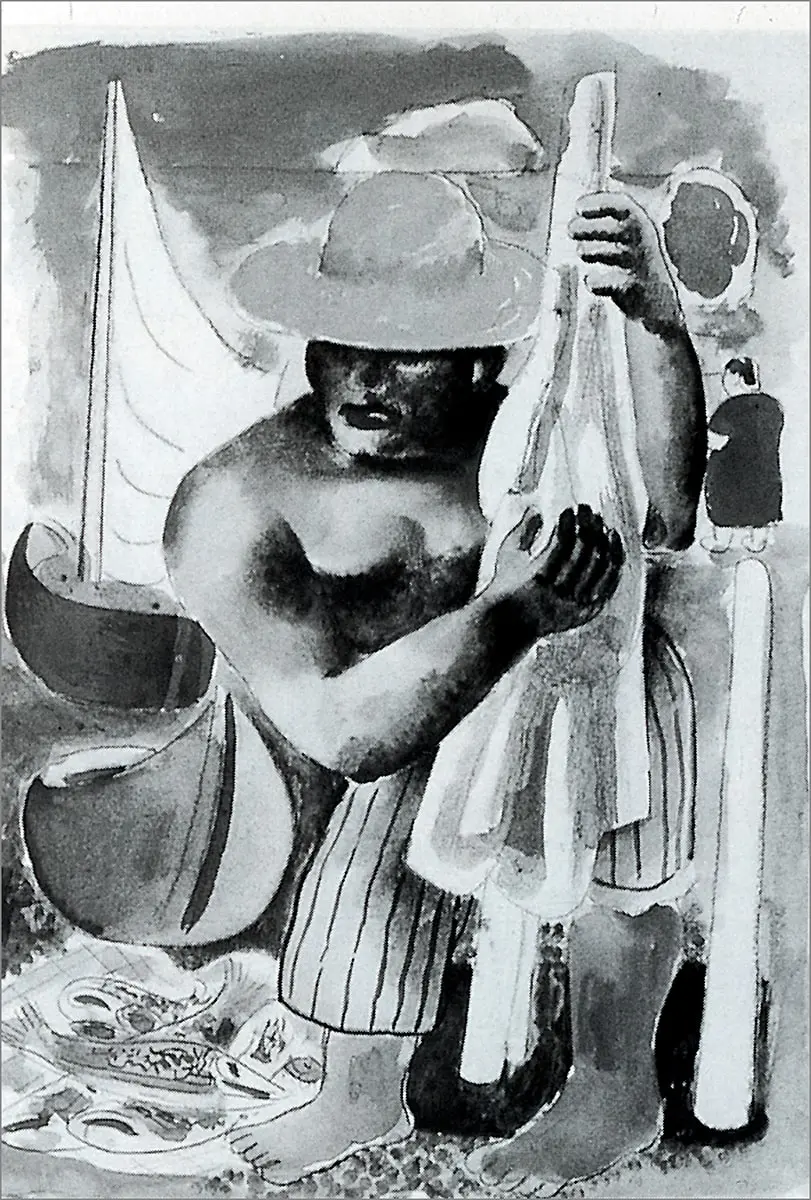
In 1923 he went to Paris as a correspondent for the newspaper Correio da Manhã. This was the year in which the Brazilian modernists flocked to the French capital—a period when Latin American artists and intellectuals were seeking out the great artistic center of the Western world. In Paris, Di Cavalcanti rubbed shoulders with Picasso, Léger, Braque, and Matisse, as well as such literary figures as Cocteau and Cendrars. He was also in contact with his Brazilian colleagues: the painters Anita Malfatti and Tarsila do Amaral, the writer Oswald de Andrade, the sculptor Victor Brecheret and the critic and poet Sérgio Milliet, who were all supporters of the modernist movement. He was also able to travel to Italy, where he could observe firsthand the work of the Renaissance masters. It was at this time that he began his poetic production, which in turn gave rise to a close relationship between his painting and poetry. Later, he also wrote two volumes of memoirs.3
In 1924, when the newspaper in which he was working closed down, he returned to Brazil and said: "Paris left its mark on me. A new nature was created for me and my love for Europe became transformed into a love for life... I began to know my land."4
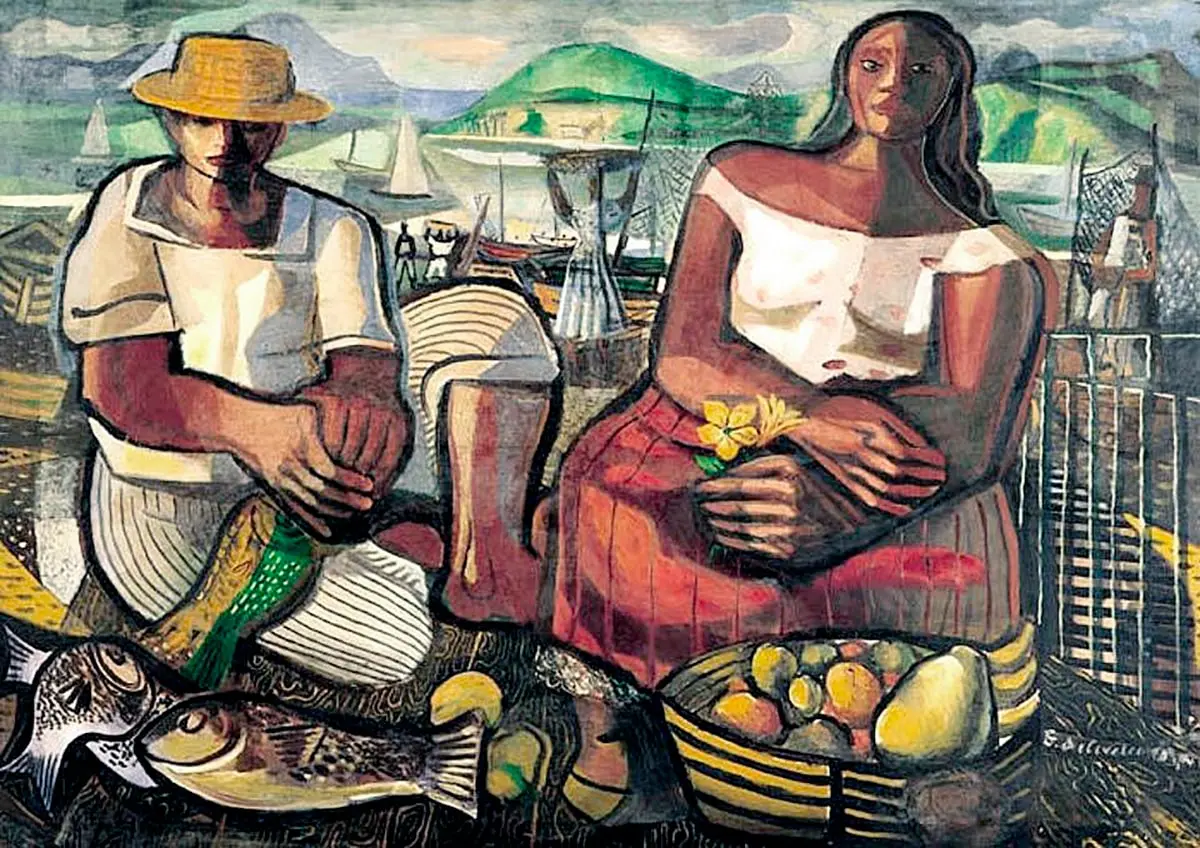
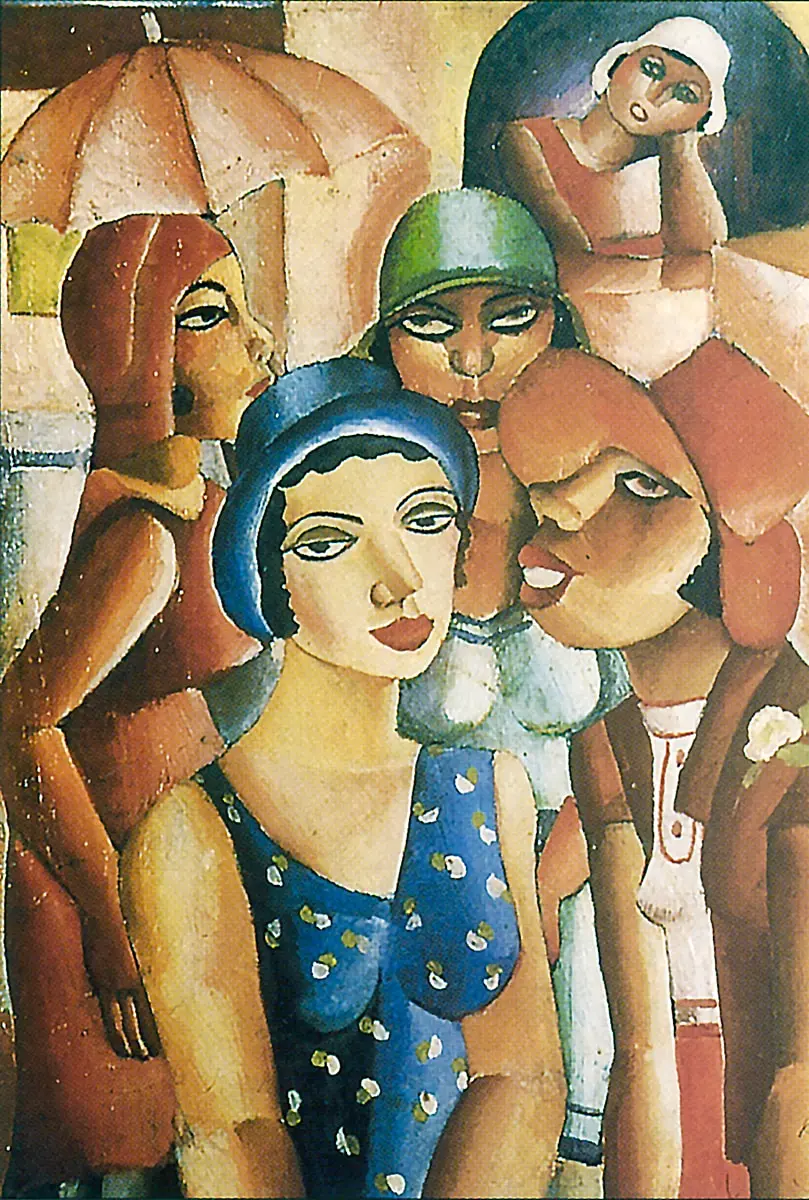
From this point on, Di Cavalcanti developed his own style, which is so characteristic in Brazilian painting. Settling in Rio de Janeiro, he used the city as an observation laboratory; from its "carioca" urban life5 he took the inspiration for his artistic production, with his well-known themes of the mulatta women, music (the samba), popular celebrations, and figures from everyday life. He was fascinated by the subject of street life—the life of the city, men at work, fishermen. Di Cavalcanti continued his professional activity as an illustrator for newspapers and magazines and also worked on theater sets (João Caetano Theater, 1929).
Between 1935 and 1939, he made other trips to Europe: to Portugal and Spain. In 1937, he settled in Paris. There, he participated in the Art and Technique exhibition, where he won a gold medal, and only returned to Brazil on the eve of the German invasion in 1940. Since the war was in full swing at the time, he was not able to take with him the work he had done during the period, work he was able to recover only 26 years later.
For the second time, he settled in São Paulo. Throughout the 1940s he became known as one of the most important names in Brazilian art. A major show of his work was held in 1948 at the Institute of Architects of Brazil. At that time a review of the careers of the country's artists was being initiated on the basis of retrospective shows, and Di Cavalcanti was one of the first artists to be honored in this way.
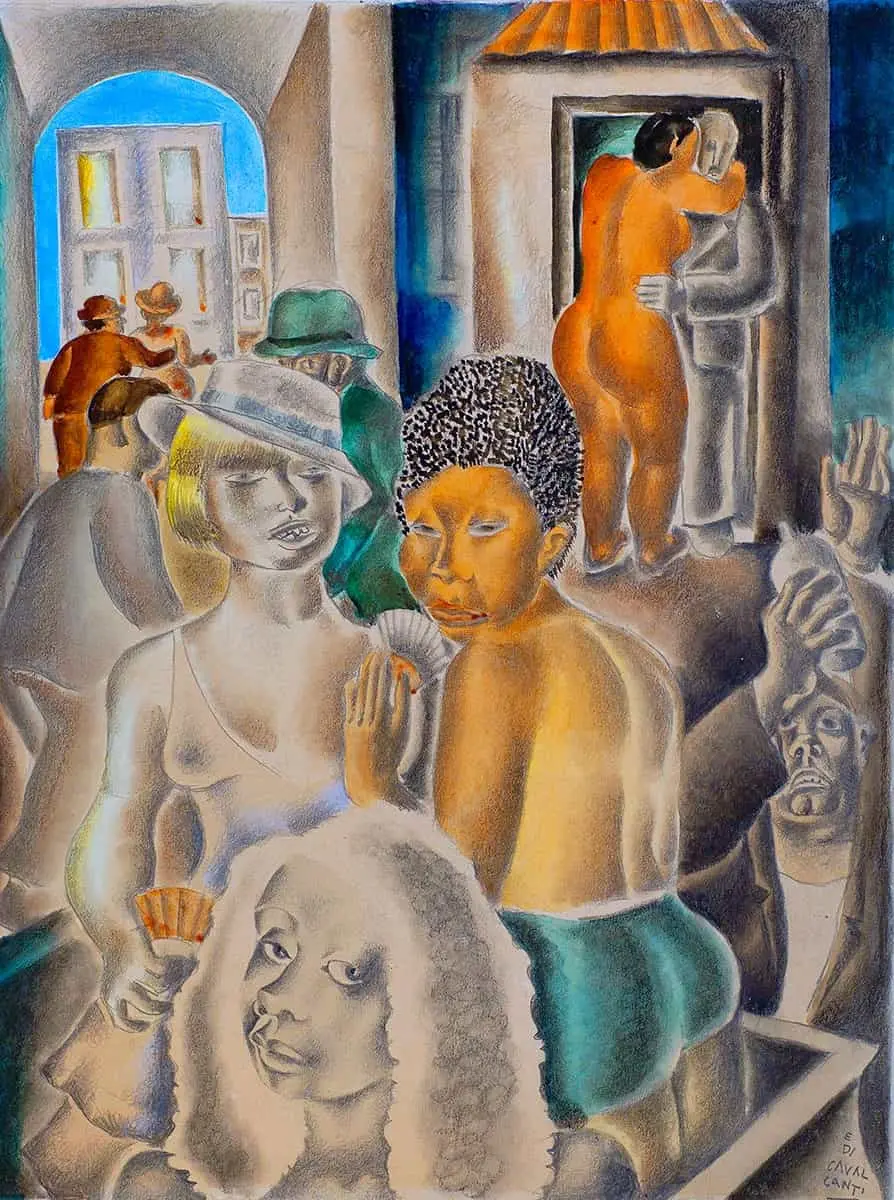
Critics were always aware of his work. In the show at Modern Art Week, he was singled out by Sergio Milliet for his drawing skills.
In 1932, Mário de Andrade, a modernist writer, poet, and art critic, spoke of his loyalty to the objective world and his love for human life. He believed that these qualities saved the artist from getting side-tracked into investigations on avant-garde theories. De Andrade wrote: "The cubist, purist, and futurist theories passed through him without making his change direction." He added that Di Cavalcanti knew how to use that part of the theory which could enrich his technique and his ability to express his vision of the world.
His 1948 retrospective was enthusiastically received by the critics. They saw the artist as one of the most significant representatives of contemporary Brazilian painting and emphasized the "Brazilian" nature of his work. They also praised the technical excellence of his artistic work. This "Brazilian" element reflected, a little later in the same decade, a significant point of resistance in Brazilian modern art.
It should be recalled here that from 1951 on, with the creation of the São Paulo Biennial, the country began to experience intense contact with foreign art. This resulted in a strong comingling of different tendencies.
Knowledge about developments outside the country now developed more quickly.
In this way, abstraction arrived and soon became a dominant trend in the institutional spaces of Brazilian art.
Throughout the 1950s there was a sharp debate between abstract and figurative artists on the role of art and the artist in the culture of the country.
It was in this polemical context, in 1952, that Di Cavalcanti won the Grand Prix for Painting (shared with Alfredo Volpi). The jury's discussions lasted all night. Were the Biennial prizes going to honor the masters or focus on the art of the moment?
In that year, commenting on the prize-winning work, Sergio Milliet (the same critic who wrote about Di Cavalcanti's work at the show during the Modern Art Week in 1922), a critic at the newspaper O Estado de S. Paulo, noted that: "This important painter of our country has sought out one thing: the expression of a Brazilian sensibility which is deeply sentimental and sensual... His work is, as he says, a single body." This "single body" is made up of both painting and drawing. The drawing precedes the pictorial creation. The painting takes up the themes that spontaneously arise in the drawing. In Di Cavalcanti's work, painting and drawing were always fundamental, constant, and uninterrupted activities, as he himself said.
With his art, whether in painting or drawing, Di Cavalcanti observed a spirit of lyricism in the everyday reality of his times, showing with simplicity the nature of reality, the customs, life, and people of his country. He looked at everything with the eye of a poet and an essay writer, a sensitive and critical eye.
His images can be read as poetical references to the idea of place and Brazilian identity, and his iconography a "poetic prose". His composition, although spontaneous, is achieved with great technical skill. And that technique is inspired by the achievements of the European artistic movements at the beginning of the century: there is something of expressionism, something of cubism, with touches of Picasso from the 1930s. But his aesthetic creation is always personal, always his own. In his illustrations, we can see his social view of Brazil, the sensuality which he gives to his compositions, and the way he models form and uses color.
The creative will of Di Cavalcanti is the expression of an imagination that championed life as a beautiful and fascinating spectacle.6
NOTES
1. Probably during a conversation with the historian Paulo Prado.
2. Elpons was trained in Munich and Berlin and his work bore the imprint of impressionism. He arrived in Brazil in 1912 and two years later established his Elpons Course. Several emerging artists from São Paulo attended his workshop classes.
3. Viagem da Minha Vida - O Testamento da Aivorada (1955); and Reminiscencias Ltricas de um Perfeito Carioca (1964).
4. In his book Viagem da Minha Vida, op.cit.
5. “Carioca” is an epithet referring to people or things from Rio de Janeiro.
6. Luis Martins in Di Cavalcanti: 50 Años de Pintura (São Paulo, Brunner, 1971): “life for him is a beautiful and fascinating spectacle which he not only witnessed but in which he played one of the most active roles.”
LISBETH REBOLLO GONÇALVES