Enrico Armas (Caracas, 1957) is an example of a complete artist who has worked as a painter, print-maker, draughtsman, sculptor, and ceramic artist, and sometimes as the author of newspaper articles on the subject of art. His career began in 1973 when he presented his first one-man show of sculptures.
Armas recently presented an exhibition titled Con-sequences at the University Gallery of the University of Carabobo in Valencia. Painting, collage, sculpture, and installation from the chapters through which the artist constantly moves. Even more interesting is the movement between the figurative and the abstract, with Armas' language being based on open elements, provocation, and a readiness to embrace all kinds of artistic experience. It is his sense of unity that saves him from conceptual contradictions, a unity rooted in his interest in matter and texture, the value of line work, and the stains of constructive color.
It has been said that the art of the last two decades has been characterized by the crisis of the object, representation, and coherence, as well as the inadequacy of individual discourse. Armas takes up the challenge of exploring projects based on the incompatibility, antagonism, and paradox of concepts. Thus one of his sculptures with figurative volumes appeared alongside another which proposed simple lines in space. Further, the two pieces were set next to one another which brought together objects that have been cast aside by men around the city. What can unify all these very different-looking things? I believe there is a kind of rusty glow of ochre shades and yellow hues, sometimes pale and sometimes flashing, which emerges from the patina and brings together opposing forms. There is also a constructive sense, a kind of recovery of memory, as well as exaltation in what the hand of man has achieved. Thus beyond the impression of forms which may be figurative or not, the sculpture of Enrico Armas draws its strength, first and foremost, from the fact that the materials and the process form a single category.
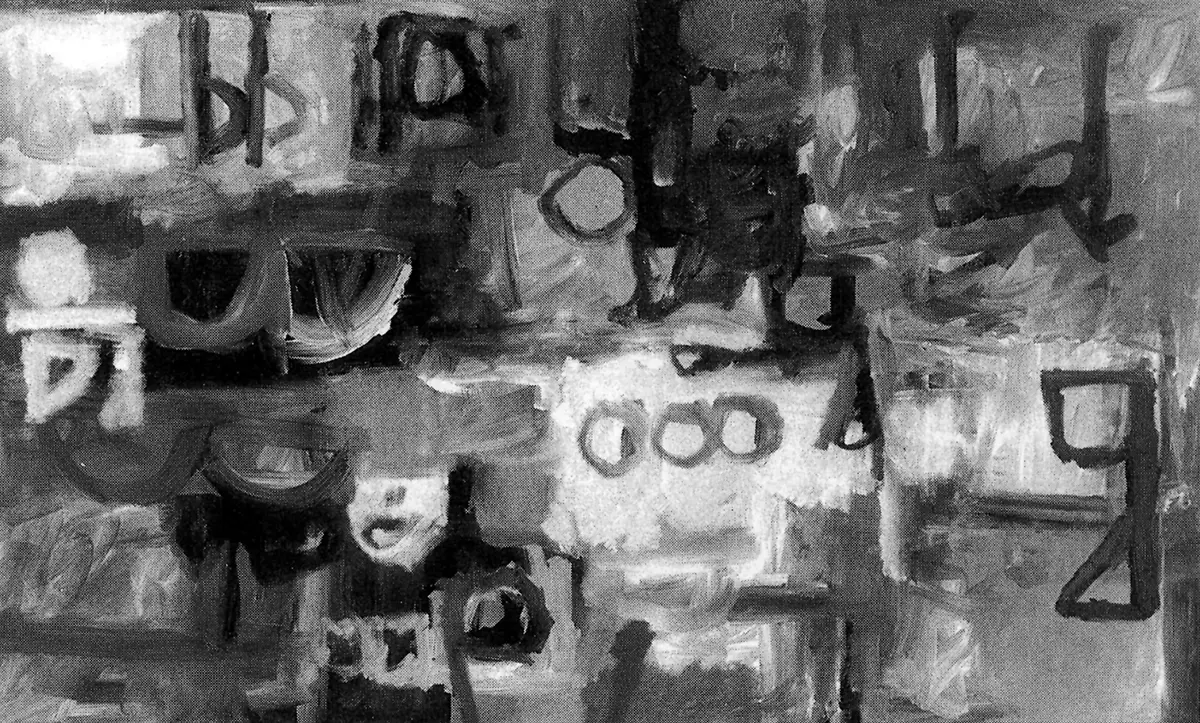
In his painting, which is mostly one of lyrical abstraction, there is a warm range of colors —not just yellows and oranges but also blues and green, fruitfully related to one another by pencil lines in pentimento and very free exercises, very discreet but very present, with figures and compositional elements, the most frequent being human silhouettes, faces, horses, bottles, coffee pots, and vases.
In this exhibition, Armas established associations and created installations with his own work. His pictures were used to create large mosaics or fringes of color, pictures from different periods, in different formats and with different finishes, brought together under his authorship and revealing common features in his proposal of freedom at any risk.
Through his modeling, painting, and practice à l'ancienne, Enrico Armas remains present in the current art debate in Venezuela: for the sense of craft and discursive capacities are also distinctive features of contemporaneity. The title of one of his paintings, While happening (acrylic on canvas, 200 x 120 cm., I992), confirms the validity and plurality of the imagination which transcends the immediacy of a period and its tendency towards stylistic unity.
JUAN CARLOS PALENZUELA