Coterminous/Two Projects/Dos proyectos, at the Boricua Gallery, proposed an interesting dialogue between two radically different perceptions of Puerto Rican culture. In the installation Patria mia/tierra prometida, Sylvia Benítez, an artist born in Brooklyn, explores her own emotional and nostalgic connection with the land of her ancestors.
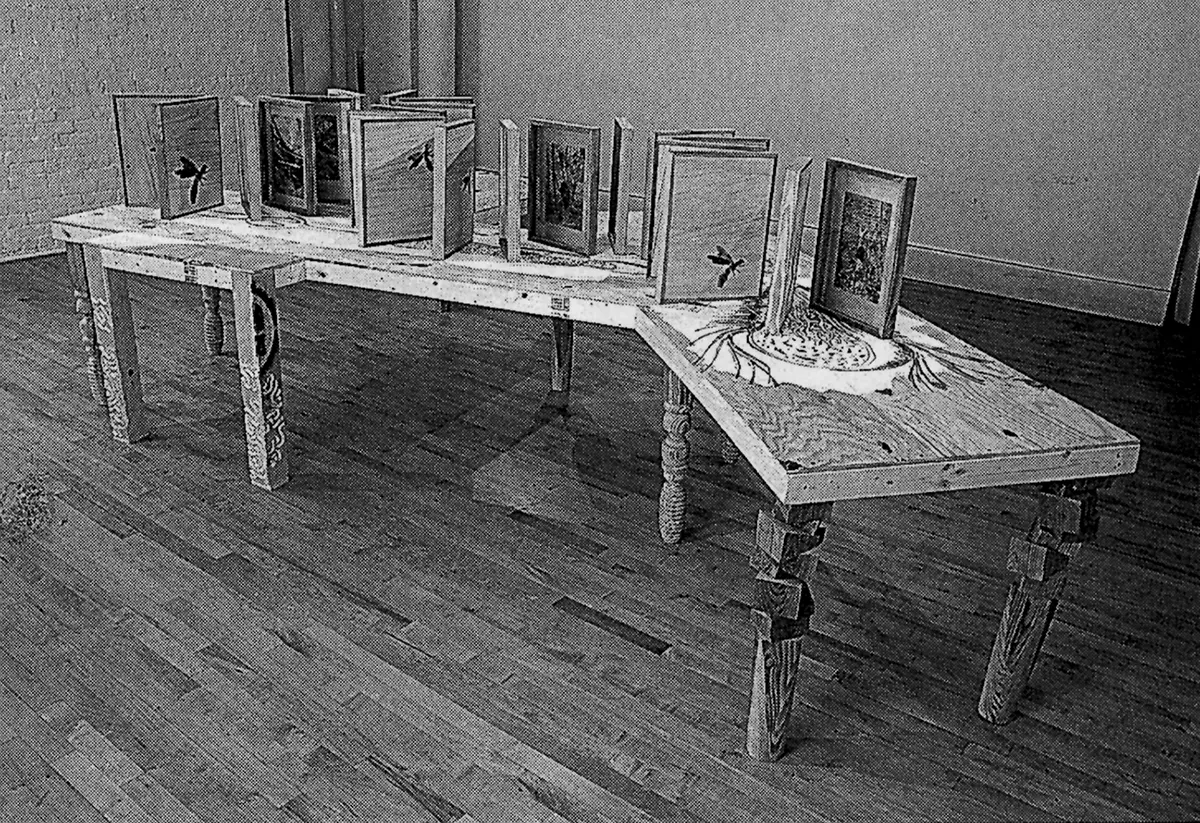
Carlos Juhasz Alvarado, a resident of San Juan, presented a completely different and darker vision of the same society in his installation E = mc2, in which termites are used to represent the creative and destructive forces of society and nature. In Juhasz's work, the termites are not only a silent plague that threatens and undermines structures from within but sophisticated and meticulous constructors of intricate and fascinating networks of tunnels and fabulous mounds. The termites symbolize how creative work can have negative consequences, the destruction of social, moral, economic, and political efforts. The erosion caused by the termites is also a symbol of the survival of the oppressed and dispossessed and their silent rebellion against decrepit, unjust, and incompetent institutions: termites attack only trees and old wood. The termites become part of the invaded object and in many cases, the only way to get rid of them is to destroy the object itself. In one of the rooms, Juhasz installed an enormous model of a termite made from wood, while in the other room, he presented a large work table based on a combination of different tables, mimicking the termite's work of construction and destruction. The fusion of the tables suggested a strange digestive process or an apparently irrational and compulsive act recalling the way termites destroy wood.
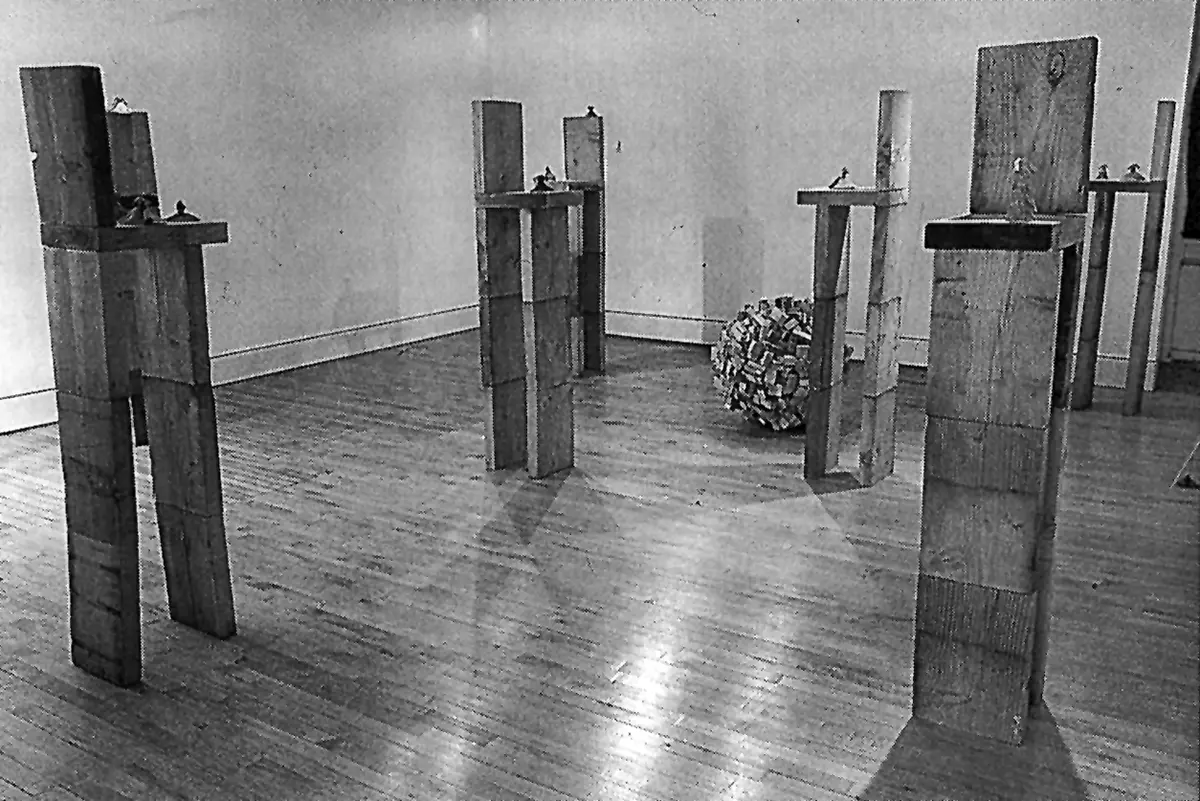
The two pieces created a sensation of tension and contradiction which went beyond the simple differences in the composition of the meaning of art and space. Two Projects questioned the way in which class and gender shape such concepts as nation, identity, and immigration, but at the same time Benítez and Juhasz explore the relationship between nature and culture. Both artists have an extraordinary talent for creating objects with organic materials, but while Benítez uses these objects to recreate distant memories through a lyrical approach, Juhasz focuses ironically on destruction and deterioration (the gallery was transformed into a frenzied kind of natural science exhibition). The common link in Two Projects was the fact that both artists tried to reveal the energy that gives life to inanimate objects. In the case of Benítez, this energy appears in the form of a living legacy that is present even in the most insignificant objects. For Juhasz, the energy is represented in the agitated activity of the termites inside the infested objects. For both artists, art is a creative act, but also a destructive force. Benítez recreates and celebrates the beauty and magic of the forest with artifacts made of wood and paper while Juhasz shows the termite tunnels as the dramatic calligraphy of nature or as strange and elegant abstract drawings. One of the most significant aspects of Two Projects was that it was not only a description of a particular society but a reflection of our origins and our love/hate relationship with nature – the first homeland from which society decided to emigrate in order to construct a new habitat, which we call culture.
NAIEF YEHYA