In today's world of up-to-the-minute computer links, fast-action films, and highspeed video games, visual literacy largely depends on instantaneous recognition of symbols and imagery. Vik Muniz's traveling exhibition Seeing is Believing, organized by the International Center of Photography; gathers together a body of work produced over the past decade that interrogates the idea of perception in contemporary visual culture.
Vik Muniz's photography plays on our conventional expectations, compelling the viewer to take a second look and carefully examine the nature of appearances. Analogous to Bertolt Brecht's theory of estrangement where actors reveal the artificiality of the performance as well as the internal structure of the play, Muniz deliberately allows the viewer to see the constructed nature of his photographic illusions. His images are not one-to-one copies of nature, but intentionally exhibit subtle imperfections owing to his unusual choice of materials. Using everyday, domestic items such as chocolate syrup, spaghetti noodles, sugar, dirt, wire, thread, and cotton balls, Muniz composes portraits of well-known and anonymous individuals, recreates famous art historical paintings, and mimics the appearance of various types of artistic media. His photographs trick the eye, momentarily destabilizing our responses, and leading us to contemplate the contradictions between reality and representation, between the original and the copy. What is most stimulating and likable about Muniz's photography is his light-hearted, smart, and witty approach to complex ideas and philosophical questions.
Muniz's retrospective presented nearly one-hundred images incorporating fourteen of his photographic series including Equivalents, Pictures of Wire, The Sugar Children, Principa, and his latest series, Aftermath. Viewing the works collectively was like attempting to solve a series of riddles - satisfaction was gained from uncovering each visual deception. Some images were significantly more effective than others, yet this is always the hazard of a retrospective exhibition where works that are more fully realized will be displayed beside less successful attempts for the sake of presenting a historical context.
In his series, Best of Life (1989), and Personal Articles (1996), Muniz explored the effects of mass media representations. In these photographs, the artist looks at our ability to be critical of information presented as Truth, as well as the media's impact on collective and personal memory. Later series such as his Pictures of Thread (1995- 1998), Picture of Soil (1997-1998), and Pictures of Chocolate (1997-1998), appropriate, and reconceptualize, art historical works by Corot, Gerhard Richter, Edward Weston, and Leonardo Da Vinci. The idea of appropriating images from art history is not a new one, however, Muniz's technique and painstaking execution are so utterly original as to differentiate his works from other artists developing similar ideas.
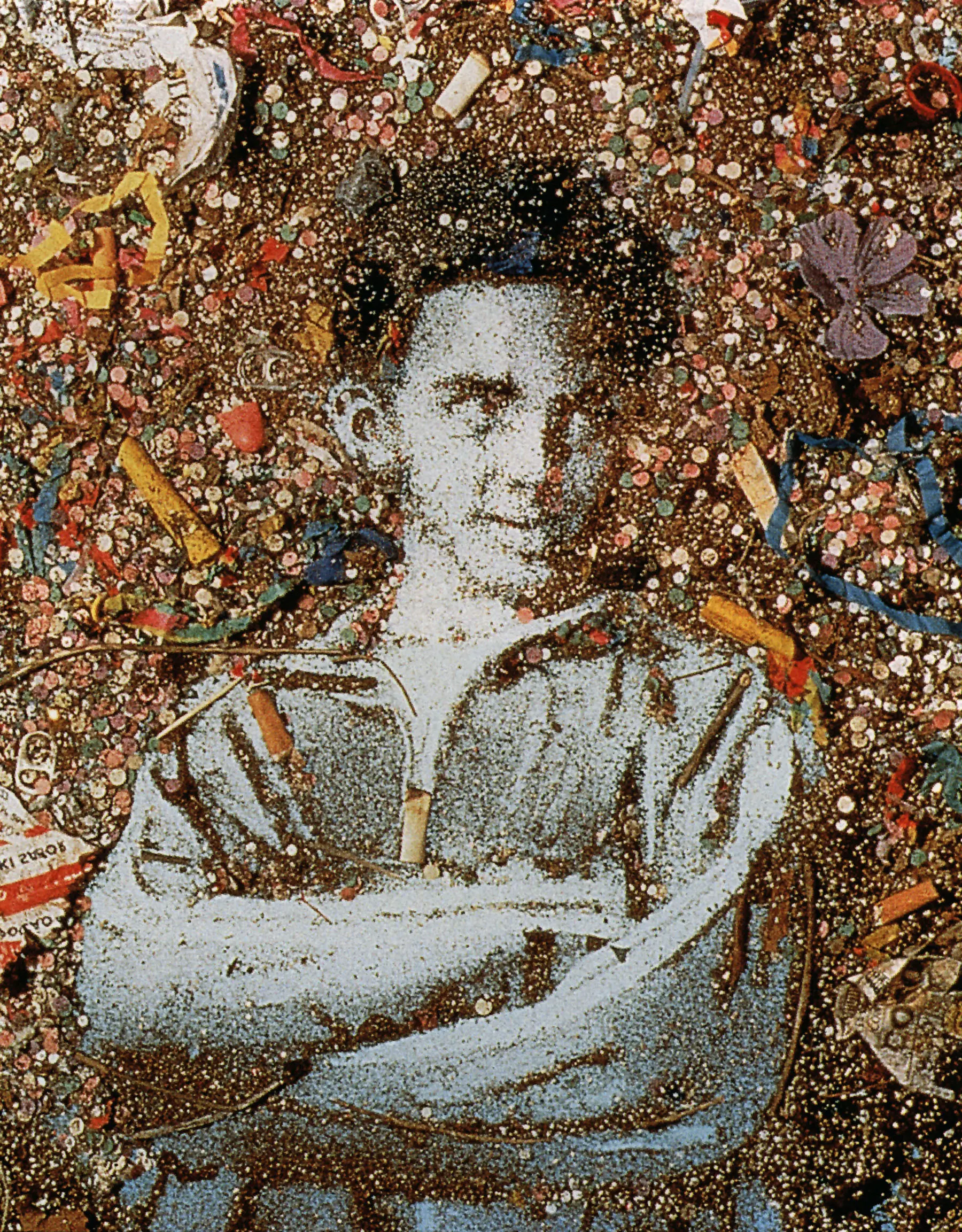
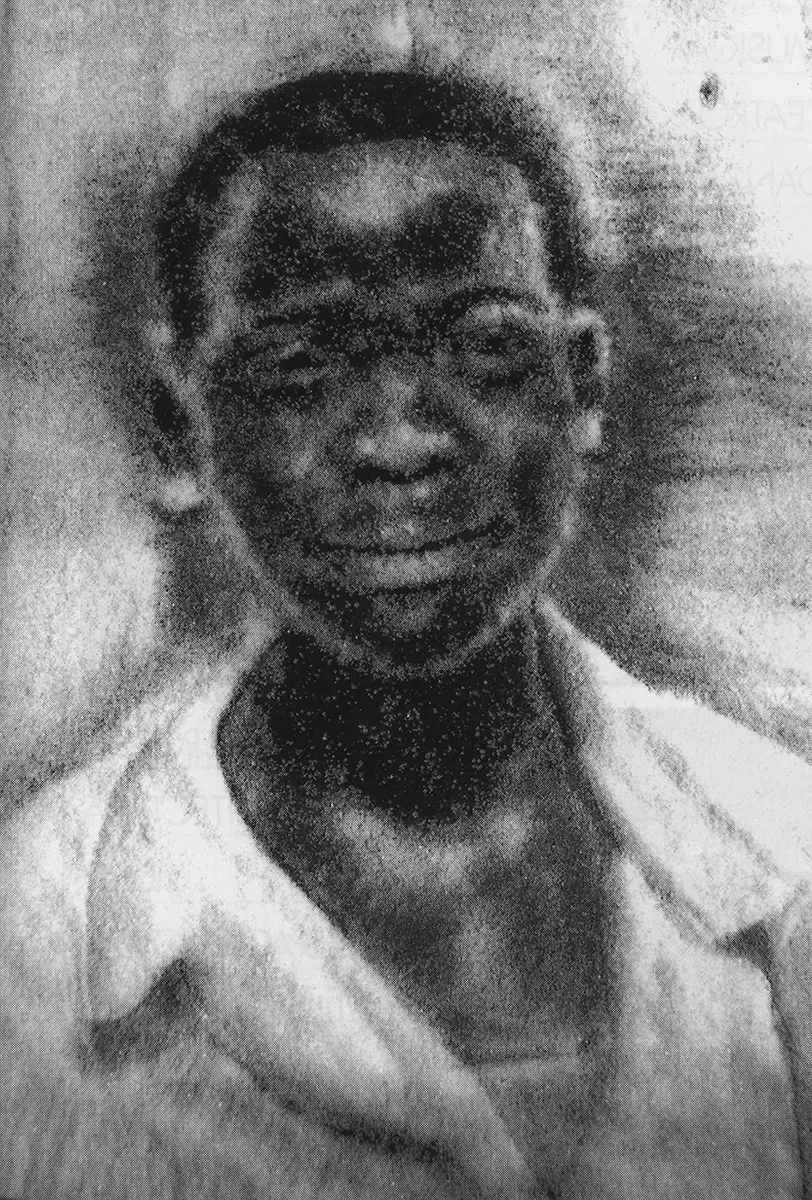
A more socially engaged subtext can be read in both his Sugar Children, 1996, and in the latest series Aftermath of 1998. In his images of Sugar Children, Muniz rendered six portraits of the sons and daughters of sugarcane workers on the Caribbean island of St. Kitts. The images were constructed using refined sugar on a black background and suggest the unjust history of the sugar trade in the Caribbean and its continued legacy in the lives of these children who, for lack of other opportunities, will presumably grow- up and follow in their parent's footsteps. In Aftermath, Muniz used the debris and garbage he collected on the morning after Carnival to compose portraits of homeless children living on the streets of São Paulo. The work evokes the theatrical illusion of Carnival where the poor dress up as the wealthy, and a few lucky individuals momentarily become kings and queens, nonetheless by Ash Wednesday the fantasy ends and the reality of daily life begins anew. In both of these series, Muniz endows the children with a sense of dignity. His work is not overtly political in tone but displays a nuanced and thoughtful approach that operates on many levels, from the purely aesthetic, to the socially engaged, and from the introduction of new materials and techniques to the theoretically rigorous. Vik Muniz's humorous photographs lead us to reflect on the diverse types of visual imagery that enter into our daily lives and the innumerable benefits of careful and deliberate observation.
CHARMAINE PICARD
Art critic and Ph. D Candidate in Art History at The University of Chicago.