
Among all the perspectives with which British empiricism contributed to the theory of the visual arts, that of Archbishop Berkeley is one of the most suggestive: for him, the existence of all depends on the perception we have of it. Berkeley did not deny the existence of a world, but rather the material nature of things. In other words, we can only affirm what we experience at the moment- of perception; there is no space unto itself, rather this space that I perceive is what exists.
In the case of Arturo Herrera (Venezuela, 1959; he lives in New York), the absent object or image is, however, what becomes legitimized in his works. In them, there exists a tension between what we see and what we are not seeing because he makes us certain that we are not being shown everything, but rather a small angle, just enough for the work to be a work. The inevitable questions that come to mind are "What is missing?" "What is the absence in his works that disturbs us so?" The importance of Herrera's work is grounded not in what it says, but in what it silences.
Arturo Herrera incorporates elements of surrealism, minimalism, and a common language derived from popular culture icons in order to formulate careful mysteries with enough elements to intrigue (and even obsess) the viewer. His images cause that sensation of recalling a word that we have on the tip of our tongue, without ever achieving the pleasure of articulating it. Herrera makes use of these perceptive discomforts in order to incite the viewer to generate his own conclusions.
Herrera had his artistic training in Chicago, where he earned his Master's in Visual Arts at the University of Illinois, Chicago. He stems from the artistic debate that took place in Chicago from the mid-'80s to the end of the '90s. His formal point of departure is the critical —and eloquent—response that the new generation of conceptualists offered the city's somewhat esoteric obsessions: the tendency to favor works with strong psychological content; the idea of innovating formal questions, though without breaking the dialogue with pop art; and the fascination with naïf and eccentric art (a good example is a recent interest in the work of Henry Darger). Before this panorama, Herrera developed a type of composition that—whether consciously or subconsciously—incorporates and transcends those dilemmas. His decision to incorporate cutouts of characters from comic strips or children's books inevitably links him to the tradition of the Chicago Imagists, for whom vernacular art was vital. But unlike the imagists, Herrera takes these interests to the conceptual field, and he gives priority not to the personal experience, but rather to the way these images can be interpreted.
The work of art as a parenthesis
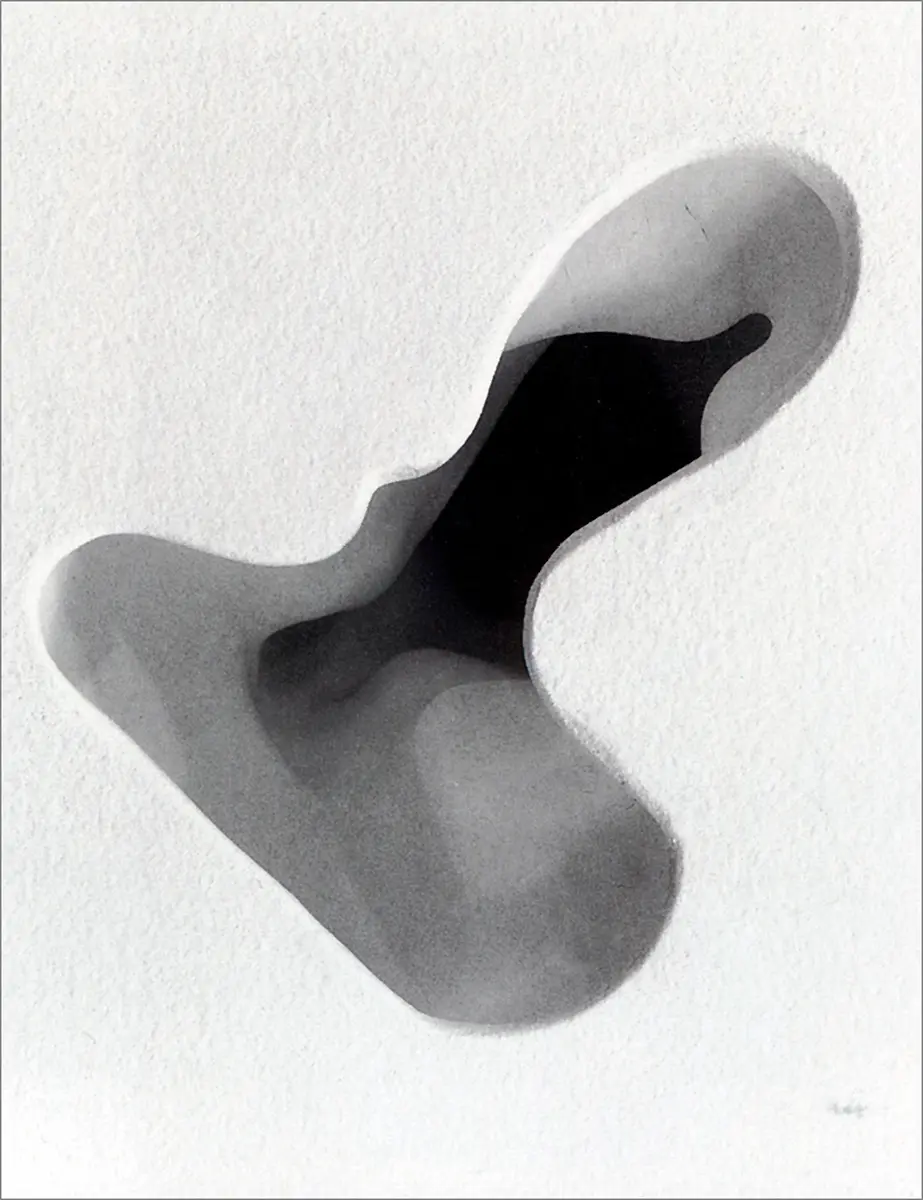
The absences that appear in his pieces —whether they be the negative spaces in his drawings, the details of light in a photograph, or the mutilated areas of a body in a collage—are as communicative as what they reveal: it is the frame of absence that perseveres in our perceptive experience. Herrera's voids are not gratuitous holes, but rather cautious and intentional absences in areas where, in other pieces, we would find the "meaning," the "message," or at least the determining bases for effecting a reading of the work.
Endowed with an innate ability to take the most minimum elements and exploit them to the maximum, Herrera gives us only the essential clues, stringently confined, as if it were a logic problem. The question, as the critic Fred Camper once formulated it when writing about Herrera: "How little can an artist do to still do art? Or, in other words, How few clues can the artist give us in order to say something and, at the same time, to invoke our curiosity, our mania for 'understanding' the work?" Herrera's calculated simplicity recalls Goya's famous painting, almost abstract, if it were not for the face of the dog that is sinking in quicksand—a detail that gives meaning to emptiness, barely justifying the work's nearly total abstraction.
Arturo Herrera's negative space makes us uncomfortable because it demands that we fill it with our minds. The white space of the gallery becomes the anxiety of emptiness from which we tend to flee, something like what Pascal meant when he wrote Le silence éternel de ces espaces infinis m'effraie: the anxiety of emptiness, whether an emptiness of memory, of the universe, or of the immense possibility of interpretations.
Extrusion and Intrusion
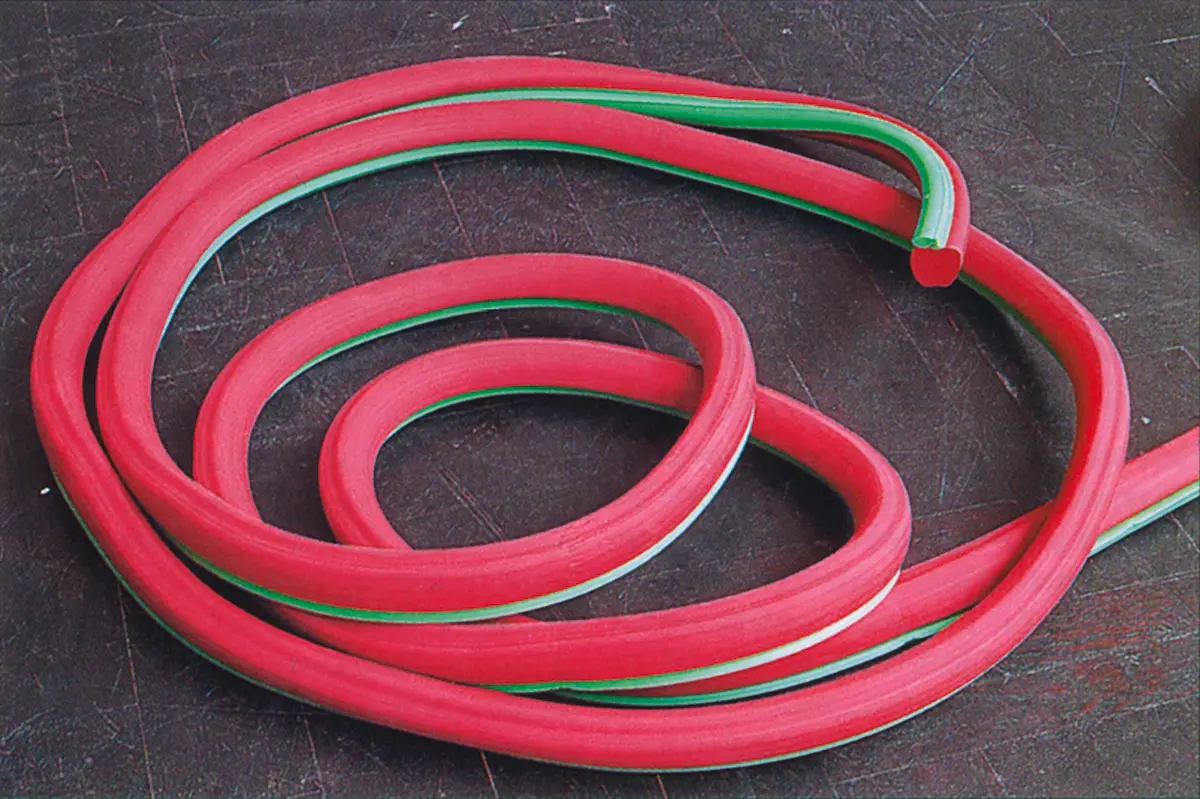
Herrera specializes in wielding the ambiguity of images in the most obstinate way. His pieces, which appear to have an almost innocuous simplicity at first, gradually reveal themselves to us as the images begin to reverberate in our memory and appeal to our curiosity. And they demonstrate levels of conceptual complexity that could get away from us if we do not pay attention. Those who visited his show last year at the Renaissance Society of Chicago may have seen a gallery that, at first sight, looked half-empty, with only small plaster heads of Jiminy Cricket and Pluto sticking out of the wall. (A hole in the other side gave us an internal view of Pluto's head.) There were also two abstract murals with several sections left blank, a photograph of a forest, and a series of mysterious red-green objects on the floor, the length of hoses, with a cross-section of an apple; all of them like silent presences in space. But behind the apparent inconsistencies and formal impurity (and lack of coherence) among the pieces, what slowly began to unravel were his complex communicating vessels and the sensation, above all, of a relational context in space: themes like innocence, sexuality, childhood myths spring forth; and, in short, the psychological repressions that our own minds impose. Herrera, like Wittgenstein, silences what cannot be spoken, but his images surround it and, upon doing so, they reveal it to us.
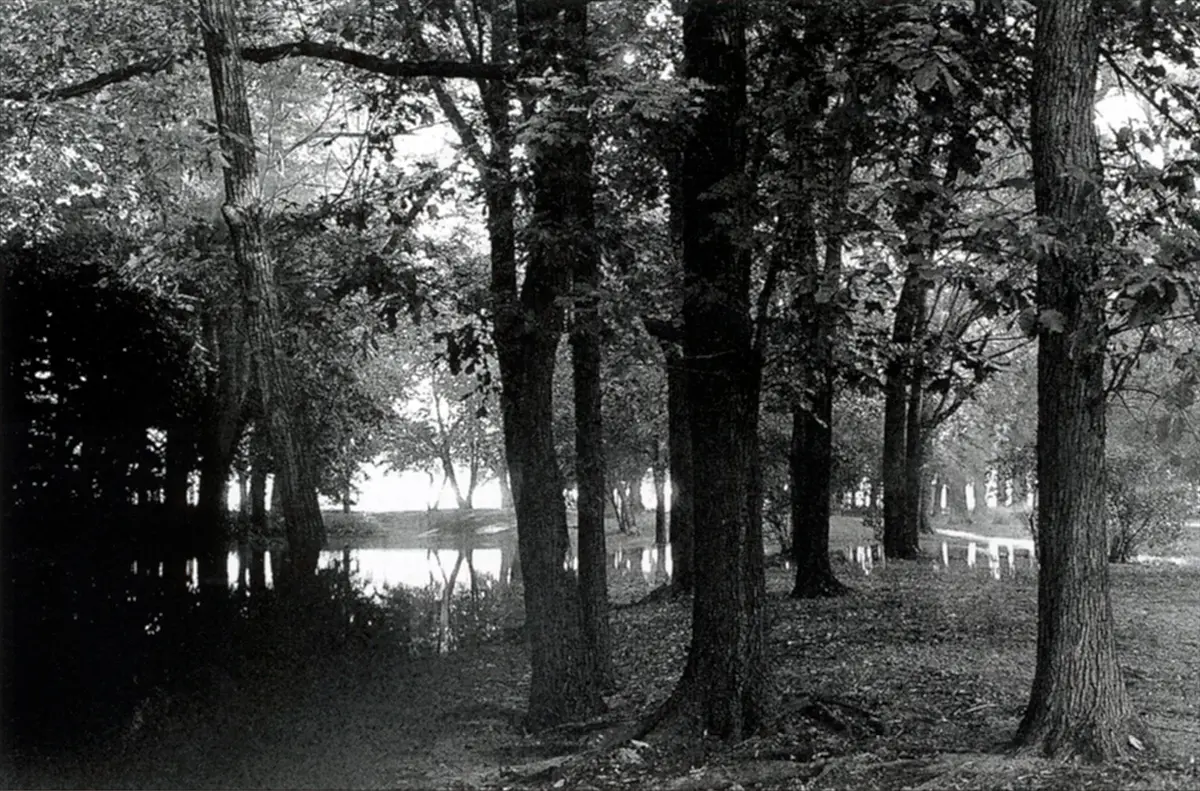
In both a physical and conceptual way, Herrera presents works that flirt with the viewer, on one hand, sharing elements that strike us as personal, attractive, and seductive; on the other hand, they coldly distance themselves, like philosophical reasoning, a distancing that the artist himself calls a "transparent mist." His compositions dodge personal confessions and become conceptual sources of meanings, like Rorschach's spot experiments that force us to participate with our own interpretations.
The viewer gets lost in a work with too many interpretative options, while a confessional piece runs the risk of being introverted and self-complacent. Herrera, conscious of these extremes, places himself precisely in the middle. The result is an activity in which we search to find ourselves, searching for the course taken by the artist in creating these pieces. His works are challenges in which the viewer tries to unmask the artist, while the artist attempts to slip away.
The enchanted forest
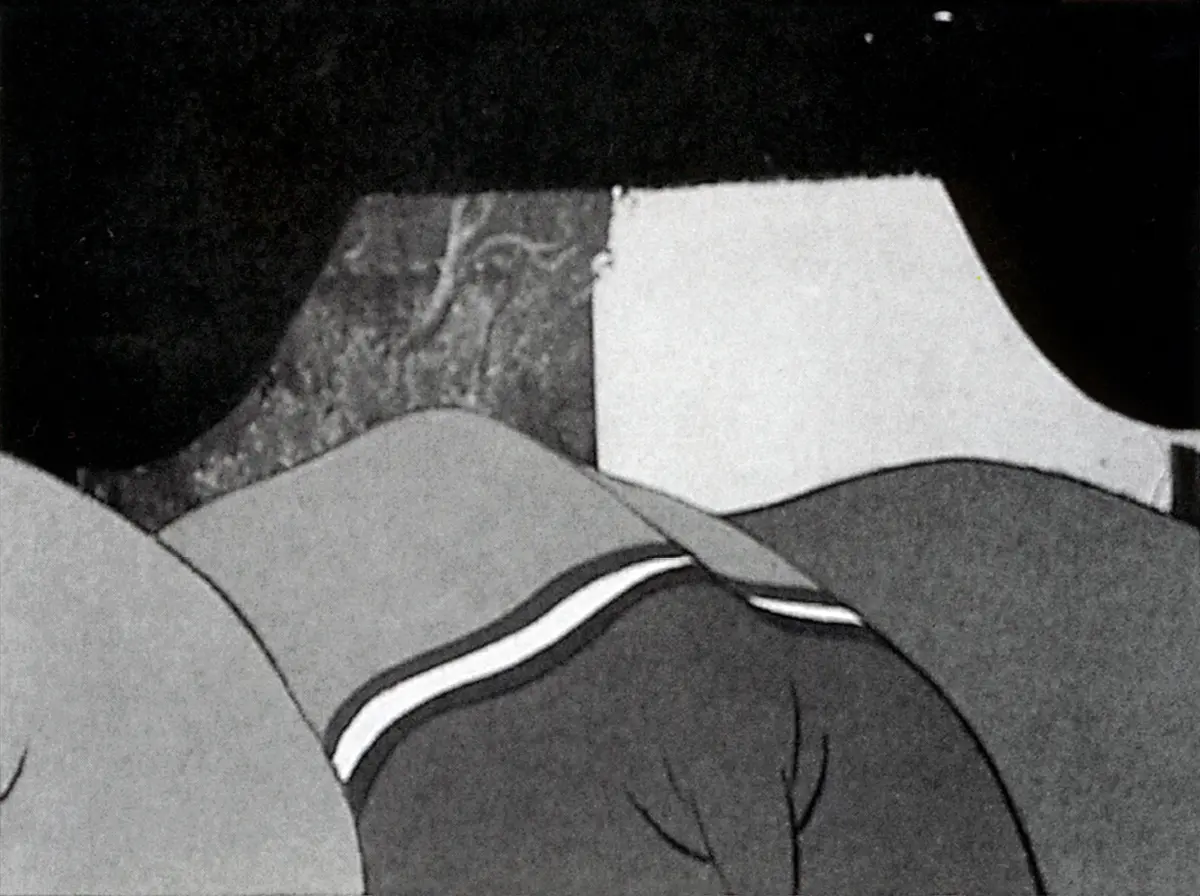
To be sure, one of the most familiar elements in Herrera's vocabulary is the world of childhood caricatures. Saint-Exupery, at the beginning of The Little Prince, writes: "We have all been children at some point, but very few remember it." This sentence may be applied to the way we see Herrera's work: many of his pieces appeal to that half-blurred memory of our childhood, a mixture of specific pleasures and vague fantasies. Upon seeing Herrera's invocations, a memory comes to the aid of perception so that, through mental associations, we may recall and recognize the objects that are presented to us as immediate, sensible, and perceived realities; that is, in order that we may fill in the blanks. But it is necessary to point out that Herrera's work is not about childhood, just as the work of Jake and Dinos Chapman or Paul McCarthy is also not about childhood. It simply happens that childhood lends itself perfectly as a creative territory for the ideas that Herrera wishes to explore due to his innocent character. It is also because, by being removed from our present, childhood is a series of blank images and areas. And, finally, childhood is the lingua franca of our collective memory.
Moreover, this presence of childhood elements (the biomorphic forms, representations of colors, and objects that we tend to associate with Saturday morning cartoons and children's stories) is not necessarily fun, but rather generally perverse and, occasionally, phantasmagoric. At the Renaissance Society's show, for example, the photograph of the forest turns into a distressing image of the enchanted forest, while the "stretched apple" (which is the industrial extrusion of an eraser before being cut into several pieces) is even more sinister. Although it makes innocent references (the apple of the witch in Snow White, for example, the typical eraser in the pencil boxes from our school days), it points to obscure images, such as the slices of this long object that suggests a penis. Therefore, this "hose" is a powerful object that merely by being presented—as is the case, for example, with Meret Oppenheim's fur-lined cup—refers us to all kinds of sensations. In this case, to ideas of castration—original sin, as the critic Neville Wakefield mentions—to wanting to "erase" our sins and, above all, to the loss of innocence. Herrera's childhood universe is a sort of inverted Disneyland, for instead of retrieving the easy side of emotions and histories, we obtain their dark, unresolved side, like the mysterious dreams that we are accustomed to having. Only in this case, there are no happy endings or candy-coated Disney, but rather the sad narratives of Hans Christian Andersen.
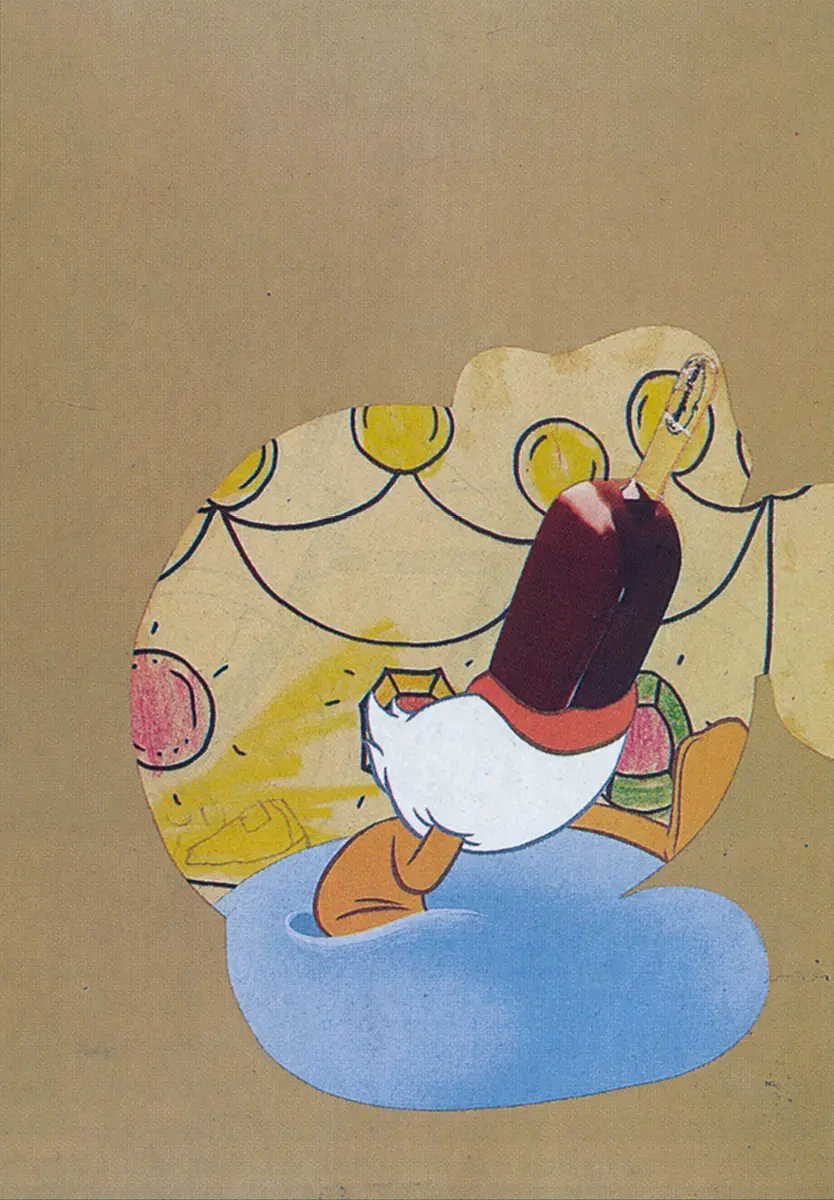
Herrera's creative processes are particularly legitimized in the face of his collages. Created in the style of Max Ernst, and with a similar cynicism, Herrera "rapes" the images and makes full use of the tension between the innocent image and the juxtaposition of another intrusive object that breaks the harmony of the memory. What springs forth when we see Herrera's collages is not the memory of the game, but rather that of the repressed desires, the prohibition that adults imposed upon us, and the lost opportunities. A perfect example would be when they finally gave in and decided to buy us ice cream, but the truck had already turned the corner.
Herrera's collages are a reflection of the repression of desire: they are not entirely surrendered to us, like what was denied to us during childhood and what is not given to us as adults.
Cloud configurations
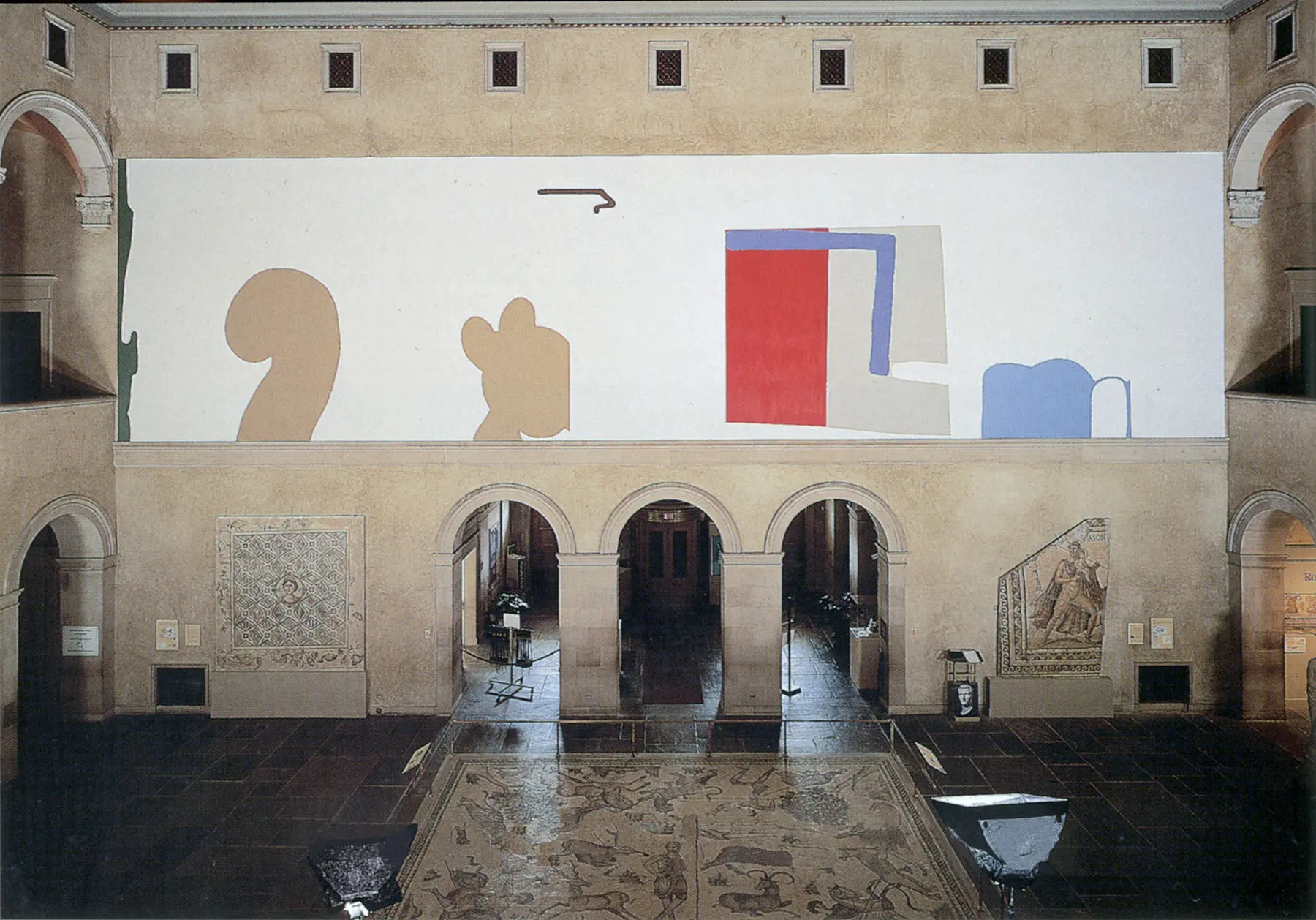
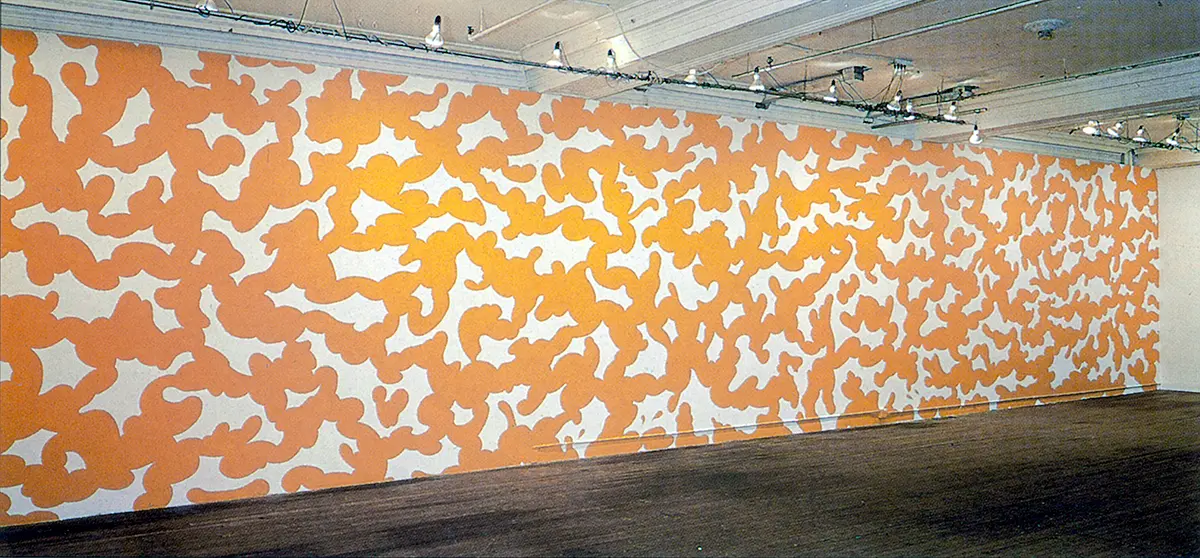
Arturo Herrera's work tends to find itself on the edge between the explicit and the implicit, or between the familiar and the foreign. In one of his murals, titled Tale, Herrera covered a wall with fragmented images that would strongly suggest silhouettes of Disney characters, but which never reveal themselves in a direct way. Tale's hurricane of images, —which make the viewer contemplate the wall at length, like someone trying to find faces and figures in the clouds in the sky— captivates and incites the viewer to do a reading, without releasing much information.
Herrera is doubtless a Proustian artist who constructs minefields that, as we cross them, refer our memory to an entire series of personal experiences. Something like this occurs as we enter the diptychs created for the Dia Foundation (Almost Home), an internet project that consists of a crossing of a hundred images that begin to appear one next to the other. Like the Freudian idea of dreams, in which the joining of two similar elements generates a certain interpretation, Herrera's diptychs become systems of subconscious meaning.
These empty spaces, these absences, inform the viewer in a psychic and emotional way. Before these voids, there is nothing to do but to surrender ourselves to our own psychology. But the works of art, it must be said, do not abandon us. On the contrary, their disquieting images force us to get involved psychically with them.
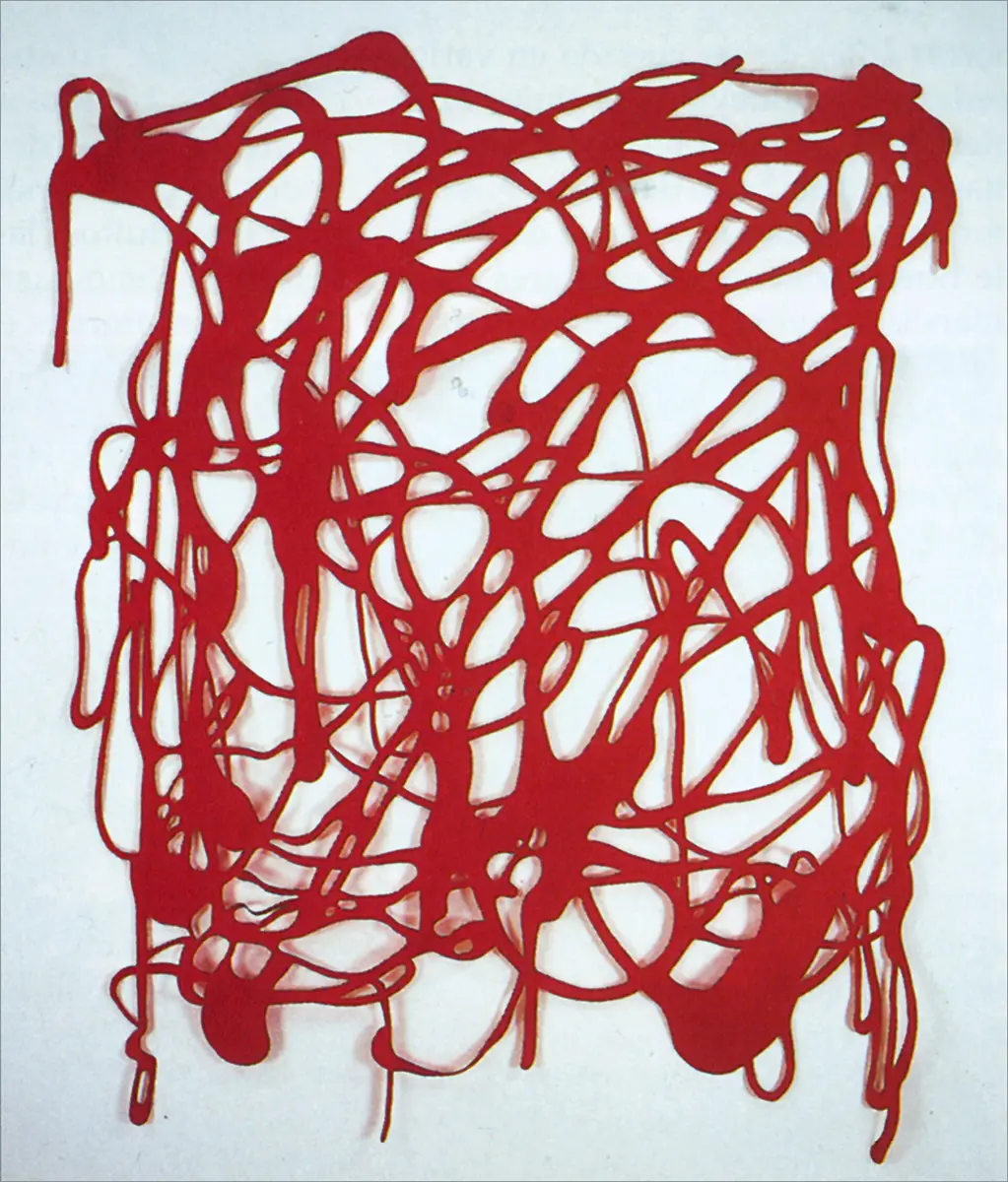
His work is double, both affirmation and negation, covered space and void, noise and silence, seduction, and separation. The fragments cannot be understood as a totality because totality in itself is fiction. As Hume would say —to return once more to Empiricism— the idea of a tree does not exist, rather this particular tree and that particular tree exist. In the same way, a concrete monolithic experience does not exist for Herrera —not even a totally personal experience— rather this fragment of life, this sensation, these objects, these holes all exist. And even so, these sensations are ambiguous and passing; they are constantly changing, and they are in constant flux, as in Borges's literary world. It is when we accept this atmosphere of floating fragments, of clues and signs, of cloud formations, that we can better appreciate Herrera's work.
* All illustrations are courtesy of Brent Sikkema.
PABLO HELGUERA
Artist and independent critic. He supervises the educational programming of the Guggenheim Museums in New York.