
Made in Mexico/Made in Venezuela is a conceptual exploration of how to break down the barriers interpenetrating contemporary cultures in the Americas. The works of art on display were put together according to instructions faxed or e-mailed by the artists to the gallery, enabling collaboration across borders with none of the usual impediments of shipping, insurance, etc. The most striking aspects of Made in Mexico/Made in Venezuela turn on Art Metropole's facilitating role of realizing the pieces at little or no expense to the artists themselves. This show affects an egalitarian economy in which artists and gallery staff engage in a shared conspiracy to thwart the capitalization of art, no mean achievement in the contemporary international environment of profits and bottom lines.
Curator Luis Jacob has put together a catalog documenting his exchanges with the artists, including a discussion of instructions and plans. Augmenting the art on display, these faxes and e-mails invite us to consider the process of making entailed in each work's creation and presentation in Canada. Uniting documentation with the objects themselves, the exhibit is a terrain where communication is the prevailing credo.
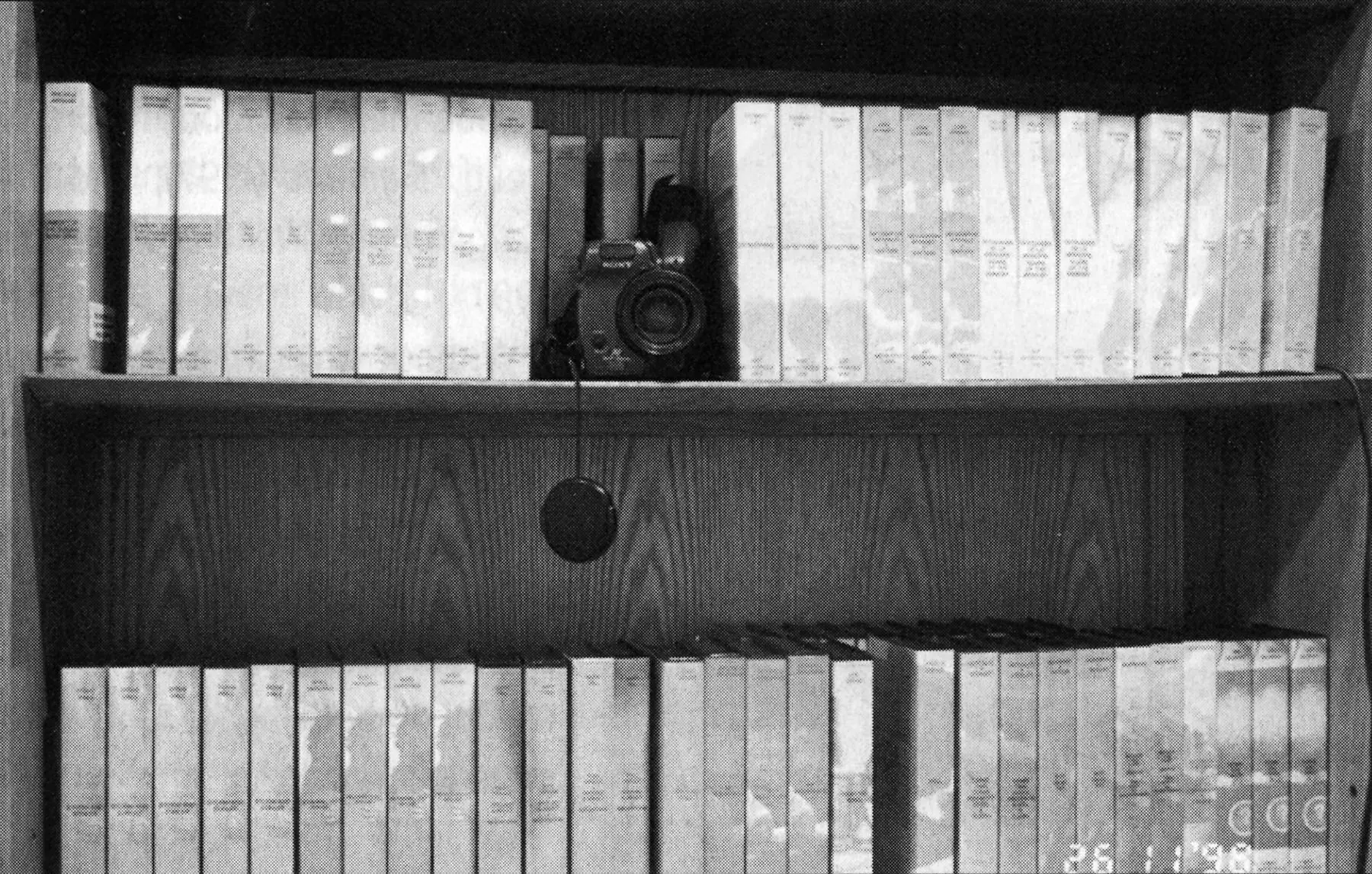
Mexican artist Santiago Sierra, for example, presents a real-time video of the dismantling and subsequent repair of a sink in his Mexico City studio. The video itself is a product of circumstances documented in the catalog, where we learn that Art Metropole was unable to follow Sierra's original instructions to have a sink dismantled and repaired in Canada due to financial constraints. The ease with which the sink is dismantled so quickly makes for a telling contrast to its involved and time-consuming reassembly. Time's passage reflects the real value of the labor that goes into making the mundane things that sustain our lives, a value that is usually displaced in favor of a financial equation.
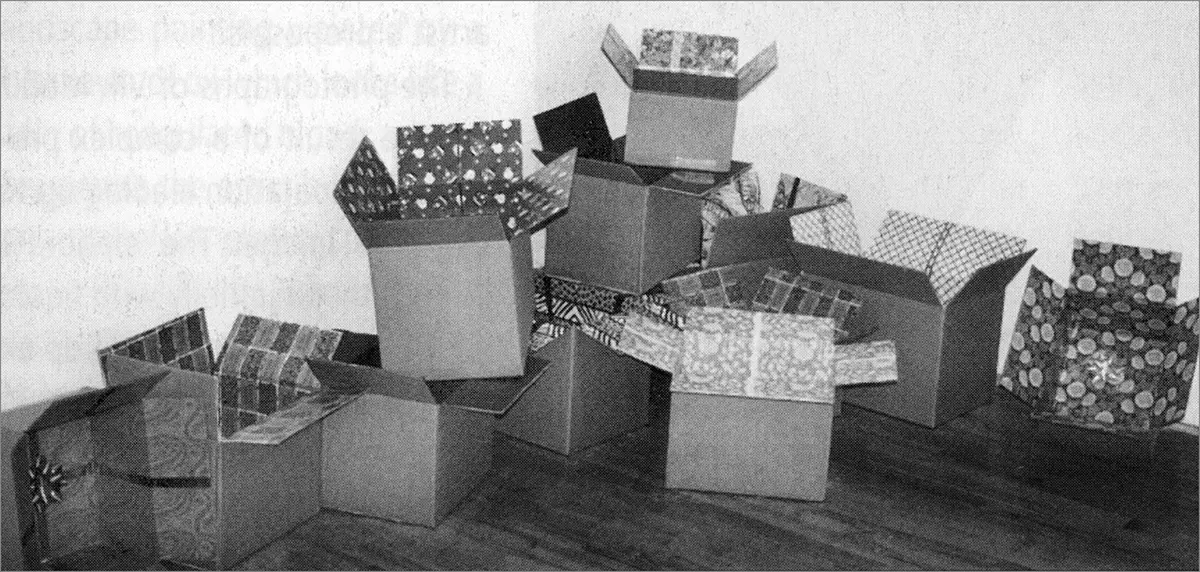
Sierra works with the economic commonalities of work. A humorous transcendence of the rigors of monetary exchange is the centerpiece of Venezuelan Alí González's piece. González provided Jacob with minute instructions for wrapping the interior of cardboard boxes like presents, complete with bow ties. The boxes were then left open and strewn casually at the entrance to the exhibit. A multitude of inverses ensues: wrapped interiors of "opened" presents containing nothing playfully negate González's role as a gift-giver and our own role as grateful recipients. The promise of physical gifts from afar is displaced by conceptual art's covert —and intangible— function as a gift to be experienced, rather than owned.
Experience, in fact, is the empathy-building communicative feature binding pieces by Mexican artists Stefan Brugemann, Yolanda Leal, and Venezuelan Alexander Gerdel, as well as Sierra and Gonzales. The catalog instructions for Brugemann's installation blazed across a wall in capital letters —"The Event Of Writing Maybe The Unevent Of Reading"— point to the artist's unproductive complicity with us in our equally unproductive role as readers. Leal's piece records the response —both written and photographed— of a close friend of Jacob to an intimate question posed by Leal. Again neither artist nor viewers are present for the act of production that the question generates. Similarly, an invitation to produce is the subject of Gerdel's work in which power tools have been laid across a table, unused by the artist, and ready for use by us.
Contributions from Venezuelans Juan Nascimento and Diana López and Mexican Inaki Bonillas were interesting but less focused. López exhibited a bottle of Canadian Club Whiskey on a carpet and had the opening night reception filmed. Nascimento instructed Jacob to create a small self-supporting toothpick sculpture. Bonillas presented a series of photographs of a clock on different days for a week along with a blank whiteboard filmed at different times during the day.
Certainly, these pieces contained complex meanings, but each in its own way neglected the experiential element linking artist and viewer that enriched the other works.
The appeal to experiential empathy was, for me, the most satisfying feature of Made in Mexico/ Made in Venezuela. Here, perhaps, lie the seeds of a more egalitarian conceptualism, one capable of integrating into itself the creative potential of both artist and audience.
ALLAN ANTLIFF