
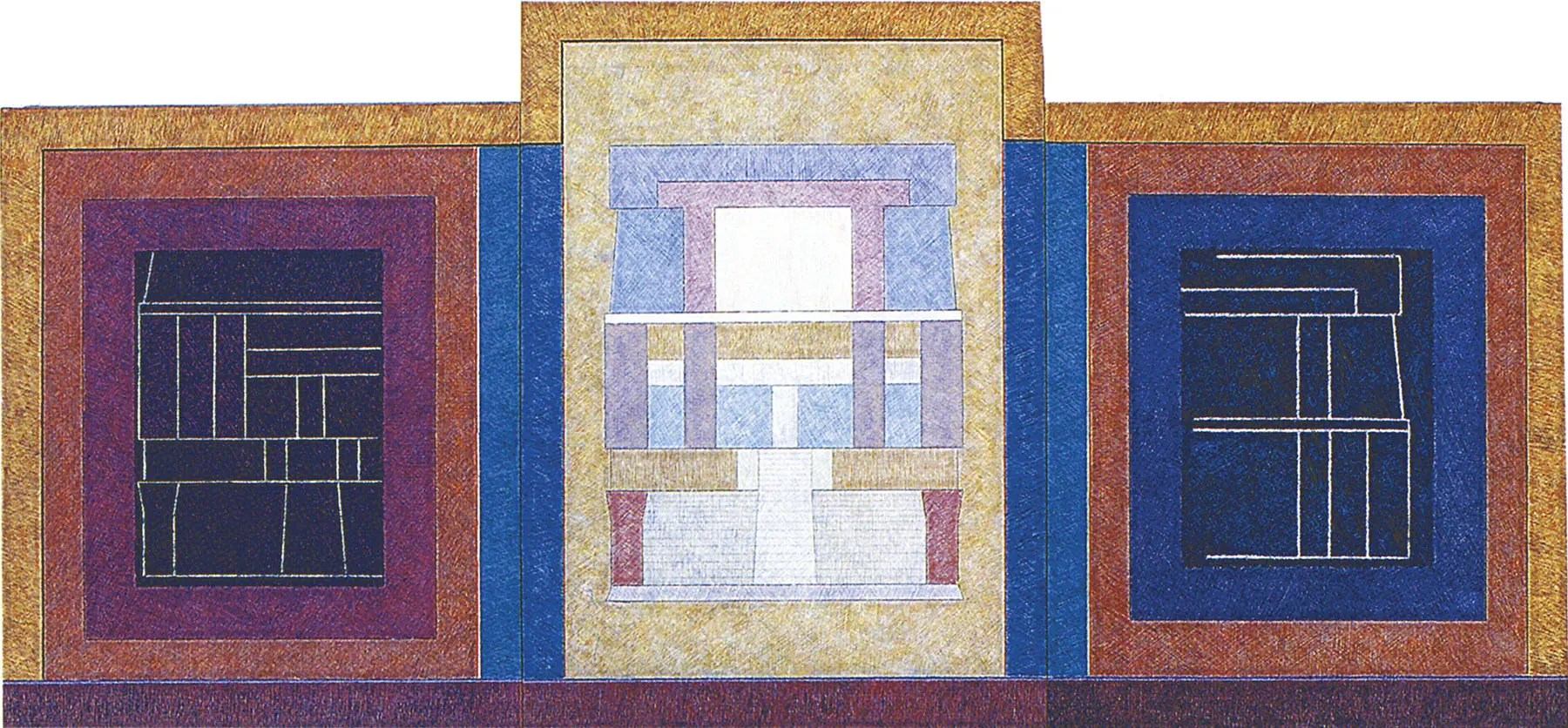
Alejandro Puente says: “My art is a present that is also a dateless past.” In another writing, he states: ”I do not choose (the world view) of my parents, the Mediterranean, I choose America. I was born here. Today we are beginning to discover it. A distant culture that reappears, old and new. A new world. In ancient culture, matter and meaning were fused together. The rock was not only a rock; ideas and meaning were turned into rock. The logic of forms, volumes, lines, and colors. A conception of space and time, different from that of Europe”.1
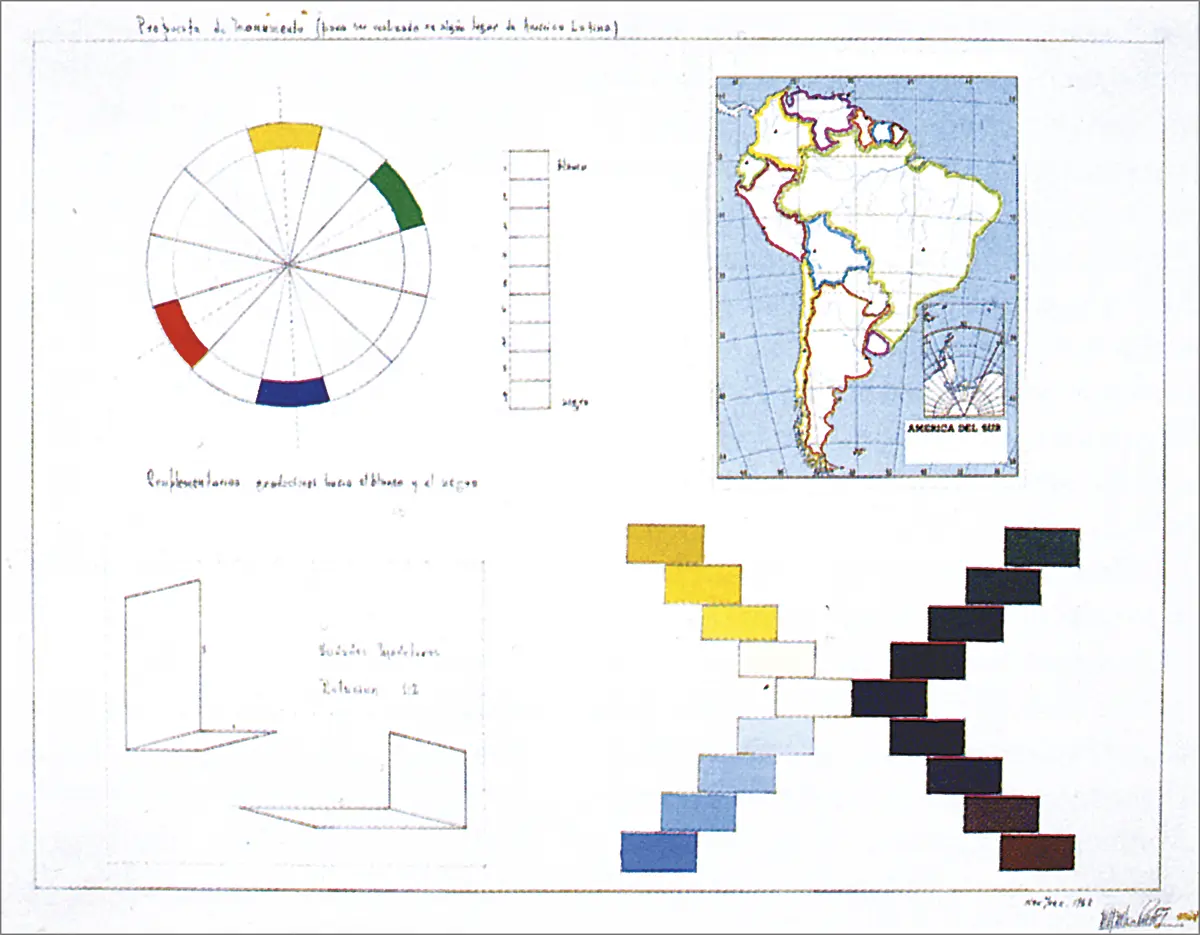
He began to feel this identification with the essence of Latin America in 1968, at a time when he was living and working in New York. It was precisely the cultural differences that he perceived that gave him “the possibility of feeling and thinking about the need to include in my work a referent of place, an identification with place because it reveals physical data (topography, climate, and materials) as well as memory data (tradition, culture, and history)”.
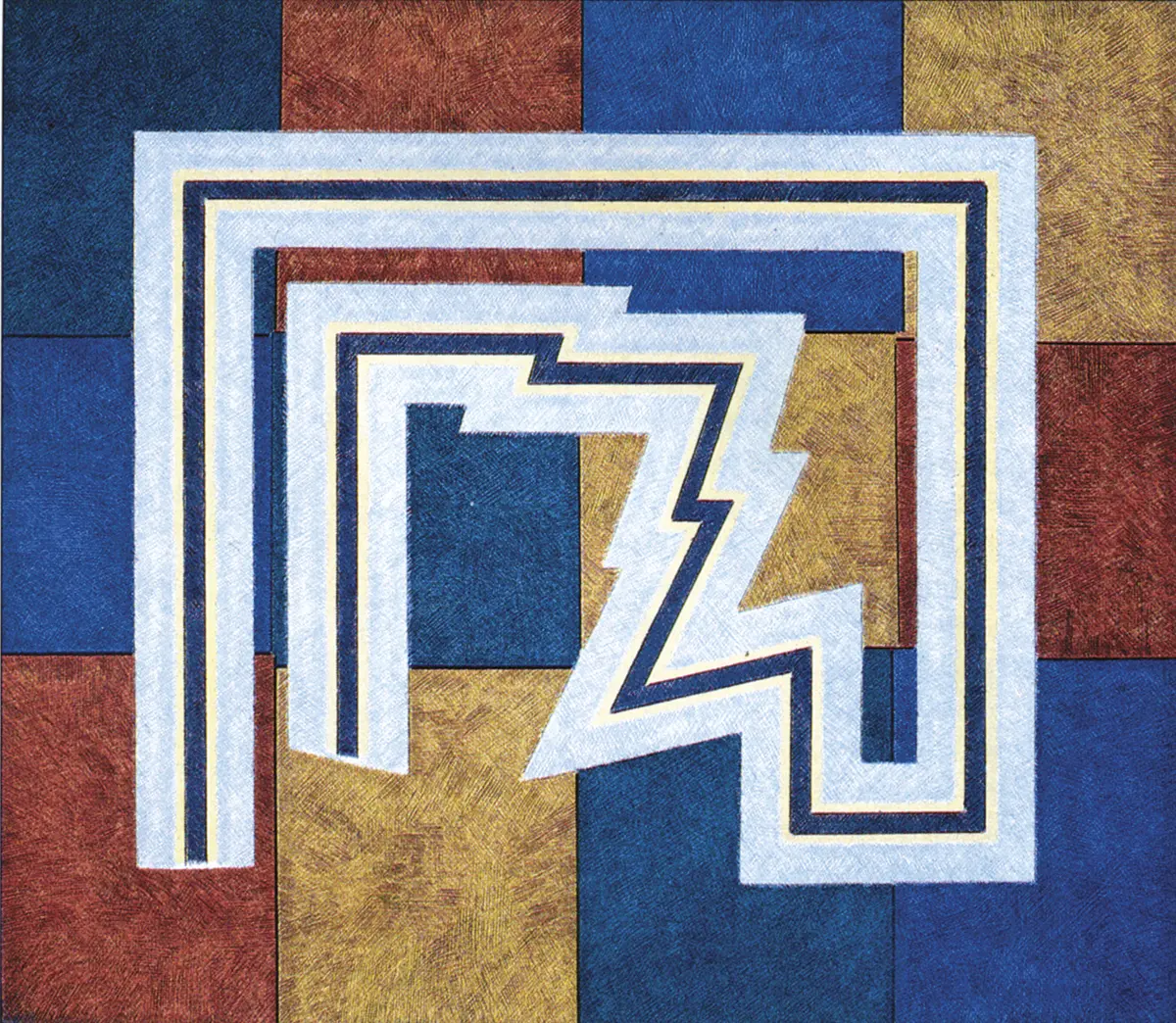
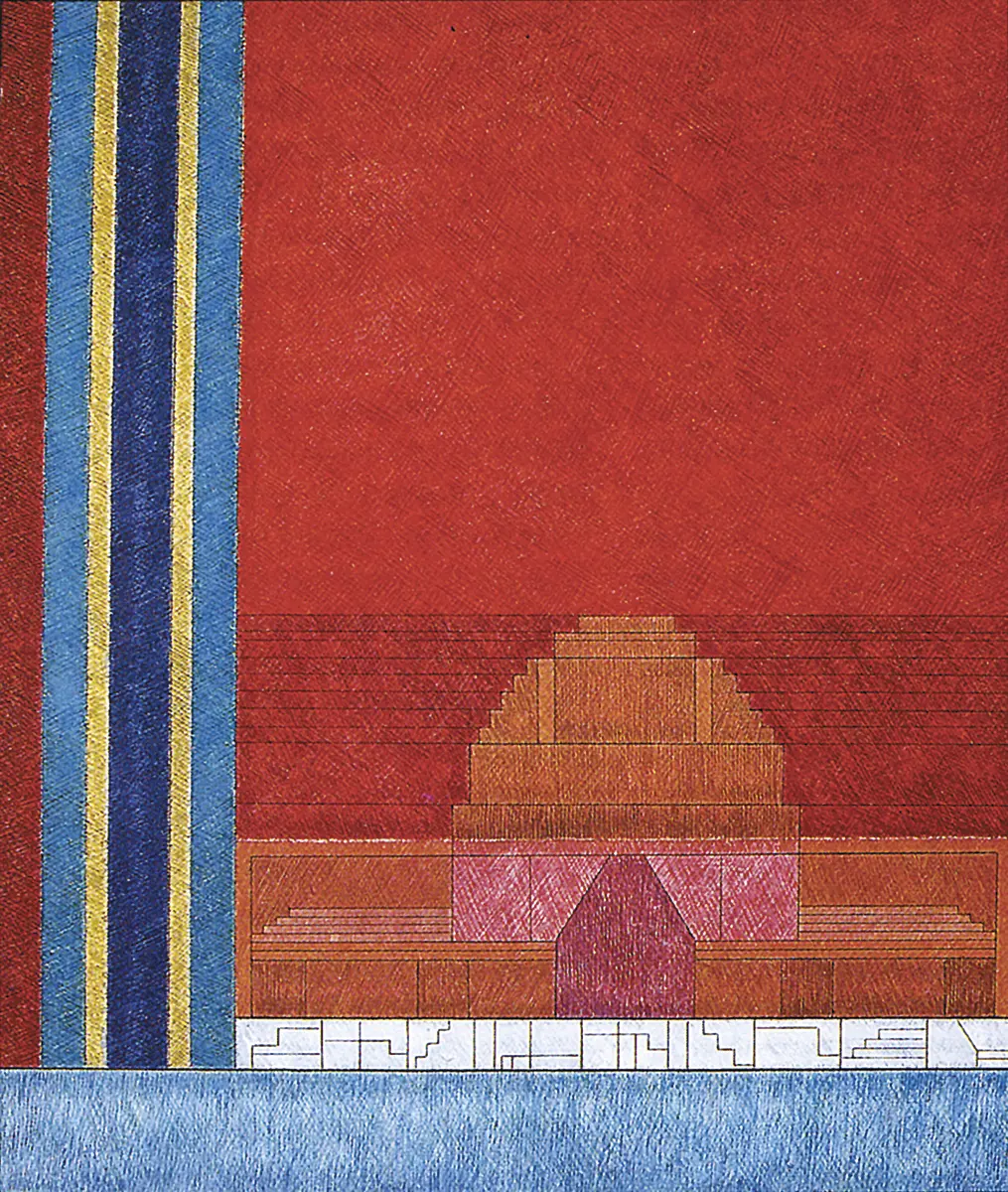
That same year, while drawing the plan for a sculpture project—as he tells us—he noticed the relationship between his work and the layered forms seen in the textiles and constructions of the ancient pre-Hispanic cultures. This layered sign constant is one of the primordial symbolic forms of pre-Colombian culture and is of little relevance in the old Western world. I especially wish to point out the function it has as an architectonic element: it facilitates the ascent and descent between levels of different heights and casts its original symbolic meaning into oblivion.
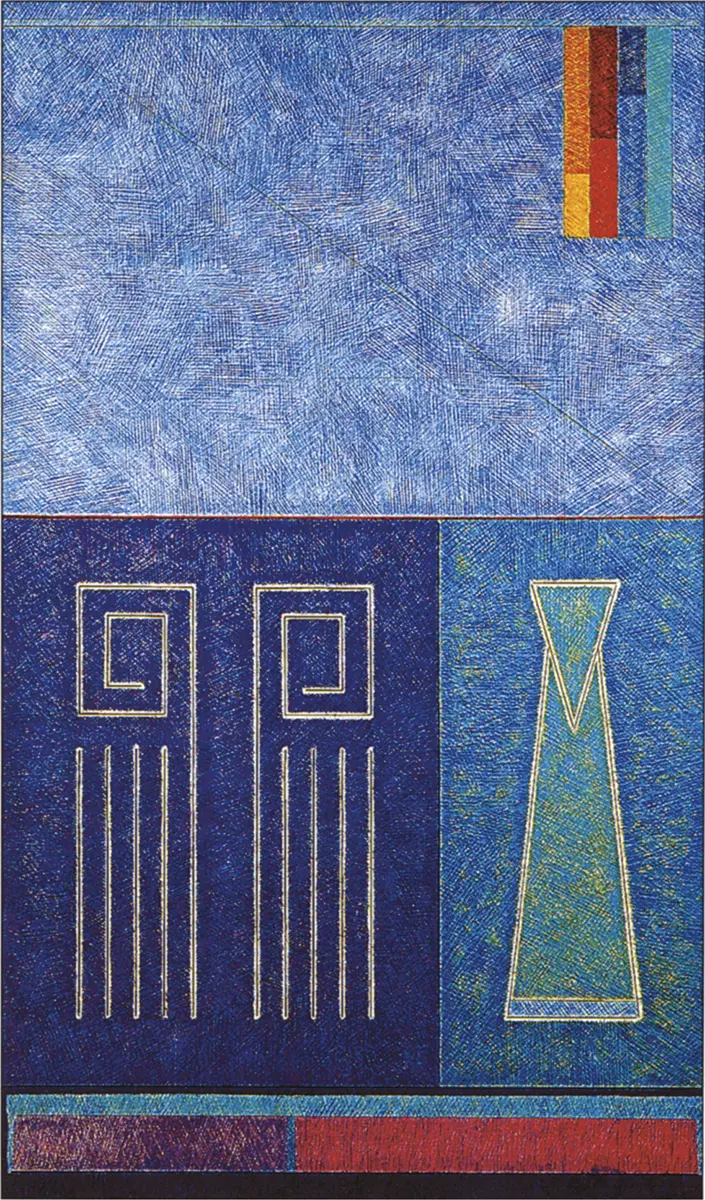
Thus did he also begin to associate the change of more saturated, more primary colors with the spontaneity and decision of the color settings of popular artistic manifestations like ponchos and blankets. The link to textiles was highly significant since it allowed him to sense that here lie the most genuine possibilities of altering the gaze and conceiving a way of feeling and thinking that was not European.
From that moment on, the artist began to use names of indigenous origin: Haynú, Quetral, and Chamal, emphasizing the meeting point between his investigation into conceptual art and his need to include entities that connote place.
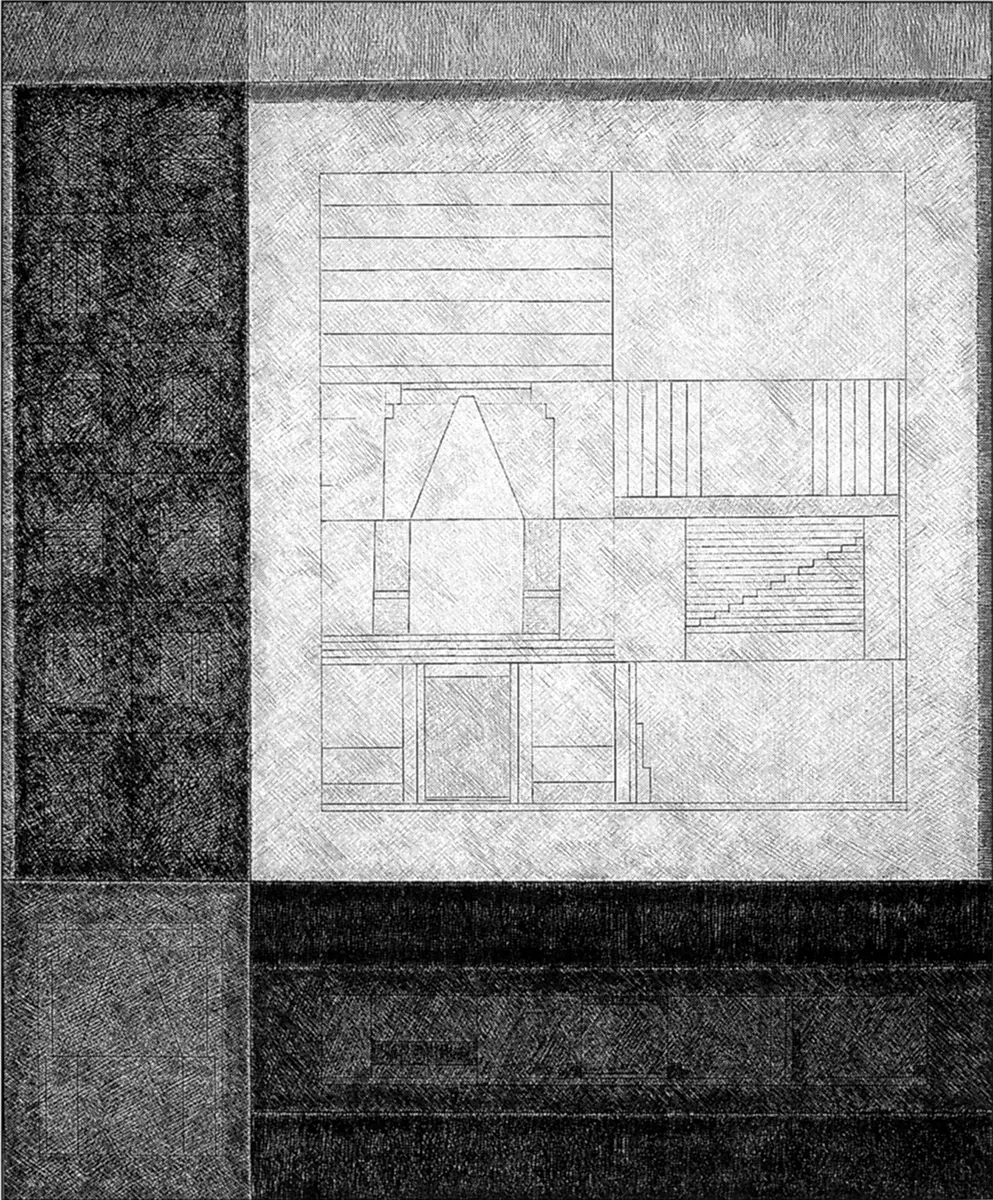
His in-depth analysis of the relationship between the elements of geometric abstraction and order—a geometric order of signs charged with indigenous symbolism—takes him to exalt sensorial stimuli in his paintings. Puente finds this work, which he calls “the subject of matter,” best suited for distancing himself from Greco-Roman and Renaissance naturalism which are based on the human figure. “Painting ideas disconnects us from the sensible, tactile relationship established with the matter.” Because he feels painting is a visual, sensorial phenomenon, he has worked with different supports (canvas, paper) and he has realized objects with different materials, such as feathers. His point of departure is his familiarity with those beautiful feather pieces created in the pre-Columbian era of America, and in the America of today, especially in Brazil, where he was able to see the feather art of collectors.
He shares that concept of Latin America’s ability to personify a different and autonomous tradition with César Paternosto, another Argentine painter with whom he lived in the United States, which he has made his home. Paternosto has written a book in which he points out that Henry Moore, Giacometti, Josef Albers, Isamu Noguchi, and other great contemporary artists were inspired by preColumbian art.2
This position taken by Puente and Paternosto is what justified their incorporation into the show The Southern School: The Workshop of Torres-García and his Legacy, organized by the Archer Huntington Gallery in Austin, Texas. That exhibition was based, as is well known, on the manifesto published by Joaquín Torres-García in 1935, one year after his return to Montevideo. In that publication, the author proposed the inversion of the South American continent with its southern tip pointing northward.
That attempt by Torres-García to reposition South America within the context of Western contemporary art has spawned not only the students from his workshop but also protagonists of River Plate Concretism, as well as Puente, Paternosto, and other artists who relate to a visual language based on the synthesis of elements of pre-Columbian art and contemporary languages.
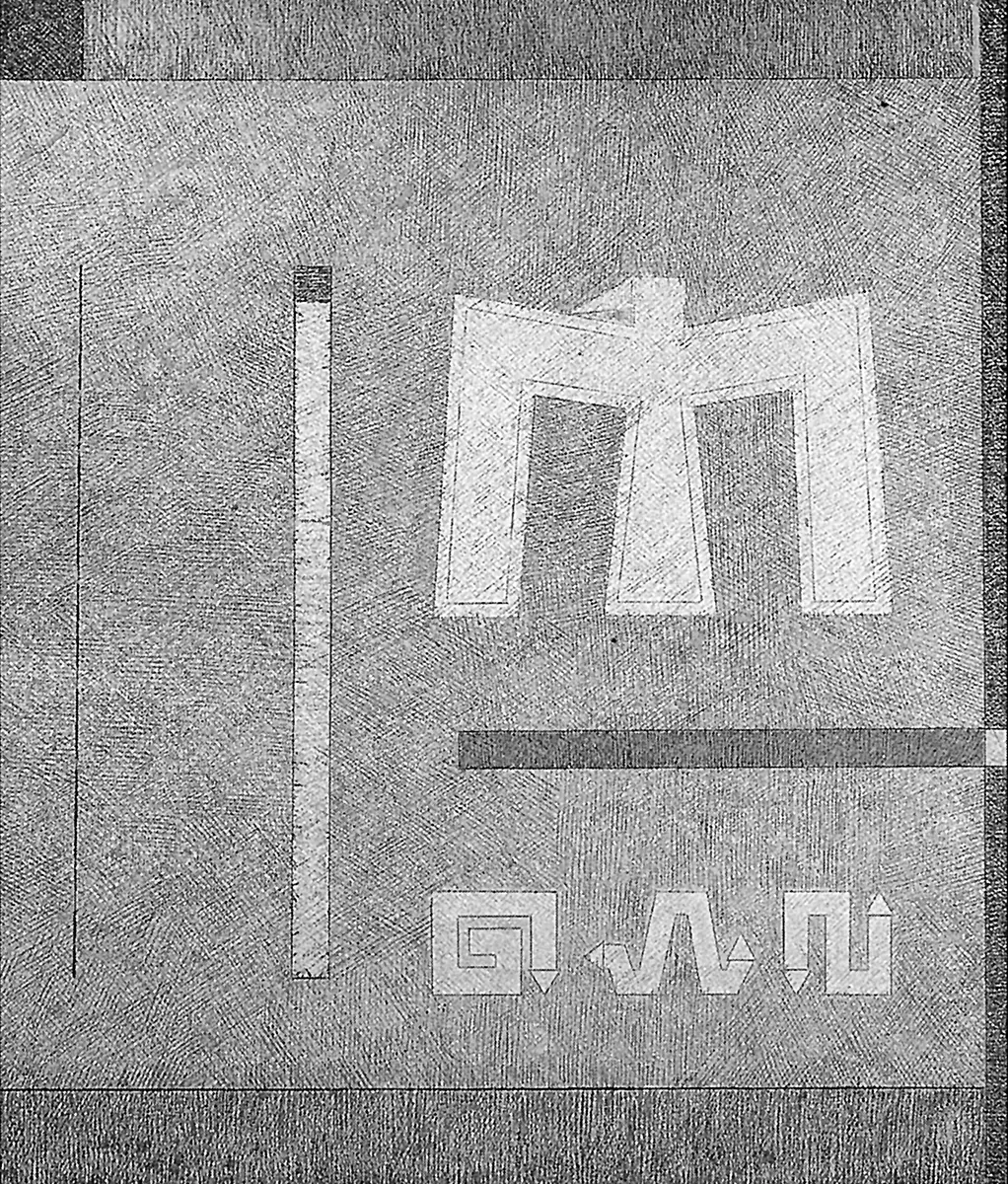
Mari Carmen Ramírez writes in the catalog: “To a large extent, the Southern School owes the work of these two artists and their followers to the fact that they were able to overcome the destiny of the Academy and were able to reaffirm their importance for contemporary artists”.3 She later analyzes how Paternosto and Puente, in spite of the conceptual affinities between their first works and those of Torres-García, journeyed through Minimalism and geometric abstraction before becoming aware of that link. This search was, to a certain extent, the backbone of their pictorial praxis and their reflexive work, and it gave them a decisive orientation.
With this process of recovering primitive forms, they entered into a larger current of radical criticism of Western, technological, and materialistic society.
“The reductionist simplicity and the gleaming character of Paternosto’s monochromatic series, and the reference signs in Puente’s pictures, are aimed as a last resort to imbue the composition with the same aura it had in a period in which technology and current materialism did not exist”.4
It is something like trying to recover the magical dimension that art had for these primitive communities. Puente’s austere and ascetic line of work specifically connects him to Andean cultures and distances him from the exuberances of other MesoAmerican cultures.
This position relates Puente to previous searches in Argentina, like that of the architect Ángel Guido, who in 1930 had already written about the indigenous artists who “had introduced a geometry, an autochthonous linearity in open pictorial, confusing, linear forms of Spanish baroque architecture.”5
Guido’s ideas are connected to the entire movement of the indigenous claim of the ‘20s and ‘30s that encompassed all of Latin America and which found sharp intellectuals who reflected upon the Latin American cultures in the Mexican José Vasconcelos, in the Argentine Ricardo Rojas, in the Peruvian José Carlos Mariátegui, and in the Bolivian poet Franz Tamayo.
That interest in the Latin American identity that is profiled “as the most creative and sustained current of Latin American art”6—as Álvaro Medina says—seemed to vanish when modernist rationalism erupted with subdued force. Thus, that line was retaken with particular vigor and depth with Puente and Paternosto, uniting with Torres-García’s demand and blazing trails to other artists like Alberto Delmonte, Corujeira, Elizabeth Aro, and the sculptor Belcic, who lives in Mexico.
Puente and Paternosto had worked together since the very beginning in the city of La Plata where they made up the group SI along with Dalmiro Sirabo, César Ambrosini, and Juan Antonio Sitro. In 1964, Puente and Paternosto presented a show in Buenos Aires called Nueva geometría (New Geometry). This exhibition—realized in the now historical Galería Lirolay—was introduced by the critic Algo Pellegrini, who baptized their way of working as “sensible geometry.” Pellegrini wrote the following: “To the impossibility, to the harshness, to the impersonality of traditional concrete art in its geometric version, these painters oppose a geometry of the personal in which the trace of the creator, his particular sensibility, leaves its mark. The geometric figure ceases to be an active element and becomes only the passive support on a true stage—a neutral stage, so to speak—on which the true characters of the painting act: color and texture. The annulment of geometry’s dominant activity is obtained through the maximum simplification of the plastic anecdote and by the subordination to an almost strict symmetry. Then what stands out is the activity of color, offering itself in a mobile way through the opposition of strips of different colors inside the forms themselves”.
When they showed their work together again in Buenos Aires’s Galería Bonino in 1966, the Argentine critic Jorge Romero Brest, somewhat disconcerted before their work, commented that they had introduced “a new genre of a piece of art that looks like a painting but is not a painting, it looks like an object but is not an object,” a “portable mural,” as Greenberg himself said apropos of some of Pollock’s paintings.
The pieces in question were canvas stretchers with forms usually called shaped canvas, and structures that were called three-dimensional paintingobjects. We stand before a stage of Puente’s work called Chromatic Geometry in which color is the protagonist, a stage that would have to be continued with chromatic structures that seem to break free from the wall and invade real space.
In 1967, Puente collaborated with Paternosto, Sirabo, Sitro, Ambrosini, his aforementioned colleagues from the city of La Plata, Gabriel Messil, and Enrique Torroja in an important show at the Museum of Fine Arts in Buenos Aires. The exhibition was called Visión elemental (Elemental Vision) and was accompanied by a text written by the artists themselves as a sort of manifesto.
The following is an excerpt from that text: “We work with volumetric or JI at forms that are simple, concise, large, and round. The pigmentation applied to these forms, integrally or by zones of opposite or similar tones, gives rise to the “activation” of the planes or volumes. This activation possesses a convergent double meaning, an unchaining of the physical act of color as a stable sheet, and an accentuation of the material opacity of a solid. To paint with flat, homogeneous colors means, essentially, the decisive abandonment of all illusionist tradition. Complex structures are thus set aside. The positional relationships and interaction with simple elements characterize for each case the state of physical-chromaticspatial tension that each one of our works proposes. In short, we understand that these objects are self-sufficient ... They do not demand any complementary intellectual interpretation, for they are visual nature, or rather, products of the creative vision”.
In that show, Puente began to carry out a theme that would center his concerns for quite a while: programmed color and its relation to the support. His work distinguishes itself from orthodox Minimalism; his pieces are penetrable structures placed on the floor, made up of equal modules with a determined chromatic articulation. Before leaving for the United States as a Guggenheim Grant recipient, he still participated with his works of these characteristics in the Galería “El Taller.”
When Puente arrived in the United States in 1967, his work already contained a conceptual element exemplified by his systematized use of color. The color was applied to the modules with no decorative intention or emotional content, but rather in accordance with rigorous rules. Puente took a tone, for example, and he used it in accord with a programmatic scale of values.
The first group show in which he appeared after his arrival to the United States was titled American Artists, which took place in the Delaware Art Center in 1968. In that exhibition, the space requirements forced Puente to place his series against the wall. But in Más allá de la geometría (Beyond geometry), and in a show at the Paula Cooper Gallery in New York, the pieces were placed in line on the floor, as per the artist’s original intention. Programmed color in sculpture had not been seen before in the United States, nor had works that projected themselves toward a third dimension. In 1969, Puente collaborated in Grupos, a show organized by Lucy Lippard which took place at the Gallery of Manhattan’s School of Visual Arts. For this exhibition, Lippard invited the artists to experiment with certain restrictions. Puente’s contribution was atypical since the conceptual element dominated his work. The piece was made up of a series of photographs accompanied by a text that referred to the time-space relationship established in the photos.
This experiment was not completely dissociated from his other activities, for his modular units were often accompanied by sketches of measurements, details, and fragments, giving the viewer an idea of how he had composed the work. In the show at New York’s MoMA, titled Information, Puente had the opportunity to take his ideas to greater extremes. He offered a sort of illustration of conceptual theory, made up of glass tubes with pigment, bottles with liquid color, modular elements of rigid and bland materials, and a text on the grammar and syntax of color and the rules for its use.
Among the artists who collaborated in Information—which was organized by Kynaston McShine—were Vito Acconci, Michelangelo Pistoletto, Hélio Oiticica, Yoko Ono, Robert Morris, Richard Long, Sol Lewitt, Joseph Kosuth, Joseph Beuys, and Carl Andre. This irregular mix, in which conceptual art seeks to embrace an infinite number of proposals, was important for its scope and it showed the complex situation of the art of the ‘70s. For Puente, as Fermín Fevre has said,7 conceptual art was more a point of arrival than a point of departure.
Shortly after leaving the United States, Puente collaborated in the shows El espacio del Hombre (Man’s Space) in Caracas, Venezuela, and “Four Latin American Artists” at New York University.
Upon his return to Buenos Aires, he began to work with squared and rectangular forms in two dimensions, developing an investigation that underscored the importance of mathematically armed reticles whose bases lie in modules that repeat themselves, thus forming a weft-like color that articulates according to its own syntax of tone-value-shade.
If we add to these elements the importance the artist gives to the act of craftsmanship, to matter, and to the act of making as fundamental tools of the artistic praxis, we find Puente resolutely set on the right road in his Americanist pictorial discourse.
From the very beginning, Alejandro Puente situated himself within a geometry that went beyond the bare and succinct modernist rationalism. His cognitive eagerness led him to encroach upon the art of systems in order to carry to extremes a rigor that he has never abandoned, and to value matter and all that has to do with dialogues between materials and their treatment as a valuable enrichment that is both sensible and sensorial. His inquiry into primitive American art and his ability to combine its image with contemporary geometry are linked to an impeccable achievement, making him a notable figure in the panorama of current Argentine art.
NOTES
1. Alejandro Puente, paper presented at the conference “La importancia de América” (The importance of the Americas), University of Morón, Argentina, 1989.
2. César Paternosto, Piedras abstractas. La escultura inca. Una visión contemporánea [Abstract stones: Incan sculpture: A contemporary view] (Buenos Aires: Fondo de Cultura Económica, 1989).
3. Mari Carmen Ramírez, “La Escuela del Sur: el legado de Torres-García en el arte latinoamericano” (The Southern School: the Legacy of Torres-García in Latin American Art), in the catalog La Escuela del Sur: el Taller de Torres-García y su legado (Austin: Archer M. Huntington Gallery, 1991).
4. Mari Carmen Ramírez, Ibid.
5. José Emilio Burucúa and Ana María Telesca, “VI el arte y los historiadores,” in La junta de Historia y numismática americana y el movimiento historiográfico argentino en la Argentina (1893-1938) II (Buenos Aires: A.N.H., 1996). The Ángel Guido quote comes from Euríndia en la arquitectura americana (Rosario: Universidad Nacional del Litoral, 1930).
6. Álvaro Medina, “Arte latinoamericano y arte indoamericano,” (Latin American art and Indo-American art), ArtNexus 6 (1992).
7. Fermín Fevre, Puente (Buenos Aires: CEAL, 1981).
NELLY PERAZZO
President of the National Academy of Fine Arts, Argentina. Advisor at the Ministry of Relations, Foreign Trade, and Culture.