
In 1995 Arturo Montoto presented an exhibition titled Provocations, which was the first indication of a work that is now synonymous with his essentially pictorial development. At that time, the "provocations" operated at several levels of interpretation. One was undoubtedly the reference to, or rather the undeniable confirmation of a vocation which, at least in appearance, seemed to follow certain standards, formulas, and stylistic archetypes, the principles of which are emblematic of the academy. The other was —not without irreverence— the selection of a narrower path of entry into the national art scene, in preference to the easier recipe of making use of what was happening in the artist's environment. It is worth remembering that 1995 was a year that still shunned the retina.
Although that "provocation", as I noted in the exhibition catalog at the time, took the form in the exhibition of an exquisite technical finish, it also subverted the ideo-aesthetic "treatises" of the art schools and modified the genres from the artist supposedly set out, thus making the work one of juxtaposition, counterpoint, and ambiguity.
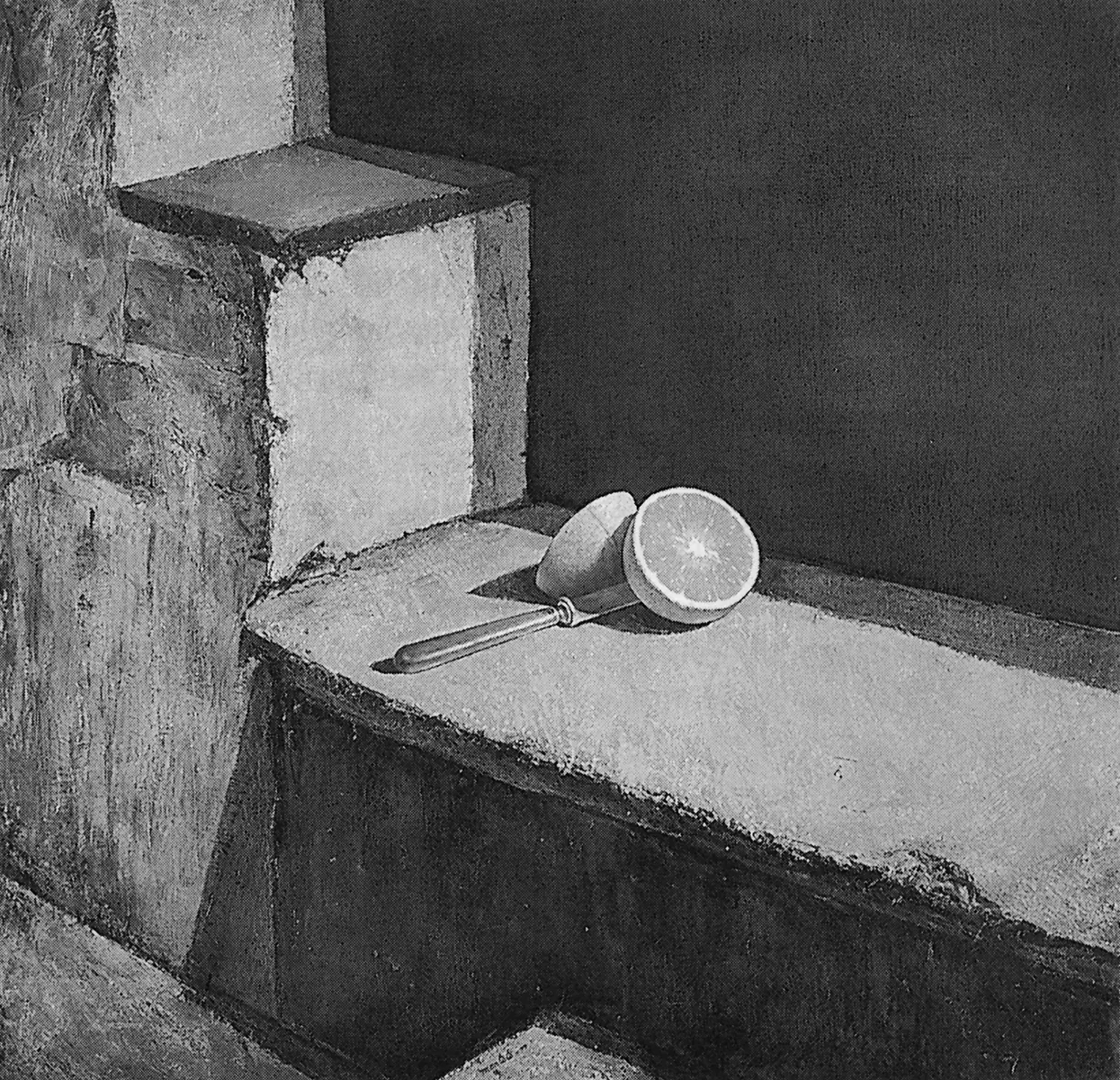
Since then, Montoto seems to have progressed far along his path. The tectonic structure and the architectural vision which previously made their presence felt, and which replaced the well-supplied support of fruits and objects of the typical baroque still-lifes, have now given way to volumes and even to new "artifacts".The spaces are less panoramic, contemplation becomes more intimate (like looking inwards through a window), and the simplicity of the image goes beyond the representation of what is strictly necessary, encouraging an appreciative gaze. This we might call the surrounding vastness.
Despite the predominant role of the objects, there is no loss of interest in space, or in the specific "philosophy" emerging from its conception. The pictorial treatment of walls, columns, and steps is still evident, contrasting with the more "velvety" appearance of the "things". But now, in addition, tiny fragments of what might be backgrounds or containers of the more detailed motifs acquire a kind of independence; they could almost be extracted, like pictures within a picture.
In fact, the changes in the work of this creator of artifice have survived in a dialectal manner, without any convulsions, in a sort of balancing act. The mannerism, which now appears more abandoned, reveals with greater clarity the peaceful investigation of representation, while the artist continues to make use of solutions that respect the photographic base of his technique and the determined exploitation of theatrical scenography, baroque lighting, and the timeless appearance of the scene. However, in his fortunate encounter with already successful imagery, Montoto has not let himself be seduced by any precious variegation. His "scenes" speak of a noble sense of reason, they demand essential solitudes and satisfy states of mind; the artist has done nothing more than propose their quantum formula.
Despite the silence of the composition, the sense of strictness, and the solitude of the atmospheres and objects, we know that it was not always like this. The action has just ended or is about to begin; in passing, someone has left behind a trace of their presence. And if that were not enough, solitude is contrasted with the voluptuousness and fleshiness of the fruits, the formal asceticism of the objects and puppies, and the exquisiteness of the drawing that structures and profiles each form. In this sense, the setting is both abundant and full in its duality.
Works such as Garlic, The Cut, and An old story reveal the artist's use of constructed light with drastically reduced limits, the presence of architectural fragments, like the restrained profiles of eternal experience, as well as other elements whose textural qualities establish a counterpoint with the contrasts within the "set". Qualities, textures, light, and shadow enhance our sense of pleasure. We cannot but give way to the tenacity of these deceptive but justifiably inviting divagations, enjoy the bountiful freshness of a coconut preferred, the almost erotic gift of a pumpkin, the exhibitionist internal perfection of an orange or the ordered brilliance of corn on the cob. There is no shame felt in this desire to perpetuate the substance and realness of second nature.
What might be seen as a painting of the obvious is in fact the result of tricks and ironies, based on lessons well learned from various sources and a simulacrum that invites us to see what is not, and to be what we do not see. It is almost a metaphysical painting. Its intention is more modest and more satisfied than what it is in itself, an undermining of the sense of complicity we feel with things we always long to enjoy because it deals with the vanity of the existence of art itself.
HILDA MARÍA RODRÍGUEZ ENRÍQUEZ