The Museum of Contemporary Art of Caracas recently presented a retrospective exhibition of work by the painter, teacher, and museographer Manuel Espinoza, work which is characterized by the precision of its plastic language, the repeated dialogue and communication with nature, the presence of both drawing and painting and the general use of medium formats.
Manuel Espinoza was born in I937 and his relationship with the plastic arts dates back to his student days, in the mid-1950s. His first one-man show was held in 1960 at the Museum of Fine Arts. When we look at his work in this retrospective, which clearly illustrates his range as an artist, it is surprising that specialized art critics in Venezuela have so often overlooked the name of this artist.
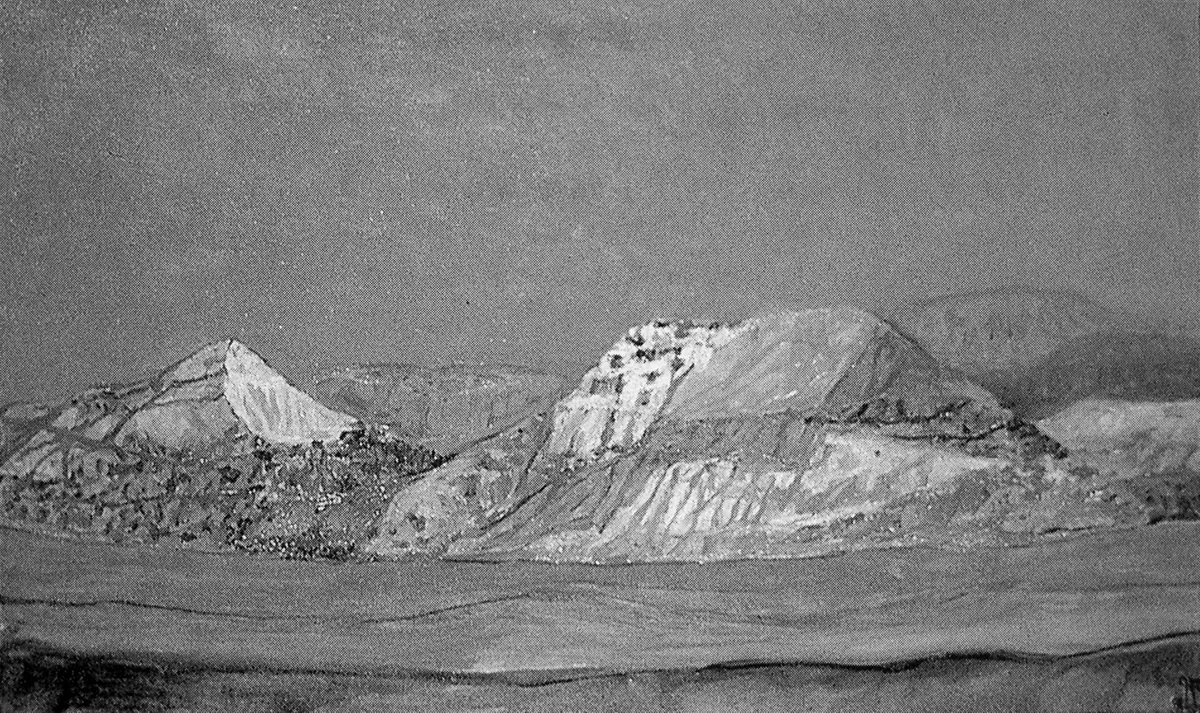
It is a work of great coherence and quality and reflects the artist's interest in nature —for example his studies of dragonflies, trees, flowers, and landscapes. This theme, with hundreds of parentheses, such as his figurative period from the 1960s or his geometrical and design work of the 1970s, is his most persistent and the one which finally serves as the basis for his best work. The theme of exuberant flora and sensual nature is one which symbolizes a nonschematic idea of Latin American painting, which cannot be reduced merely to a kind of surrealist or "revolutionary" folklorism but is a very good painting of a cultured kind.
The landscape genre would seem to be condemned by the radical postulates of modernity. But if this were the case, it would only be at the anecdotal level, and would not concern the intrinsic nature of the language and content of the work. Landscape as such is a theme and a means of expression which are still valid in the renewal and development of humanism. This is the message of works that seem to go against the current, such as the best of Obregón, Antonio Barrera, or our own Aponte Istúriz or Pujol. The painting of Manuel Espinoza belongs to this investigation of codes and expression in terms of landscape. The artist has made use of what he has learned, his experiences, and his own language and embodied them in his very concise periods over a very balanced career.
His excursions to the open countryside have led him to dry places with only relative artistic qualities; these demanding features have enabled him to find his own voice. His scenes are rich in substance, with contrasting kinds of light, a restricted range of elements, and intensely graphic features. These compositions are full of strong color surfaces, climates on the point of becoming storms, sunsets of extraordinary beauty, and with little narrative content; other works seem to signal a stripping down of the natural motif, with a preference for language reminiscent of the visual patterns of the oriental script.
This exhibition confirmed that the maturity of this creator is the result of a process of constancy, of a thousand days spent in front of a tree, or a sunset, or observing the many changes of color and form in nature. The artist's hand is very evident in all his works, which persistently reflect certain expressionist convictions. In the last series of landscapes, there is a sense of analysis and structuring in the fields and mountains, In Praise of Silence creates a kind of modulation in the artistic language. At this point, the landscapes become a kind of still life, or more exactly, an expression of creative activity.
JUAN CARLOS PALENZUELA