
Miguel Rio Branco's survey of photographs at the Rena Bransten gallery shot in various tribal regions of Brazil ranges from 1979's Dog Man to 1993's Fire and the Lioness, proof in itself that Rio Branco has been steadily mastering his craft over three decades, manipulating light when he needs to or patiently, stealthily waiting to take advantage of the sun's beneficent twilight glow. Rio Branco is a film director's dream, an uncanny cinematographer of the natural world who easily coaxes drama out of inert objects when the narrative subsides or falters. Extreme close-up, tight framing, and aerial views break up the monotony of much documentary photography that otherwise seems staged. Color, as the photographer well knows, is effective as well.
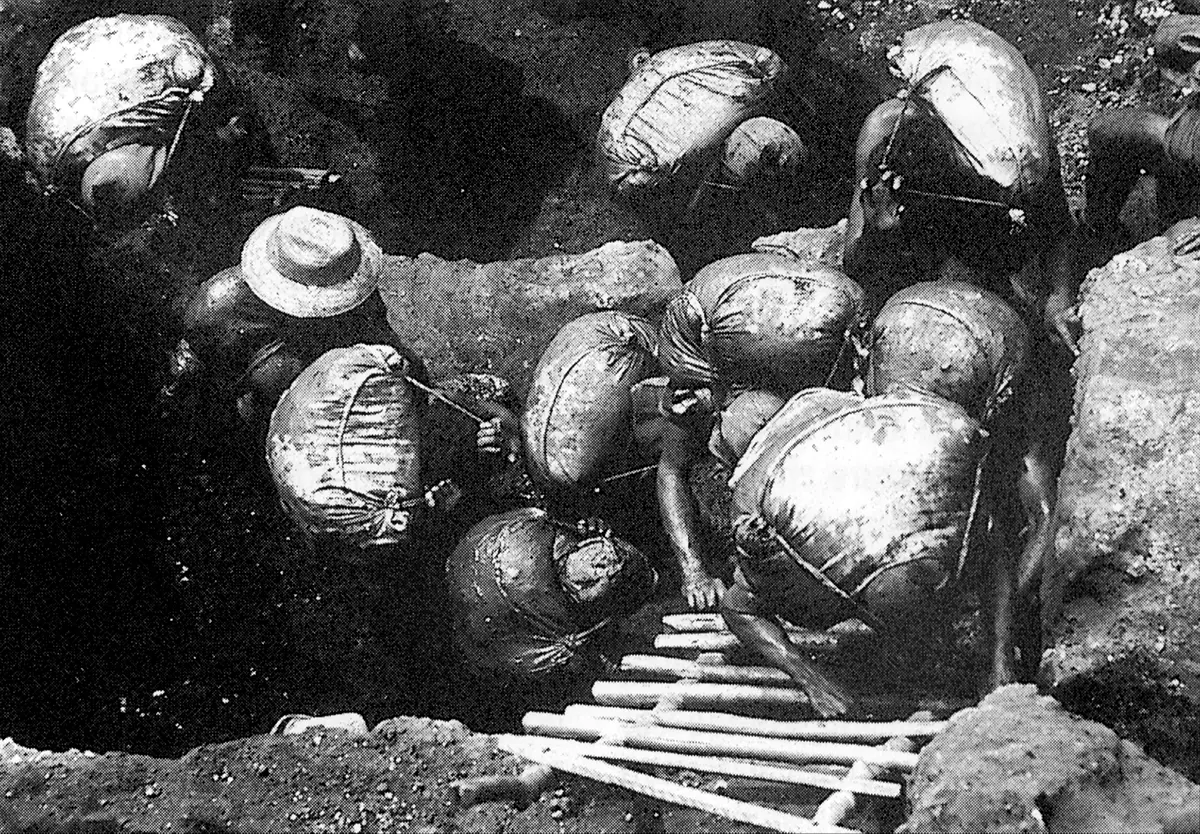
That Rio Branco effortlessly intuits these techniques to his advantage is clear, which only makes the Bransten gallery's statement that much more disturbing: "What unites the photographs and gives the viewers a sense of the rich complexity of Rio Branco's subjects is his use of saturated color to transform reality and vivify his oeuvre." Harmless enough when describing purely formal issues, but completely disingenuous considering Rio Branco's subject matter includes soot-covered day laborers emerging from a cramped quarry, enormous bundles straining their hunched backs, or barefoot street urchins playfighting in a dingy back alley. In the case of Striptease Forain (1986), a soft-focus shot of a topless dancer stepping out of the cool, red glow of shadows, claiming that saturated color transforms her reality, as if she was role-playing in a fairy tale, seems irresponsible at best.
If Rio Branco positions himself purely as a documentary photographer attempting to engage our sympathies, or at least a vague liberal sentiment, through the camera's unbiased, and in this case, unobtrusive eye, that is one thing. But to assert that camera effects-close-ups that abstract the human figure, or shots at dusk of children that create affectless silhouettes, weightless wraiths suspended in motion though pleasing to the eye, are part of an entirely different tradition. The beauty here does not for a moment redeem the lives of any of the subjects in Rio Branco's photographs nor should it redeem ours. On the contrary, it initially suspends our compassion even as it begins to gloss over the narratives of each individual, concealing rather than drawing us into the drama of their struggle. That the struggle Rio Branco depicts could as easily be relocated to Eastern Europe, Africa, or anywhere else in the developing world seems to reinforce the notion, unfairly attributed to contemporary Latin American artists, that poverty as a subject matter is an effective, if cynical strategy, especially for Western audiences who are primed by a sensational media to receive these images with knee-jerk outrage, or even more dubiously, pity. It's unfortunate that Rio Branco wants to have it both ways —rapturous moments of formal beauty, entwined with a plea for understanding— since his subjects possess a dignity of their own. To exalt that dignity through beauty only seems to mock it.
DAVID HUNT