On 4 May 1999, the Museum of the Americas inaugurated a comprehensive exhibition of work by Rafael Colón Morales which clearly illustrated the artist's virtuoso qualities. In expressing these themes, Colón Morales makes use of his broad knowledge, ranging from classical standards to unusual kinds of resources. The artist's experimental nature has led him to develop characteristic kinds of painting which exploit the chemical properties of acrylic polymers in a language that gradually reveals the secrets of the materials used. This exploration of the possibilities offered by specific elements is probably the reason for his use of a wide range of themes and images which, although distant from the other, are linked by the strong stylistic treatment. The unity of this exhibition was the result of the compatibility of the various modes of the various pieces, all of which offered the spectator a rich journey through the spirit.
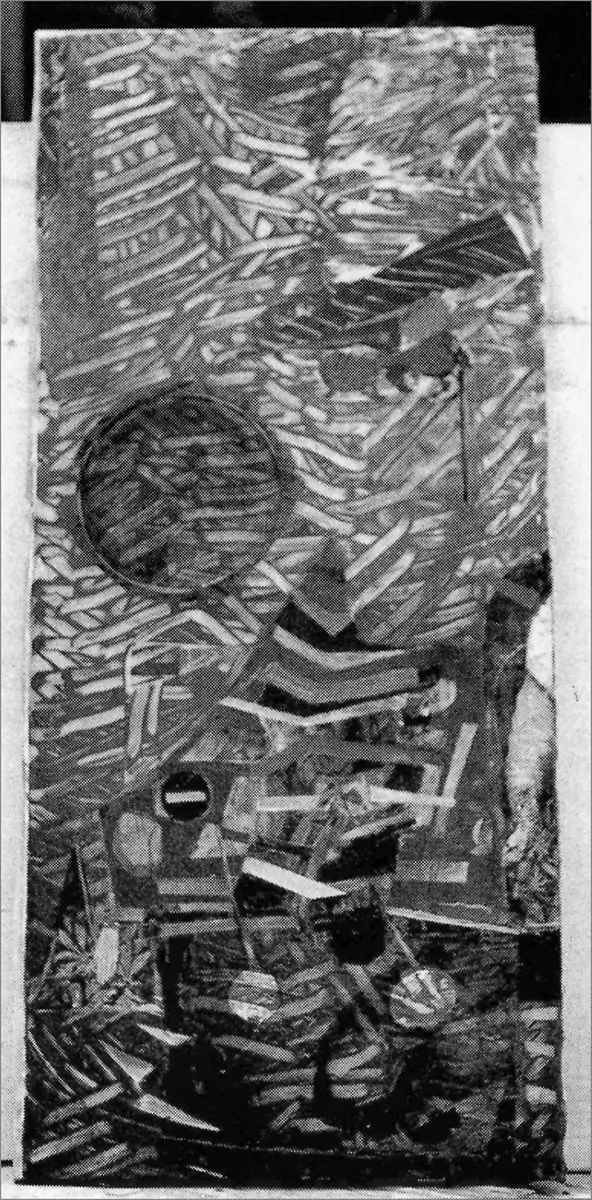
Colón creates scenes full of pulsating content, the product of the anxious investigations characteristic of his inventive art. Open and secret elements reach a kind of boiling point in his work, phantasmagoric elements which seem to be fighting to break out of the normal scale of things. The ordinary optical dimension ceases to exist here, resulting in the creation of internal worlds. Colón Morales thus stimulates the sense of the natural, intensifying it and transforming it into something improbable. This feature might also be due to the fact that in general, the works seem to be in the throes of some kind of transition from the objective to the subjective dimension, by means of elusive effects which are magnificently achieved through aesthetic principles. At the same time, these visual effects are enhanced by the gelatinous glazes created by the artist, with the sequences of the creative process being identifiable by spectators familiar with his work. The textures of the skins often reveal the steps taken to achieve the desired effect, with the traces of the inventive ritual remaining suspended on the membrane-like surface of the acrylic. The spectator's gaze is thus encouraged to go beyond the normal limits, with the "gel" also allowing the sequences to be projected from different levels. This stratification in the composition enables us to engage in speculations about the way in which the artist managed to give the canvas its definitive appearance. In this way, Colón Morales carefully places each element at the respective level, so that the spectator's eye can identify the internal movements which are struggling to emerge and play a major role. The pictures also contain figures which seem to move around in elusive mists, like chimerical "extras." They are hidden behind a veil of uncertainty, suggesting links that are both causal and casual. The content is therefore one of vehemence and intentionality which speak of a cosmos both real and unreal. What is interesting is the way in which the artist allows our sensors to capture both extremes. In these canvases, existence is merely the starting point for the exploration of realms on the edges of the material world. The pleasure of being able to identify these esoteric realms is one of the challenges posed by the work of Colón Morales.
I fully concur with Osiris Delgado who has said this artist is able to identify the essential nature of the phenomenon of life. Perceptions emerge in which slight differences create an undeniable artistic identity, with the material references being reinforced by the freedom of interpretation. The artist's intention seems to be to allow the spectator to participate in the imaginative possibilities which exist in the most intimate realms of emotions.
JOSÉ ANTONIO PÉREZ RUIZ