
Ricardo Mosner (Buenos Aires, 1948), who has lived and worked in Paris since 1972, is a contemporary artist. By that I mean he is really an artist of his time. Having never wanted to restrict himself to just one activity, he has since 1970 developed his unlimited curiosity, without any preconceptions and in a spirit of unfettered freedom, in the theater, video art, and publicity posters as well as in radio and illustration. All of this has been achieved without compromising the central passion and driving force of his energy: his threefold activity as a painter, sculptor, and printmaker.
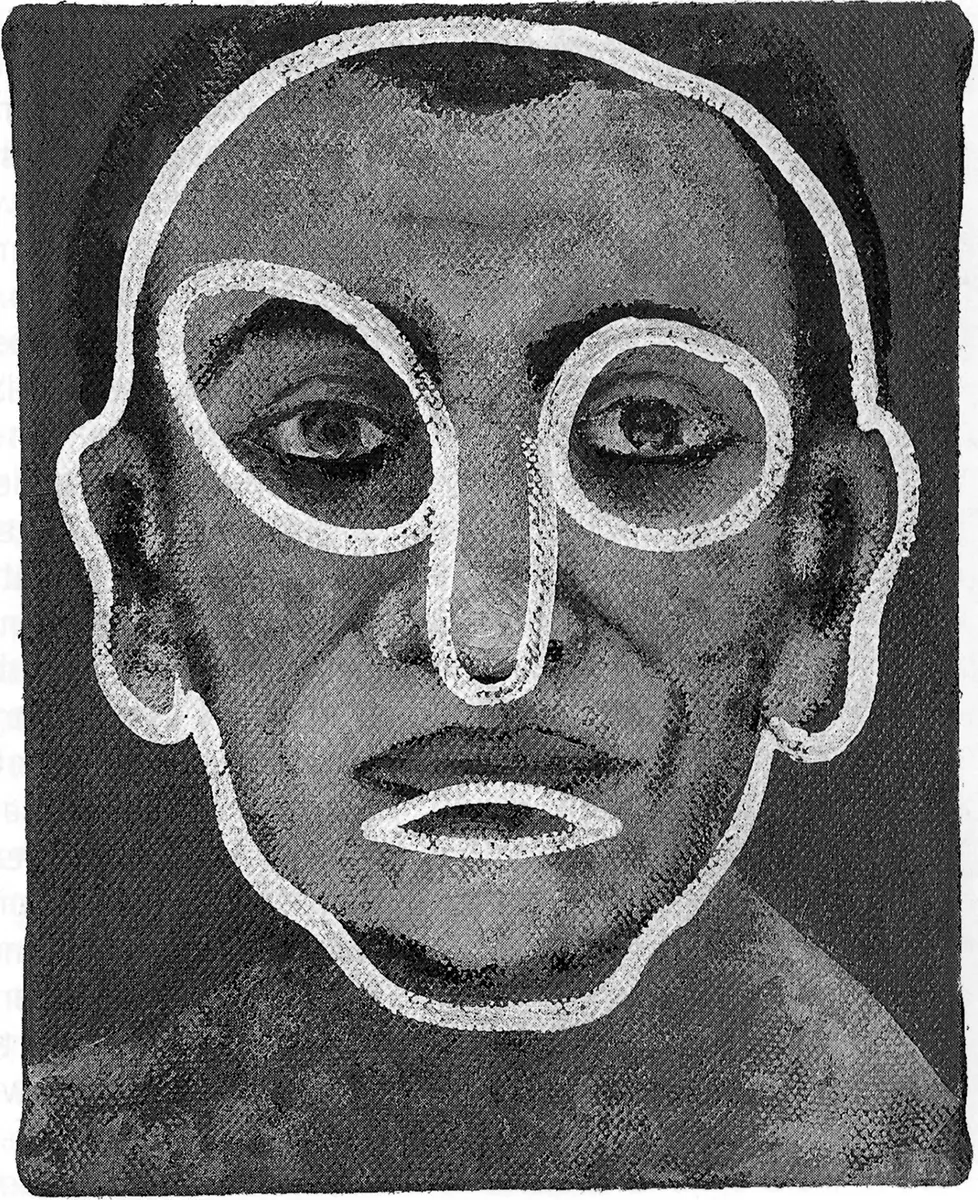
This versatility, which some might look askance at in the name of specialization (which often castrates) or a simplistic kind of identification, is part of his essential nature. A compulsive eater, in the purest Latin American anthropophagous tradition (Picasso or others, sometimes appear, as in Clover), Ricardo Mosner is nevertheless an artist full of obsession and unrest. His questioning of man's relationships with the world has resulted in his placing the human figure at the center of his formal and aesthetic concerns. As a pivot, pedestal, and principle of this essential questioning, the human figure is pummelled and kneaded, stretched and gathered together, cut into pieces, and opened up; yet it is always human. Reinvented with verve and mischievousness, it appears on the support of canvas, cardboard, iron, wool, wire, plaster, and paper. The pigments are worked to the maximum of their potential, with the use of gesture and a desire to experiment that allows Mosner to create an infinite register of attitudes, physiognomies, and characters. Without ever lapsing into repetition or routine, without wanting to stick with art brut or to restrict himself to just narrative figuration, Mosner prefers to linger on the fringes explored by artists like Baselitz, Clemente, or Lupertz, in the 1980s tradition revisited with humor and tenderness. His fondness for caricature reminds us of Antonio Segui in his use of this essential characteristic of Argentinean pictorial expression.
1999 has been a very productive year for the artist, who has had several exhibitions in France (Macon, Paris, and Avignon), commissioned a poster for the Avignon International Theater Festival, the publication of his first monograph by Editions Area, and his upcoming inclusion at the FIAC in Paris in September.
The recent works which he presented at the Lefor-Openo Gallery (oils on canvas and mixed media on paper) display the qualities which make up his rich oeuvre. Flirting with the comic strip, his art reveals a kind of bulimic ease and creates a joyful explosion of matter in which, as in the drawing, there is no kind of barrier or constraint. Within a stock of images of a sequential type, arranged into compartments in the manner of Torres-García, he presents anthropoid signs and invented words in a sort of dadaist collage (as in Bestivas and his Portraits, a series of six mixed media on paper). What is characteristic of and interesting about Mosner's work is that he does not disregard the famous libertarian adage of the poet: "Do what you please." Mosner's urban world is not organized into a framework as, for example, in the case of Segui, rather its disorganization is only apparent and is the result of what we might call its spontaneous generation. The face is deconstructed in order to reconstruct it better, in loops. However, this apparent simplicity is the result of a constant process of investigation and introspection on the expression of the body and the face, with special reference to the hands. The same fear of the void can be seen in the drawings and sketches in his countless notebooks, veritable interlace (or automatic writing) of organic bodies. The prolixity and proliferation of the characters (inks) which cover his notebooks are both the prelude to and alter ego of, his canvases where, in a different way but with no loss of continuity, he tightens the form and texture by seeking out the individual nature of the figure and its density. The men (or women) are alone in his pictures, without any context or iconographical trappings, without any possibility for the observer to identify a sociological or anthropological link (objects, nature).
The influence of dance and the theater, however, is present everywhere (as in The Three Nights and Wrapped, mixed media on paper, 1998 and 1999). Man is alone with himself and the gaze of the other. He is sometimes awkward and frightened, the body is massive, now barely sketched out, now very chiseled. Mosner’s skills in painting, drawing, cutting, gluing, and assembling make him both an artist and an artisan of pleasure and freedom. In the combined strength and weakness of the form and the “object”, nothing that is human seems foreign to him.
CHRISTINE FRÉROT