Writing in 1994 about his friend, the Brazilian-born artist Lygia Clark (1920-1988), critic Yve-Alain Bois expressed a hope that a North American museum would take on the complex task of presenting Clark's work, which isn't easy to simply display, as Clark had throughout much of career worked at creating situations, relationships, and psychological states as much as art objects. As Bois wryly put it, "Perhaps one day, on this side of the Atlantic, an institution will allow itself to take part in the game." Five years later, Bois is getting what he wished for, and more, as an exhibition at the Museum of Contemporary Art in Los Angeles, becomes the first show in a North American museum to include a large number of Clark's works, as well as the works of four other artists active, and until recently, primarily known in Latin America who shares Clark's interest in developing works and forms of art that are not just viewed or observed, but rather directly experienced, lived.
Organized by Riña Carvajal and Alma Ruiz, the exhibition includes Clark and fellow Brazilian-born artist Hélio Oiticica (1937-1980), both from Río de Janeiro, and both born into affluence that afforded them the luxury of pursuing their artistic visions full-time and the opportunity to come into contact with the artistic scenes, traditions and academia of Europe and North America. The other three artists in the exhibition, Gego (1912-1994), Mathias Goeritz (1915-1990), and Mira Schendel (1919-1988), all were born and educated in Europe and later immigrated to Latin America. Born in Hamburg, Germany, and educated in architecture and engineering in Stuttgart, Gego settled in Caracas, Venezuela after fleeing Nazi Germany in 1939. The Italian-born Schendel, a self-taught artist whose interests had been in philosophy and theology, also fled the unrest in Europe where she had spent several years in hiding in the former Yugoslavia and settled permanently in São Paulo after arriving in Porto Alegre in 1949. That same year, Goeritz, who was raised in Berlin, emigrated with his wife to Guadalajara, Mexico, where they lived briefly before settling in Mexico City.
While all five artists in the exhibition have in common exposure to Europe, and while their work shows clear influences of artistic movements usually discussed by art historians within a framework of a European modernist tradition dada, surrealism, expressionism, geometric abstraction, concrete poetry, and constructivism, they also share interests which only occasionally showed up in traces of European and North American art during the early twentieth century. Their preoccupations with experience and interaction wouldn't be embraced in the arts of Europe and North America until much later, in many cases, contemporary with and after Clark, Gego, Goeritz, Oiticica, and Schendel had produced much of their most important work. In particular, these five artists were fascinated by the possibility that art could not only reflect modern life or comment upon it, but also rather involve it and become part of it. As Oiticica wrote in 1966, this was an interest necessitated formulating a new role for the artist in which the artist, "understands his/her position not any longer as a creator for contemplation, but as an instigator of creations."
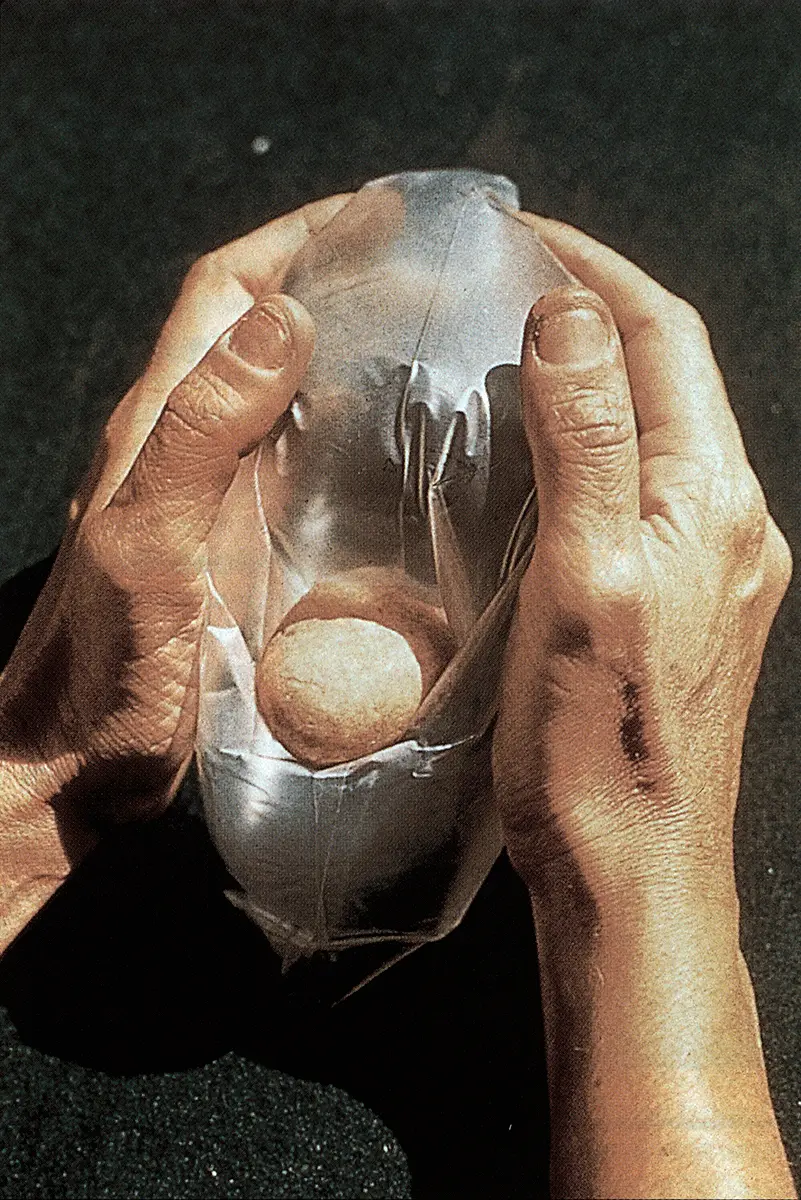
Though not offering a full survey of Clark's work, the exhibition does provide a solid overview of some of her most ambitious and innovative endeavors sea body of works began in 1966 which Clark grouped together under the title Nostalgia do corpo (Nostalgia of the Body). In these works, such as in Air and Stone, a piece consisting of an air-filled plastic bag which the viewer/participant must squeeze in order to move a stone resting on the bag, and Breathe with Me, a pair of heavy rubber suits joined by a rubber tube and intended to be worn rather than simply viewed, Clark sought to remove the roles of author and spectator and insist upon the art becoming collaborative, bodily and experiential. The exhibition also includes A casa e corpo (The House is the Body), an installation Clark created for the 1968 Venice Biennial to take viewers on a metaphorical trip through the female reproductive system.
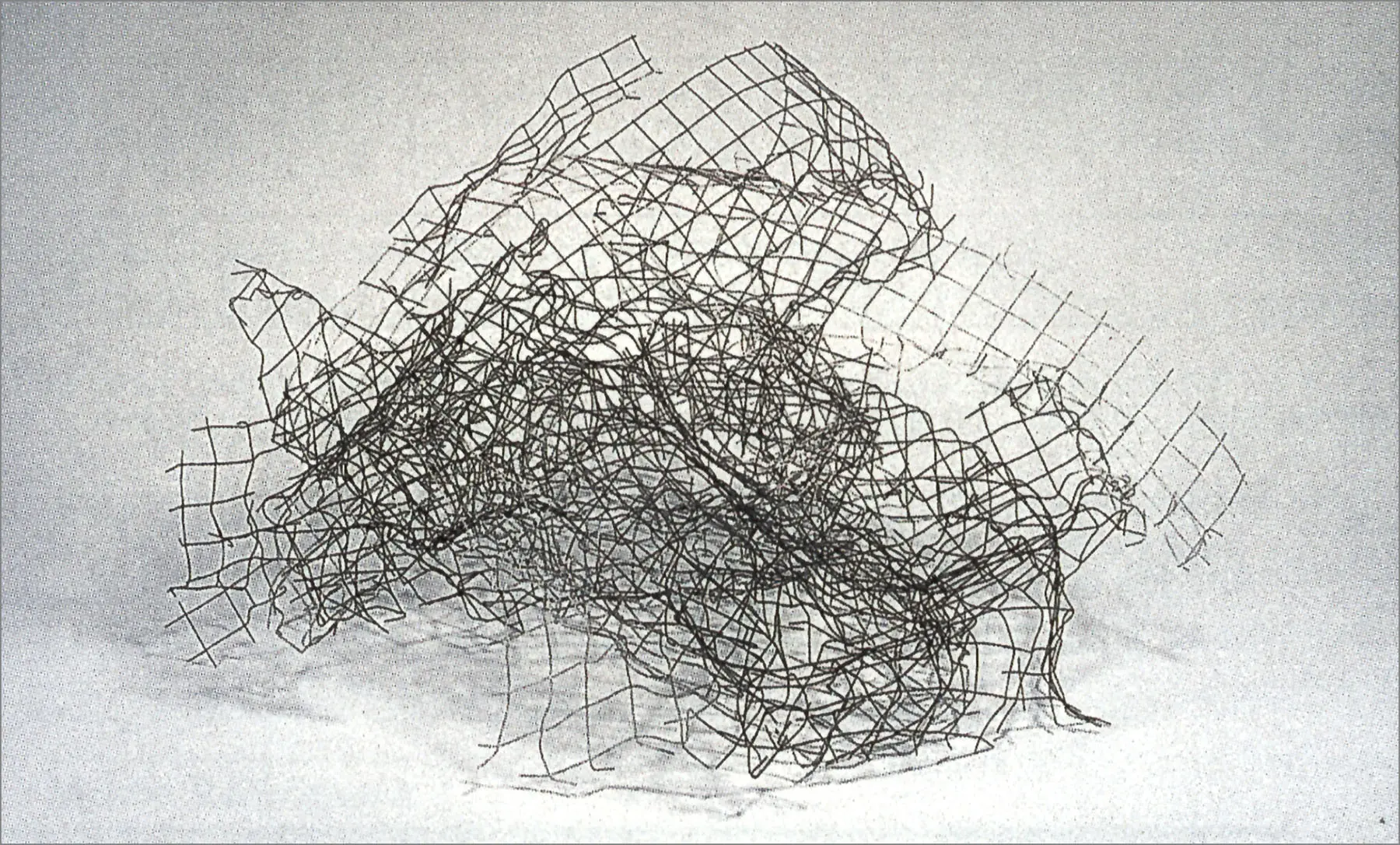
Gego, whose work was often site-specific, is represented in the exhibition by a grouping of sculptural works which, though not site-specific, were intended to affect whatever space they entered. These works were not created for the purpose of providing viewers with objects to contemplate, but rather to alter the sense of the space that both sculpture and viewer shared.
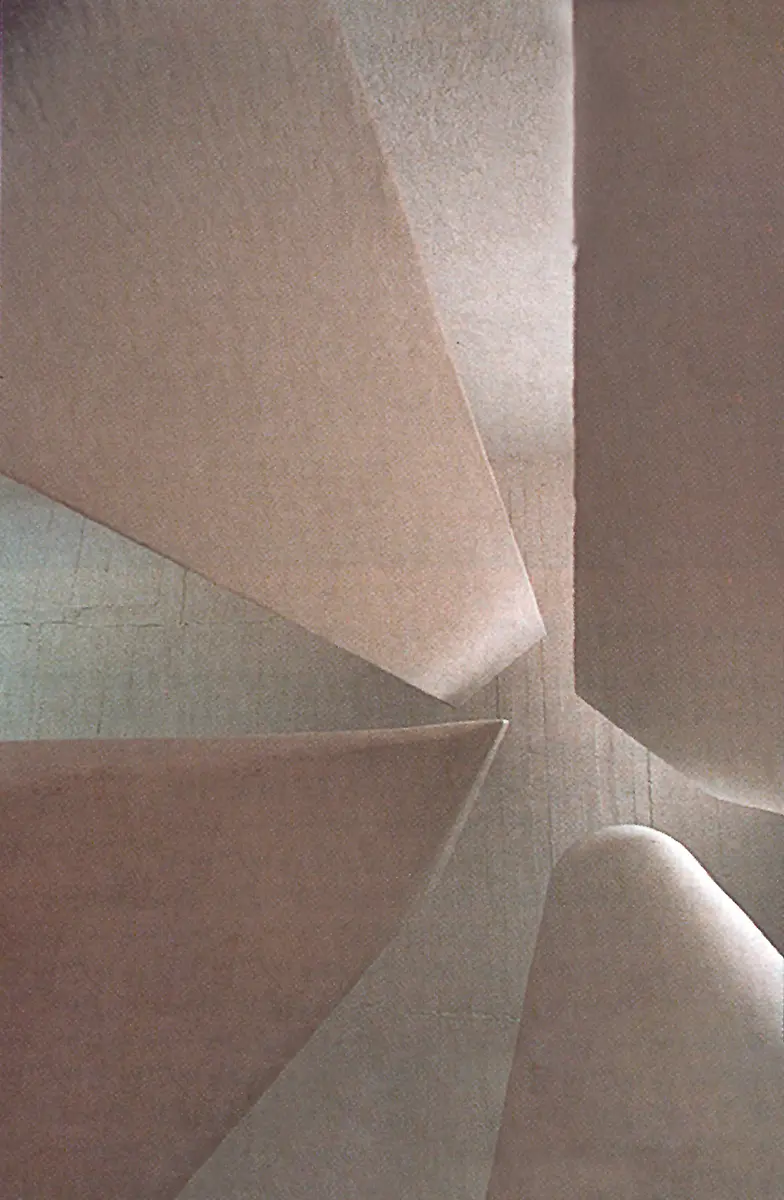
The exhibition captures the simplicity, elegance, and impact of the architectural/sculptural experiments undertaken by Goeritz in the 1950s with documentary photos of El Eco (The Echo Experimental Museum) and the Torres de Ciudad Satelite (Towers of Satellite City), a series of miniature tower constructions, and full-scale replicas of seven larger towers Goeritz constructed in his studio. These works stand as evidence of the tenacity of Goeritz, who was deeply inspired by Dada and the Bauhaus, and who favored abstraction and worked openly in opposition to both the heavily politicized muralism that dominated Mexican modernism at the time and the functionalism that permeated the new architecture he encountered in Mexico City. Yet this work is also the product of Mexico City, in that it was in this environment, where economic and cultural changes inspired the kind of debate that fueled Goeritz's experimental zeal, and where the need for architectural innovation in the face of rapid urban growth provided him with steady research material literally at his doorstep.
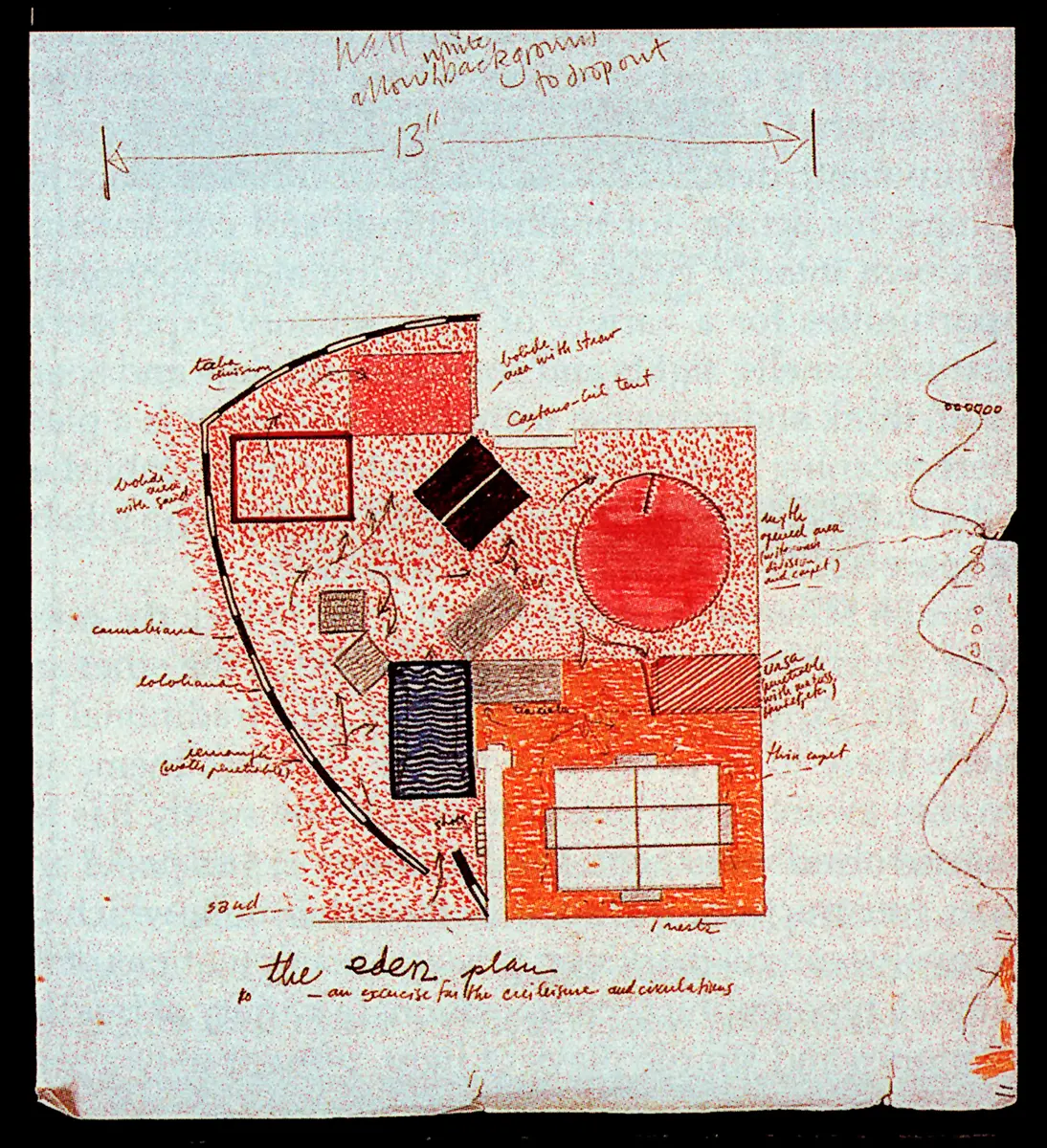
Oiticica, who was also interested in issues of space and architecture as they related to culture and the individual, is represented by documentation of an experimental setting, a sort of ideal psychological space that Oiticica proposed, and which is perhaps best described in the artist's own words. This special place is called, as one might guess, Eden, and it is a sort of school where students are their own teachers. Oiticica, who likened it to a taba (indigenous encampment), described it as "a kind of mythical place for feelings, for acting, for making things and constructing one's own interior cosmos." An environment containing opportunities for a variety of basic sensory experiences —textures, smells, sights, and sounds— and time and space to rest, think and converse with other visitors, it is a place where meaning is questioned, understood, and established by the individual and the group of individuals who inhabit the space.
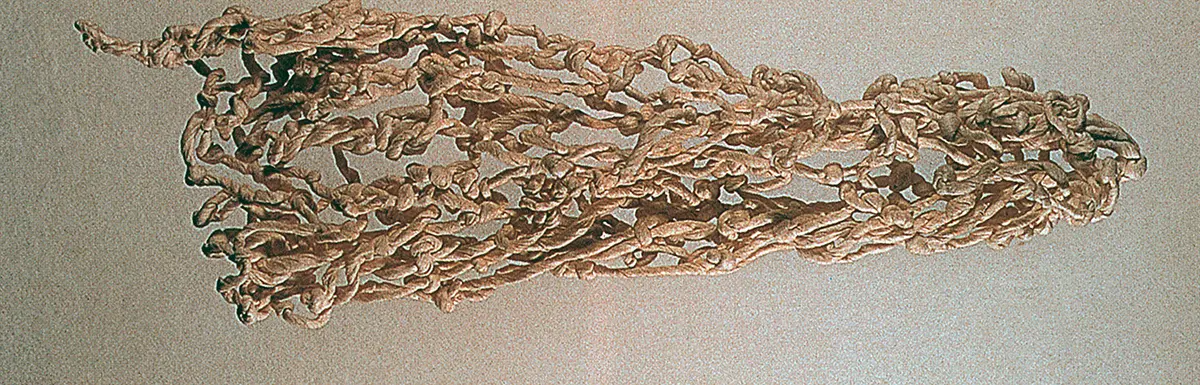
Though Schendel's works at first seem to lack the interactive dimension so apparent in the works of the other artists in the exhibition —seeming more like traditional art objects there to be observed— as one observes them, one becomes aware of the extent to which one subtly has become involved with them. The delicate works on paper and paper constructions included in the exhibition, which often involve careful markings, physical manipulations of the material, typographical compositions, a variety of binding techniques, and simple plays of light, present only a sampling of the thousands of such ephemeral works Schendel created. Through composition and construction, language use, and the actual scale and placement of the objects, Schendel sets a sort of poetic trap in which viewers who might at first have assumed a critical distance suddenly find themselves intimately involved.
The implication of this exhibition is that this new approach to how artists made work and viewed themselves as makers came about for these five artists and others more easily in a Latin American context where the influences of European modernism could be felt, but where artists had little stake in maintaining this modernism's trajectory down an increasingly narrow path. In fact, one well might argue that like the artists involved in many of the modernist movements that inspired and show traces in the works of Clark, Gego, Goeritz, Oiticica, and Schendel —movements that found themselves on the fringe as modernist history was distilled and canonized—, these five artists show some of the earlier development of a postmodern perspective. In their questioning, stretching, and redefining of the roles of artist and viewer, their expanding of the boundaries of the art context, and their desire to foster the overlapping of art, objects, language, and experience, these artists exemplify the words originally used by Brazilian art critic Mario Pedrosa to describe the work of Oiticica and other artists working in Brazil in the 1950s: the experimental exercise of freedom. A brief phrase that seems to cover an infinite range of possible activities and yet zeroes in on such a very specific spirit, this simple string of words came to be used by artists and critics alike as a figure of speech to describe a certain quality of work and creative will, and it was these words that were aptly chosen by the organizers of this exhibition to reflect its contents. It is a phrase that operates both as a historical designation and a contemporary imperative; it honors the achievements of Clark, Gego, Goeritz, Oiticica and Schendel, and other artists who shared their spirit, and it stands as a calling —almost a dare to be so bold as to take one's freedom as far as one can— for artists and thinkers of a new generation.
CHRISTOPHER MILES
Artist and writer living in Los Angeles. He currently writes for Artforum, ArtNexus, Flash Art, and Flaunt, and he teaches at the California State University, Long Beach, and the Claremont Graduate University.