
At the entrance, as if bearing witness to some earlier time, two good-sized hard plastic suitcases could be seen, with Continental Airlines labels; one with the name De Chiara (Laurie) and the other López Chabaud (Ornar)—the curators of this exhibition titled Three Suitcases which was presented at Art & Idea, one of the alternative spaces which have already made a name for itself in Mexico City.
The work of Jim Anderson, Adriana Arenas, Dexter Buell, Mary Ellen Carroll, Hilda Daniel, Wilson Díaz, Luke Dowd, Thomas Eller, Robert Fisher, Matthew Geller, Maximilian Goldfarb, Tim Hailand, Martine Kaczynski, Kaus Lutz, Robert Marshal, Arnaldo Morales, Reinhold Martin & Kadambari Baxi, M. River & T. Whid Art Associates (MTAA), Carol Saft and Type A should, according to the curators, fit into three suitcases (comfortably, of course, and without exceeding the standard luggage allowance per person for commercial flights).
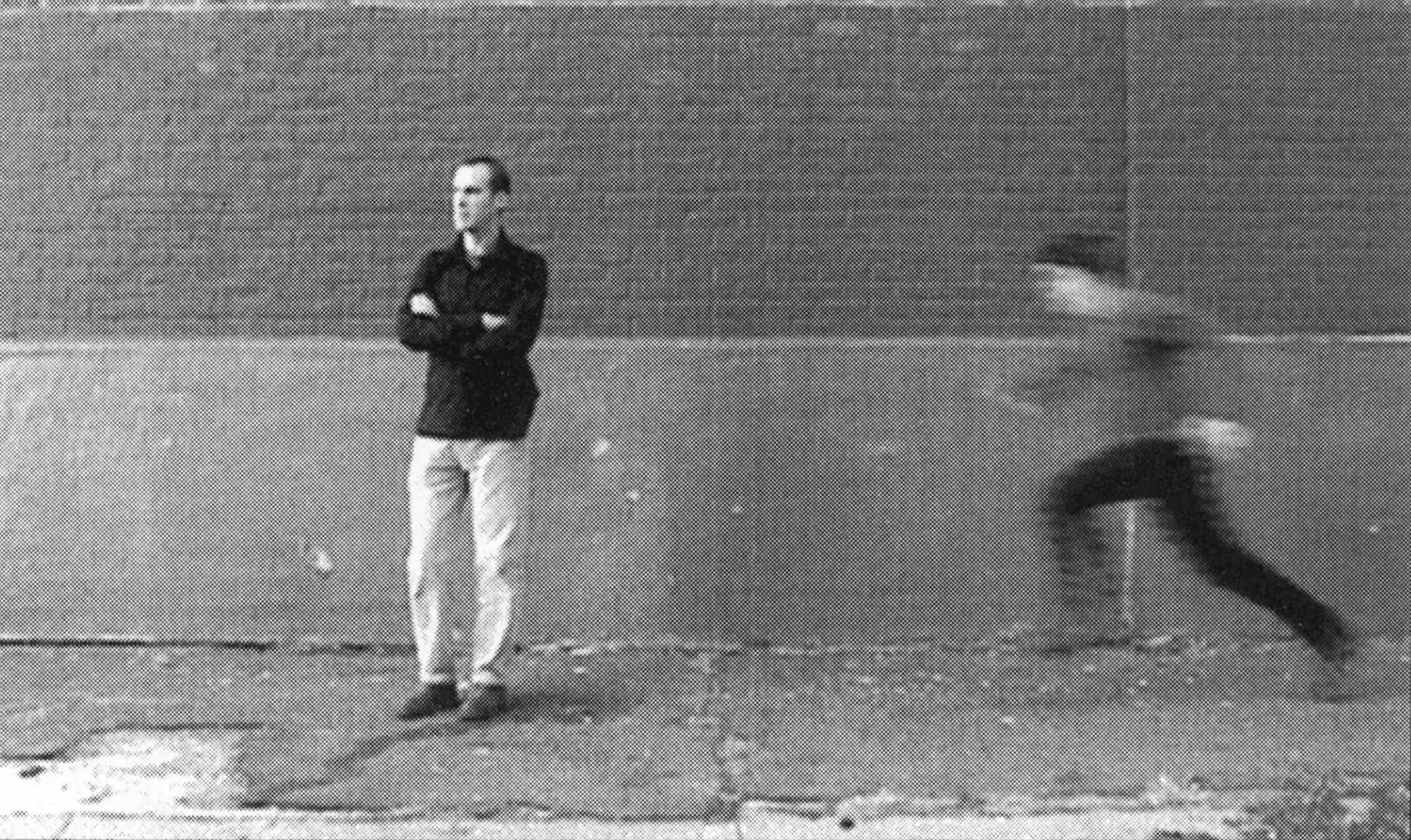
In an attempt to keep the gallery space as clean as possible without any texts interfering with the reading of the pieces, a small map of the exhibition was included in the information provided to the visitor. But rather than a journey in terms of nostalgia or adventure, priority was given here not only to the airplane (a mode of transport inherent in the gestation of this exhibition in three suitcases from New York, which was not intended for comparison with the rhythmic movement of the train or the long geographical length of a journey by road) but to the pragmatic and time-related aspects involved in this kind of travel. A programmed but also fleeting phenomenon, the idea was captured in an original manner in the video by Dexter Buell titled Tread Mill, in which a man is surveyed like a piece of landscape whilst he operates a circular platform of wooden strips by running inside it. Incessantly, behind the wooden bars, the strange perspectives of the body in movement- which the camera captures in snatches, skimming from above or below, from the sides, from behind, and from the front-repeat the circular form of this" human cage“. The monotonous visual and sound rhythms of the movement and agitated breathing end up by calling into question the meaning of movement that apparently leads nowhere.
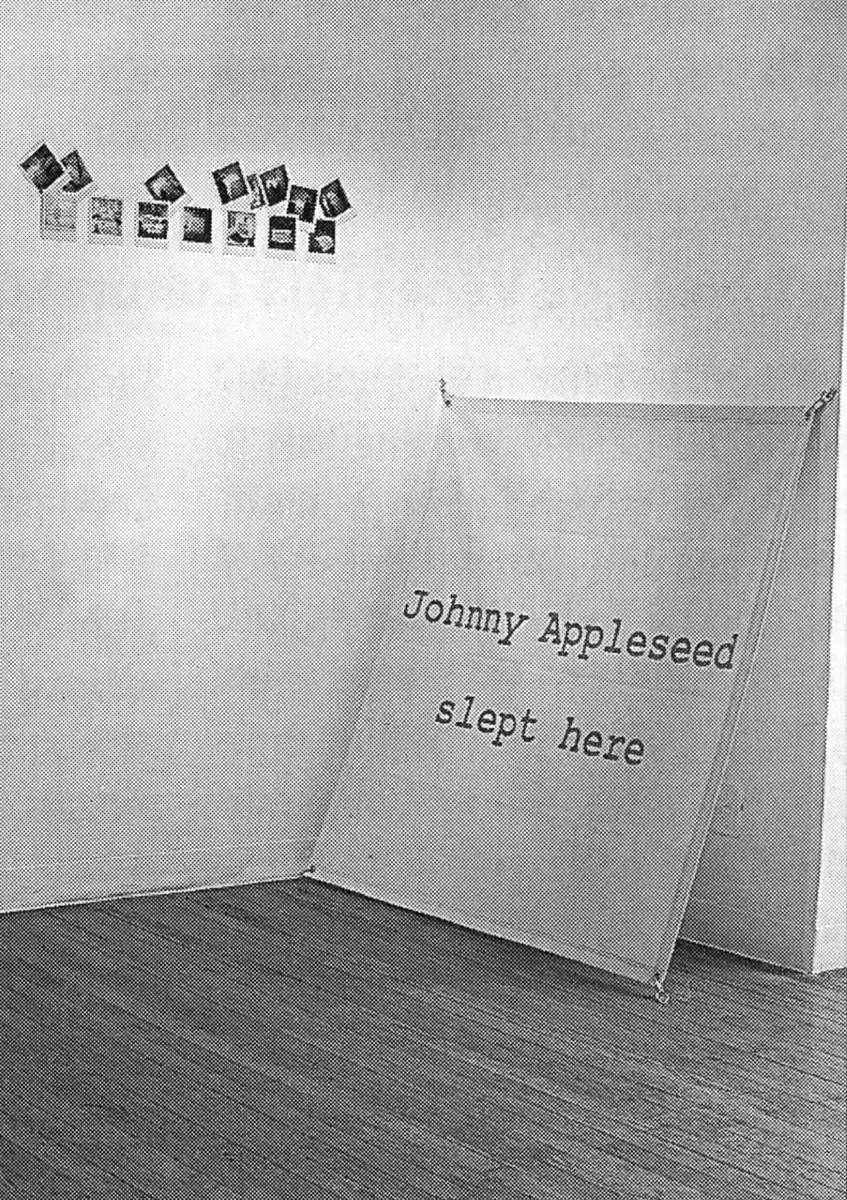
In addition to the video, installations, drawings, photographs, sculpture, painting in non-conventional media, and multimedia works were all used to propose various kinds of dislocations: pop- a starry Mickey Mouse in Jim Anderson's video; language- Evrewun iz welkem by Mary Ellen Carroll, in a welcome mat placed at the entrance to the building, or space; Johnny Appleseed slept here, a moving sign by M. River & T. WhidArt Association. The distortion was not only the result of travel and animation.
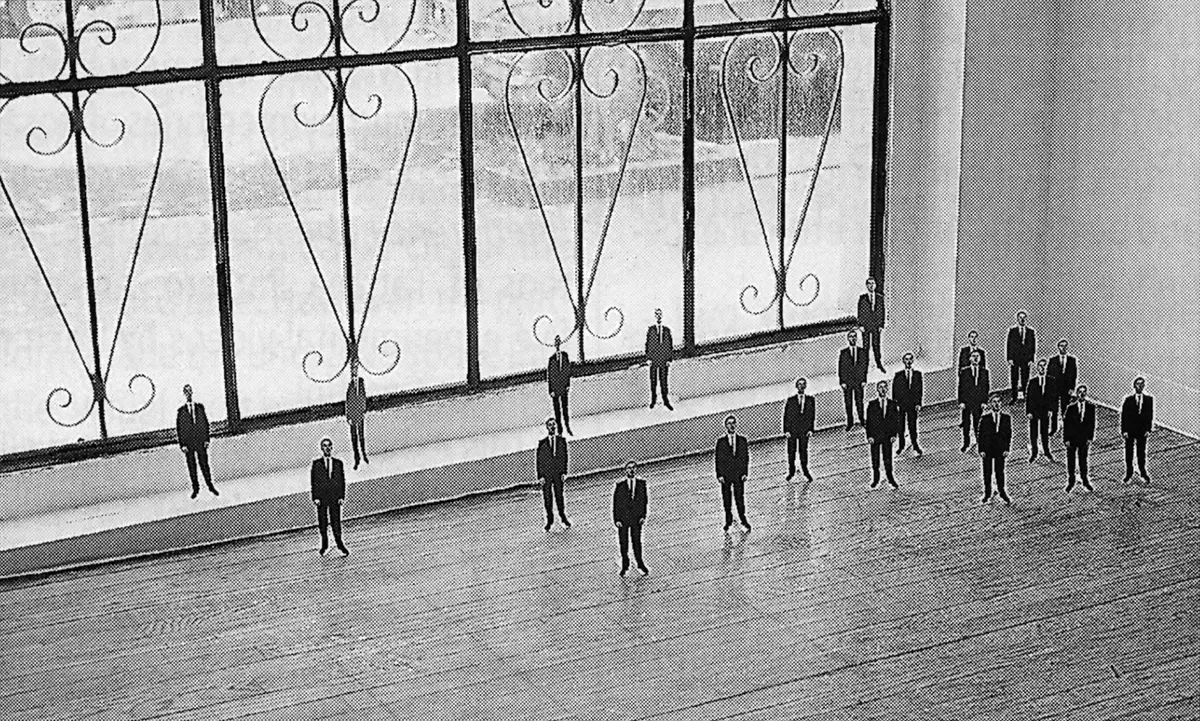
The media chosen by these artists are in themselves the result of a dislocation in the perception of the subject-object: being here and there, acquiring existence in the work, and finally, being nothing more than an impression on paper that is folded and repeated like the twenty little cardboard beings, cut out by Thomas Eller like cardboard dolls for children.
In the same way, Type A, two male action artists, repeated procedures in 4 Urban Contests. This work played with the concepts of competition and contextualization suggested by the title of their video. On a second occasion, they performed Five Urban Rescue Operations, in which the victim is saved from suicide, falling objects, and an oncoming subway train ... the sequence ends melodramatically when the rescuer is shot while trying to protect the victim. More comic than dramatic, these rescue operations focused on the transfer of meaning and everyday events as actions leading to an eternal return.
Of all these various details concerning the journey, I should like to mention the portfolio of M. River & T. Whid Art Associates, with their home art projects, in which, on the basis of a market-cum-technical strategy, they promote and sell ideas for works of art that can be constructed or installed at home, once the idea has been acquired through an economic transaction. Certificates of authenticity are also provided. In projects such as Tom and Becky lost in the Cave or Thomas Edison never slept (here), a phrase written on a spotlight, ironically referred to familiar aspects of North American life or the conveniences of technology, and in particular, satirized and called into question the fact of art itself. In this sense, any idea could fit within a suitcase. And these projects could be multiplied: a third suitcase, in fabric and without any labels, is perhaps the one which we should fill up. In the final analysis, although suitcases now have wheels, we should not forget that they were made to carry our belongings and they continue to be (along with the long waits) one of the heavy items of our journey.
ANA ISABEL PÉREZ GAVILÁN