A fascination with an almost taxonomical ordering of images and words, the organization of objects, vegetables, and animals in the museums of natural history, and the litanies and ancients chants in Latin are some of the sources of inspiration for the most recent work of Cecilia Paredes, in this exhibition titled Proverbs. These inspiring phrases, with their age-old wisdom and popular authority, are the bases for these canvases in which the artist presents several carefully chosen objects drawn with great care and detail. This combination of images and words is in fact an interplay of verbal, visual, and mental contradictions.
In one of the canvases, we see a large variety of flowers. Of all of them, the rose is the only variety that is repeated and emphasized with changes in color. But, however beautiful the flowers may be, there is a reality, a proverb written in the lower part of the picture, which reminds the spectator to remain alert. Who told you that life is a bed of roses? brings the spectator delighting in the beauty of the picture sharply back to reality. This dichotomy is at the basis of this series of proverbs and is repeated in each of the pictures in a similar manner. In If you go away, you can't expect people to keep your place for you (*), three very elegant baroque chairs symbolize the well-being, permanence, and security of the person who owns or sits on them. A placard, which suggests the idea of triumph in its design and use of laurel leaves, is in fact a warning sign. What is clear is that the text reproduces the well-known proverb reminding the spectator to lower his guard.
The ordered elements which appear in the works of Cecilia Paredes play a crucial role both in the composition and the content of the pictures. In Big Oaks Grow from small ones, the artist shows a series of fruits full of seeds, marked with words suggesting the scientific names of the bulbs. When we look more carefully, however, we see that what is written are human characteristics that, taken together, make up an allegory of what a human being can become. The ordered and meticulous form in which the words are written (in small letters and phonetically) strengthens the composition of the picture and the idealistic nature of the characteristics to which the artist refers (magnificent, triumphant, immaculate, unequaled, etc.).
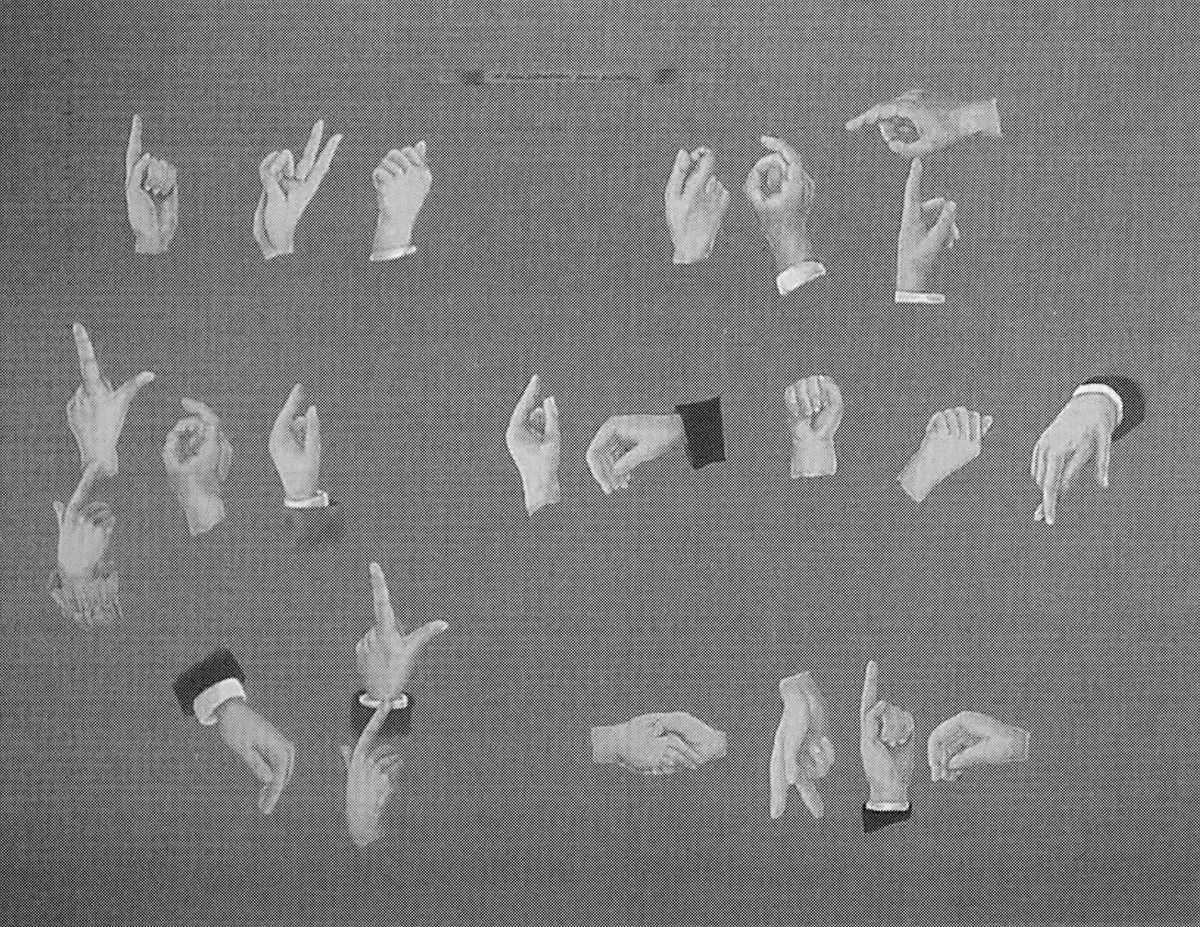
A fundamental feature of these works is their poetic quality. The wordplay goes beyond the popular philosophy of the proverb and reflects the artist's sensitivity to themes and human experiences. In You are my cup of tea(rs), for example, she evokes the relationship between a couple. Another important feature is her sense of humor. In A Word to the Wise is Enough, the message does not take the form of written words, but hands which suggest the words I've got you under my skin. In this case, the image and the conceptual meaning are complemented with much detail and precision. The most important work in the show was It'll only end in tears (*), an installation that includes a canvas and several objects placed in two rows opposite the canvas.
On the canvas, we can see several hands which although they look innocent enough, have rather perverse intentions. Without the proverb, the reading would probably be different. By writing out the proverb, the artist has made the intentionality of the hands into a subtle form of aggression which reminds us that a "villain" is not only someone who hits but also someone who poisens, cuts, squeezes, points, in short, any person who acts with hidden intentions. For example, the hands holding a spoon might suggest someone administering medicine. But the proverb and the presence of sharp instruments and knives nearby make us think of someone administering some poisonous potion. Some of the hands are repeated three-dimensionally in resin molds which reproduce the artist's hands holding certain objects (a spoon, a jar, a handkerchief, etc.), imitating some of the's leights of hand depicted in the picture.
Within the context of the artist's career, Proverbs marks a stage of great maturity, and the way in which she develops her conceptual approach, without disregarding the pictorial nature, is a major achievement.
TRANSLATOR NOTE
(*)Translator's note: The Spanish-language proverbs used by the artist often refer to objects (chairs, hands) that do not appear in the English equivalent proverbs. Thus It'll only end in tears, the English equivalent of the Spanish Juego de manos es de villanos, contains no reference to the manos (hands) or the villanos (villains) of the Spanish title of the work.
FRANCINE BIRBRAGHER