Organized by Luis Camnitzer, Jane Farver, and Rachel Weiss, structured around two periods (from the end of the '50s to 1973 and from the mid-'70s to the end of the '80s), and curated by regions (Japan, Western Europe, Eastern Europe, Latin America, North America, Australia, and New Zealand, The Soviet Union, Africa, South Korea, China, Taiwan, and Hong Kong), "Global Conceptualism: Points of Origin" shows 240 works by 135 artists, selected by a group of eleven international curators: Chiba Shigeo and Reiko Tomii, Claude Gintz, László Beke, Mari Carmen Ramírez, Peter Wollen, Terry Smith, Margarita Tupitsyn, Okwui Enwezor, Sung Wan-Kyung, and Gao Minglu.
The show has many outlines for reflection and controversy. Some constitute basic objectives of the show; others, though involuntary, are no less interesting.
In the first group, that of the show's objectives lies a historical reading of the rise of conceptualism on a global plane. This reading implies a collection of information that is a great credit to the show as well as to its catalog whose value transcends mere documentary. Regardless of the degree of thoroughness (since it is always possible to add something more), the material gathered here brings together numerous unknown works; unknown, at least, beyond the sphere in which they were created.
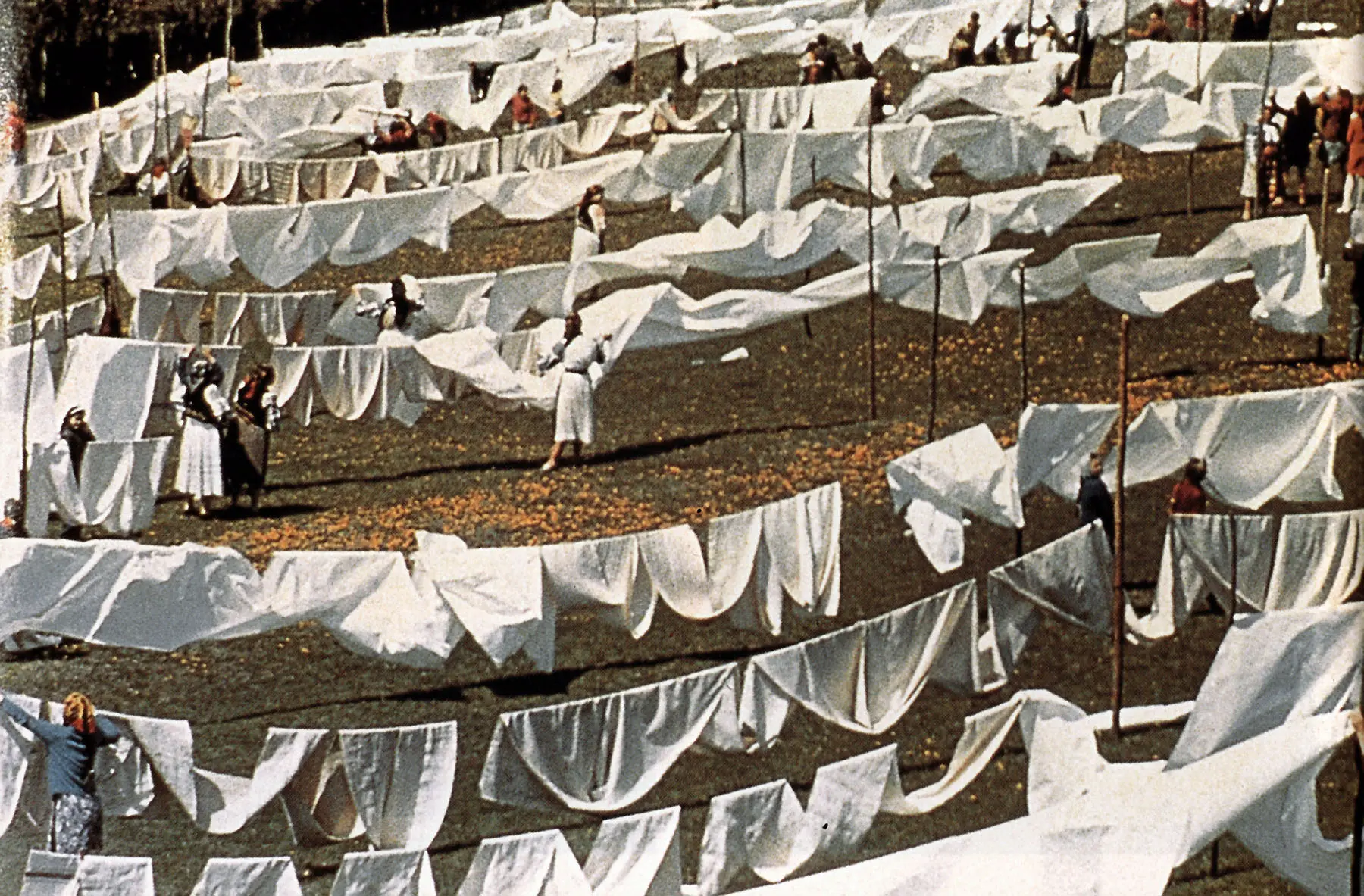
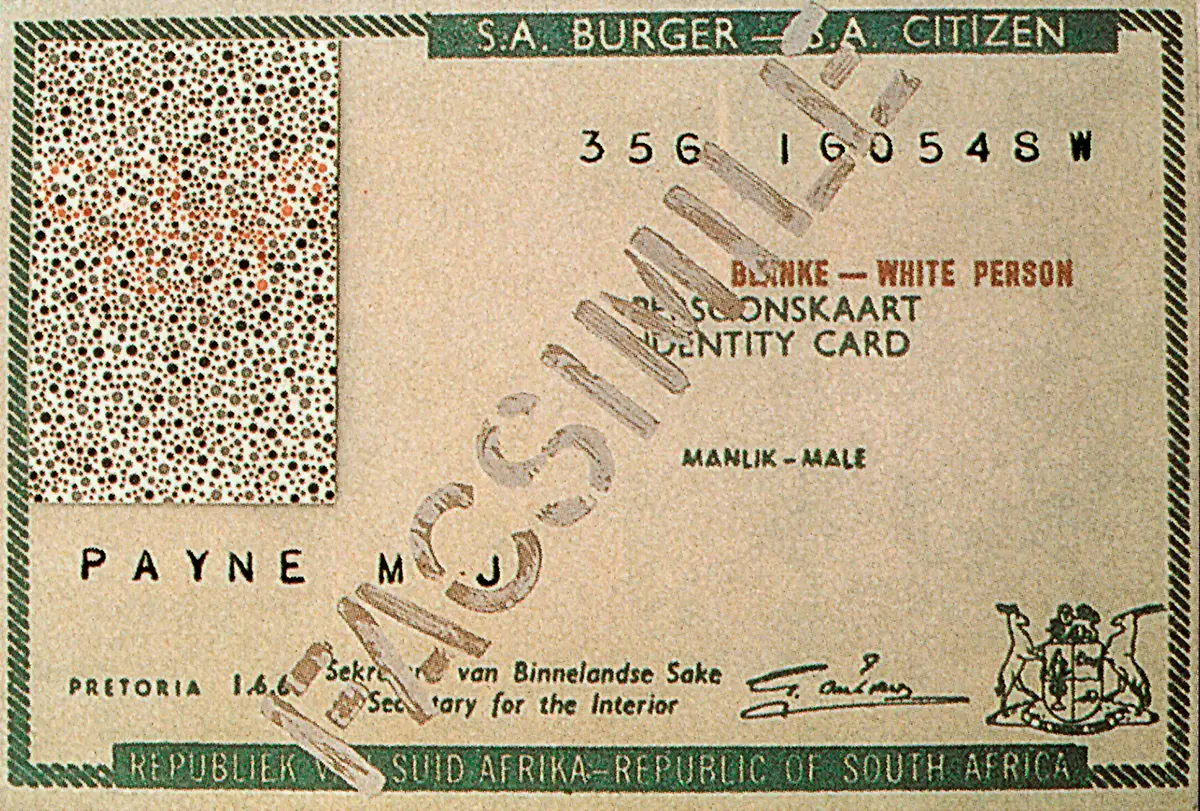
The scope of surprises can range (depending on one's point of view) from Color Test (1973-1974) by South Africa's Malcom Payne, who denounces apartheid through the documentation of identity (in South Africa, each citizen had an identification document with everything he or she could do and where, according to sex and race), to Ideal Document (1975) by the Russian duo Vitaly Komar and Alexandr Melamid, who also turn to documentation (in this case, everything a Soviet citizen carried) in order to arrive, by mediating format and color, at the red square. An "ideal document" whose paradoxes incorporate humor and sadness and involve everything from the most revolutionary manifestos of modern art to those of egalitarianism and social freedom. Another noteworthy presence was Humid Installation (1970) by Romania's Ana Lupas. A photograph registers the action created by the artist at Margaux Village (Transylvania), where she summoned local women to hang white fabrics like sheets along a wire that was stretched before an entire hill landscape. Lupas thus turns nature into an image, the support of a poetic and political discourse that foretells the cultural outlines that the themes of gender and identity would take in that decade.
In a harmony that also encompasses the domestic element and landscape, in this case, hinted at by the work's title, Budapest's Miklos Erdely shows Snow of Last Year (1970): a solitary thermos on a wooden pedestal protected by glass, similar a museum relic.
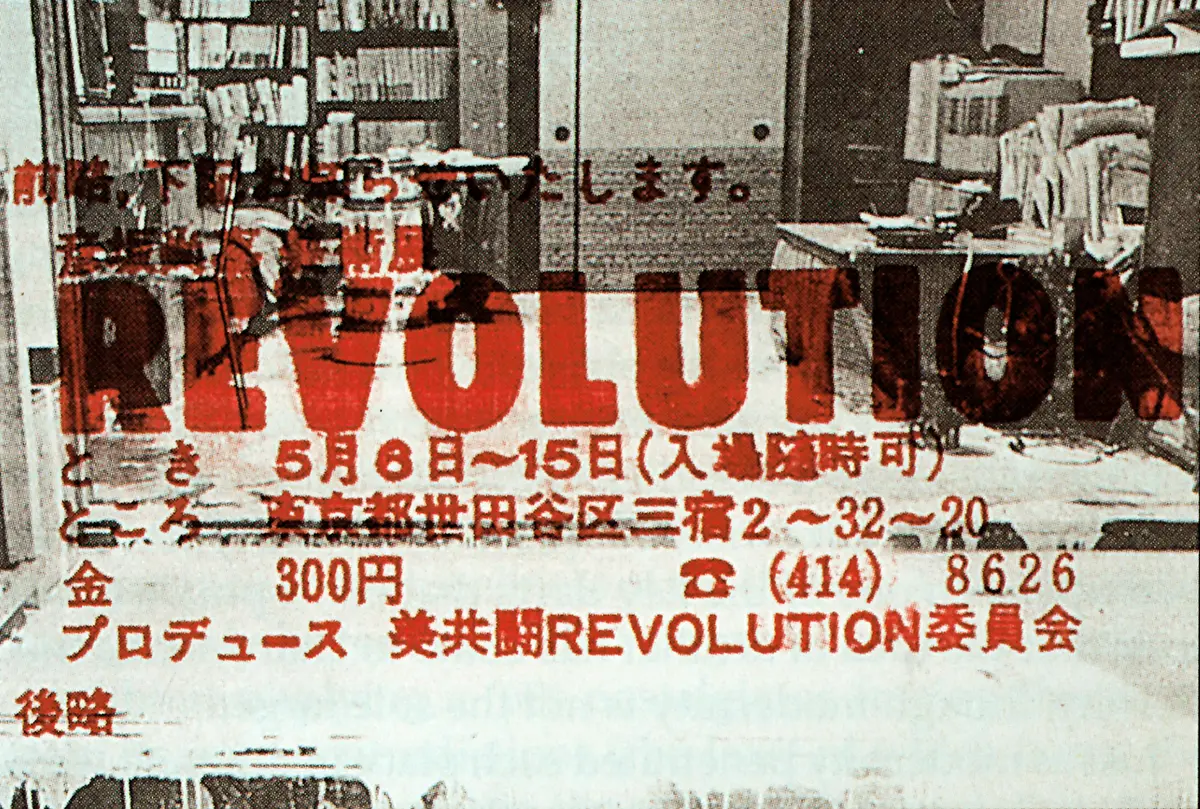
Floor Event (1971) by Hikosaka Naoyoshi is another connection where private space —his studio— somehow turns into the landscape. A metaphorical, complex landscape: that of art itself and its revolutionary outbreak. A postcard that announces the advent of another time serves as a precise emblem with which this show has identified itself from the very cover of its catalog.
But returning to the historical reading that this show executes, it is necessary to pause before those aspects where a rereading is also achieved, that is, where other gazes preexist. On one hand, in the context in which these expressions appear. On the other hand, in the specific considerations regarding the privileged definitions of conceptual art and conceptualism. And finally, in another basic aspect, namely, the frame of interpretation of globality itself.
Regarding context, the circumstances behind the two periods in which the show is articulated are determined by two stages. The first stage is that of industrial and technological development, postwar capitalist expansion, and the consolidation of the Cold War. The second stage is that of the haste and deterioration of the socialist world that coincided with the violent conflicts generalized throughout the Third World.
Both periods are marked by the political and social commotion stemming from a process of adaptation and/or resistance to new norms, technological developments, and relative positionings before the imposition of a socioeconomic system. And by the dominant cultural concomitant that accompanies each process. Revolution and resistance are the extra portions of an alternate current highlighted by this show.
The evaluation of these circumstances and artistic episodes that symbolize them deal with opening up a definition of conceptualism that this show seeks to rescue. A definition distinct, in the judgment of the organizers, from that of conceptual art: "a term used to denote an essentially formalist practice developed in the dawn of minimalism." Regardless of the concise grounding of the formalist attribute for the category of conceptual art, what is clear is that here it deals with a conceptualism that in some way aspires to recover art's "functionality." Functionality in the sense of a giver of meaning, a tool, a mediator of thought as complex as the very contemporaneity in which it is conceived. An art of ideas that do not necessarily rest on the visual, and which is connected to the perceptive inasmuch as it recognizes it as a form of knowledge.
Art appeals to all the disciplines that have broadened that knowledge, such as linguistics, philosophy, psychology, mathematics, sociology, history, and anthropology, just to name a few.
To question the place of its own materiality, of its institutionality within a system that legitimates it, to attempt to destabilize the system itself, to emphasize the role of the context: these are some of the many claims that this conceptualism makes for itself in order to communicate a political activity that disputes the aesthetic statute and redeems ethics.
In many cases, dematerialization—and in other cases, the relocation of the object as one more piece of a signifying system—was an anticapitalist proclamation. What is more, it often meant a shift of the object toward action, a pondering of the subject, but also an operative strategy. Therefore, it is not rare to see it in radically dissident proposals in the socialist scope. Likewise, to question visuality itself has perhaps been one of the key darts that conceptualism has tossed at the idea of art that has come to characterize modernity, though modernity is not the sole target.
Just as modernity penetrated each place in different ways and permeated their peculiarities, thus conceptual practices flourished in the various regions, sometimes with common denominators and other times without them, with similar or diametrically opposed local experiences.
There are enormous regions (Africa is one example) where the concept of art as an autonomous practice, as a system with a meaning per se, has never stood out. However, it may not be too bold of an assertion to say that they were always essentially conceptual. But, in regards to this show—where artistic strategies are at stake (this is a controversial outline of the West, and one to be deemed problematic)—the considerations made for their inclusion in the show have to do with "themes between art and life that were also strongly related to traditional culture and/or religious grounds." The voice heard by Japan's Matsuzawa in 1964 demanding the disappearance of objects, which led him to renounce objects and to lean on the text in order to develop his work, is one such example. So is the vision that pushed Africa's Frederic Bruly Bouabre to transcribe the oral traditions behind the epistles of the West African Alphabet (The Bété) (1982).
These considerations which straddle conceptualism as both a strategy and an attitude help us to find common traces among distant extremes as well as thousands of differences and incompatibilities. Those traces that refer some artists to others, some regions to others—such as the peculiarities which individualize them and the local stories in which they germinate—are the essential bases of a rereading of globality that makes an effort to look at the world as a complex, multiple, collective structure free of paternalism, hierarchies, and ethnocentricism. It is not a matter of competing for a lead role or contending for the origin, but rather of multiplying it, giving it the density that any project of universal history demands.
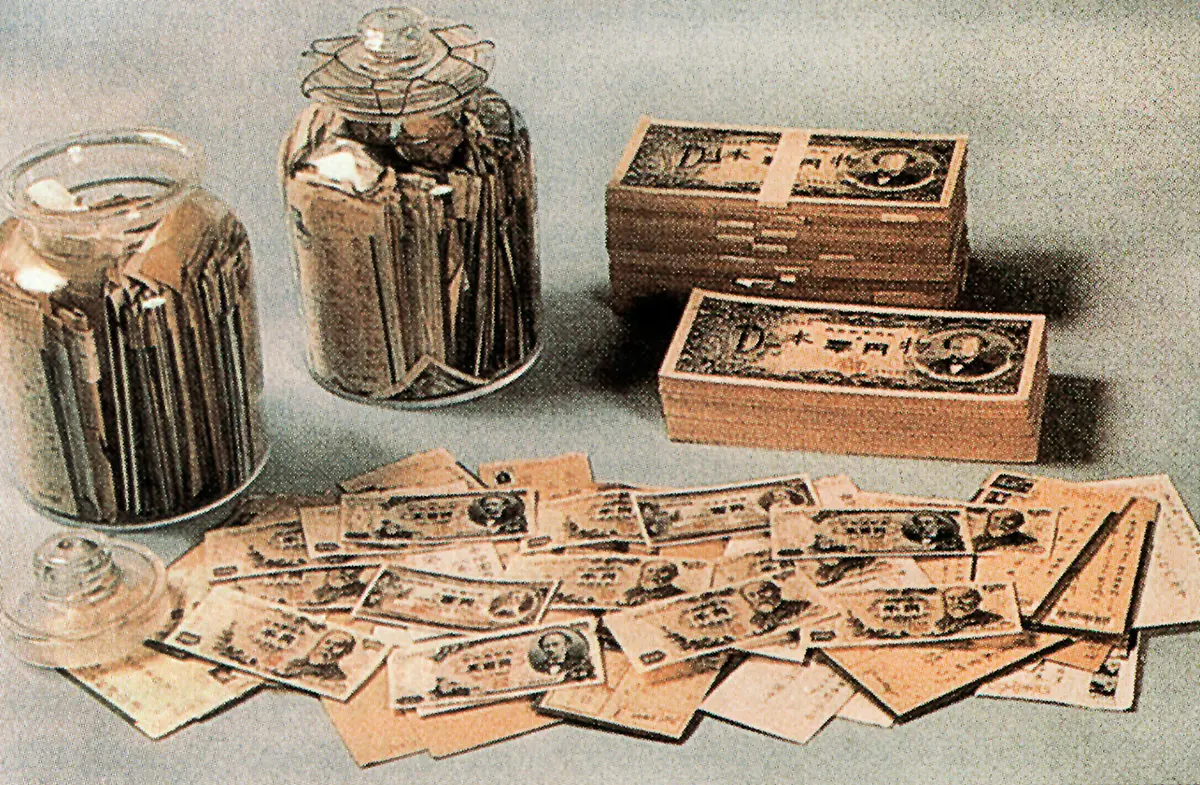
This rereading of globality is one of the show's greatest merits and a sort of compensation for its weak points (recognized by the organizers themselves), namely, the type of regional grouping selected, often supported only by geographic proximity. A greater analysis and rigor in the definition of regions may have contributed, among other things, to a more stimulating montage for the viewer to test out even further the fabrics that can be seen, and those merely insinuated. Fabrics that indeed cross in many ways. For example, in 1964 Japan's Genpei Akasegawa, in Model 1000-Yen Note Incident: Definition, uses the term "capitalist realism" for the title of a text that commands the title "model" for its copy of a banknote that would lead him to be judged and found guilty of counterfeiting. Akasegawa uses the judgment itself as a key work that involves society in a semantic/ideological discussion of art and the artist.
We come across that same term, "capitalist realism," again in a performance that Gerhard Richter and Konrad Lueg realized in a store in Düsseldorf: Life with Pop: A Demonstration for Capitalist Realism (1963). A series of bases, commonly used to show products on sale, here display pieces that make up a living room: armchairs, a serving table, and a TV set; and the artists themselves are seated in the living room. A living sculpture that challenges the market, the artistic object, and its ideological support, relocating the referent for the art of its time.
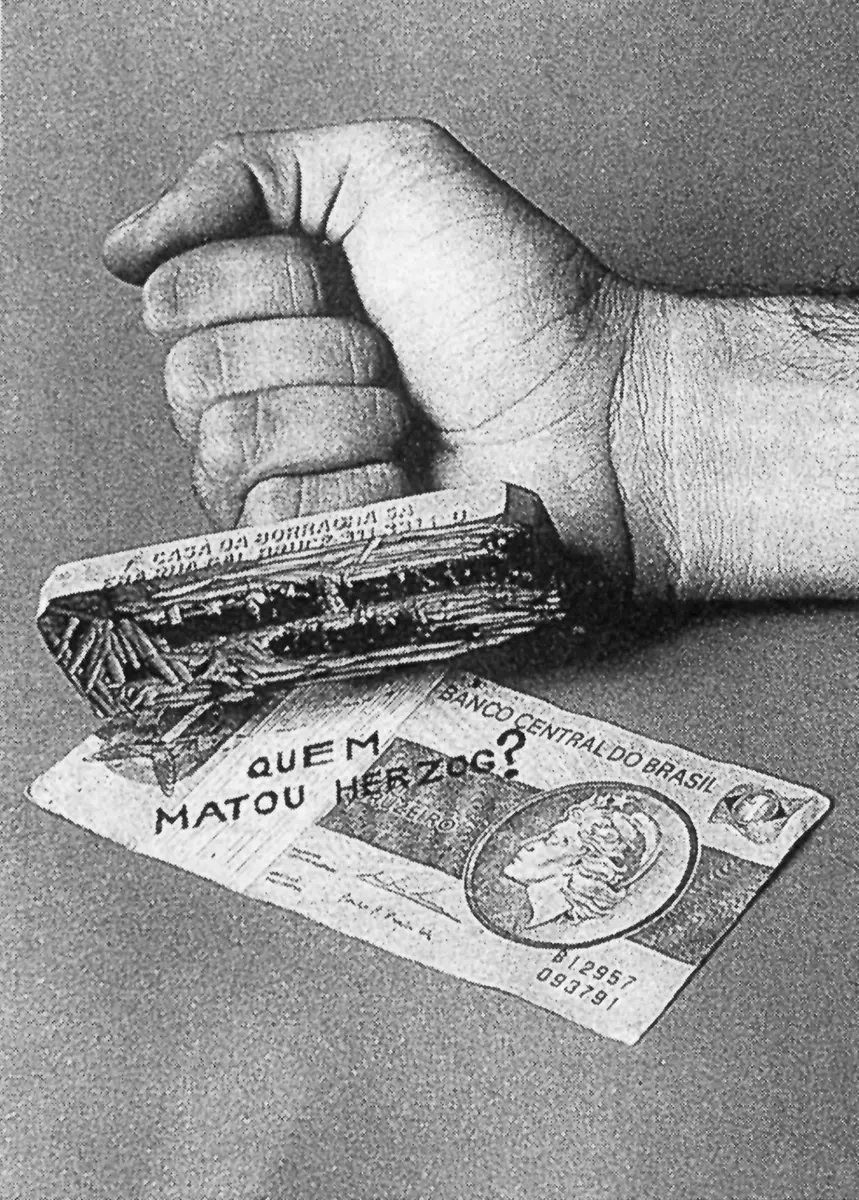
We also repeatedly encounter money throughout the show as the prime matter that structures various discourses. Miklós Erdely uses it in what Lázló Beke calls "testing the limits of political protest and the will of the authorities to tolerate it." Unguarded Money is an activity that he carried out in 1956 and which consisted of placing an open drawer, without a lock, where people deposited money in solidarity with widows and children on the first day of October of the Revolution of 1956. A poster announced: "The purity of our Revolution allows us to collect money in this way for the families of our martyrs. The Union of Hungarian Writers."
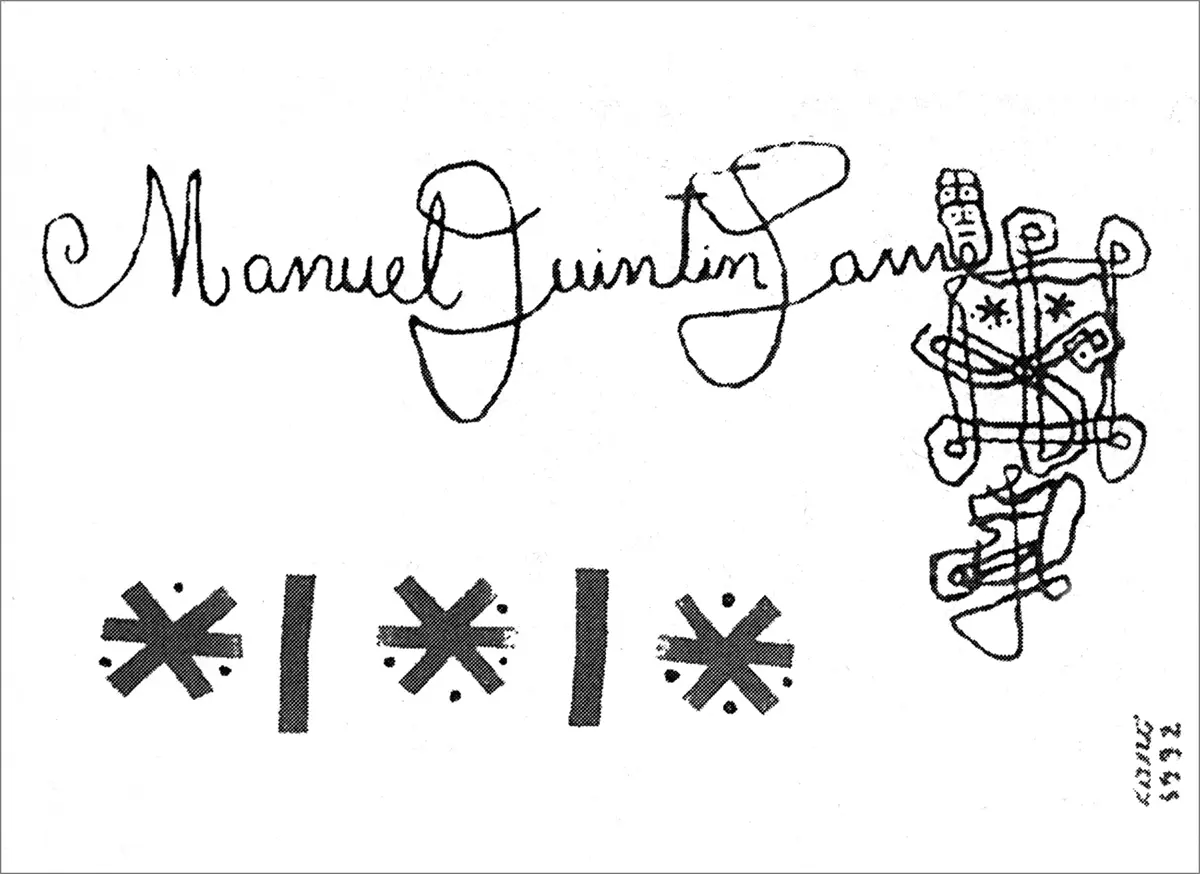
By following other threads we may encounter an opposition between the Construcción de un horno popular para hacer pan (Construction of a traditional oven for making bread, 1972) by Argentina's Víctor Grippo, and the Homenaje a Manuel Quintín Lame (Homage to Manuel Quintín Lame, 1972) by Colombia's Antonio Caro, who reproduces the signature of the Indian who advocated on behalf of the indigenous peoples.
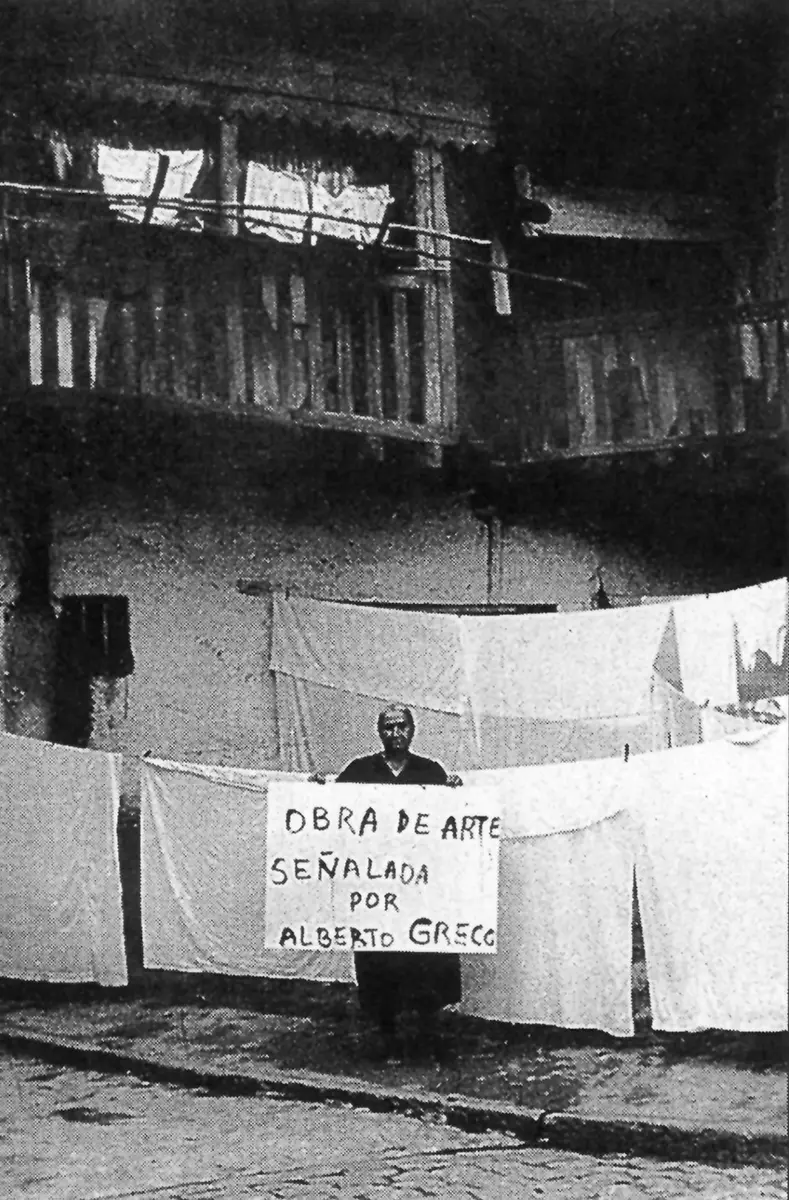
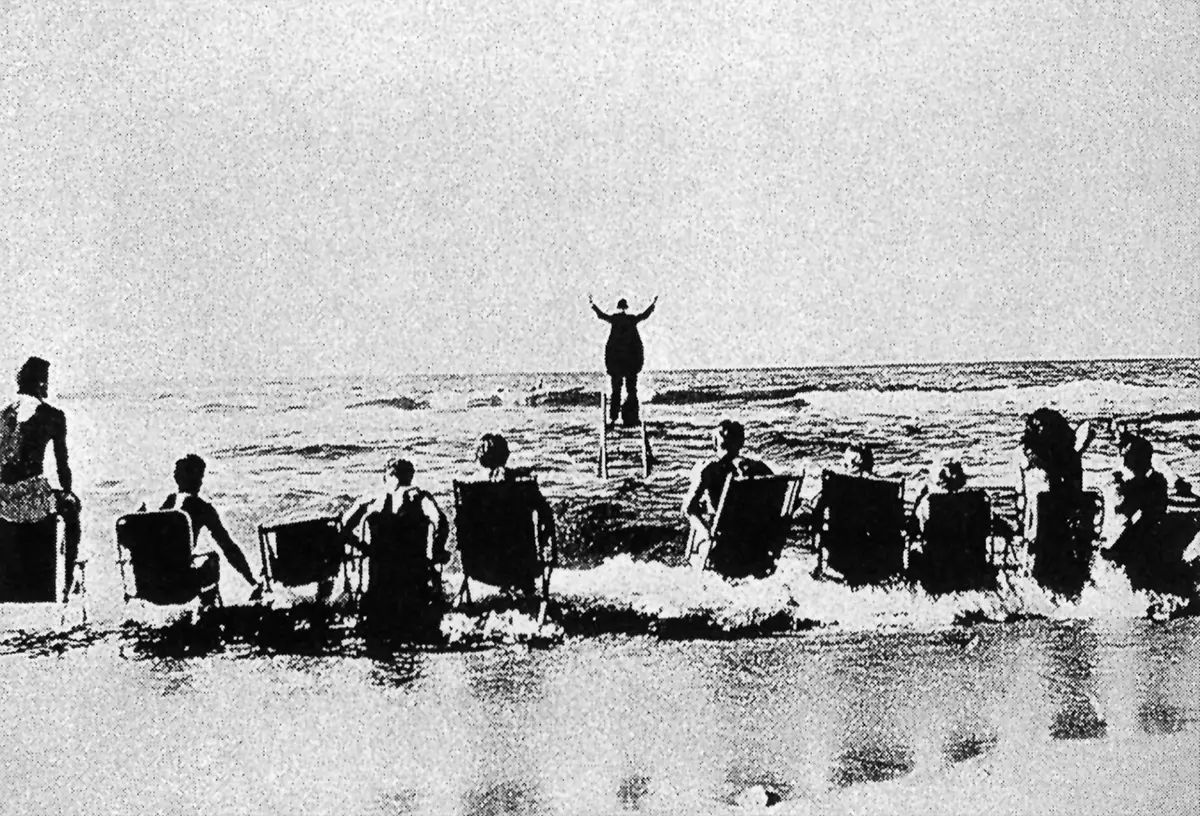
Catalonia's Trevall group and their confrontation with the Franco regime may be subjected to a comparative analysis with the Campaña publicitaria (Advertising campaign, 1968) by Argentina’s Tucumán Arde; and both groups can be seen as a referent for a dialogue with Choi Byung-soo and his Funeral Procession for Lee Han-ryul (1987). The Sea Concert (1967) by Poland's Tadeusz Kantor is illuminated by Argentine Alberto Greco's Vivo dito (1962), and vice versa.
The analysis of political, philosophical, and/or artistic synchronisms and diachronic is also a point that complicates later matters, a point that is insinuated when the show takes notes on the legacy of conceptualism. And the notes are bare that, like headlines that are too hasty to be profound or even somewhat conclusive. They would deserve another show at least as dense as the present one.
Nonetheless, there are questions that jump out and interest us more as coordinates of a system or details of a problem than as the evaluation of successes or failures.
From the absorption that the art market made of the conceptualist proposal to the inauguration of a conceptual "aesthetic" that restores a visuality distant from its vocation; from the revision of the artist's ethical parameters to the relocation of the place of the viewer; all are processes whose comprehension is at least operative for the design and practice of new strategies.
A few days ago, a brochure fell into my hands that advertise a seminar sponsored by the New York Foundation for the Arts. The first sentence of the brochure's heading reads thus: "Art is a business." In New York's current fin de siecle, this sentence may not keep anyone awake. However, it lends itself to thinking about something that the organizers of "Global Conceptualism" do not claim as one of their proposals: the timeliness of the show as a conterpart, though only historical, of that slogan of art as a business.
Without implying a '60s nostalgia or freeing the show from its own contradictions (the least of which is not the relocation of the works in the museum's space), this show stimulates, in conjunction with a reflection on its own narrative, a reflection on the present, where the de- ideologization of art predominates even over the political category to which it aspires: a present in which the insertion of all symbolic cultural production in the market economy is undisputed. (Here, the show itself is not even saved; it would suffice to have access to the insurance on the pieces shown to see this). A moment where the institutionalization of art is restored even by those who once reclaimed the position of alternative space. A time of primacy for entertainment, often damaging the density of thought where the excess of transcendentalism confronts frivolity with excess. Also an instance of capitalist expansion and inevitable technological development accompanied by a perspective of globality that, far from considering the earthly globe as a collective wooden framework, is designed as a one-way highway. And the most significant thing about this fin de siecle crisis is that it is a here-and-now in which the predominance of skepticism ponders cynicism rather than a responsible critical activity.
In 1967 Hélio Oiticica declared, "On adversity, we thrive." In 1999 this show (without having proposed it) could also be a call for attention and a petition for growth in the midst of new adversities.
ANA TISCORNIA
Uruguayan artist based in New York. She collaborates with the weekly Brecha and the International Atlantic Magazine.