
The entire artistic process of José Antonio Suárez seems to be geared towards the false idea that his work is anachronistic and repetitive. I admit that I myself once made this mistake. Suárez draws and illustrates according to the rules of a supposedly dead tradition, or at least one which derived from the figurative work of nineteenth-century illustrators and which can still be found in certain contemporary practitioners of the graphic arts. But strictly speaking, we cannot speak of an illustrator recognized for his unrestricted fidelity to certain artistic codes, but must rather of a creator who renews, like Dokoupil, for example, the very notion of figuration and who asserts what the hand hides in its unexpected stock of images.
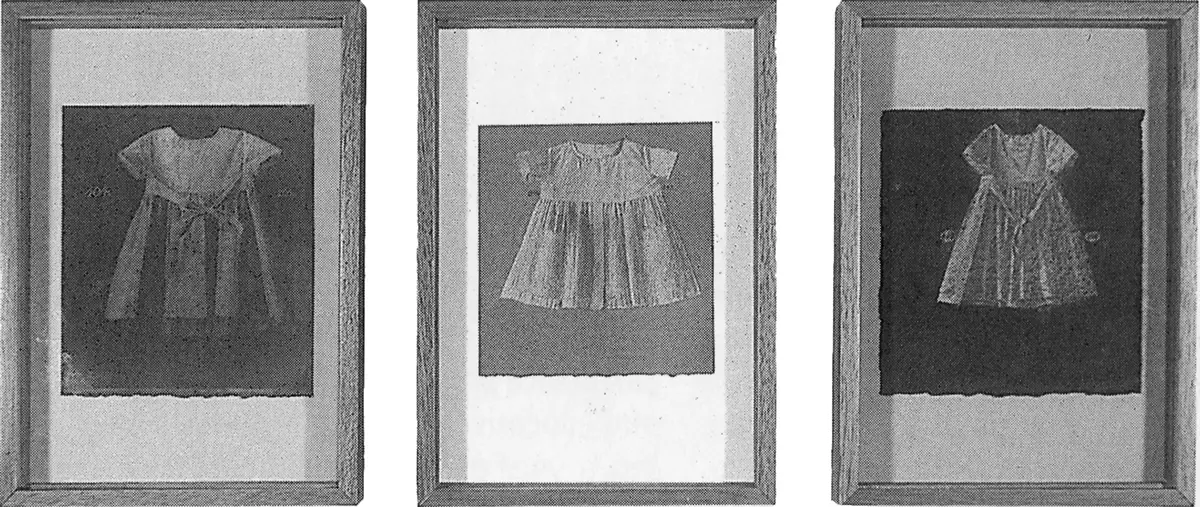
But in the settling of accounts regarding the so-called avant-garde movements —the obsession of Jean Claire— the path towards resolving tasks such as this has been cleared and we now have enough distance to objectivize the problem. What is important now is the artist's gaze, not the artistic medium which the artist uses to express a given content. For the time being Juan Antonio Suárez has released what we call illustration from its dependence on a given text, and the content, the narrative element, becomes the illustration in itself. This is important.
In the same way, we cannot speak of "small format" works, but rather a resizing of the concept of scale, since Suárez reminds us once again that the monumental cannot be confused with the colossal in the legitimization of a specific scale. Of course, any reference to the miniature would be a fatal error. What Suárez is saying is that figuration deprived of a relationship with the imagination would lack any legitimation —such as the memory of things that did not live, the right to legends and aesthetic codes that are supposedly not our own, i.e. that other unknown spheres of the memory, located not in any pastoral past, but in the vast domains of human ancestry. In this way, the figuration becomes a pure image.
All this was magnificently confirmed in Suárez's recent exhibition at the Suramericana building, where the theme of his works was the persistent of the image. Because in a reality where precisely this common soil of our ancestors, the infinite and unpredictable memory of what is human, is being supplanted by the false images of television and film and the vacuousness of the false chronicle of photography, a world where as Regis Debray has said the real image has disappeared, such a task resolutely asserts what is at stake and in danger. Even though in a reality as absurd as ours we cannot say that this process of replacement has been fully carried out. The mediatic element eliminates the image, in so far as the anthropological dimension is replaced by the empty images of topicality, by a meaningless kind of experience bereft of those primary images nurtured on the collective consciousness, and which over the years are transformed into a kind of invisible homeland for every human being.
Suárez explores this rich soil of images and creates new and fruitful associations reminiscent of surrealist aesthetics. The drawing is thus saved from any academic connotations where these unexpected associations —a kind of automatic writing— would not be possible of the demand for literalness. It seeks out new frontiers between the line as a limit and the color as a free surface, between what the drawing configured and made into a habit —the identity of a face, hair, mouth, nails, a tree— and that frontier which creates a shadow falling on the surface of a table or the roundness of a fruit.
These free associations which disrupt the frontiers of the drawing and the strictly pictorial elements are thus presented in splendid hybridity, not in the sociologizing sense given to the term by García Canclini, but in the sense of something escaping from the prison of established rules and searching for what the great masters of drawing of all periods have created: the statue, the metamorphosis of marble, the sacred grove of Bomarzo, the griffin, and the caryatid.
A retardatairel To break with the injustices of the avant-garde movements is to recuperate the kind of tasks which José Antonio Suárez undertakes, the task of the solitary creator who is able to make precise the reasons of day and night, the persistence of mystery and the intangible in contrast to the devastating enterprise of what is merely mediatic. To contrast, as Virilio notes, the page and the screen, the hand, and the computer.
This is made possible by the lucidity which comes from an absolute knowledge of the standards that define this concept of figuration with which the artist begins and which he explores and analyzes in all its possibles and errors, slowly constructing with the passage of time an extraordinary visual order.
DARÍO RUIZ GÓMEZ